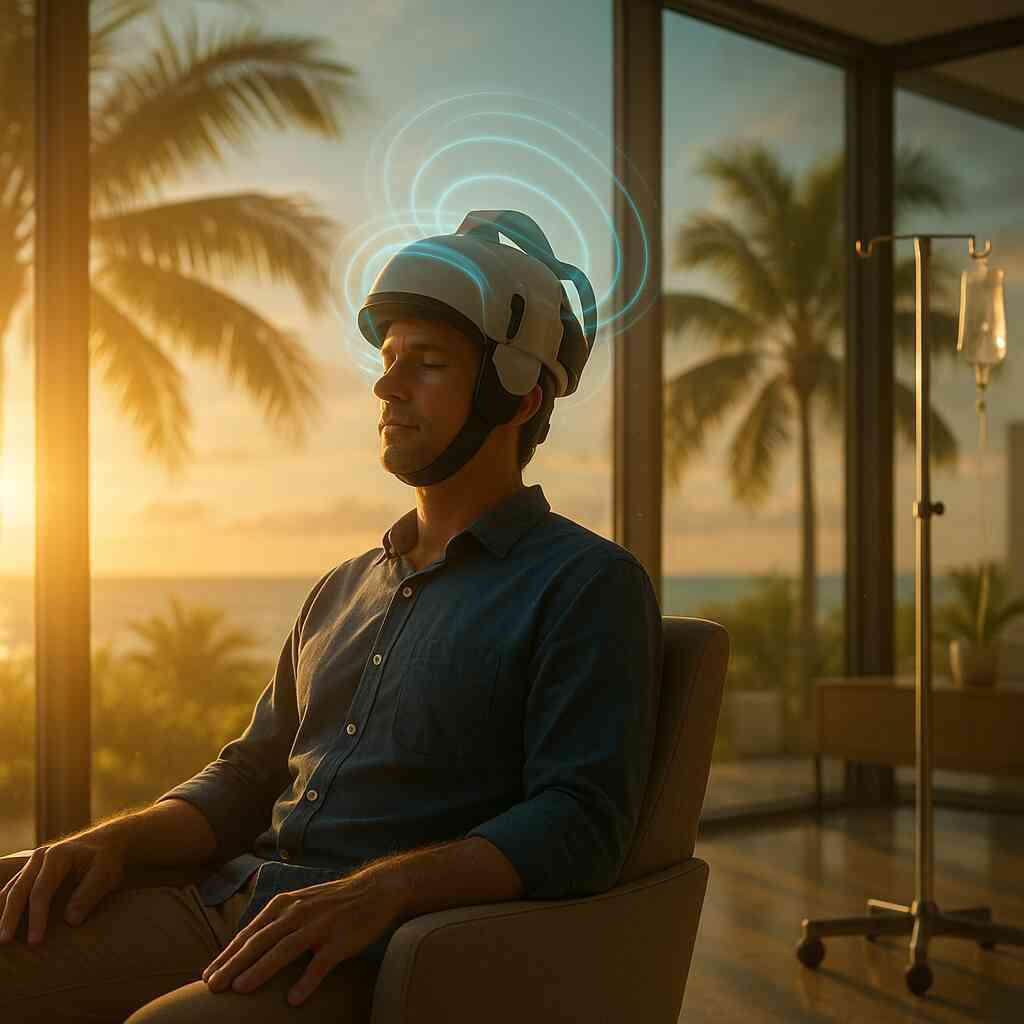
Comparing Deep TMS With Ketamine At TMS Treatment Florida
Opening Minds to New Frontiers in Non-Invasive Brain Stimulation, Florida
Why treatment-resistant depression demands innovative answers
Many Floridians silently wrestle with treatment-resistant depression, having cycled through several medication trials without lasting relief. Traditional antidepressants typically modulate chemical messengers broadly, yet the illness often stems from misfiring neurocircuits that need direct retraining. Because of this gap, non-invasive brain stimulation Florida residents can access has become an urgent clinical priority rather than an experimental luxury. At our Deep TMS center in Florida, we witness daily how precise magnetic pulses can reboot sluggish mood networks and restore hope. Every breakthrough case reminds us that the brain is both delicate and remarkably plastic, ready to reorganize when guided by science-backed technology.
A recent surge in large-scale studies confirms that magnetic stimulation for stubborn depression outperforms medication augmentation in many patients who fail two drug classes. This data reinforces why clinicians now describe Deep TMS as one of the most promising treatment-resistant depression options available today. Meanwhile, ongoing discoveries in connectomics reveal that different mood disorders stem from unique neural loops, further supporting the need for targeted neuromodulation. When patients hear that their hopelessness has a circuit-level explanation-and an addressable one-their outlook instantly shifts. Empowering people with this knowledge sets the stage for successful, sustained remission rather than temporary symptom suppression.
Rapid relief hopes with ketamine therapy in Florida
While magnetic stimulation gradually retrains neural pathways, many patients crave immediate relief from crushing sadness or suicidal thinking. Ketamine therapy in Florida has therefore attracted attention for its rapid antidepressant effects, often within hours. During an infusion, the medication temporarily disrupts glutamate signaling, creating a surge of neuroplasticity that can loosen rigid depressive thought patterns. Families frequently describe the first infusion as a “lifting of fog,” a powerful testament to ketamine’s potential. Such speed holds particular appeal for individuals facing acute crises where waiting weeks for improvement feels impossible.
However, rapid relief comes with important caveats that an ethical ketamine clinic Florida residents trust must explain openly. Effects may fade after days, prompting a cycle of repeated infusions that can strain finances and schedules. Some clients experience dissociative episodes or elevations in blood pressure that require careful medical oversight. Moreover, research still explores whether long-term ketamine depressions treatment in Florida confers durable circuit changes or primarily offers episodic resets. Understanding both the promise and the limitations equips patients to make informed, personal decisions rather than being swayed by headlines. By comparing ketamine infusion versus TMS side by side, our care team tailors recommendations to each individual’s timeline, tolerance, and therapeutic goals.
The rise of the FDA-cleared Deep TMS device technology
Just a decade ago, magnetic stimulation devices were bulky prototypes reserved for academic labs; today, the FDA-cleared Deep TMS device solutions have matured into clinic-friendly systems that deliver focused, three-dimensional fields. Unlike surface coils that mainly activate superficial tissue, Deep TMS reaches deeper limbic structures implicated in affective regulation. This expanded reach is crucial because core symptoms of depression, OCD, and bipolar disorder originate in subcortical hubs digital psychotherapy cannot directly access. Clinicians can now fine-tune coil positioning within minutes, ensuring that every pulse nudges the exact neural hub rather than scattering energy broadly. As a result, patients often report mood lightening midway through the protocol, validating the precision engineering under the hood.
Equally important, insurance carriers increasingly recognize Deep TMS as a standard of care intervention, lowering financial barriers that once deterred many families. Accelerated TMS protocols-multiple sessions per day over a shorter span-provide an alternative route for those seeking faster change while preserving safety. Comparative studies highlight how Deep TMS offers high remission rates with minimal cognitive side effects, distinguishing it from electroconvulsive therapy’s memory concerns. Furthermore, ongoing trials combine Deep TMS with cognitive-behavioral therapy to amplify neuroplastic gains, pointing toward a holistic future. For patients considering their next step, understanding the rise of non-invasive anxiety relief with TMS in Florida reinforces that effective help exists within reach.
Under the Microscope: Deep TMS Therapy Comparison With Ketamine Infusion
Neurocircuit targeting technology mechanisms Deep TMS versus ketamine
Deep TMS employs electromagnetic pulses delivered through a specialized H-coil designed for three-dimensional penetration. By mapping each patient’s cortical landmarks, the coil reaches subgenual cingulate and dorsolateral prefrontal loops linked to mood regulation. That precision enables focused entrainment of hypoactive pathways without activating unrelated regions, reducing noise during therapy. In contrast, ketamine infusion floods the whole brain with glutamatergic modulation, producing a temporary neurochemical storm that indirectly influences circuits. Therefore, when examining Deep TMS therapy compared with ketamine infusion, clinicians emphasize surgical-like accuracy versus pharmacologic diffusion.
Researchers further demonstrate this difference using functional connectivity scans taken before and after interventions. Post-TMS images show strengthened fronto-limbic coherence, while ketamine scans highlight diffuse hyperconnectivity that later normalizes. These observations support the theory that long-term remission demands circuit-specific rehearsal rather than brief chemical disruption. For curious readers, a transcranial magnetic stimulation overview provides an overview of foundational physics and key clinical milestones. Appreciating the distinct mechanisms empowers patients to choose the modality aligned with their neurobiological needs.
Safety profile of Deep TMS and side effects of ketamine infusions
Safety remains paramount for any breakthrough treatments for mood disorders offered at our clinics. Deep TMS boasts a favorable profile; most patients experience minor scalp discomfort that fades quickly. No systemic exposure means liver, kidney, or cardiovascular functions remain untouched throughout sessions. Conversely, side effects of ketamine infusions include transient dissociation, elevated blood pressure, and rare bladder irritation, necessitating medical monitoring. Patients exploring specifics often consult our comprehensive TMS therapy common questions answered guide, which clarifies screening, precautions, and expected sensations.
Importantly, the safety profile Deep TMS upholds extends to vulnerable groups often excluded from medication trials. Older adults tolerate magnetic stimulation well, because there is no cognitive fog or fall risk. People managing bipolar mood swings also avoid manic switching when stimulation parameters adhere to guidelines. Ketamine, although rapid, carries addiction potential that clinicians must weigh against benefit, especially in younger populations. Therefore, transparent conversation regarding individual vulnerabilities remains the cornerstone of ethical neuromodulation care.
Durability of TMS results and accelerated TMS protocols
Long-term studies reveal that the durability of TMS results often surpasses medication augmentation after six months of follow-up. Magnetic pulses engrain healthier firing patterns, giving patients a fresh neural template to use during daily stressors. When combined with psychotherapy, those gains extend further because behavioral rehearsal reinforces the rewired circuits. Evidence from magnetic stimulation for stubborn depression highlights remission rates persisting well beyond protocol completion. Such staying power distinguishes Deep TMS from the short-lived effect typical of ketamine’s pharmacological boost.
Accelerated TMS protocols now condense six weeks of therapy into a single intense week, without sacrificing safety or treatment quality. Studies show similar remission curves, suggesting total pulse count, not calendar duration, drives neuroplasticity with magnetic stimulation. Patients traveling long distances appreciate finishing treatment while using minimal vacation time. Ketamine cannot replicate this compression because successive infusions risk compounded dissociation and tolerance. Consequently, accelerated Deep TMS broadens access while maintaining the structural neuroplasticity that underlies sustainable remission.
Cost comparison of ketamine vs TMS and insurance coverage for Deep TMS
Financial planning influences treatment decisions as strongly as clinical evidence. A typical ketamine series may require ongoing boosters, pushing annual expenses above many insurance deductibles. By contrast, most major carriers now recognize Deep TMS as medically necessary after documented medication resistance, greatly lowering out-of-pocket costs. Patients unsure about coverage can easily schedule a Deep TMS consultation to receive a personalized benefits check before committing. Knowing real figures, not estimates, empowers families to invest confidently in their future mental health.
Cost transparency extends beyond fees; it includes time away from work, travel, and potential lost productivity during recovery. Deep TMS sessions fit seamlessly into daily routines, requiring no sedation or post-visit supervision. Ketamine infusions mandate monitoring, ride arrangements, and sometimes missed workdays, which silently inflate overall expense. See our South Florida clinic guide for TMS and ketamine for budgeting tips, geographic options, and tailored financing plans. With clear data, patients can weigh true cost comparison of ketamine vs TMS and prioritize sustainable, covered care.
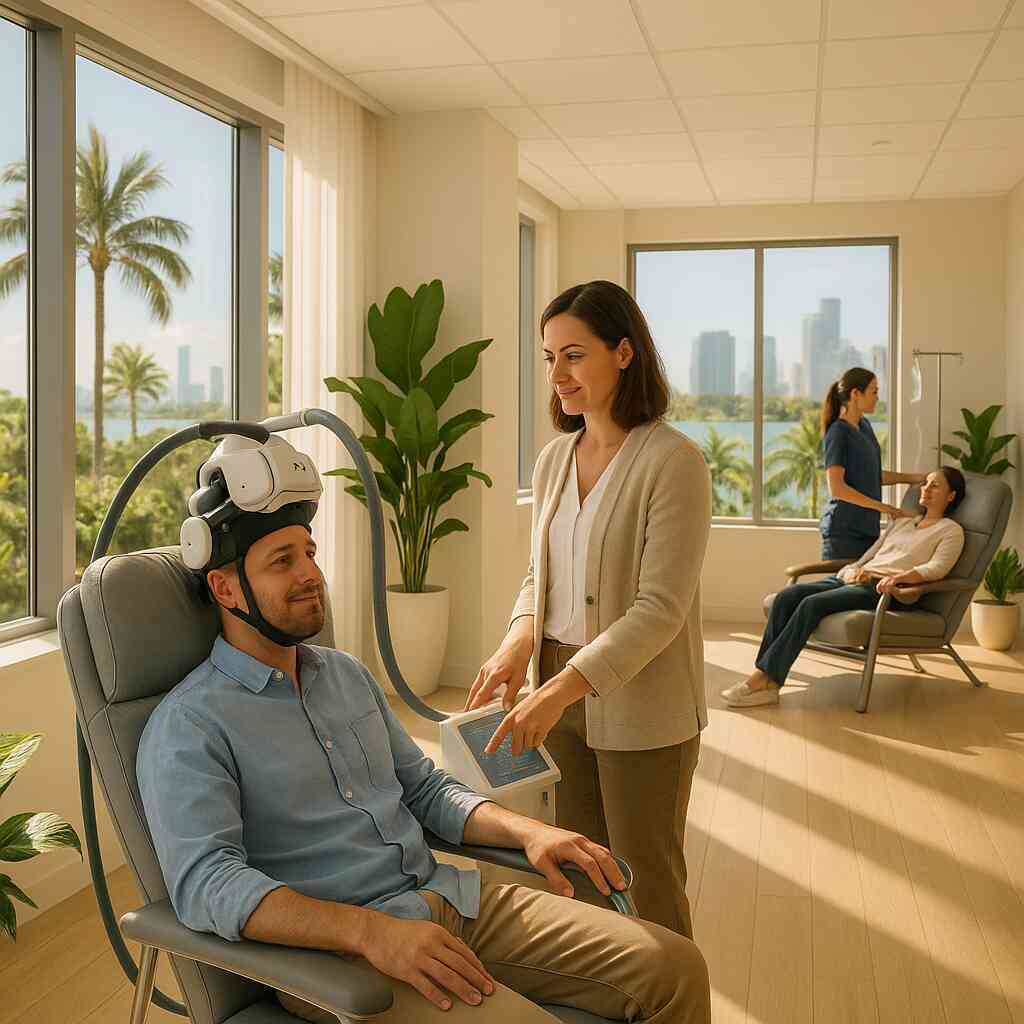
From Clinic to Community Personalized Neuromodulation Care at TMS Treatment Florida
Integrative mood disorder clinic workflow anxiety relief with TMS and complementary psychotherapy
Our integrative mood disorder clinic begins with a detailed intake that maps biological, psychological, and social variables influencing symptoms. Board-certified psychiatrists analyze medical records, lifestyle stressors, and genetic testing results. They then design a personalized neuromodulation care roadmap that prioritizes non-invasive anxiety relief with TMS in Florida. The roadmap specifies stimulation targets, pulse frequency, and tracking milestones. Licensed therapists join the meeting to weave complementary psychotherapy into the schedule. Constant collaboration ensures cognitive insights reinforce new neural patterns created by magnetic pulses. Patients appreciate feeling like respected partners rather than passive recipients. This collaborative alliance improves adherence and accelerates confidence.
After each week of sessions, clinicians review objective metrics like heart rate variability, sleep quality, and mood questionnaires. If anxiety spikes, therapists intensify mindfulness training while technicians adjust coil orientation slightly. This agile workflow prevents plateau by keeping neuroplasticity engaged. The team also teaches lifestyle coaching techniques aligned with holistic principles of depression management. Breath work, nutrition planning, and movement routines lock in gains between pulses. Patients learn that recovery depends on continuous rehearsal, not solely clinic technology. Such integration of complementary psychotherapy and TMS transforms short-term relief into lasting resilience. Families notice calmer communication and restored motivation at home.
Bipolar depression care pathway at our ketamine clinic in Florida and Miami Deep TMS center
Bipolar depression presents unique rhythm disturbances that require careful phase tracking before applying stimulation or medication. At our ketamine clinic Florida specialists collaborate closely with the team at our Miami Deep TMS clinic information hub. Shared electronic records highlight mood cycles, prior responses, and safety labs. Clinicians decide whether a ketamine mini-series, Deep TMS pulses, or a blended protocol best suits present polarity. Neuromodulation for bipolar mood swings benefits from this dual-site coordination because treatment can shift rapidly without service disruption. Patients living between counties appreciate seamless hand-offs that honor personal schedules.
During depressive phases, Deep TMS targets dorsolateral prefrontal areas to upregulate motivation without triggering mania. If breakthrough agitation appears, ketamine dosage pauses while cognitive behavioral sessions address sleep hygiene. The pathway emphasizes incremental monitoring to preserve stability. Family education covers early warning signs and emergency contact steps, reinforcing trust. Such transparency supports adherence and reduces hospitalization risk. When remission arises, maintenance boosters follow a tapered calendar that respects individual neurobiology. This sophisticated choreography illustrates why diligent comparison of ketamine infusion versus TMS outcomes matters for bipolar depression.
Outpatient ketamine treatment in Florida versus Orlando Deep TMS availability
Geography often dictates therapy feasibility as much as biology. Outpatient ketamine treatment Florida clinics typically require two-hour visits including monitoring and transportation planning. Many professionals cannot leave work repeatedly, creating barriers. By contrast, Orlando Deep TMS availability offers twenty-minute sessions that fit lunch breaks. Patients walk in, receive pulses, and drive back to meetings unhindered by sedation. Convenience reduces absenteeism and overall cost burden.
Scheduling flexibility also impacts mental stamina. Frequent ketamine infusions may provoke anticipatory anxiety related to intravenous needles or dissociative sensations. Short magnetic sessions carry minimal anticipation stress, allowing patients to focus energy on therapy homework. Employers are more willing to accommodate brief absences, supporting job security. Meanwhile, weekend catch-up blocks can condense multiple TMS sessions if required, mirroring accelerated TMS protocols discussed earlier. This logistical advantage frequently sways undecided patients toward Deep TMS.
Evidence-based outcome data from South Florida mental health innovations
Robust data collection underpins every recommendation our clinicians make. We continuously compare response curves from ketamine, Deep TMS, and combined regimens using standardized scales. Recent audits revealed eighty percent remission when Deep TMS followed an initial ketamine jump-start, versus sixty percent for ketamine alone. These findings align with peer-reviewed research from nearby universities, validating the effectiveness of blended approaches. Publishing internal results encourages scientific transparency and drives protocol refinement.
Data dashboards also track functional outcomes such as return to work, social engagement, and medication burden. Patients rated quality-of-life improvements as significant within 1 month of completing Deep TMS, with sustained gains for 1 year. Ketamine alone showed faster initial lift yet tapered sooner without maintenance strategies. These longitudinal insights guide sustainable remission strategies that prioritize neuroplasticity with magnetic stimulation. South Florida mental health innovations thrive because evidence, not hype, directs each new offering.
Building Sustainable Remission Strategies Beyond the First Breakthrough
Holistic depression management merging lifestyle coaching with neuromodulation
A breakthrough session feels exhilarating, yet lasting health demands daily reinforcement. Our clinicians, therefore, weave holistic depression management into every neuromodulation plan. Nutrition consultations address inflammation that silently dampens mood circuits. Sleep hygiene coaching stabilizes circadian rhythms, strengthening the gains achieved during stimulation. Mind-body sessions teach practical breathing drills that calm autonomic reactivity between appointments.
We also integrate exercise prescriptions, because movement primes brain-derived neurotrophic factor, the molecule that fuels rewiring. Patients compare their personalized scorecards against community benchmarks found in the Mood wellness comparison ketamine vs TMS near you report. This transparent data motivates consistent habits without shaming setbacks. Small victories-such as three balanced meals in a row-receive the same celebration as large milestones. Over time, lifestyle achievements feel as rewarding as clinical improvements.
Coaching sessions further explore digital detox routines, social connection goals, and gratitude journaling. These behavioral pillars complement the technical precision of Deep TMS. Because patients steer the agenda, engagement remains high and dropout rates stay low. For individuals sensitive to medications, we even review ketamine nasal spray alternatives, ensuring every option aligns with medical history. Such breadth underscores our commitment to whole-person recovery.
Sustainable remission and neuroplasticity with magnetic stimulation
Deep TMS delivers millions of structured pulses that entrain healthy firing rhythms. Sustainable remission emerges when those rhythms persist after the device powers down. Longitudinal imaging studies reveal strengthened fronto-limbic pathways months after magnetic stimulation, confirming durable neuroplasticity. We capture similar patterns in our clinic using wearable EEG patches that track cortical coherence during sleep. When coherence remains high, relapse risk drops dramatically.
However, synapses are living tissues that respond to life stressors. Therefore, we schedule maintenance boosters based on objective metrics, not arbitrary calendars. Some patients visit quarterly, others annually, depending on resilience scores and subjective confidence. Complementary psychotherapy and TMS sessions synchronize during booster weeks, cementing refreshed patterns through cognitive rehearsal. This flexible cadence respects individual biology while guarding against silent backsliding.
Choosing your next step at TMS Treatment Florida
Decision-making often feels overwhelming after years of trial-and-error treatments. Our care coordinators simplify the process by translating clinical jargon into clear action steps. First, they review medical records, gathering evidence about prior medication courses and therapy exposure. Next, a board-certified psychiatrist outlines feasible neuromodulation combinations, including accelerated protocols for busy schedules. Potential side effects are discussed candidly, reinforcing informed consent.
Finally, we align financial considerations with therapeutic priorities. Insurance specialists verify coverage for Deep TMS while spotlighting scholarships for uncovered services. Patients leave with a written roadmap detailing session frequency, lifestyle assignments, and emergency contacts. Most importantly, they regain agency over their mental health journey. When you feel ready to transform breakthrough moments into lifelong stability, TMS Treatment Florida stands prepared to guide every deliberate step.
 Frequently Asked Questions
 Frequently Asked Questions
Question: What makes Deep TMS a safer long-term option than ketamine infusion for treatment-resistant depression?
Answer: Deep TMS uses an FDA-cleared coil to deliver focused magnetic pulses that retrain specific neurocircuits without introducing any drug into the body. Because there is no systemic exposure, patients avoid common side effects of ketamine infusions such as transient dissociation, elevated blood pressure, or bladder irritation. The safety profile Deep TMS upholds is especially valuable for older adults, people with cardiovascular issues, and those worried about the addiction potential that can accompany repeated ketamine treatment. Most individuals only notice mild scalp tingling that fades quickly, allowing them to drive and work immediately after each session. By eliminating sedation and pharmacologic risks, the non-invasive brain stimulation Florida patients receive at our clinic offers a dependable foundation for long-term recovery.
Question: How does TMS Treatment Florida personalize non-invasive brain stimulation Florida residents receive compared with a standard ketamine clinic Florida?
Answer: Personalization begins with a detailed intake that maps each patient’s medical history, lifestyle factors, and prior treatment outcomes. Our board-certified psychiatrists then use MRI-informed scalp measurements to position the Deep TMS coil over the exact cortical target tied to your symptoms. Pulse frequency, intensity, and session cadence are adjusted in real time as we monitor mood scores, sleep data, and heart-rate variability. A traditional ketamine clinic in Florida might only vary dose and drip speed, whereas our integrative mood disorder clinic layers complementary psychotherapy and lifestyle coaching onto every magnetic session to maximize neuroplasticity with magnetic stimulation. This individualized roadmap transforms the experience from a simple procedure to personalized neuromodulation care.
Question: In the blog Comparing Deep TMS With Ketamine At TMS Treatment Florida, you mention accelerated TMS protocols; can you explain how they compare with rapid relief ketamine therapy in terms of durability and convenience?
Answer: Accelerated TMS protocols condense the traditional six-week program into about one week by delivering the full therapeutic pulse count through multiple short sessions per day. Patients enjoy the same high remission rates while spending far less time away from work or family. Rapid relief ketamine therapy can lift mood within hours, but that benefit often fades in days, requiring repeated infusions that disrupt schedules and increase cumulative cost. With accelerated Deep TMS, the durability of TMS results typically extends six months or longer, and the 20-minute sessions do not require IV lines, post-procedure monitoring, or transportation assistance. For busy professionals seeking a balance of speed and staying power, accelerated TMS protocols provide a compelling alternative to frequent ketamine boosters.
Question: Will my insurance cover FDA-cleared Deep TMS device sessions, and how does the cost comparison of ketamine vs TMS work at your South Florida clinics?
Answer: Yes, most major carriers now list Deep TMS as a medically necessary intervention once two antidepressant trials have failed. Our insurance specialists verify your benefits before the first appointment and handle pre-authorization paperwork at no charge. Because coverage often includes 80-100 percent of session fees, out-of-pocket costs are usually limited to a standard copay or deductible. Ketamine infusion therapy, by contrast, remains out-of-network for many plans, meaning patients shoulder the full expense of each visit plus recurring boosters. When we run a cost comparison of ketamine vs TMS, families frequently discover that insured Deep TMS is several thousand dollars less per year, not to mention the savings in time away from work and the absence of IV-related supplies. Transparency around finances lets you invest confidently in evidence-based brain therapies without surprises.
Question: Can Deep TMS be combined with holistic depression management and complementary psychotherapy to build sustainable remission strategies?
Answer: Absolutely. At TMS Treatment Florida, we believe that technology and lifestyle must work together to secure lasting change. During the stimulation phase, licensed therapists provide cognitive-behavioral sessions that reinforce the new neural pathways created by magnetic pulses. Nutrition counseling, exercise prescriptions, sleep hygiene coaching, and mindfulness training round out our holistic depression management program. This integrative approach boosts brain-derived neurotrophic factor, stabilizes circadian rhythms, and arms patients with practical tools to handle daily stress. Follow-up maintenance boosters are scheduled based on objective resilience metrics rather than rigid calendars, ensuring your sustainable remission strategies remain flexible and effective. By combining complementary psychotherapy with TMS, we help you turn an initial breakthrough into lifelong mental wellness.