What Does TMS Treatment Mean for OCD Recovery 2025
Igniting Neuroplastic Hope: Unlocking OCD Recovery with TMS Therapy
From drug-resistant loops to magnetic breakthroughs
Living with obsessive-compulsive disorder often feels like being trapped inside an endless feedback loop. Traditional medications sometimes plateau, leaving patients searching for drug-resistant OCD solutions that respect both brain chemistry and dignity. Today, clinicians leverage noninvasive magnetic stimulation for obsessive thoughts to interrupt those stubborn circuits. At our clinic, we guide patients toward cutting-edge TMS therapy for OCD recovery in Florida – a gentle, outpatient protocol that sparks renewed neuroplasticity while avoiding systemic side effects. These focused transcranial magnetic pulses and mental health strategies empower individuals who once believed relief was impossible.
Scientists now visualize maladaptive circuits quieting as pulses discharge across the cortical surface, almost like resetting a jammed computer. Repetitive bursts at prescribed frequencies coax the brain to carve healthier pathways, producing meaningful TMS therapy for OCD remission. Importantly, each stimulation session builds on the last, so progress accumulates rather than fades. Many Floridians report that intrusive images lose intensity first, then compulsive rituals shrink in frequency and urgency. Hope becomes tangible when brains relearn flexibility instead of remaining locked in fear-driven patterns.
Why Florida TMS clinic outcomes are redefining remission expectations
Florida’s diverse population gives clinicians rich data, allowing protocols to evolve quickly and responsibly. By monitoring functional connectivity reset across thousands of sessions, our experts refine coil positioning and session cadence with each case. These personalized TMS treatment plans translate into progressively higher remission rates, surpassing published national benchmarks. Patients with concurrent anxiety benefit, too, because evidence-based neuromodulation for anxiety and OCD dual treatment addresses shared mood circuitry modulation. As results spread through communities, stigma shrinks, and more families seek brain-focused care rather than relying solely on medication trials.
Outcome tracking also shows durable gains when maintenance TMS sessions reinforce newly forged pathways over months. That sustainable mental health strategy reduces relapse risk and lets patients focus on rebuilding careers, relationships, and hobbies. Families notice lighter moods, consistent sleep, and renewed motivation, confirming that neuroplasticity in OCD recovery extends far beyond symptom tallies. With each success story, our team deepens its commitment to compassionate OCD care that integrates science, empathy, and culturally sensitive support.
Rewiring Obsession: The Neuroscience Behind Transcranial Magnetic Pulses
Low-frequency right DLPFC modulation and functional connectivity reset
Neuroscientists now map obsessive circuits with millimeter precision, revealing hyper-synchrony between the right dorsolateral prefrontal cortex and deep striatal hubs. Low frequency right DLPFC stimulation applies an inhibitory rhythm, calming those overactive loops without drugs. Each magnetic burst induces tiny electrical shifts, encouraging neuroplasticity in OCD recovery while protecting healthy tissue. Clinicians witness intrusive thoughts slow, proving transcranial magnetic pulses and mental health science can cooperate gracefully. Because sessions occur while patients relax comfortably, noninvasive magnetic stimulation for obsessive thoughts respects autonomy and dignity.
Research teams track brainwave coherence before and after treatment, confirming a measurable functional connectivity reset that endures. These data guide ever more specialized TMS protocols for obsessive-compulsive disorder tailored to individual circuitry maps. Such precision transforms drug resistant OCD solutions into realistic goals, as inhibitory pulses extinguish maladaptive firing patterns. As pathways quiet, worry loops no longer hijack attention, opening space for mindfulness practices. Patients describe steadier moods, validating Florida TMS clinic outcomes published by regional universities.
High-frequency innovations in mood circuitry regulation
Where inhibition proves insufficient, clinicians pivot to excitatory, high frequency trains that energize underactive networks governing motivation. These rapid pulses enhance synaptic release of dopamine and glutamate, fostering resilience against compulsive withdrawal behaviors. High frequency TMS breakthroughs rely on sophisticated coil geometries that penetrate limbic structures while sparing scalp discomfort. By oscillating between inhibitory and excitatory schedules, personalized TMS treatment plans regulate both fear and reward circuits concurrently. Consequently, TMS therapy for OCD remission now approaches benchmarks once reserved for invasive surgeries.
Advanced algorithms continuously adjust duty cycles, ensuring mood circuitry modulation remains balanced throughout the course. When combined with digital mood diaries, providers catch subtle shifts early, refining stimulation parameters proactively. Functional imaging confirms strengthened prefrontal-striatal pathways correlating with renewed goal-directed behavior. This adaptive strategy exemplifies sustainable mental health strategies rooted in advanced psychiatric technologies rather than blanket medication. Many participants reclaim hobbies, demonstrating real-world neuroplastic gains instead of laboratory-only findings.
Evidence-based neuromodulation for anxiety and OCD dual treatment
Obsessions rarely travel alone; generalized anxiety often shadows every compulsive ritual. Evidence-based neuromodulation addresses both, targeting shared cortical nodes that broadcast alarm signals. Cross-diagnostic meta-analyses affirm that anxiety and OCD dual treatment benefits when stimulation modulates the salience network. Patients report reduced somatic tension alongside fewer checking behaviors, highlighting TMS versatility. Importantly, brain stimulation side effects remain minimal compared with polypharmacy piles.
Therapists integrate slow breathing drills between pulse trains, reinforcing autonomic calm while cortical plasticity peaks. This integrative rhythm accelerates rapid symptom relief techniques, shortening recovery timelines without sacrificing depth. Clinicians also monitor heart rate variability, ensuring parasympathetic gains mirror cognitive improvements. Such data strengthen the evidence base, encouraging insurers to broaden TMS insurance coverage Florida residents can access. Ultimately, evidence based neuromodulation empowers individuals to dismantle fear architecture and build thriving, balanced lives.
Tailored Magnetic Journeys: Designing Personalized TMS Treatment Plans
Noninvasive magnetic stimulation for obsessive thoughts
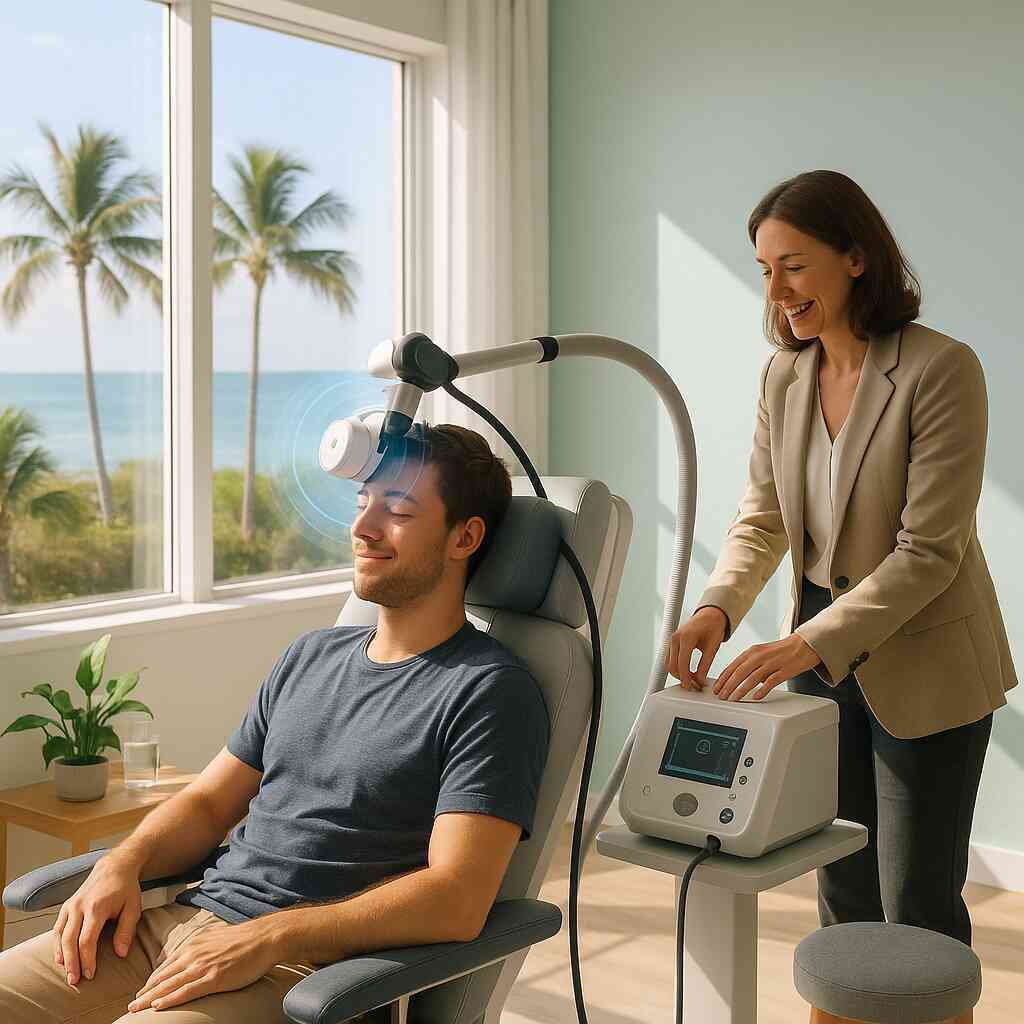
Your brain deserves care as unique as your fingerprint. Our clinicians begin every journey by listening to the precise rhythm of obsessive thoughts and compulsive urges. Noninvasive magnetic stimulation for obsessive thoughts offers a gentle first step, allowing patients to relax while targeted pulses quiet hyperactive circuits. Because no anesthesia or systemic medication is required, daily routines stay intact, reinforcing confidence from the very first appointment. As sessions build, patients notice intrusive images lose intensity, affirming that TMS therapy for OCD remission can emerge without sacrificing comfort or safety.
The transformation grows deeper when we pair stimulation with education. Each visit includes brief coaching on recognizing obsessive loops and celebrating small victories. These discussions reinforce neuroplasticity in OCD recovery because new learning strengthens freshly quieted pathways. Family members are invited to observe progress, turning previously private struggles into collaborative wins. Over time, this supportive atmosphere lowers stigma, motivating patients to stay committed through every magnetic milestone.
Data-driven targeting and neuroimaging-guided coil placement
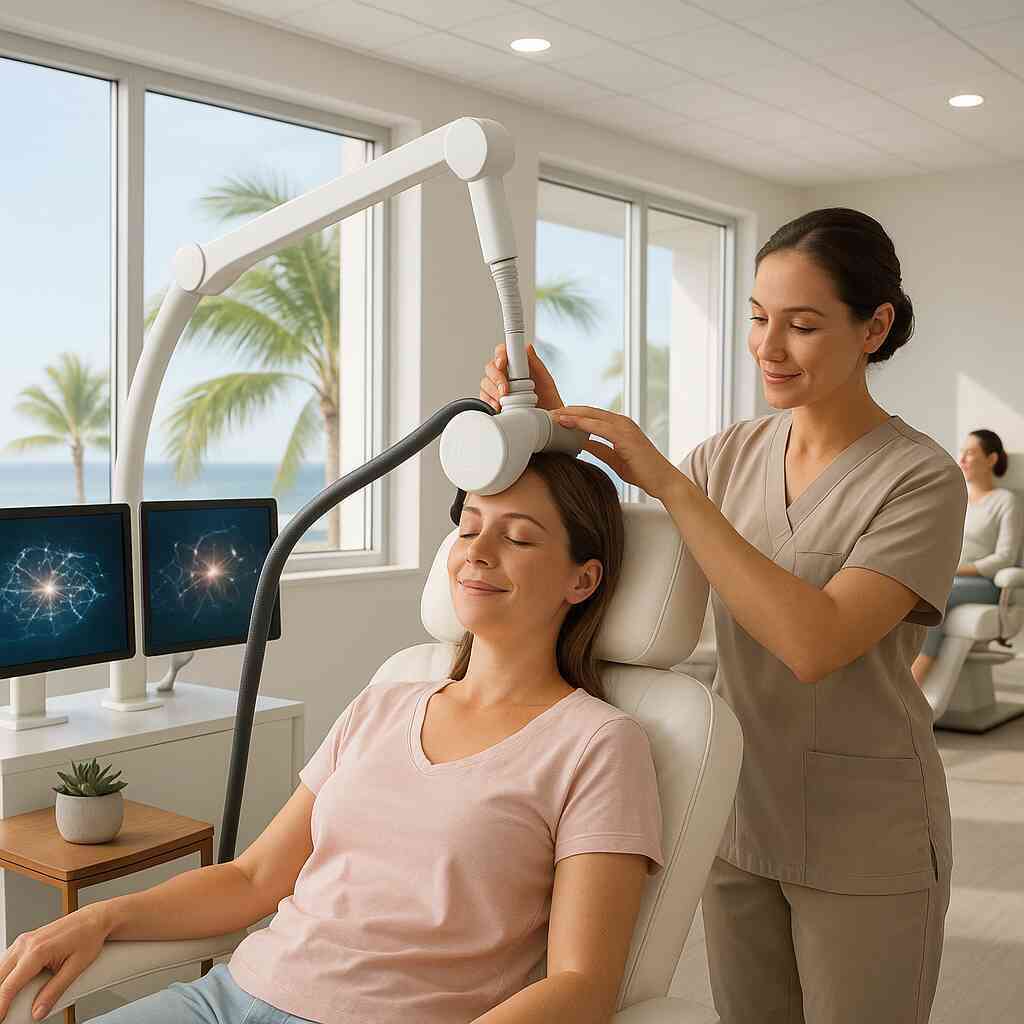
Precision drives outcomes. Before the first pulse, advanced neuroimaging maps each client’s cortical and subcortical activity, spotlighting hotspots of functional connectivity reset potential. Our software converts those maps into exact coil coordinates, guaranteeing stimulation lands where it matters most. Throughout treatment, the team tracks symptom scores alongside imaging data, adjusting positions by millimeters when new patterns emerge. This ongoing calibration transforms generalized protocols into personalized TMS treatment plans that evolve in real time.
Reliable metrics foster trust. Patients view color-coded brain scans that visualize progress, making abstract changes tangible. They also review numerical trends that show compulsions dropping in parallel with reduced network hyper-synchrony. Data driven decision-making demystifies psychiatry, turning each adjustment into a clear, evidence based step. When people see objective proof of improvement, motivation skyrockets, pushing momentum toward lasting mental freedom.
Maintenance TMS sessions and sustainable mental health strategies
Healing does not end when the final acute series finishes. Neural pathways, like muscles, grow stronger when exercised periodically. Maintenance TMS sessions occur at widening intervals, reinforcing circuit stability and preventing relapse. These brief touchpoints refresh the functional connectivity reset achieved earlier, ensuring gains remain durable during stressful seasons or life transitions. Patients liken the process to tuning an instrument: small adjustments keep harmony intact.
Sustainable mental health strategies extend beyond the magnet. Clinicians combine booster pulses with sleep hygiene coaching, nutritional guidance, and mindfulness practices. Such holistic reinforcement fosters resilience in frontal-striatal networks that govern willpower and flexibility. Over months, clients report stable emotions, steady sleep, and renewed enthusiasm for hobbies once abandoned. The result is a balanced, self-sustaining lifestyle rather than a sprint toward short-lived relief.
Navigating TMS insurance coverage in Florida
Financial clarity matters as much as clinical excellence. Our patient advocates decode complex policies, outlining deductible details and preauthorization timelines in plain language. Because every insurer evaluates neuromodulation differently, we prepare documentation that highlights peer-reviewed research, individual symptom severity, and prior medication trials. This comprehensive packet often accelerates approvals, allowing therapy to start without disruptive delays.
We also guide clients through supplemental funding sources when coverage falls short. Flexible payment plans, health savings accounts, and employer wellness stipends frequently bridge gaps. For families comparing treatment options, we provide a comprehensive neuromodulation services overview that outlines relative costs and expected outcomes. Transparency empowers informed choices, lowering stress before the first session begins. With financial obstacles minimized, patients can focus fully on reclaiming their lives through advanced, compassionate care.
Beyond Magnets Integrative Mental Wellness at TMS Treatment Florida
Adjunct ketamine therapy for compulsions
Obsessive loops sometimes cling even after several weeks of magnetic pulses, yet hope remains. Adjunct ketamine therapy for compulsions offers a biochemical reboot that primes stubborn circuits for change. Low-dose infusions briefly block NMDA receptors, creating a plasticity window that dovetails with ongoing TMS sessions. During this window, intrusive urges lose their urgency, allowing patients to practice new behavioral skills without overwhelming fear. Consequently, treatment teams witness faster gains and greater confidence.
Florida residents appreciate that ketamine treatment Florida protocols remain outpatient, comfortable, and closely monitored. Board-certified psychiatrists coordinate with each Ketamine clinic Florida partner to tailor dosage, frequency, and safety parameters. Clinicians track dissociative side effects in real time, ensuring every infusion feels predictable and empowering. When combined with personalized TMS treatment plans, the dual approach amplifies neuroplasticity in OCD recovery. Patients frequently report deeper calm within days, reinforcing commitment to continued care.
Ketamine depression treatment in Florida and synergy with TMS
A growing body of research confirms that ketamine depression treatment in Florida can accelerate mood stabilization while TMS refines cognitive control. Our practitioners provide a concise guide to TMS & ketamine synergy in Florida so families understand each step. The document explains pharmacodynamics, scheduling logistics, and insurance considerations using plain language. Armed with clarity, patients engage enthusiastically, knowing exactly how each modality supports the other. Clarity reduces anxiety and strengthens therapeutic alliance.
Moreover, ketamine therapy in Florida complements noninvasive magnetic stimulation for obsessive thoughts by targeting limbic glutamate surges. Ketamine in South Florida clinics often relieves depressive paralysis within hours, allowing individuals to reenter exposure exercises quickly. Meanwhile, TMS sessions continue mood circuitry modulation without drug interactions. Because the mechanisms differ, combined protocols minimize cross-tolerance while maximizing symptom relief. Together, they create a flexible toolkit for drug resistant OCD solutions.
Mindfulness-enhanced TMS protocols for rapid symptom relief
Technology alone cannot heal the whole person, therefore mindfulness with TMS protocol sessions bridge science and self-awareness. Guided breathing begins immediately after each pulse train, capitalizing on the brain’s heightened receptivity. Patients anchor attention to present sensations, teaching newly stabilized circuits healthier default settings. This deliberate pairing qualifies as one of our rapid symptom relief techniques because skills consolidate while neuroplasticity peaks. Over weeks, intrusive thoughts fade faster and self-regulation strengthens.
Clinicians also encourage brief body-scan practices at home, reinforcing clinic gains. These exercises further diminish brain stimulation side effects like mild scalp tension by promoting relaxation. Additionally, mood circuitry modulation improves when patients consciously shift focus from fear toward neutral stimuli. Progress is charted through digital diaries, giving real-time feedback to the care team. Transparent data empower precise adjustments and maintain momentum.
Holistic recovery journeys and compassionate OCD care
Healing requires community, purpose, and sustainable mental health strategies beyond the treatment room. Nutrition counseling, movement therapy, and sleep optimization all integrate seamlessly with advanced psychiatric technologies offered onsite. This holistic approach honors mind and body equally, ensuring gains remain resilient during life transitions. It also reinforces compassionate OCD care by acknowledging every dimension of the human experience. Patients feel seen, respected, and motivated.
Florida TMS clinic outcomes continue to improve because every program flexes to individual cultures, values, and schedules. Teams incorporate family education, workplace advocacy, and creative arts whenever useful. Such breadth nurtures long-term resilience and reduces relapse risk. As personalized TMS treatment plans evolve, clients celebrate milestones once deemed unreachable. Hope becomes lifestyle instead of goal.
Charting the Path Forward: Embracing Advanced Psychiatric Technologies
From neuroplasticity to real-world resilience
Neuroplasticity in OCD recovery is no longer theory; it now guides every decision clinicians make. When magnetic pulses reshape cortical maps, functional connectivity reset cascades through entire cognitive networks. These shifts translate into practical freedom, confirming that advanced psychiatric technologies truly transform lived experience. Patient centered therapy Florida residents trust blends evidence based neuromodulation with lifestyle coaching for sustainable mental health strategies. Maintenance TMS sessions reinforce gains, ensuring compassionate OCD care persists long after initial relief appears. Because each boost revisits strengthened circuits, relapse rates decrease while confidence steadily increases. The result is a resilient outlook that follows patients into workplaces, relationships, and creative pursuits.
Bridging laboratory insight and daily life requires thoughtful planning. Therapists teach rapid symptom relief techniques that dovetail with mindfulness with TMS protocol sessions. This integration minimizes brain stimulation side effects while expanding self-regulation skills. Clients practice breathing drills during commutes, replacing intrusive loops with calm sensory awareness. Such holistic recovery journeys cultivate autonomy, a hallmark of truly sustainable progress.
The promise of future high-frequency TMS breakthroughs
High frequency TMS breakthroughs focus on energizing networks that govern motivation, reward, and cognitive flexibility. Florida TMS clinic outcomes already demonstrate sharper attention and brighter mood after precisely timed stimulation trains. Researchers predict exponential improvements as coil geometry evolves and algorithms personalize burst patterns. Clinicians study findings from future innovations in high-frequency TMS at Florida clinics to refine protocols continuously. Data show improved mood circuitry modulation without increasing session length or discomfort.
Even with exciting technology, some circuits remain stubborn, especially in drug resistant OCD solutions. Adjunct ketamine therapy for compulsions offers a chemical catalyst, priming synapses for deeper change. Our network collaborates with Ketamine clinic Florida partners to deliver careful Ketamine treatment Florida residents can trust. Options include Ketamine therapy in Florida infusions and Ketamine depression treatment in Florida booster sessions. When combined with noninvasive magnetic stimulation for obsessive thoughts, patients experience faster relief and expanded hope.
Frequently Asked Questions
Question: How does TMS therapy for OCD remission at TMS Treatment Florida outperform traditional medication for people seeking drug-resistant OCD solutions?
Answer: Traditional medications work system-wide and often bring unwanted side effects or plateauing results. Our noninvasive magnetic stimulation for obsessive thoughts delivers focused transcranial magnetic pulses directly to overactive cortical loops, producing a functional connectivity reset without affecting the rest of the body. Florida TMS clinic outcomes demonstrate higher remission rates and faster relief, as we can fine-tune the coil position, frequency, and intensity in real-time. This precision sparks neuroplasticity in OCD recovery and allows most patients to drive themselves home after each session-something pills alone can’t provide.
Question: What can I expect from a personalized TMS treatment plan, and are there any potential side effects from brain stimulation to be concerned about?
Answer: Your journey starts with advanced neuroimaging that maps your unique circuitry. We then craft personalized TMS treatment plans that may include low frequency right DLPFC stimulation to quiet intrusive loops or high frequency TMS breakthroughs to energize underactive mood networks. Sessions last about 20 minutes, five days a week, for six weeks. Most people experience only a gentle tapping sensation on the scalp; temporary scalp tingling or mild fatigue are the most common side effects of brain stimulation and usually subside within minutes. Maintenance TMS sessions are scheduled later to solidify gains, ensuring sustainable mental health strategies well into the future.
Question: In your blog What Does TMS Treatment Mean for OCD Recovery 2025, you mention that low-frequency proper DLPFC stimulation exactly does it trigger a functional connectivity reset?
Answer: Obsessive loops are driven by hyper-synchrony between the dorsolateral prefrontal cortex and deeper striatal hubs. By applying low-frequency pulses to the right DLPFC, we temporarily inhibit that overactivity, giving the brain a chance to rewire. The result is a measurable functional connectivity reset confirmed by before-and-after imaging. Patients report fewer intrusive thoughts, and our data demonstrate meaningful mood circuitry modulation after just a few weeks.
Question: Can adjunct ketamine therapy for compulsions be combined with TMS to accelerate recovery, and is it available in South Florida?
Answer: Absolutely. Adjunct ketamine therapy for compulsions offers a rapid biochemical reset that pairs beautifully with TMS. Low-dose infusions at our Ketamine clinic, Florida, partners open a neuroplasticity window, allowing TMS pulses to cement healthier pathways more quickly. We coordinate scheduling so ketamine therapy in Florida does not overlap with stimulation sessions on the same day, minimizing side effects and maximizing synergy. Many patients in Ketamine treatment Florida programs see dramatic relief within days, then maintain progress through ongoing TMS.
Question: Will my insurance cover maintenance TMS sessions and integrative care such as anxiety and OCD dual treatment?
Answer: Most major insurers now recognize evidence-based neuromodulation as a frontline option, especially when medication trials have failed. Our advocates handle all TMS insurance coverage Florida paperwork, citing published Florida TMS clinic outcomes and your documented treatment history. While acute treatment is often approved first, we submit progress data to justify maintenance TMS sessions that protect your gains. If coverage gaps remain, we offer flexible payment plans so compassionate OCD care stays accessible.