When flashbacks keep winning: why TMS is worth asking about for PTSD
Summer can make PTSD feel louder in Florida. The heat hangs in the air, sleep gets lighter, and sudden storms can jolt your nervous system throughout the day. If you are reading this because you feel stuck in the same loop, that dread makes sense. We hear that from people who have tried therapy, medication, and “just giving it more time.” Sometimes that advice feels thin.
What makes TMS treatment in Florida for PTSD worth asking about is simple: it does not ask you to relive everything in the room. Instead, transcranial magnetic stimulation therapy uses magnetic pulses on specific brain regions tied to mood and fear processing. That difference matters when you feel exhausted by side effects, numbness, or the long wait for relief. Many readers first hear about it after they have already tried several medications.
Why summer stress can make PTSD symptoms feel louder in Florida
Florida summer brings its own strain. Air conditioning hums, thunderstorms roll in fast, and seasonal visitors can make schedules messy. For someone with PTSD, that extra unpredictability can keep the body on alert. Sleep can break apart. Startle responses can rise. Even small triggers can feel oversized.
One client near Delray Beach described it this way: “My body never got the memo that I was safe.” That sentence stays with us because it captures the whole problem. PTSD is not only about memory. It is also about the nervous system staying stuck in protection mode. That is why people often search for TMS for PTSD in Florida when they want something beyond another prescription.
What makes transcranial magnetic stimulation therapy feel different from talk therapy or meds
Talk therapy can be powerful, and it still helps many people. Medication can also help, especially when symptoms involve depression, anxiety, or panic. But some people feel foggy, flat, or emotionally blunted on medication. Others do the work in therapy and still wake up with pounding dread. That is where non-invasive brain stimulation becomes interesting.
Here is the part most people miss: TMS does not replace support, and it does not force a dramatic change overnight. It offers a different route. The treatment targets brain circuits linked to regulation, not just thoughts. If you have struggled with medication resistant depression, the search for something else can feel deeply personal, not theoretical. In that setting, non-invasive brain stimulation for depression and PTSD can feel like a reasonable next question.
Where TMS for PTSD Florida fits when sleep, mood, and triggers all stay tangled
PTSD rarely arrives alone. Sleep, mood, irritability, and hypervigilance often tangle together. Add grief, workplace pressure, or substance use, and the picture becomes even more complicated. That is why a good Florida mental health clinic should look at the whole pattern, not just one symptom list. A thoughtful TMS psychiatrist Florida team will ask what changed, what worsens symptoms, and what has helped even a little.
The readers who contact us most often are not looking for hype. They are looking for fit. They want to know if TMS treatment Florida could help when the usual road has already been hard. That may include people searching for TMS depression treatment Florida, TMS for anxiety, or support after TMS after failed medications. For some, the answer may also involve therapy pairing, sleep repair, or trauma care alongside treatment.
The brain signals behind PTSD and why repetitive TMS gets attention
PTSD affects more than memory. It changes how the brain predicts danger. Fear circuits can stay overactive, while regulatory circuits may not calm them well. That is one reason repetitive TMS has drawn attention. It aims at those loops without medication, which matters for people tired of drug side effects or limited response.
In plain terms, magnetic brain therapy tries to nudge activity in targeted brain regions. It does not erase trauma. It may help the brain respond differently to stress cues. That idea sounds small, but for some people, small shifts matter a lot. Better sleep, less panic, and fewer shutdown days can change daily life.
How magnetic brain therapy aims at stuck fear loops without using medicine
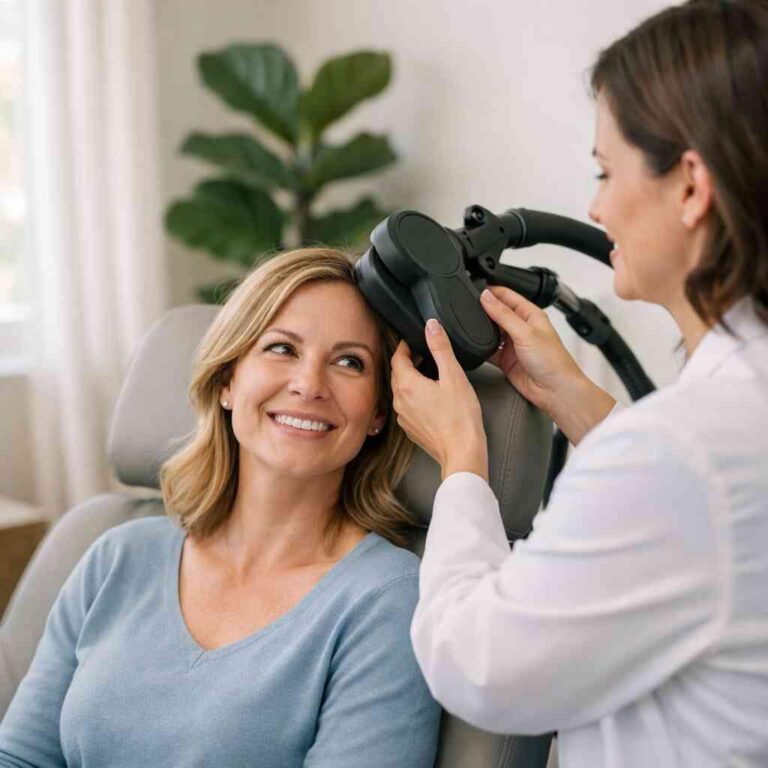
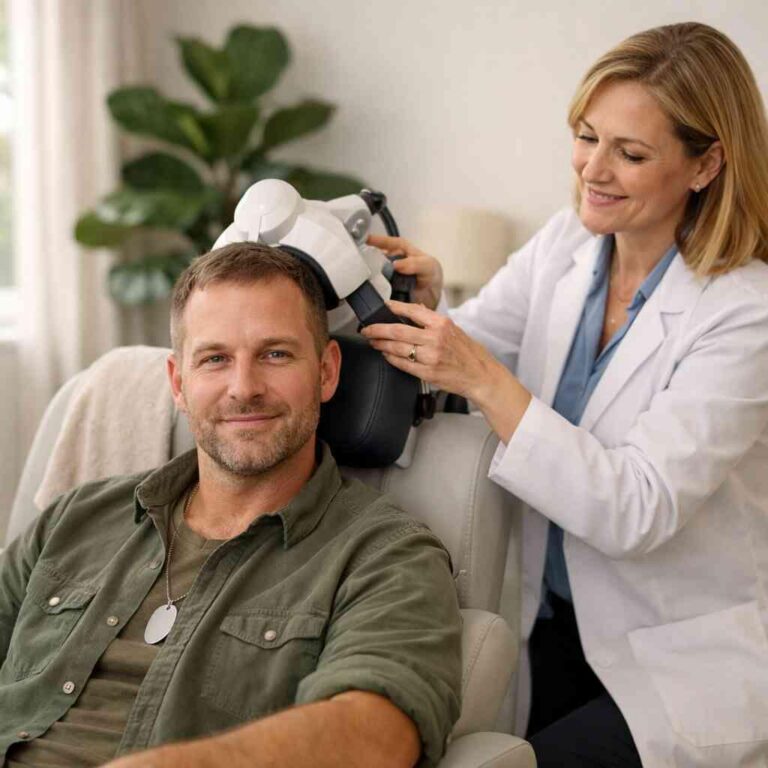
TMS uses a coil placed near the scalp. The coil sends magnetic pulses through the skull to influence neural activity. That is the basic answer to how does TMS work. It is a form of neurostimulation, and it does not require anesthesia or surgery. People usually remain awake and can talk before and after sessions.
The newer PTSD conversation often includes deep TMS therapy as well as other protocols. Deep TMS can reach broader networks, depending on the device and treatment plan. Still, not every patient needs the same approach. Some clinics may consider symptom profile, history, and location before recommending a protocol. If you are also dealing with fear spikes and mood crashes, that conversation becomes even more relevant.
Why non-invasive brain stimulation is getting more attention for medication resistant depression and trauma-related symptoms
The evidence base for TMS is strongest in depression. The 2018 Stanford study and earlier clinical work helped push the field forward, especially for hard-to-treat symptoms. For many clinics, FDA-approved depression treatment means TMS is already established as a serious option for mood disorders. That does not prove it is right for every PTSD case, but it explains the growing interest.
If you have tried several medications and still feel stuck, you may fit the profile people call non-drug depression treatment or alternative depression treatment. In Florida, that often matters for people balancing work, family, and insurance limits. It also matters for people considering TMS for bipolar depression, TMS OCD therapy, or even TMS addiction recovery in a dual-diagnosis setting. The treatment question often becomes less about labels and more about what the brain has not responded to yet.
What current transcranial magnetic stimulation research suggests about PTSD, anxiety, and comorbid depression
Current transcranial magnetic stimulation research keeps expanding. Studies suggest TMS may help some people with PTSD symptoms, especially when depression and anxiety sit alongside trauma. Research also continues into craving reduction, including work from centers such as the Medical University of South Carolina. That matters for people with TMS for substance use disorder, alcohol addiction brain stimulation, or TMS for smoking cessation needs.
The strongest message from the literature is cautious optimism. TMS is not a cure-all. It is a serious tool with a growing evidence base. The Clinical TMS Society consensus review and APA practice guidelines give clinicians a framework for responsible use. That is the right kind of signal when you are deciding between marketing and medicine.
What a Florida TMS clinic actually looks for before treatment starts
A careful clinic does not jump straight to a protocol. It starts with a full picture. PTSD symptoms can overlap with depression, panic, OCD, bipolar depression, ADHD, and substance use. If those pieces are mixed together, treatment planning gets messy fast. That is why a Florida behavioral health team should slow down and sort the details first. At a solid Florida mental health clinic, the goal is not just to check a box. It is to understand what problem is driving the most suffering. That may mean reviewing trauma history, sleep, medications, and substance use patterns. It may also mean looking at safety risks, especially if depression feels heavy. In Florida, outpatient clinics should also align with AHCA expectations for licensing and care standards. ### How a careful evaluation sorts out PTSD, depression, anxiety, OCD, bipolar depression, and substance use disorder 
PTSD often rides with other conditions. You may have intrusive memories and also TMS for anxiety needs. You may have trauma and repetitive thoughts that point toward TMS OCD therapy. You may also have mood swings, which changes the conversation toward TMS for bipolar depression. If cravings or relapse are part of the picture, then TMS addiction recovery and dual diagnosis treatment Florida become part of the assessment.
The best clinics in South Florida, including a TMS clinic Miami, TMS Fort Lauderdale, or TMS West Palm Beach, should ask careful questions. They should also think about where you live and how often you can travel. That matters for people commuting from Aventura, Coral Gables, Boca Raton, or Winter Park. Convenience can shape follow-through more than people expect.
Why PHQ-9, MADRS, and symptom history matter before anyone talks about a protocol
Good care uses numbers and stories together. Tools like the PHQ-9 and MADRS help track depression severity before and during treatment. They do not replace your lived experience. They give the team a shared language for change. That matters when you want to know if treatment is helping or simply filling time.
Symptom history also matters. Have medications failed? Did one drug help briefly and then stop? Did side effects make you quit? Those details guide whether TMS after failed medications makes sense. They also help the team discuss TMS therapy success rate honestly, without promising more than the evidence supports. A good clinic should be clear about uncertainty. That honesty builds trust.
How TMS psychiatrist Florida teams think through TMS after failed medications, TMS and EMDR combination, and dual diagnosis treatment Florida
A thoughtful psychiatrist may consider TMS alongside other care. If you are already doing trauma therapy, TMS and EMDR combination may come up as a practical idea, though timing matters. Some people do TMS first to lower symptom intensity. Others use EMDR once sleep and panic are less overwhelming. There is no single script.
One patient from Broward County described feeling “stuck behind glass” after three failed antidepressants. The clinic’s task was not to sell hope. It was to map risk, medications, sleep, and trauma triggers, then decide if TMS was a fit. That kind of review is especially important in dual diagnosis treatment Florida, where substance use, mood symptoms, and trauma can feed each other.
Why the next decision is less about hype and more about fit
The next decision should be practical. You want to know if TMS matches your symptoms, your schedule, and your budget. You also want to know what the clinic actually does when things do not go smoothly. That is why comparing sites, not slogans, matters. A polished landing page can hide a weak process.
Some people search TMS near me Florida because they need a location fast. Others are comparing a luxury TMS center with a smaller Florida behavioral health practice. Either way, you should ask how they measure progress, how they handle side effects, and whether they coordinate with your therapist or prescriber. A good answer sounds calm and specific, not vague or salesy.
QuestionWhat a careful clinic should explainHow do you track progress?PHQ-9, MADRS, symptom review, and session notesWhat do you do if symptoms shift?Adjust the plan, reassess the diagnosis, and coordinate careHow do you handle travel or work schedules?Flexible timing and realistic attendance planningWhat if I also have PTSD, OCD, or addiction concerns?Integrated screening and referral when needed### When TMS treatment Florida may make sense as an alternative depression treatment or non-drug depression treatment
TMS may make sense when depression has not improved with standard treatment. That is especially true for medication resistant depression or repeated relapse after antidepressants. It may also appeal if you want a non-drug depression treatment because of side effects, pregnancy planning, or personal preference. In some cases, it also becomes part of care for TMS for teen depression or TMS for young adults, though evaluation standards must stay careful.
If you live in TMS South Florida, or you are comparing TMS Orlando and TMS Tampa, access matters. So does follow-up. Florida’s seasonal resident pattern can make continuity tricky, especially in snowbird months. A clinic should be able to explain how they manage that reality without overpromising convenience.
What patients usually need to know about TMS insurance coverage Florida, TMS cost Florida, and does insurance cover TMS in Florida
Insurance questions come up fast. People want to know does insurance cover TMS in Florida, and they should ask early. Coverage often depends on diagnosis, prior treatment history, and payer rules. That is why TMS insurance coverage Florida deserves a real benefits check, not a guess. If a clinic will not help with verification, that is a warning sign.
Cost can vary by protocol, location, and coverage status. So can the number of sessions. Be wary of anyone giving exact numbers before they review your situation. When people ask about TMS cost Florida, the best answer is usually a range plus the factors that move it. If you are comparing a best TMS clinic Florida candidate with another office, ask for a written summary.
How to compare TMS clinic Miami, TMS Fort Lauderdale, TMS West Palm Beach, TMS Orlando, and TMS Tampa without getting lost in marketing noise
Location should feel workable, not impressive. A TMS clinic Miami may suit one person who works near Brickell. TMS Fort Lauderdale may fit another who needs access from Broward. TMS West Palm Beach can be easier for northern Palm Beach County. TMS Orlando and TMS Tampa matter for central and west coast patients. The goal is consistent attendance, not the fanciest lobby.
Try this quick filter:
- Ask how they confirm the diagnosis.
- Ask what outcomes they track.
- Ask who oversees treatment decisions.
- Ask how they handle TMS side effects safety.
- Ask whether they provide maintenance planning.
What to ask about TMS side effects safety, maintenance therapy, and long-term results before choosing a Florida mental health clinic
TMS is generally well tolerated, but you should still ask about safety. Headache, scalp discomfort, and fatigue can happen. Serious risks are uncommon, but they should be discussed clearly. A clinic that avoids the topic is not helping you. You deserve plain language about TMS side effects safety.
You should also ask about TMS maintenance therapy and TMS long-term results. Some people do well after a course and need only monitoring. Others need booster sessions later. That is normal. For readers who have cycled through relapse, that honesty matters more than polished optimism. If you want to explore TMS insurance coverage in Florida or review TMS side effects and safety in Florida, use those questions to guide the conversation.
You do not have to solve everything today. Start by checking one clinic, one insurance benefit, and one treatment philosophy. If you are near South Florida, review the closest TMS clinic locations in South Florida and ask for a careful evaluation. If the fit feels respectful and clear, that is a strong sign.
Frequently Asked Questions
Question: Why TMS Treatment Florida is considered for PTSD in Summer 2026, and how does TMS work for people dealing with trauma symptoms?
Answer: TMS Treatment Florida is considered by many people exploring PTSD treatment options in Florida because transcranial magnetic stimulation therapy offers a non-invasive brain stimulation approach that does not require surgery or anesthesia. In simple terms, how does TMS work? It uses magnetic pulses to target specific brain regions involved in mood regulation, fear processing, and stress response. For people who feel worn down by flashbacks, hypervigilance, sleep disruption, or medication side effects, that can make TMS for PTSD Florida an appealing conversation to have with a qualified TMS psychiatrist Florida. While TMS is best established as an FDA-approved depression treatment, current transcranial magnetic stimulation research continues to explore its role in PTSD, especially when symptoms overlap with medication resistant depression, anxiety, or panic. A compassionate Florida mental health clinic should explain what is known, what is still being studied, and whether TMS after failed medications may be a reasonable next step for your situation.
Question: What should I expect during an evaluation at a Florida mental health clinic for TMS depression treatment Florida if I also have TMS for anxiety, OCD, or bipolar symptoms?
Answer: A thoughtful Florida behavioral health team will not treat PTSD in isolation. Before starting TMS depression treatment Florida, they should review your symptoms, medication history, sleep patterns, trauma background, and any concerns related to TMS for anxiety, TMS OCD therapy, or TMS for bipolar depression. This is important because many people seeking TMS treatment Florida have more than one diagnosis or are working through dual diagnosis treatment Florida needs, including substance use concerns. A careful evaluation may also include depression screening tools and a discussion of whether repetitive TMS or deep TMS therapy may be the better fit based on your history and goals. The purpose is not to rush you into treatment, but to determine whether transcranial magnetic stimulation therapy is appropriate and whether your care plan should also include psychotherapy, medication management, or addiction rehab Florida support.
Question: Is TMS a non-drug depression treatment option if I have medication resistant depression and PTSD symptoms together?
Answer: Yes, that is one of the main reasons people ask about TMS treatment Florida. When someone has medication resistant depression along with PTSD symptoms, they may be looking for a non-drug depression treatment that feels different from trying yet another prescription. Transcranial magnetic stimulation therapy is a form of magnetic brain therapy that aims to stimulate brain circuits tied to mood and regulation without relying on daily medication. That does not mean it is a guaranteed fix, and it should never be presented that way. But for people who have not responded well to medication or who want an alternative depression treatment, TMS can be worth discussing. In some cases, clinics may also talk about TMS and EMDR combination planning, especially if trauma processing is part of the broader care approach. The best TMS clinic Florida options will be transparent about what TMS can and cannot do, and they should never promise specific outcomes or TMS therapy success rate numbers without individualized evaluation.
Question: What should I ask about TMS side effects safety, TMS maintenance therapy, and long-term results before choosing a clinic?
Answer: You should ask any Florida mental health clinic clear questions about TMS side effects safety, how they monitor progress, and whether they offer TMS maintenance therapy if symptoms return later. TMS is generally considered well tolerated, but side effects such as headache, scalp discomfort, or fatigue can happen, so it is important to understand what to expect and how the clinic responds if you feel unwell. It is also reasonable to ask about TMS long-term results, but the answer should be honest and individualized rather than promotional. A strong clinic will explain that some people do well after a treatment course and only need monitoring, while others may benefit from booster sessions. If you are comparing TMS reviews Florida, look for signs that the clinic communicates clearly, tracks progress with tools like PHQ-9 or MADRS, and coordinates with your therapist or prescriber. That level of care is more important than marketing language.
Question: How do TMS insurance coverage Florida and TMS cost Florida usually work for people looking for TMS near me Florida in South Florida, Orlando, or Tampa?
Answer: People often start with TMS near me Florida because access and consistency matter. Whether you are considering a TMS clinic Miami, TMS Fort Lauderdale, TMS West Palm Beach, TMS Orlando, or TMS Tampa, the clinic should help you understand your benefits before treatment starts. TMS insurance coverage Florida can depend on diagnosis, prior medication history, and your specific plan rules, so the safest answer to does insurance cover TMS in Florida is that it varies and must be verified. The same is true for TMS cost Florida, which can differ based on protocol, location, and coverage. A trustworthy clinic will not guess or give you pressure-based pricing. Instead, they should offer a benefits check, explain what documentation may be needed, and help you compare options in a way that respects both your health and your budget. If you are looking for the best TMS clinic Florida for your needs, clarity about cost and coverage is a sign of professionalism.
Question: Can TMS Treatment Florida help people with addiction recovery, smoking cessation, or dual diagnosis treatment Florida needs too?
Answer: In some cases, TMS may be part of a broader care conversation for people dealing with addiction recovery, TMS for substance use disorder, alcohol addiction brain stimulation, or TMS for smoking cessation concerns. That said, it is important to be careful and accurate: TMS is not a cure for addiction, and a clinic should not claim that it is. What it can do is fit into a larger plan when trauma, mood symptoms, cravings, and relapse risk all overlap. This is where dual diagnosis treatment Florida becomes important. A responsible Florida behavioral health team will screen for substance use, coordinate with addiction rehab Florida providers when needed, and help you understand whether transcranial magnetic stimulation therapy belongs in your overall treatment plan. For some people, treating depression and anxiety more effectively may also make it easier to engage in recovery work. That is why a compassionate, individualized assessment matters more than a one-size-fits-all promise.