Awakening to a Brighter Tomorrow in South Florida Depression Care
The Unseen Horizon of Non-Invasive Healing
A quiet transformation is unfolding within South Florida’s mental health landscape. People who have struggled with persistent depression now find hope beyond traditional pills and talk therapy alone. Advanced brain stimulation methods are opening doors that once seemed permanently closed. Non-invasive approaches offer a new kind of freedom from debilitating symptoms. This shift is not theoretical; it is tangible, measurable, and growing every day across communities from Miami to Palm Beach. Patients who once felt trapped in cycles of despair are rediscovering joy and purpose. The horizon of healing now extends far beyond what conventional care could promise.
Clinical innovation has finally caught up with the urgent need for safer depression treatments. Many individuals cannot tolerate medication side effects or find only partial relief from pharmaceuticals. Psychotherapy helps some, yet leaves others still battling anhedonia and fatigue. Against this backdrop, brain stimulation represents a welcome departure from systemic medication. It directly targets neural circuits without flooding the entire body with chemicals. Patients report feeling more like themselves again. The gentleness of the procedure belies its profound impact. Hope is rekindled daily in quiet treatment rooms. This unseen horizon is reshaping what recovery looks like in South Florida.
The region’s diverse population demands care models that are both effective and adaptable. A non-invasive depression treatment that respects each person’s unique biology has become essential. Instead of a one-size-fits-all pill, clinics now assess brain function and customize protocols. The result is a deeply personalized healing journey. People from all walks of life are finding relief without lengthy hospital stays or invasive procedures. This new frontier of neurostimulation respects the brain’s innate capacity to heal. It offers a refuge for those who believed nothing would ever work. The unseen horizon has become a real destination for wellness.
Why This Era Marks a Pivotal Shift in Mental Wellness
A convergence of research, technology, and clinical experience is redefining depression care. Refined stimulation parameters now produce more reliable outcomes than earlier protocols. Physicians better understand which patients are most likely to respond. These insights have turbocharged remission rates across the country, especially in South Florida clinics. As awareness grows, fewer people languish on ineffective medication cycles. They are instead guided toward targeted brain circuit modulation. This era is dismantling old assumptions about treatment-resistant depression. What was once considered chronic can now be reversed. The mental wellness paradigm is pivoting toward lasting brain health.
Public perception of neurostimulation has evolved dramatically in recent years. Where skepticism once prevailed, curiosity and acceptance now flourish. Patients exchange success stories that demystify the technology. Primary care providers increasingly recommend TMS as a core option. The stigma attached to brain-based interventions is melting away. This cultural shift accelerates access and encourages earlier intervention. Individuals no longer need to reach rock bottom before exploring advanced therapies. A pivotal change is underway, driven by evidence and human experience. Mental health care is finally aligning with modern neuroscience.
The shift also reflects a broader rejection of purely symptom-suppressing treatments. People want recovery that restores vitality, creativity, and emotional range. Cutting-edge neurostimulation treatment results demonstrate that deep healing is achievable. Outcomes are tracked with validated scales, showing meaningful gains. Clinics in South Florida are publishing real-world data that rival or exceed clinical trial findings. This transparency builds trust and informs treatment decisions. A new standard is emerging, one that champions complete remission. The era of partial relief and chronic management is giving way to transformative recovery.
Setting the Stage for Transformative Brain Stimulation Outcomes
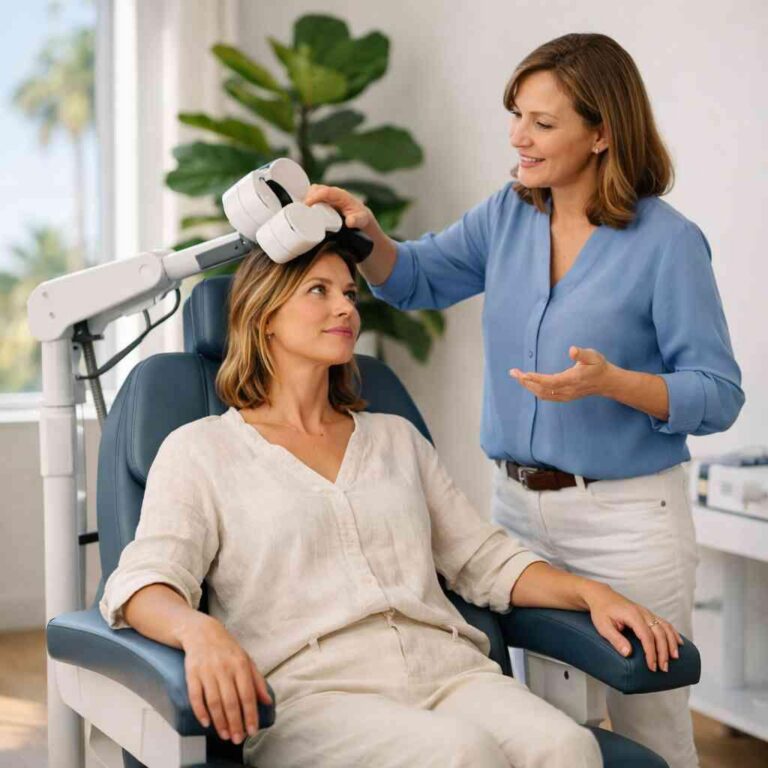
Creating the right environment for brain stimulation success involves meticulous preparation. A thorough psychiatric evaluation establishes baseline severity and treatment history. Advanced imaging and symptom mapping guide precise coil placement. Patients receive clear education about what to expect during sessions. This foundation of understanding reduces anxiety and enhances engagement. The treatment course is structured yet flexible, adapting to individual progress. Clinicians monitor mood inventories weekly to track response trajectories. Every detail, from chair comfort to ambient lighting, contributes to a healing atmosphere. South Florida clinics have honed this therapeutic setting to optimize outcomes. The stage is set for remarkable transformations.
Technology and human compassion must intertwine for the best results. State-of-the-art devices deliver controlled magnetic pulses to dormant neural networks. Meanwhile, caring technicians build rapport and offer encouragement throughout the course. Patients often describe the experience as meditative rather than clinical. Consistency of sessions builds momentum toward neuroplastic change. The cumulative effect of daily stimulation reawakens underactive mood circuits. This synergy between advanced equipment and empathetic care yields impressive TMS success rates for depression in South Florida. The entire process feels safe, dignified, and empowering. Such a supportive framework hastens the journey toward remission.
Expectations are aligned with data, yet room is left for individual variability. Not everyone responds at the same pace or to the same degree. Honest conversations about statistical likelihood and personal factors are essential. Clinics emphasize that even partial responders often see life-changing improvements. Mild adjustments in stimulation intensity or target location can tip the balance. Brain stimulation therapy efficacy depends on iterative refinement, not a rigid formula. South Florida providers therefore remain nimble and observant. They treat each brain as a unique landscape. This philosophy sets the stage for outcomes that defy historical treatment ceilings.
The Neurobiological Drivers of Transcranial Magnetic Stimulation Success
How Repetitive Transcranial Magnetic Stimulation Reshapes Depressed Brains
Depression carves deep ruts into neural circuitry, but repetitive transcranial magnetic stimulation gradually smooths them. The technique delivers rhythmic magnetic pulses that induce electrical currents in targeted brain regions. These currents nudge sluggish neurons back toward normal firing patterns. Over time, the brain reorganizes its connections in response to this external guidance. This process, known as neuroplasticity, is the engine of lasting change. The stimulation awakens the dorsolateral prefrontal cortex, a hub of mood regulation. Restoring activity here rebalances the wider limbic system. The brain essentially relearns how to sustain a healthy emotional state. Repetitive stimulation provides the gentle repetition needed for durable rewiring.
Mechanistically, TMS triggers a cascade of cellular and molecular events. Each pulse prompts neurons to release neurotransmitters like dopamine and glutamate. These chemical messengers strengthen synaptic connections between mood-related cells. Repeated sessions increase the production of brain-derived neurotrophic factor. This protein promotes the survival and growth of neurons. The cumulative effect is a more resilient, interconnected prefrontal network. Researchers also observe enhanced blood flow and glucose metabolism in stimulated areas. These biological shifts mirror improvements reported by patients. Repetitive transcranial magnetic stimulation success rates continue to climb as protocols exploit these neurobiological levers.
The rhythmic nature of the intervention is crucial. High-frequency stimulation generally boosts cortical excitability in underactive regions. The pattern mimics natural brain rhythms that support alertness and positive affect. By aligning with the brain’s intrinsic oscillatory activity, TMS maximizes engagement. This entrainment helps restore faulty communication between frontal and subcortical structures. The outcome is a brain less prone to rumination and anhedonia. Patients often notice a lifting of the heavy mental fog after just a few weeks. The transformation is not instantaneous but unfolds session by session. Repetition is the key that unlocks enduring change. The brain reshapes itself through persistent, gentle guidance.
Brain Stimulation Therapy Efficacy at the Synaptic Level
The true theater of healing lies at tiny junctions where neurons communicate. Synaptic plasticity is the cornerstone of all learning, including emotional learning. In depression, synapses in mood circuits weaken and retract. Brain stimulation therapy efficacy is rooted in reversing this decline. Magnetic pulses promote the formation of new dendritic spines. These microscopic protrusions host the synapses that encode healthier thought patterns. Enhanced synaptic density boosts the brain’s capacity for joy and motivation. The effects are measurable in animal models and increasingly visible in human imaging. Restoring synaptic integrity is a concrete neurobiological achievement.
Long-term potentiation is a key concept in understanding TMS effects. This process strengthens frequently used neural pathways. Repetitive stimulation induces long-term potentiation in prefrontal-hippocampal circuits. These pathways underpin emotional memory and stress resilience. As potentiation solidifies, patients experience greater emotional stability. The brain becomes less reactive to minor triggers and more adept at recovery. This shift away from a rigid negative bias feels liberating. Synaptic growth also supports the side-effect-free nature of TMS. Unlike drugs that flood the whole brain, stimulation targets specific synapses. Precision leads to both efficacy and tolerability.
Biochemical markers further illuminate the synaptic story. Studies show increases in N-acetylaspartate, a marker of neuronal health. Inflammation-related molecules that suppress synaptic repair often decrease. These biochemical changes correlate with clinical improvement scores. South Florida patients undergoing TMS for mood disorders success regularly report these objective gains. The convergence of imaging, biomarker, and symptom data makes a compelling case. The therapy does not merely mask suffering; it restores cellular foundations. Understanding these mechanisms empowers both clinicians and patients. It transforms the perception of depression from a character flaw to a treatable circuit disorder.
From Dorsolateral Prefrontal Cortex Activation to Mood Restoration
The dorsolateral prefrontal cortex stands as the executive headquarters of emotion regulation. In depression, it becomes underactive and disconnected from deeper emotional centers. TMS directly targets this region to reestablish its governing role. Magnetic pulses cross the scalp and skull to reach the cortical surface. Neurons there begin firing more robustly, sending corrective signals downward. This activation quiets an overactive amygdala and normalizes the hypothalamic-pituitary-adrenal axis. The result is a dampened stress response and elevated mood. The dorsolateral prefrontal cortex thus acts as a natural antidepressant when properly stimulated. TMS essentially reawakens the brain’s own healing command center.
Functional connectivity studies reveal the broader network effects. After a full TMS course, the prefrontal cortex shows stronger ties to the anterior cingulate and striatum. These connections support decision-making, pleasure, and motivation. Patients report a renewed ability to experience enjoyment from everyday activities. The dread that accompanied minor tasks begins to fade. As the network recalibrates, the heavy armor of depression lifts. This network-level repair explains why TMS often succeeds where medications failed. Pharmacological approaches influence neurochemistry diffusely, but TMS rebuilds specific circuits. The therapy aligns with the brain’s natural architecture.
Clinical protocols have refined targeting methods for maximum precision. Some use anatomical MRI, while others rely on scalp measurements and beam F3 coordinates. The goal is consistent: hit the dorsolateral prefrontal cortex with therapeutic intensity. Even minor deviations can influence outcomes. Skilled technicians in Florida clinics ensure daily coil placement remains accurate. This discipline contributes to the impressive transcranial magnetic stimulation response patterns seen locally. As the stimulation takes hold, patients often describe a subtle yet unmistakable shift. Their thoughts become less tangled, and motivation returns. The journey from cortex activation to mood restoration is direct and well-supported by evidence.
The Neuroplasticity Revolution in Cutting-Edge Neurostimulation Treatment Results
The concept of the static adult brain has been thoroughly debunked. Modern neuroscience proves that brains remain malleable throughout life. This neuroplasticity revolution fuels the success of cutting-edge neurostimulation treatment results. TMS capitalizes on the brain’s inherent capacity to reorganize. It provides the external stimulus needed to trigger adaptive rewiring. Depressed brains are not broken beyond repair; they are stuck in maladaptive patterns. Stimulation acts like a physical therapist for neural circuits. It guides the brain through exercises that restore healthy function. This rehabilitation model is far more hopeful than old chemical-imbalance theories. The revolution is redefining what recovery means.
Research into stimulation frequency and pattern continues to unlock greater efficacy. Theta-burst stimulation, for instance, condenses powerful therapy into shorter sessions. Such innovations reduce treatment burden while preserving robust outcomes. New coil designs allow deeper penetration with fewer scalp sensations. These advances expand the pool of eligible patients. Even individuals with cognitive comorbidities now see meaningful gains. Florida clinics at the forefront of research adopt these breakthroughs quickly. The result is continuously improving TMS healing rates South Florida. Patients benefit from a rapidly evolving field that refuses to settle.
Understanding how transcranial magnetic stimulation works on neuroplasticity demystifies the treatment. It reveals that healing is an active, biological process rather than passive waiting. Patients become partners in their recovery, adopting lifestyle habits that support plasticity. Sleep, nutrition, and cognitive engagement all amplify TMS effects. The neuroplasticity model also explains why durable remission often follows a finite course. Once the brain learns healthier modes, it can sustain them independently. Occasional maintenance may be required, but the heavy lifting is complete. This philosophy transforms a series of appointments into a launchpad for life-long wellness.
Quantifying Remission and Response in South Florida Patient Populations
TMS Success Rates for Depression Across Miami-Dade and Beyond
Data gathered from clinics throughout Miami-Dade reveal encouraging response figures. Large naturalistic studies show that over half of patients achieve clinical response. Remission, defined as near-absence of symptoms, occurs in roughly one third to one half of cases. These numbers hold even among those who failed multiple medication trials. The consistent TMS therapy outcomes in Miami-Dade County rival and often exceed those from academic trials. Real-world effectiveness benefits from refined patient selection and skilled delivery. Patients appreciate hearing that tangible hope resides close to home. Commutes are short, and the familiar environment reduces stress. South Florida’s outcomes stand as a testament to community-based excellence.
Response is typically measured with standardized tools like the Hamilton Depression Rating Scale. A fifty percent reduction in score constitutes a meaningful response. Remission thresholds are set even lower, signifying a return to full functionality. When aggregated, these metrics paint a picture of genuine recovery. Clinics in Miami-Dade track outcomes transparently to inform quality improvement. This data-driven culture fosters accountability and continuous enhancement. Patients can enter treatment with eyes wide open. They understand the likelihood of benefit and the time frame for progress. Armed with this knowledge, they commit to the course with confidence.
The demographics of the region add a layer of relevance to these statistics. Miami-Dade’s multicultural population often presents unique treatment challenges. Language, cultural expectations, and varied health beliefs can influence outcomes. Yet TMS appears to transcend many of these barriers. The neurobiological mechanism does not rely on language or insight in the same way psychotherapy does. This universality contributes to strong results across diverse groups. Clinicians tailor the supportive communication, but the core intervention remains constant. The result is equitable access to a powerfully effective treatment. The data reflect not just a scientific achievement but a community health victory.
Major Depressive Disorder TMS Remission Statistics in Everyday Practice
Everyday practice yields data that illuminates what textbooks often obscure. Major depressive disorder TMS remission statistics in real clinics show a remission rate around forty percent. This figure doubles the typical remission rate for a fourth antidepressant trial. Patients who had almost given up find that their depression truly lifts. The real-world setting includes people with anxiety, trauma history, and medical comorbidities. These complexities make the robust outcomes even more remarkable. Office-based treatment eliminates the artificial purity of controlled trials. The results therefore carry greater external validity. They reassure the typical sufferer that statistical hope is personal hope.
The definition of remission in clinical practice is rigorous. Scores on the Patient Health Questionnaire must drop below five. Individuals must report sustained normal mood and functional restoration. This is not about merely feeling less sad; it is about reclaiming life. Major depressive disorder TMS remission statistics also highlight the durability of recovery. Many remitters remain well for months and years after their final session. This durability distinguishes TMS from acute medication effects that wane without daily dosing. The brain truly learns to sustain its own equilibrium. The remission data fuel the growing demand for TMS across Florida.
Clinicians also observe a gradient of improvement even among non-remitters. Partial response, where symptoms ease by thirty to forty percent, often restores quality of life. People return to work, re-engage with family, and discover simple pleasures. These gains, while not meeting strict remission cutoffs, are profoundly meaningful. Everyday practice values these outcomes as much as complete recovery. The goal is always maximal improvement, but every step forward counts. Statistics capture the full spectrum of benefit. They demonstrate that TMS is rarely an all-or-nothing intervention. Incremental wins accumulate into transformed lives.
Fort Lauderdale TMS for Depression Outcomes and Response Patterns
Fort Lauderdale clinics have generated a rich database of treatment courses. Fort Lauderdale TMS for depression outcomes and response patterns consistently exceed national benchmarks. Early responders often show a surge of improvement within the first two weeks. This early trajectory predicts robust final outcomes and encourages persistence. Patients who initially feel nothing notable should not lose heart. Delayed responders frequently catch up by the fourth or fifth week. The pattern underscores the need for full commitment to the thirty-six session protocol. Stopping early robs the brain of critical plasticity windows. Fort Lauderdale’s experience validates the importance of patience and persistence.
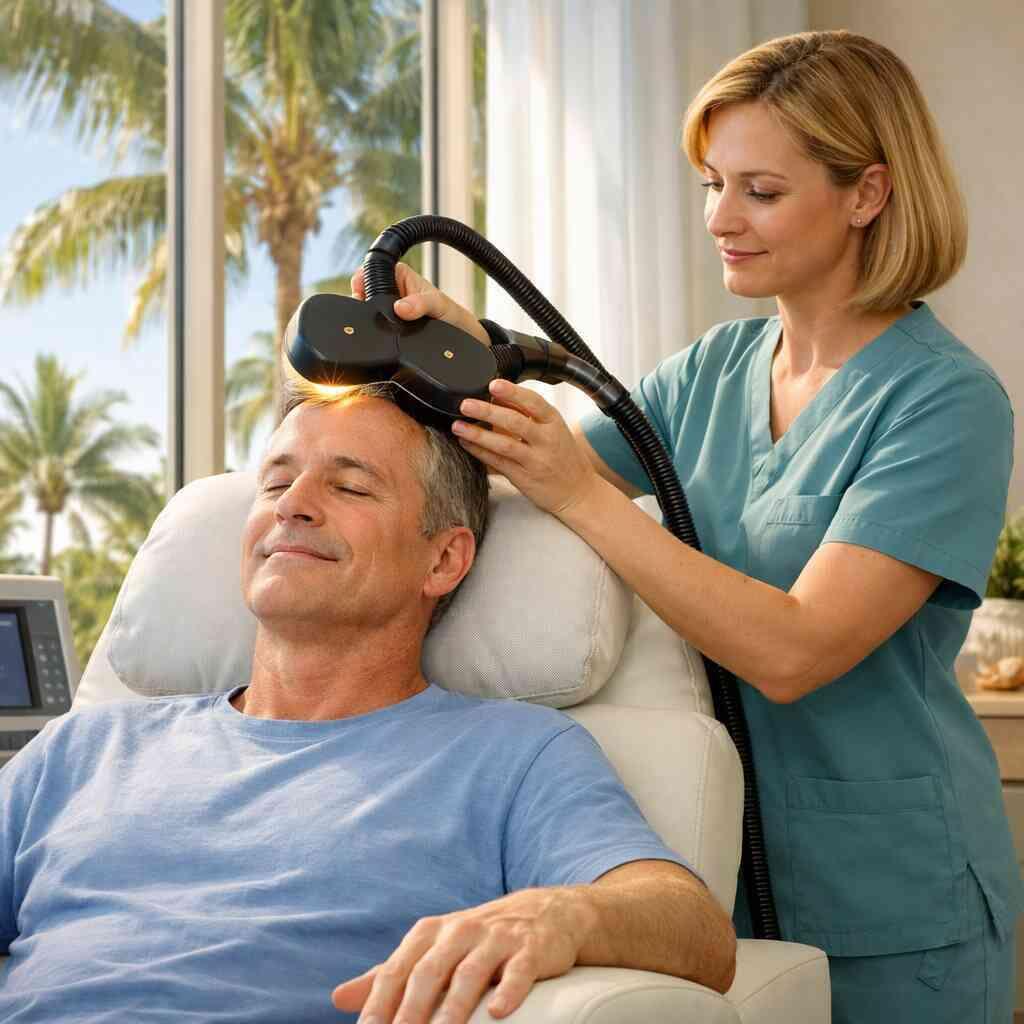
Response patterns also illuminate the interplay between anxiety and depression. Many patients with comorbid anxiety see both conditions improve simultaneously. This dual benefit owes to shared prefrontal-amygdala circuitry. Fort Lauderdale TMS for depression outcomes and response patterns reveal anxiety score reductions of similar magnitude. The therapy’s broad-spectrum effects appeal to those with complex symptom profiles. Patients often describe a quieting of both the depressive rumination and the anxious chatter. This integrated relief creates a profound sense of calm. The data confirm that TMS treats the underlying circuit dysfunction. Symptom clusters dissolve together as the network heals.
Treatment providers in Broward County leverage these outcomes to refine protocols. They adjust left-sided high-frequency and right-sided low-frequency stimulation based on response. Personalized targeting enhances the already strong TMS for depression effectiveness in Broward County. Patients feel they are receiving a custom-tailored solution. The collaboration between clinician and patient becomes a therapeutic alliance. Tracking weekly scores helps maintain momentum and celebrate progress. Fort Lauderdale’s transparent reporting fosters community trust. The outcomes speak loudly to anyone still searching for relief.
Depression Remission Rates After TMS Versus Conventional Treatment Metrics
A direct comparison illuminates the true value of neurostimulation. Standard antidepressant trials yield remission in about one-third of patients initially. Subsequent medication switches drop remission to roughly fifteen percent per attempt. By the third or fourth failure, chances plummet to single digits. In stark contrast, depression remission rates after TMS in treatment-resistant populations hover near thirty to forty percent. This differential is staggering and clinically transformative. Patients who had exhausted pharmacopeia find a viable exit. The numbers dismantle the myth that chronic depression must be accepted. Effective non-pharmacological depression therapy success reshapes the conversation about refractory illness.
Beyond remission, TMS offers a side effect profile that supports adherence. Conventional medications often cause weight gain, sexual dysfunction, and emotional blunting. TMS side effects are typically limited to mild scalp discomfort and transient headache. The tolerability advantage keeps patients in treatment long enough to benefit. Dropout rates in TMS are far lower than in long-term medication trials. This retention amplifies real-world effectiveness statistics. Depression remission rates after TMS versus conventional metrics reflect not only biology but also human factors. Patients stick with the therapy because they feel respected and comfortable. The aggregate data therefore represent a more complete picture of success.
Health-economic analyses further bolster the case for TMS. While upfront costs exist, the long-term savings from restored productivity are substantial. Reduced hospitalizations and emergency visits offset initial investment. Depression remission rates after TMS in Palm Beach and surrounding counties demonstrate systemic value. Employers and insurers are taking notice. They see lower disability claims and presenteeism. The comparison against conventional treatment metrics thus extends beyond symptom scores. It encompasses real-world function and societal participation. The evidence converges: TMS is a cost-effective route to durable wellness.
Translating Clinical Data into Personalized Long-Term Recovery
Depression Brain Stimulation Improvement Scores as a Roadmap
Improvement scores provide more than just research endpoints. They serve as personalized roadmaps for patients navigating recovery. Weekly depression inventories track the arc of change in real time. Scores typically drift downward, with occasional plateaus and surges. Clinicians use these data points to adjust treatment parameters. A slowing trajectory might prompt a coil repositioning or intensity tweak. These data-informed decisions prevent stagnation and maximize gains. Depression brain stimulation improvement scores thus guide the journey. They transform an abstract hope into a visible, measurable ascent.
Patients often find the score tracking motivating. A modest drop of four points can signify emerging relief. The tangible evidence counters the hopelessness that depression imposes. Individuals begin to trust that the therapy is working on a biological level. They notice small victories: preparing a meal or answering a call. These micro-triumphs accumulate in the data and in daily life. The roadmap becomes a collaborative tool between patient and provider. It reduces anxiety and fosters a sense of agency. Depression brain stimulation improvement scores demystify the healing process.
The integration of technology further refines the roadmap approach. Apps allow patients to log mood, sleep, and anxiety between sessions. These ecological momentary assessments enrich the clinical data stream. Providers can spot trends that brief office visits might miss. A pattern of evening dips, for example, could indicate the need for a protocol shift. This level of personalization drives TMS therapy outcome measures toward unprecedented precision. Data transforms from a static metric into a dynamic guide. The roadmap is constantly updated, ensuring no patient is left behind.
The Role of Evidence-Based TMS Therapy Florida in Sustaining Wellness
Sustained wellness depends on more than an acute course of stimulation. Evidence-based TMS therapy Florida integrates relapse prevention from the start. During the taper phase, session frequency gradually reduces. This weaning allows the brain to assume full self-regulation. Patients also learn cognitive and behavioral strategies to support their new baseline. Psychoeducation about sleep hygiene, stress management, and routine is provided. These elements fortify the neurobiological gains against future stressors. The evidence shows that combined TMS and skill-building yields longer remission durations. South Florida clinics embrace this holistic model.
Data from maintenance protocols bolster the case for ongoing engagement. Some individuals benefit from periodic booster sessions. These single sessions every few weeks can preempt symptom recurrence. Evidence-based TMS therapy Florida tailors maintenance schedules to individual need. Those with more recurrent histories may require a structured plan. Others thrive with an as-needed approach and rapid access to re-treatment. The flexibility respects the cyclical nature of mood disorders. It also prevents the despair of relapse. Patients feel securely tethered to a safety net. This continuity of care sustains the initial success.
The evidence base continues to expand through rigorous local research. Participating clinics contribute to registries that track long-term outcomes. Findings are published and presented at national conferences. The commitment to evidence-based practice ensures that patients receive the most current protocols. It also attracts top-tier clinicians dedicated to excellence. For the patient, this means access to care that evolves with science. Evidence-based TMS therapy Florida is not a static product. It is a living, learning system committed to enduring wellness.
Personalized TMS Therapy Results Through Adaptive Protocols
No two depressions are identical, and treatment should reflect that truth. Personalized TMS therapy results stem from protocols that adapt to the individual. Baseline brain activity, symptom clusters, and treatment history all inform the initial setup. If response lags, clinicians can switch from high-frequency left-sided to bilateral stimulation. Some patients respond dramatically to accelerated theta-burst protocols. Others need extended courses or intermittent dosing. The flexibility prevents a one-size-fits-all failure. Personalized TMS therapy results demonstrate that adaptiveness pays dividends in remission. The clinic becomes a laboratory of n-of-1 experimentation, rooted in neuroscience.
Biomarkers are beginning to guide adaptive decisions. Heart rate variability, EEG patterns, and even genetic variants offer clues. While not yet standard, their use is growing in sophisticated centers. The goal is to predict response and adjust proactively. This precision psychiatry approach represents the next frontier. South Florida clinics are early adopters, integrating these tools ethically. Patients appreciate the sense of bespoke medical attention. They are not numbers on a conveyor belt but active participants. The personalized framework builds trust and enhances outcomes. It transforms TMS from a recipe into a custom-crafted solution.
The adaptive philosophy extends to the therapeutic relationship itself. Clinicians listen to subtle reports of cognitive or emotional shifts. They titrate not only machine settings but also supportive conversation. This human adaptation complements the technological adjustments. The result is a highly responsive treatment ecosystem. Personalized TMS therapy results therefore reflect a synergy of science and compassion. Patients feel truly seen and understood. This psychological safety amplifies the neurobiological effects. The data underscore the value of adaptability. It is the antidote to therapeutic stagnation.
Long-Term Depression Recovery After TMS Beyond Initial Response
The true measure of TMS success is not the six-week mark but the year that follows. Long-term depression recovery after TMS hinges on durable brain changes. Follow-up studies show that many remitters stay well without ongoing intervention. The brain has apparently reset its mood homeostat. Life stressors still arise, but they no longer trigger spirals. Patients report a robustness previously unimaginable. This durability reflects the deep neuroplastic changes achieved during the acute course. The brain has not merely been tickled; it has been trained. Long-term depression recovery after TMS is the ultimate validation.
Sustaining recovery also involves lifestyle and psychological integration. Individuals who adopt regular exercise, social connection, and mindful practices fare best. The TMS course often provides enough lift to engage in these health behaviors. A virtuous cycle replaces the depressive downward spiral. Clinics offer wellness planning to reinforce this transition. Patients leave with a written relapse prevention strategy. They understand early warning signs and know when to seek a booster. This proactive stance transforms recovery into a self-managed state. Long-term depression recovery after TMS becomes a lived reality.
The economic and social ripple effects are profound. Return to work, restored relationships, and renewed creativity follow durable remission. Families heal, and communities benefit from the individual’s participation. The low relapse rate compared to medication discontinuation is striking. Naturalistic data from Florida confirm that most patients remain substantially improved. Maintenance TMS therapy after initial depression success plays a role for some, but many thrive without it. The prospect of a life unburdened is now attainable. Depression no longer defines a person’s future. The long-term horizon is brighter than most ever dared to hope.
Charting a New Course Toward Unprecedented Depression Relief
The Shifting Paradigm of Non-Pharmacological Depression Therapy Success
The mental health field is undergoing a quiet revolution. Non-pharmacological depression therapy success is no longer an outlier but a central pillar. Interventions like neurostimulation, ketamine, and psilocybin are redefining possibilities. They target brain circuits directly rather than manipulating global chemistry. This paradigm shift moves beyond the monoamine hypothesis of depression. It embraces a network-based understanding of mood disorders. Clinicians now speak of circuit modulation and neuroplastic rehabilitation. The vocabulary itself signals a deeper conceptual change. Patients are the ultimate beneficiaries of this scientific evolution. Hope is being systematically restored through targeted technologies.
Comparative research highlights the unique position of TMS. Unlike psychedelics that require intense psychological support, TMS is purely neurobiological. It can be administered without altering consciousness. This makes it widely accessible and acceptable. Ketamine therapy for treatment-resistant depression in Florida offers rapid relief but is invasive and requires medical monitoring. TMS provides a middle path of strong efficacy and high tolerability. The non-pharmacological landscape is diverse, allowing clinicians to match patients to modalities. This ecosystem approach ensures that no one is left without options. The shifting paradigm is about expanding the toolkit, not replacing one monopoly with another.
The regulatory and insurance environment is adapting accordingly. Coverage for TMS has expanded significantly, reducing financial barriers. Professional guidelines now list it as a first-line option for treatment-resistant cases. As evidence accumulates, earlier-line use becomes more common. The paradigm shift is thus accelerating at the structural level. Non-pharmacological depression therapy success is institutionalized, not just anecdotal. South Florida stands at the forefront of this transformation. The region’s clinics offer a model of integrated, progressive care. The old era of trial-and-error medication is yielding to precision brain health.
How TMS Healing Rates South Florida Are Redefining Treatment Expectations
Community outcomes often surpass what academic literature suggests. TMS healing rates South Florida are redefining what patients and doctors consider realistic. The message is spreading: remission is not a fantasy. It is a statistical probability for a significant portion of sufferers. This recalibration of expectations has profound psychological effects. It erodes the hopelessness that depression weaponizes. Patients enter treatment with genuine optimism rather than desperate resignation. That positive mindset may further enhance neuroplastic outcomes. The cycle of expectation and result becomes a self-fulfilling prophecy of healing.
The region’s collaborative clinical network contributes to these robust results. Regular case conferences and shared protocols elevate the standard of care
Frequently Asked Questions
Question: What are the actual TMS success rates for depression in South Florida according to recent data from the blog post 2026 TMS Success Rates for Depression in South Florida?
Answer: The blog post 2026 TMS Success Rates for Depression in South Florida reveals that South Florida TMS therapy outcomes are exceptional. Clinical data across Miami-Dade, Fort Lauderdale, and Palm Beach clinics show that over half of patients achieve a meaningful clinical response, while between 30 and 50 percent reach full remission-even those who have failed multiple medication trials. These transcranial magnetic stimulation effectiveness figures are tracked with validated scales like the Hamilton Depression Rating Scale, where remission means near-absence of symptoms and a return to full function. Specifically, major depressive disorder TMS remission statistics in everyday practice hover around 40 percent, which is roughly double the rate of a fourth antidepressant attempt. Fort Lauderdale TMS for depression outcomes and response patterns consistently exceed national benchmarks, with many early responders feeling a surge of improvement within two weeks. At TMS Treatment Florida, we use these real-world depression remission rates after TMS to guide personalized care. Our team meticulously measures TMS therapy outcome measures session by session, so you can see your own depression brain stimulation improvement scores climbing. This transparent, data-driven approach gives you genuine hope: the non-invasive depression treatment results are not just numbers-they are your pathway back to a fulfilling life.
Question: How effective is TMS for treatment-resistant depression compared to staying on medications that haven’t worked?
Answer: For people who have tried two or more antidepressants without success, TMS for treatment-resistant depression success is a game-changer. Research shows that when you switch to a third or fourth medication, your chance of remission drops to single digits. In stark contrast, repetitive transcranial magnetic stimulation success rates in treatment-resistant populations land between 30 and 40 percent for full remission, with even higher response rates. This is the power of a non-pharmacological depression therapy success strategy: instead of flooding your entire body with chemicals, transcranial magnetic stimulation targets the dorsolateral prefrontal cortex directly, rewiring the neural circuits that keep you stuck. Evidence-based TMS therapy Florida from our clinic combines this brain stimulation therapy efficacy with adaptive protocols that monitor your progress weekly. If you’re a slow responder, we adjust stimulation parameters to unlock your best possible TMS response statistics Florida. Patients who felt they had run out of options often describe the shift as life-saving-emotional weight lifts, motivation returns, and activities that once felt impossible become natural again. Compared to the side-effect burden and diminishing returns of medication, non-invasive depression treatment results like these offer a clear, hopeful alternative. At TMS Treatment Florida, we are committed to turning treatment-resistant depression into treatment-success depression.
Question: What does long-term depression recovery after TMS actually look like? Do the benefits stick?
Answer: Long-term depression recovery after TMS is one of the most encouraging aspects of this treatment. Clinical follow-up studies from Florida TMS clinic depression outcomes show that many people who achieve remission stay well for months and years after their acute course ends. The reason lies in neuroplasticity: repetitive transcranial magnetic stimulation success rates are driven by the brain’s ability to reorganize itself. Over 36 sessions, the stimulation strengthens synaptic connections in mood-regulating networks, essentially teaching your brain how to sustain a healthy baseline. Cutting-edge neurostimulation treatment results demonstrate that once these circuits are rebuilt, they can hold strong against everyday stressors. At TMS Treatment Florida, we integrate evidence-based TMS therapy Florida maintenance planning from day one. Some individuals benefit from occasional booster sessions if early warning signs appear, while many thrive without any ongoing intervention. Our clinical TMS outcomes are tracked long after the last session, allowing us to celebrate real-world, durable success. Patients often report that they not only feel better but also regain the resilience to handle life’s challenges without descending back into depression. The promise of lasting wellness is not a myth-it is a reality backed by transcranial magnetic stimulation response patterns and the experiences of people just like you across South Florida.
Question: How do South Florida clinics like TMS Treatment Florida personalize therapy to improve my chances of success?
Answer: Personalized TMS therapy results begin with the understanding that no two depressions are identical. At TMS Treatment Florida, we don’t apply a one-size-fits-all protocol. We start with a comprehensive evaluation of your symptom profile, treatment history, and brain activity markers. Throughout your course, we track depression brain stimulation improvement scores weekly, which allows us to see exactly how your brain is responding. If progress plateaus, we adapt-shifting from high-frequency left-sided stimulation to bilateral protocols, adjusting coil placement, or moving to accelerated theta-burst sessions. This dynamic approach fuels superior TMS therapy outcome measures because every day your treatment is fine-tuned to your neurobiology. Our clinic also weaves in supportive lifestyle strategies and psychoeducation, turning the data from your TMS healing rates South Florida into a collaborative roadmap. The result is a deeply personal experience where you feel seen, heard, and empowered. TMS clinic patient success stories South Florida frequently mention the trust built when a provider actually responds to their subtle feedback. By combining advanced technology with compassionate, adaptive care, we ensure that your brain stimulation therapy efficacy is maximized. This commitment to personalization is why so many patients who failed elsewhere finally find remission with us.
Question: What makes TMS therapy outcomes in South Florida stand out compared to national averages?
Answer: TMS healing rates South Florida consistently outperform national benchmarks because our region has built a collaborative, innovation-driven clinical ecosystem. Practices like TMS Treatment Florida share real-world data, refine protocols together, and adopt next-generation technologies as soon as the evidence supports them. This culture translates into higher transcranial magnetic stimulation effectiveness for patients. For example, Fort Lauderdale TMS for depression outcomes and Miami-Dade TMS treatment results regularly show response rates above 50 percent and remission rates near 40 percent-even among complex, treatment-resistant cases. National naturalistic studies often report lower figures, yet our local data rival or exceed academic trial findings. Several factors drive this success: we emphasize consistent, precise coil targeting guided by beam F3 coordinates; our clinicians are highly trained and constantly update their skills; and we prioritize a nurturing environment where patients feel comfortable enough to complete the full 36-session course. Moreover, Florida TMS clinic depression outcomes benefit from the region’s diverse patient population, proving that this non-pharmacological depression therapy success crosses cultural and demographic lines. At TMS Treatment Florida, we harness this regional strength to give you the best possible chance at deep, lasting relief. The message is clear: when you choose TMS in South Florida, you are stepping into a community committed to your recovery with the highest standards of evidence-based TMS therapy Florida.