When OCD turns every thought into a dead end and TMS starts to look different
If you are reading this after another rough week of intrusive thoughts, the exhaustion is real. OCD can make every decision feel poisoned. You may have already tried therapy, medication, and more reassurance than your nerves can hold. That is often when TMS treatment in Florida for OCD and anxiety starts to look different.
Why medication fatigue and compulsions can make people start looking beyond talk therapy
Many people with OCD do not fail treatment because they are not trying. They fail because the loop is stubborn. SSRIs may dull the edges, but side effects can bring dry mouth, sleep changes, or emotional flatness. Talk therapy helps many people, yet compulsions can still keep pulling the brain back into the same ditch.
Here is the part most people miss. OCD is not just worry. It is a habit circuit that keeps firing even when your logic knows better. That is why TMS OCD therapy can feel worth exploring after long months of frustration. It offers non-drug depression treatment style care for people who want another path without adding another daily pill.
What TMS OCD therapy is actually trying to change in the brain
Transcranial magnetic stimulation therapy uses magnetic pulses to influence brain networks linked to repetitive thought loops. In OCD, clinicians often target circuits tied to error detection, threat scanning, and compulsive checking. The goal is not mind control. The goal is to calm overactive signaling so the brain can step out of the loop more easily.
A patient in Boca Raton once told us the hardest part was not the ritual itself. It was the constant feeling that something was unfinished. After years of that pressure, even a quiet room felt loud. That is why magnetic brain therapy matters to some people: it addresses the circuit, not just the story around it.
How obsessive compulsive disorder can overlap with anxiety, depression, and burnout in Florida patients
OCD rarely travels alone. Many patients also live with anxiety, depression, sleep loss, or burnout. In Florida, we see that strain amplified by work schedules, caregiving, commuting, and seasonal changes in routine. A person may search for TMS for anxiety or TMS for bipolar depression because the symptoms blur together.
This overlap matters because treatment planning changes when depression and OCD share the same space. A clinic may also discuss transcranial magnetic stimulation therapy for depression in Florida or a broader Florida mental health clinic plan. The best care looks at the whole picture, not just the headline symptom. That is where advanced mental health care in Florida becomes more than a slogan.
Why people in Miami, Fort Lauderdale, Orlando, Tampa, and West Palm Beach often search for TMS near me Florida
Searches for TMS near me Florida often happen after a discouraging appointment or a long commute to a specialist. People in Miami, Fort Lauderdale, Orlando, Tampa, and West Palm Beach want something local and practical. They also want a place that understands school schedules, long workdays, and the reality of Florida traffic. If you are in Aventura, Coral Gables, Delray Beach, or Winter Park, convenience can decide whether treatment actually happens.
Florida also has a unique seasonal pattern. Some patients split time between states. Others need care that fits around travel, insurance changes, or family visits. That is why local access matters so much when someone is looking for TMS treatment Florida and wants steady follow-through, not just a name on a map.
The quiet mechanics behind non-invasive brain stimulation for OCD
How does TMS work when the goal is to calm overactive circuits tied to compulsive loops
People often ask, how does TMS work if OCD feels so mental and so tangled. The short answer is that TMS uses focused magnetic pulses to influence activity in specific brain regions. Those pulses can encourage healthier communication in networks that get stuck in repetitive alarm mode. In plain English, it tries to interrupt the brain’s overfiring, then help it reset.
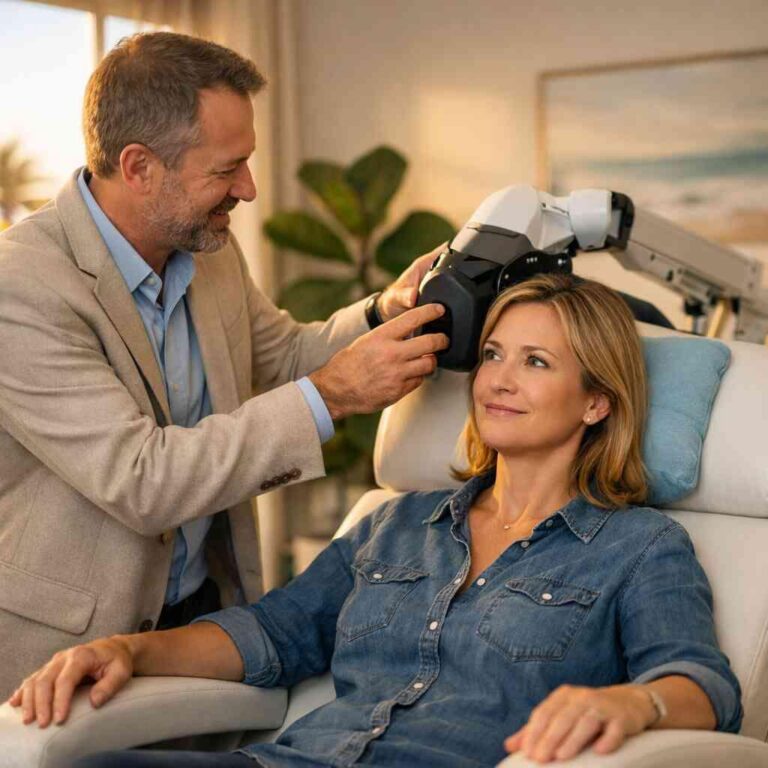
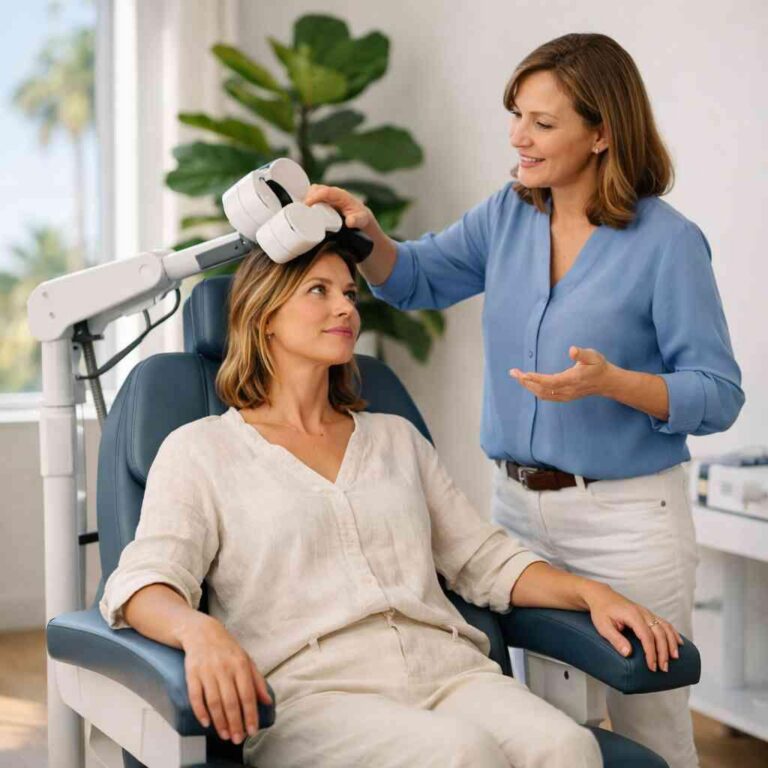
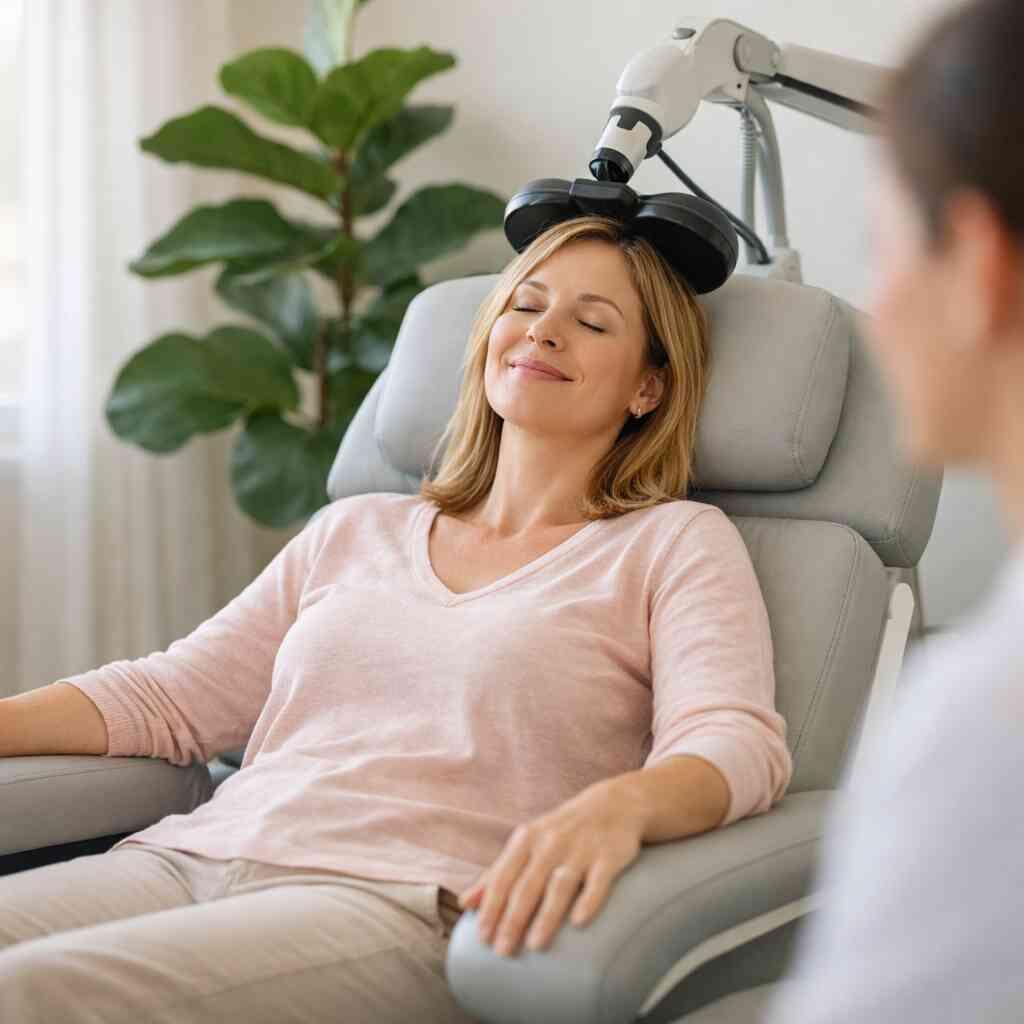
That is why TMS is called non-invasive brain stimulation. Nothing is implanted. You sit in a chair. You stay awake. The machine makes a steady tapping sound, and a clinician adjusts the placement based on your anatomy and symptoms. For many people, that feels far less intimidating than they expected.
Why repetitive TMS and deep TMS therapy are discussed differently in OCD treatment options in Florida
Not all TMS protocols feel the same. Repetitive TMS usually delivers pulses to a targeted surface area. Deep TMS therapy can reach broader networks and is often discussed for OCD because compulsive loops involve connected circuits, not one tiny spot. The right choice depends on diagnosis, symptom pattern, and clinic protocol.
Florida patients comparing OCD treatment options in Florida should ask how the clinic decides between protocols. They should also ask whether the device and plan fit their symptoms. For some people, a deep TMS therapy model makes sense. For others, a more focused approach may be the better clinical match.
What a real evaluation looks like before a personalized TMS treatment plan is approved
A careful evaluation should not feel rushed. It should review your diagnosis, prior medications, therapy history, symptom severity, and safety screen. A strong clinic will ask about seizure risk, implanted devices, substance use, and sleep patterns. It may also review whether you have had TMS after failed medications or if other OCD treatment paths should come first.
We hear this from clients almost every week. They worry they will be pushed into one solution without being heard. A good consultation does the opposite. It builds a personalized TMS treatment plan around your history, your schedule, and your actual goals.
One client from Fort Lauderdale came in after trying three medications and a long stretch of exposure work. What changed the conversation was not a miracle promise. It was the calm review of what had already been tried, what still worked, and what had clearly stalled. That kind of precision matters.
Which outcomes clinicians usually track with tools like the Yale Brown scale and mood measures when OCD also brings depression or anxiety
Clinicians need more than a feeling that things are “better.” They usually track progress with symptom tools and mood measures. For OCD, the Yale Brown scale is common. For depression, clinicians may use the PHQ-9 or MADRS. Those tools help compare baseline symptoms with later changes.
This matters because OCD often coexists with depression or anxiety. A person may have fewer rituals but still feel emotionally heavy. Or they may feel less panicked but still wake up with intrusive thoughts. Good clinics watch both symptom clusters, which is why precision psychiatry for OCD is more than a phrase. It is a method.
What TMS side effects safety usually means in plain language and when a treatment team should review concerns
Most people want the truth here, not spin. TMS side effects safety usually involves headache, scalp discomfort, or fatigue during the first sessions. Some people notice no problems at all. Rare risks exist, and a proper clinic reviews them carefully before treatment starts.
If symptoms feel unusual, the team should know right away. That includes faintness, severe headache, or any new neurological change. You should never be brushed off. A strong clinic explains safety in plain language and revisits it as treatment progresses. If you want a clear summary, this TMS side effects and safety in plain language resource helps frame the basics.
What the right Florida plan looks like after the consultation is over
When TMS after failed medications makes sense and when another OCD treatment path may fit better
TMS after failed medications makes sense when multiple medication trials have not brought enough relief, or side effects became too much. It can also be useful when OCD comes with depression or anxiety that has resisted standard care. The 2018 Stanford work by Carpenter and colleagues helped build the modern depression evidence base, and TMS is now widely used for medication resistant depression in proper settings. 
Still, TMS is not the right fit for every OCD case. Some patients need more intensive ERP. Others may need medication adjustments, substance use support, or trauma-focused work first. In some cases, clinicians discuss TMS and EMDR combination care when PTSD symptoms are part of the picture. That decision should come from a full evaluation, not from a search result.
How insurance verification, TMS cost Florida, and TMS insurance coverage Florida can shape the timing of care
Money affects timing more than people like to admit. TMS cost Florida depends on the clinic, the device, session count, and whether insurance helps cover care. Many patients ask, does insurance cover TMS in Florida. The honest answer is that it depends on the plan, the diagnosis, and medical necessity criteria.
That is why verification matters early. A good team should explain TMS insurance coverage Florida before you commit to a schedule. If you want to compare benefits and out-of-pocket estimates, review TMS cost and insurance coverage in Florida. For a broader insurance breakdown, this TMS insurance coverage in Florida for 2026 guide can also help.
TopicWhat to askWhy it mattersCoverageDoes my plan require prior authorization?It affects timing.CostWhat is my estimated out-of-pocket amount?It prevents surprises.DiagnosisDoes OCD qualify under my policy?Policies differ.SessionsHow many visits may be needed?Scheduling depends on it.### What to ask a TMS psychiatrist Florida about maintenance therapy, long term results, and follow up care
A skilled TMS psychiatrist Florida should talk plainly about follow-up. Ask whether the clinic offers TMS maintenance therapy if symptoms return later. Ask how they define TMS long-term results. Ask what symptoms they track after the acute course ends. Those questions are practical, not pessimistic.
You may also want to ask about the clinic’s use of evidence. The Clinical TMS Society consensus review and APA practice guidelines both support careful patient selection and monitoring. That kind of structure matters when you want treatment that feels thoughtful, not rushed. If a clinic can explain why it chose a protocol, you are in a better place than if it simply promises relief.
How Florida access works for patients coming from Duval County, Orange County, Hillsborough County, Miami-Dade County, Broward County, and Palm Beach County
Access in Florida is not just about distance. It is about whether the drive is realistic on a Tuesday after work. Patients from Duval County, Orange County, Hillsborough County, Miami-Dade County, Broward County, and Palm Beach County often need flexible scheduling and clear directions. That is especially true when a patient is balancing school pickups, shift work, or caregiver duties.
If you are comparing regions, start with the area we serve for TMS treatment in South Florida and then look at county-level access. People in Miami-Dade, Broward, and Palm Beach often want a TMS clinic Miami, TMS Fort Lauderdale, or TMS West Palm Beach option that reduces friction. Others look for TMS Orlando, TMS Tampa, or TMS South Florida because regular attendance drives outcomes. One missed week can matter.
Why the best next move is choosing an evidence based clinic that matches your OCD severity, schedule, and support needs
The best clinic is not the fanciest one. It is the one that matches your diagnosis, your pace, and your life. Look for evidence-based OCD treatment, transparent screening, and a team that knows how to explain how TMS works for obsessive compulsive disorder without jargon. If the clinic also understands Florida behavioral health and outpatient rules under AHCA, that is a good sign.
For many people, the right decision is simple and hard at the same time. You want a place that respects how tired you are. You want answers about TMS reviews Florida, safety, timing, and whether the plan fits your week. You do not have to solve everything right now. Start by choosing one clinic call, asking about eligibility, and requesting a written estimate. A careful conversation today can make tomorrow feel less sealed shut.
Frequently asked questions about TMS for OCD in Florida
Does TMS help OCD if medications did not work?
It can help some people, especially when OCD has not responded well to standard medication trials. The best fit usually comes after a full psychiatric evaluation and a review of prior treatment history. Clinicians often consider symptom severity, coexisting depression, and whether exposure therapy is still part of the plan. Evidence for TMS is strongest in depression, but OCD protocols have growing support. The right question is not “Will it work for everyone?” It is “Does my profile match the patients most likely to benefit?”
How many sessions does TMS for OCD usually take?
The schedule depends on the protocol, device, and clinic plan. Many courses involve frequent visits over several weeks, with follow-up discussions after that. Your team should explain the expected cadence before you start. They should also tell you how they measure progress along the way. That makes the process feel less vague and helps you plan around work and family.
Is TMS safe for people with anxiety or bipolar depression?
Often, yes, but only after a careful screening. Anxiety and bipolar depression can change how a team designs treatment. Clinicians should review mood history, sleep patterns, and any past manic symptoms before proceeding. Safety also means watching for side effects and checking in regularly. A thoughtful clinic will not treat safety as an afterthought.
Does insurance cover TMS for OCD in Florida?
Coverage varies by plan and diagnosis. Some policies have clearer pathways for depression than for OCD, which means prior authorization and documentation matter. That is why insurance verification should happen early. Ask the clinic what it needs from your psychiatrist or therapist. If coverage is unclear, request a benefits review before scheduling sessions.
What is the difference between deep TMS therapy and repetitive TMS?
Both use magnetic pulses, but they differ in how deeply and broadly they target brain networks. Repetitive TMS often focuses on a smaller area. Deep TMS therapy may reach broader circuits involved in OCD. The best choice depends on the clinic’s protocol, your symptoms, and your medical history. A good provider should explain why one option fits better than another.
Can TMS be combined with therapy or addiction treatment?
Yes, in many cases it can. Some patients continue ERP, therapy, or medication management while receiving TMS. Others with substance use issues may need integrated care first, especially if cravings or withdrawal are active. Research on rTMS for cravings is growing, including work discussed by groups such as the Medical University of South Carolina. If OCD overlaps with addiction, the treatment plan should reflect both conditions with care.
How do I choose the best TMS clinic in Florida for OCD?
Look for clear screening, transparent insurance help, and a team that explains outcomes without overselling them. Ask whether they treat OCD often, how they handle follow-up, and what measures they use to track progress. If the clinic serves your region well, that helps too. A strong fit should feel calm, organized, and honest. If you want a place to start, review the clinic’s FAQ page and ask for a consultation that fits your schedule.