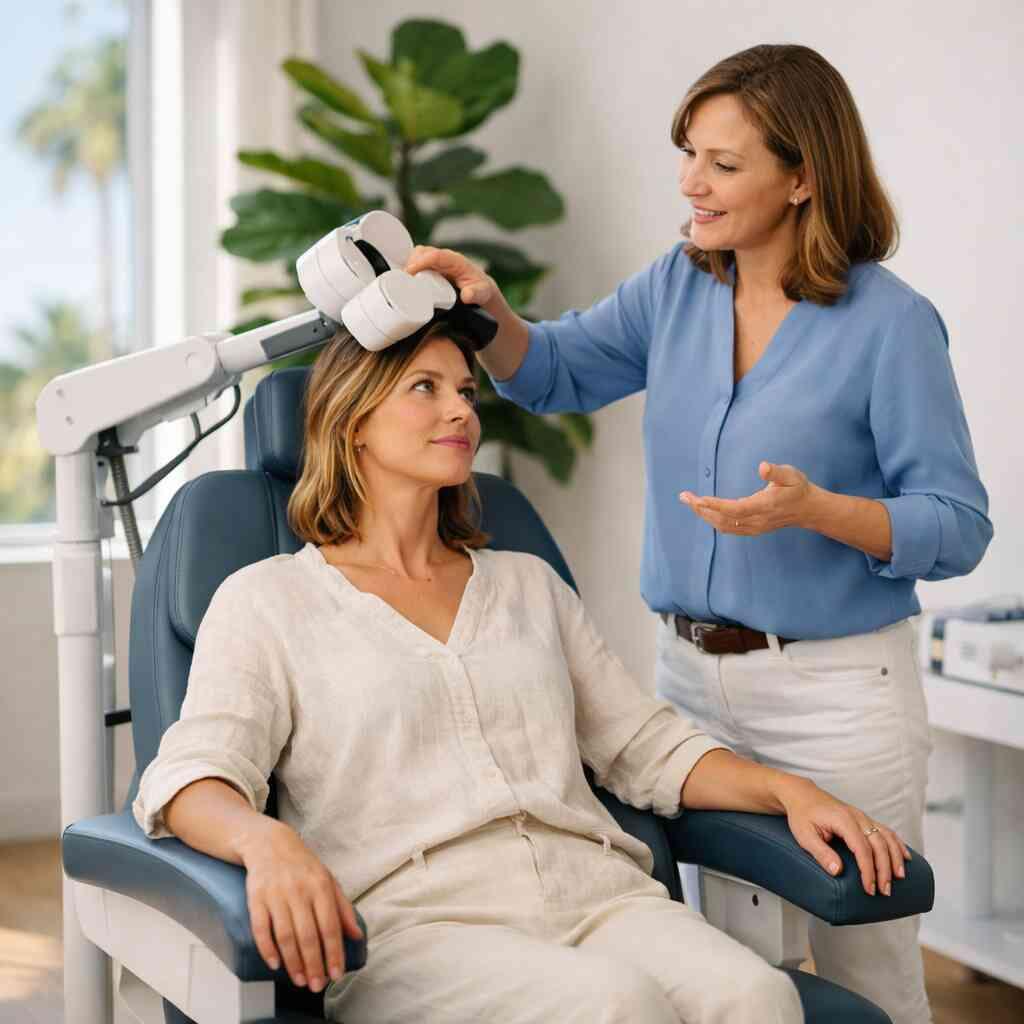
When depression keeps winning after the second or third medication, what TMS is really offering
The question we hear most often is simple: what is the difference between TMS and rTMS for depression? If you are asking that after two or three medications have stalled, the frustration is real. The fog can feel stubborn. The mornings can feel heavy. And the dry mouth, sleep changes, and emotional blunting from pills can make hope feel oddly expensive. That is exactly where TMS treatment in Florida enters the conversation for many people looking for a different path.
Why the same fog can keep returning after SSRIs and SNRIs
SSRIs and SNRIs help many people. Still, medication-resistant depression is common enough that clinics hear this story every week. Some people get partial relief, then relapse. Others never get enough improvement to matter. The brain is not always refusing help; sometimes the pattern just needs a different tool. That is why people start searching for a non-drug depression treatment after TMS after failed medications becomes a more serious option.
In Florida mental health settings, the emotional toll is as important as the diagnosis. You may have tried one prescription after another. You may have also done therapy faithfully and still felt stuck. That mix often leaves people asking for an alternative depression treatment that does not rely on another daily pill. A patient in Broward once told us the hardest part was not the symptoms. It was the sentence, “let’s try one more medication,” after the fourth time. That kind of fatigue changes how you think about care.
Where TMS treatment Florida fits after failed medications and talk therapy
Transcranial magnetic stimulation therapy is often considered after medication and psychotherapy have not delivered enough relief. It is a non-invasive brain stimulation option used in outpatient care. In depression, TMS usually targets brain circuits linked to mood regulation. The best-known use is as an FDA-approved depression treatment for adults with depression that has not responded well to prior treatment. For many patients, that makes it a bridge between “nothing has worked” and “there is still a real plan.”
If you are comparing options, our TMS treatments for depression page is a helpful place to start. The clinical conversation usually centers on diagnosis, prior medication trials, and symptom severity. In real clinics, providers may use tools like the PHQ-9 or MADRS to track baseline symptoms and response over time. That does not guarantee a result. It does, however, turn vague suffering into measurable care.
What patients usually mean when they ask for alternative depression treatment
People rarely mean “new” when they say alternative. They usually mean hopeful, non-drug depression treatment that feels less blunt than another pill. They mean something that does not flatten their energy or make them wait six more weeks for a maybe. They mean a treatment that respects how tired they are. That is why TMS depression treatment in Florida is often discussed alongside other options like ketamine or, in some settings, psilocybin research pathways.
Here is the part most people miss. “Alternative” should not mean experimental for the sake of novelty. It should mean a treatment with a real evidence base, a clear protocol, and honest limits. The 2018 Stanford-led work by Carpenter and colleagues helped strengthen the conversation around TMS for depression, especially in treatment-resistant cases. That study did not erase the need for careful screening. It did, however, reinforce why so many clinicians take TMS seriously after failed medications.
Why Florida clinics see so many people searching for non-drug depression treatment and TMS near me Florida
Florida has a lot of moving parts. Seasonal residents split time between states. Insurance plans change. Traffic stretches simple errands into long days. So when someone types TMS near me Florida, they are often looking for more than a map pin. They want a clinic that understands scheduling pressure, coverage questions, and the emotional cost of waiting.
We hear this from people in Aventura, Coral Gables, Boca Raton, Delray Beach, and Winter Park. They want a Florida mental health clinic that feels accessible and calm. They want a place that understands Florida behavioral health realities, not a generic national script. That is why searches for TMS clinic Miami, TMS Fort Lauderdale, TMS West Palm Beach, TMS Orlando, and TMS Tampa keep rising. The need is personal. The logistics are too.
The small but important split between TMS and rTMS that changes how the treatment is delivered
What transcranial magnetic stimulation therapy means in plain language
At its core, transcranial magnetic stimulation therapy uses magnetic pulses to influence activity in targeted brain regions. No surgery. No anesthesia. No medication entering your bloodstream. That is why people call it magnetic brain therapy and why it sits under the broader umbrella of non-invasive brain stimulation. If you want a plain-language explanation, our transcranial magnetic stimulation therapy explained resource walks through the basics.
The word “TMS” is the umbrella. The word “rTMS” is the delivery style most people actually mean. The “r” stands for repetitive. That matters because the session is not one burst and done. It is a repeated pattern of pulses designed to stimulate specific circuits over time. In practice, that repetition is what makes the therapy feel structured and intentional rather than random.
Why repetitive TMS is the name most people actually mean when they say TMS
Most patients use “TMS” and “rTMS” as if they are identical. Clinically, repetitive TMS is the more exact term for the standard depression protocol. That is the version supported by the largest body of transcranial magnetic stimulation research for mood disorders. It is also the form most clinics mean when they talk about TMS therapy success rate or treatment planning for depression.
The difference is not just language. Repetition affects dosing, session length, and protocol design. Some systems use high-frequency stimulation over the left dorsolateral prefrontal cortex. Others use different frequencies or laterality depending on symptoms. If you are reading reviews or comparing clinics, ask which protocol they use and why. That question tells you more than marketing copy ever will.
TermPlain meaningCommon useTMSBroad category of magnetic stimulationGeneral search termrTMSRepetitive TMSStandard depression treatmentDeep TMSUses a different coil design for deeper field reachSome depression, OCD, and other protocols### How deep TMS therapy differs from standard coil-based treatment
Deep TMS therapy uses a different coil design than standard figure-eight coil systems. That design can influence a broader or deeper set of cortical areas. It does not mean “better” in every case. It means different. That is why a clinic should explain the rationale, not just the brand name. If you want to compare protocol styles, see our guide on the difference between deep TMS and repetitive TMS.
The practical difference matters to your body too. Some people describe deep TMS as feeling a bit different on the scalp. Others barely notice a distinction beyond the coil shape. A clinic should talk to you about comfort, target diagnosis, and coverage. If a provider cannot explain that clearly, keep asking. Clear answers are part of care.
When a psychiatrist may point to TMS for anxiety, TMS OCD therapy, or TMS for bipolar depression instead of depression alone
Depression is the headline, but it is not the whole story. Many clinics also discuss TMS for anxiety, TMS OCD therapy, and TMS for bipolar depression when symptoms overlap or diagnoses stack up. Some patients also ask about TMS for PTSD Florida or TMS for bipolar depression after multiple medication trials have fallen short. The treatment choice depends on the diagnosis, risk profile, and local protocol rules.
If your anxiety sits right on top of depression, that matters. If compulsions take hours a day, that matters too. And if mood swings complicate the picture, the plan has to be careful. Our TMS treatment for anxiety disorders page explains how clinicians think about overlap. In some cases, providers also coordinate with therapy, including an [TMS and EMDR combination] approach when trauma symptoms are part of the picture.
What happens inside the chair when magnetic brain therapy starts working with the brain rather than against it
How does TMS work and why the motor cortex matters before treatment starts
If you are wondering how does TMS work, the short answer is this: magnetic pulses stimulate nerve cells in carefully chosen brain areas. Before treatment begins, many clinics perform motor threshold mapping. That helps estimate the right intensity for you. This step is why the motor cortex matters. It gives the team a reference point before they treat mood-related regions.
The process is more precise than many people expect. On the first day, the team positions the coil, checks comfort, and adjusts based on your response. That careful setup is part of why TMS side effects safety is usually discussed before the first pulse, not after. Good clinics make room for questions. Better clinics make room for nerves, too.
A woman from Palm Beach once described the sensation as “a tapping pencil on my scalp with a rhythm.” That is not medical language, but it was honest. She was relieved that the experience felt structured rather than dramatic. That reaction is common. The fear is often bigger than the session.
What a typical session feels like from the first pulse to the last minute
A typical session is outpatient and stays non-invasive. You sit in a chair. You stay awake. The machine clicks in a steady pattern. Some people read, some listen to music, and some just breathe through the first few minutes. Most sessions last long enough to feel repetitive but not so long that they take over the whole day.
What many Florida patients appreciate is how ordinary the visit can feel. You can often return to work, pick up groceries, or head back to Coral Gables traffic without downtime. That is one reason TMS for young adults and working adults comes up so often in consultations. It fits around real life. It does not require recovery time in the usual sense.
Why TMS side effects safety matters more than most people expect
People often assume the main question is effectiveness. Safety matters just as much. Common side effects can include scalp discomfort, headache, or local twitching. Those effects are usually temporary, but they still deserve a real conversation. If you are comparing clinics, ask how they monitor discomfort and adjust settings. That is part of competent care, not an afterthought.
If you want a clear overview, our TMS side effects and safety information page covers the basics. The APA practice guidelines and the Clinical TMS Society consensus review both stress screening and protocol fidelity. Those are not just paperwork terms. They are guardrails. They help keep treatment organized, especially when symptoms, medications, or comorbidities complicate the picture.
How TMS maintenance therapy and long-term results are discussed in real Florida mental health clinics
There is a lot of hype online about long-term change. Real clinics talk more cautiously. TMS maintenance therapy may be discussed after an acute course if symptoms return or if a patient needs periodic support. The goal is not to promise permanence. The goal is to preserve gains where possible and monitor carefully when symptoms shift. That honest language matters. TMS long-term results vary by person, diagnosis, and what happens after the acute phase. Clinics may repeat PHQ-9 or MADRS measures to track whether symptoms stay improved. The good ones tell you this upfront. They also explain when follow-up, medication adjustments, or therapy support might still be needed. That is not failure. It is real-world medicine. 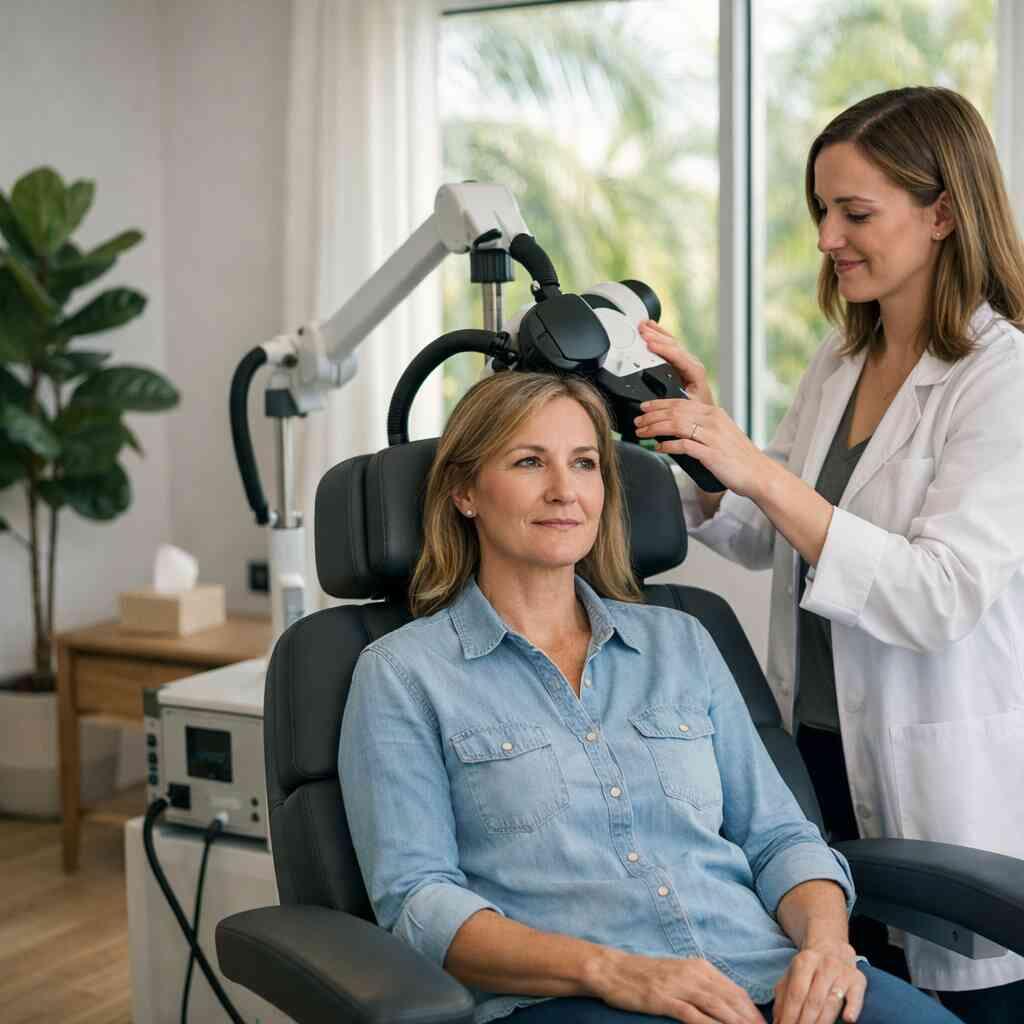
How a Florida patient decides whether TMS is the right next move instead of just another promise
What insurance review usually looks like with TMS insurance coverage Florida and does insurance cover TMS in Florida
The insurance question is often the first wall. TMS insurance coverage in Florida can depend on diagnosis, prior medication history, and plan rules. So when people ask, does insurance cover TMS in Florida, the honest answer is: often, but not always, and usually with documentation. Clinics frequently review prior antidepressant trials, symptom severity, and past treatment notes before submitting authorization.
Florida’s insurance landscape can feel fragmented, especially for seasonal residents and people changing plans. That is why verification matters before you commit emotionally. You deserve clarity before you commit time.
How TMS cost Florida and TMS therapy success rate should be weighed without hype
Cost is real. So is uncertainty. TMS cost Florida should never be thrown around like a sales pitch, because the numbers can change with location, coverage, and protocol. If you want a framework, compare the out-of-pocket estimate with the number of sessions, travel time, and follow-up needs. That is more useful than chasing a single headline number.
The same caution applies to TMS therapy success rate. No honest clinic should promise a universal outcome. The better question is whether the clinic uses careful selection, evidence-based protocols, and outcome tracking. If you want to compare payment and planning, our guide to TMS cost Florida and payment options page gives a clearer picture. Ask for specifics. Silence around cost usually hides confusion, not value.
Why people comparing TMS clinic Miami, TMS Fort Lauderdale, TMS West Palm Beach, TMS Orlando, and TMS Tampa need location-specific guidance
Florida is large enough that location changes the experience. A person searching for a TMS clinic Miami may need different logistics than someone looking for TMS Tampa. The drive across Broward can feel different from the drive across Orange County. Access, parking, appointment windows, and follow-up patterns all matter. That is why local guidance beats generic national advice every time.
If you are comparing providers, start with the locations page and then ask how they handle intake, verification, and schedule flexibility. People in South Florida often want options near Aventura, Coral Gables, or Boca Raton. In Central Florida, Winter Park and Orlando access may matter more. If you have been typing best TMS clinic Florida into search bars, the better filter is this: who explains the plan clearly and respects your time?
How TMS for teen depression, TMS for young adults, TMS for PTSD Florida, TMS for smoking cessation, and TMS for substance use disorder may connect with dual diagnosis treatment Florida and TMS and EMDR combination
Some cases are not just depression. Families ask about TMS for teen depression and TMS for young adults when symptoms disrupt school, sleep, and identity. Others ask about TMS for PTSD Florida after trauma has kept the nervous system on edge. Still others ask about TMS for smoking cessation or TMS for substance use disorder when cravings and mood feed each other. In those settings, the plan may intersect with dual diagnosis treatment Florida or addiction rehab care.
Research on rTMS for cravings is growing, including work from centers such as the Medical University of South Carolina. The literature is still developing, so careful screening matters. For substance use concerns, clinicians often look to the SAMHSA TIP framework and coordinate with established addiction care. If you want a clinic that talks about this thoughtfully, see TMS for substance use disorder Florida. You can also ask whether trauma therapy, including EMDR, should sit alongside magnetic treatment rather than behind it.
Frequently Asked Questions
Is TMS the same as rTMS for depression?
Not exactly. TMS is the broader term for transcranial magnetic stimulation. rTMS means repetitive TMS, which is the standard protocol most people mean when they talk about depression treatment. In daily use, many clinics and patients use the words interchangeably. The distinction matters most when you compare devices, protocols, or published studies. If you are asking a clinic about treatment, ask which protocol they use and why.
How does TMS work for depression?
TMS uses magnetic pulses to stimulate specific brain circuits linked to mood. The treatment usually targets the left dorsolateral prefrontal cortex for depression protocols. It is non-invasive and does not require anesthesia. Many clinics map your motor threshold before treatment to set the right intensity. Research, including major depression studies and consensus guidelines, supports its use for certain patients with treatment-resistant depression.
Does insurance cover TMS in Florida?
Often yes, but coverage depends on your plan and clinical history. Most insurers want proof of prior medication trials and a diagnosis that fits medical necessity criteria. Some plans also require psychotherapy history or symptom-scale documentation like PHQ-9. Because Florida plans vary, clinics usually verify benefits before treatment starts. That verification can save you time and reduce surprise bills.
What are the most common TMS side effects?
The most common side effects are scalp discomfort, headache, or brief twitching during treatment. These effects are usually temporary. Serious side effects are uncommon, but clinics still screen carefully for seizure risk and other contraindications. You should always ask how a clinic monitors comfort and adjusts the protocol. Safety should feel discussed, not assumed.
How long do TMS results last?
That depends on the person, the diagnosis, and what happens after treatment. Some patients maintain gains for a long time. Others need maintenance sessions or additional support later. Clinics often use PHQ-9 or MADRS scores to follow change over time. Honest providers will explain that long-term planning is part of the process, not an optional extra.
Can TMS help with anxiety, OCD, PTSD, or addiction too?
It may help in some cases, depending on diagnosis and treatment goals. TMS has stronger evidence in depression and OCD, and growing research supports use in anxiety-related symptoms, PTSD support, and some substance use disorder applications. It is not a cure-all. It works best when a clinician matches the protocol to the problem. If you are considering combined care, ask about therapy, medication, and trauma treatment together.