When TMS reviews sound promising but your real question is whether the clinic fits your life
You may be reading reviews at night because your meds stopped helping. That tired, stuck feeling is real. It can make every clinic sound either magical or suspicious. The harder question is simpler: can this place actually fit your week, your energy, and your budget? That is where smart choices begin.
What people usually miss when they compare TMS treatment Florida options online
Most people compare star ratings and stop there. That misses the real work. A strong TMS treatment Florida option should feel organized, calm, and tailored to your history. If a clinic only talks about results but never about screening, coordination, or follow-up, keep looking. For depression-specific information, you can also review TMS treatment for depression in Florida to see how a care plan is framed.
Here is the part most people miss: the best choice is not always the closest one. It is the one that matches your diagnosis, schedule, and insurance reality. One client from Coral Gables told us the drive was easy, but the real relief came from a clinic that answered questions before the first visit. That kind of clarity matters when you already feel drained.
How to read TMS reviews Florida without getting fooled by vague praise or fear
TMS reviews Florida can help, but only if you read them carefully. Praise that says “great staff” without details tells you little. Fear-based reviews can also mislead, because one bad wait time does not prove poor clinical care. Look for mentions of intake clarity, scheduling reliability, and whether the team explained transcranial magnetic stimulation therapy in plain language. For broader service questions, the Florida TMS treatment and clinic reviews page can help you compare how a practice presents itself.
Pay attention to patterns. Do people mention feeling rushed, or do they mention time spent on screening? Do reviews describe respectful communication about TMS side effects and safety and follow-up? Those details matter more than emotional extremes. A thoughtful review often sounds ordinary, and that is a good sign.
Why TMS near me Florida means more than distance when you are already worn down
TMS near me Florida is not just about miles. It is about whether the commute fits a foggy morning and a low-energy afternoon. If you have tried medication after medication, even a short drive can feel huge. That is why location matters more than most ads admit. The right clinic should make attendance feel doable, not punishing.
Florida adds its own layer. Traffic on I-95, seasonally crowded corridors, and parking near busy medical hubs can change everything. If a clinic serves South Florida, check whether it is practical from places like Aventura, Boca Raton, or Delray Beach. If you live farther north, easy access from Winter Park or Tampa can matter just as much. You want a Florida mental health clinic that respects the real logistics of your life.
What Florida mental health clinic access looks like for busy weeks and low-energy days
Busy weeks and low-energy days do not cancel each other out. They stack. That is why access should include more than an address. Ask how the clinic handles appointment reminders, rescheduling, and transportation issues. A good Florida behavioral health office expects life to happen. It does not punish you for being human.
If you are balancing work, family, and symptoms, ask about intake speed and session rhythm. Some clinics offer streamlined check-in and clear daily routines. That can make a huge difference when you are already carrying a lot. For broader care details, the About TMS Treatment Florida and patient care approach page can help you sense how the team thinks about support. Small process details often tell you more than polished marketing ever will.
The clinic signals that matter more than marketing gloss
Why best TMS clinic Florida should mean clear screening and a personalized TMS treatment plan
The phrase best TMS clinic Florida should mean more than nice photos. It should mean careful screening, documented diagnosis review, and a plan shaped around your symptoms. A real clinic does not assume everyone needs the same protocol. It should explain why it recommends repetitive TMS or deep TMS therapy, and what that choice means for you. If you want a broader overview of services, TMS treatment options in Florida for depression, anxiety, and OCD is a useful starting point.
A personalized plan matters because mental health care is rarely linear. Depression, anxiety, OCD, and bipolar depression can overlap in ways that change treatment decisions. A clinic should ask about sleep, substance use, medication history, and prior therapy. That is not busywork. It is the difference between guesswork and real care.
What to look for in a TMS psychiatrist Florida before you book anything
A strong TMS psychiatrist Florida should listen more than they pitch. They should explain how they assess diagnosis, safety, and treatment fit. You want someone who can discuss FDA-approved depression treatment options without overselling them. You also want someone willing to say when TMS may not be the right match yet. If staff credentials are important to you, the About Us page is a practical place to start.
Ask how they handle medication-resistant cases and comorbid symptoms. A serious evaluation should include symptom scales like the PHQ-9 or MADRS, not just a casual conversation. That gives you a baseline for tracking change. It also shows the clinic takes measurement seriously. Here is what almost no online guide mentions: you should feel informed, not persuaded.
How outpatient TMS therapy should feel from check-in to treatment room
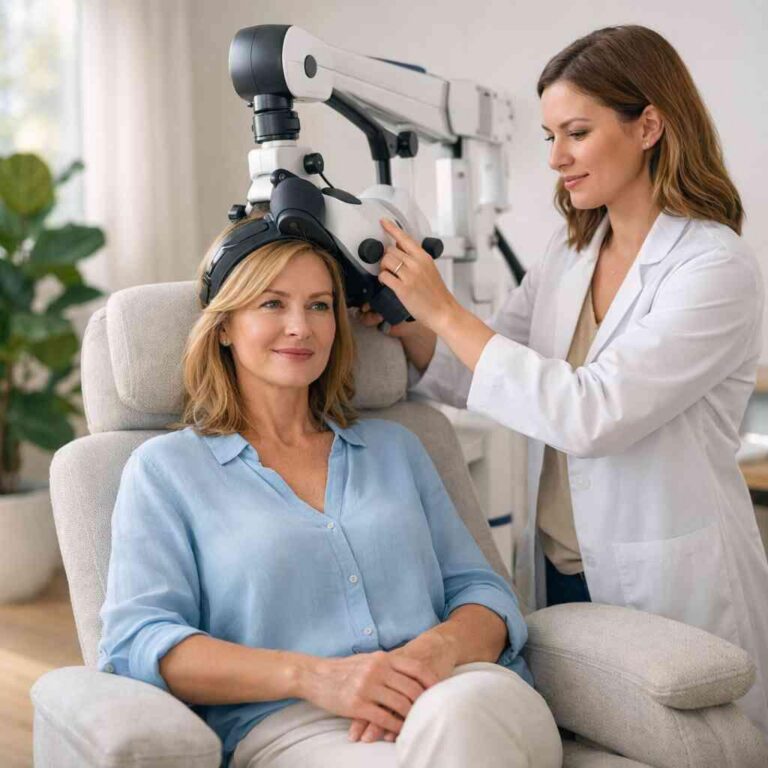
Good outpatient TMS therapy should feel structured and calm. You check in. You answer a few questions. You sit in a chair, and the team explains what will happen next. The machine hums. The session is focused and repetitive, but the environment should not feel cold. For people comparing non-invasive brain stimulation options, the experience matters as much as the device.
One patient described the room as “quiet enough to breathe.” That is the goal. You should not feel confused about timing, discomfort, or next steps. A clinic that explains the process clearly usually handles the rest with more care. The sensory details matter because treatment can feel intimidating before it ever starts.
Why Florida behavioral health rules and AHCA oversight matter for safety and trust
Safety is not a slogan. In Florida, outpatient centers operate within state oversight, including AHCA expectations for licensed care settings. That does not replace medical judgment, but it does matter. It helps set standards for documentation, infection control, and operational accountability. A trustworthy clinic should welcome questions about how it stays compliant.
This is especially important if you are comparing a polished luxury TMS center with a more modest clinic. Nice finishes do not equal strong systems. Ask about emergency procedures, screening policies, and how the clinic handles changes in symptoms. The goal is simple: you want a place that protects your trust, not just your comfort.
What transparent talk about TMS cost Florida and TMS insurance coverage Florida says about a clinic
Real transparency about TMS cost Florida usually starts with plain answers. A good clinic should explain insurance verification, possible copays, and any out-of-pocket costs before you commit. If they dodge those questions, that is a warning sign. For a deeper look, how to compare TMS insurance coverage in Florida clinics can help you frame the right questions.
Ask directly: does insurance cover TMS in Florida for your diagnosis? Coverage often depends on medical history, prior medication trials, and plan rules. That is why one clinic’s answer may differ from another’s. Clear financial talk is a sign of respect. It means they expect you to make a grounded choice, not an emotional one.
How transcranial magnetic stimulation therapy actually earns trust for depression, anxiety, OCD, and addiction-related care
How does TMS work in plain language and why magnetic brain therapy feels different from medication
How does TMS work? In simple terms, it uses magnetic pulses to stimulate targeted brain areas linked to mood and behavior. That is why some people call it magnetic brain therapy. It does not circulate through your whole body the way medication does, so it can feel different both physically and emotionally. If you are tired of side effects like dry mouth, weight gain, or fog, that difference may matter.
This is non-drug depression treatment and an alternative depression treatment for people who want another path. It does not replace therapy for every person, and it does not erase the need for careful diagnosis. But it can offer a new angle when medication has stalled. That is often why people look into TMS after failed medications.
When repetitive TMS and deep TMS therapy are considered for medication-resistant depression and TMS after failed medications
Repetitive TMS and deep TMS therapy are both used in clinical settings, but they are not identical. Each approach targets brain activity differently. Clinicians often consider them for medication-resistant depression after several medicines have not helped enough. That decision should follow a documented evaluation, not a quick sales pitch. If depression is your main concern, TMS treatment for depression in Florida offers a more focused explanation.
The evidence base matters here. Research from Stanford and related work by Carpenter and colleagues helped strengthen confidence in TMS outcomes for depression. Clinics often track progress with PHQ-9 or MADRS scores to keep the discussion objective. That does not promise a specific result. It does show whether the treatment is moving the needle in a measurable way.
Why TMS for anxiety, TMS OCD therapy, and TMS for PTSD Florida are not the same conversation
TMS for anxiety is not identical to depression treatment. TMS OCD therapy usually follows different targeting strategies and clinical goals. TMS for PTSD Florida also requires thoughtful screening and a careful discussion of symptoms, trauma history, and current stability. One label does not fit every brain pattern. If you are comparing options, TMS treatment for anxiety disorders in Florida and TMS treatments for obsessive-compulsive disorder (OCD) are good reference points.
A thoughtful clinic does not blur these categories. It explains why one protocol is being considered over another. That is especially important when symptoms overlap. Anxiety can ride alongside depression. OCD can sit inside a much broader stress pattern. Precision matters more than labels.
What the research can and cannot say about TMS therapy success rate, TMS long-term results, and TMS side effects safety
People want a TMS therapy success rate number. That is understandable. But research does not give one perfect answer for every clinic or every person. Outcomes vary by diagnosis, severity, treatment history, and adherence. Studies do support TMS as a meaningful option, but no honest clinician should promise a specific result. The same is true for TMS long-term results. 
Safety matters too. TMS side effects safety is usually discussed in plain terms: scalp discomfort, headache, or fatigue can happen, while serious effects are uncommon when protocols are followed. A clinic should explain contraindications and monitoring. It should also be honest about what the research does not know yet. That honesty builds trust faster than optimistic claims ever will.
Where TMS addiction recovery, TMS for substance use disorder, and TMS for smoking cessation fit with dual diagnosis treatment Florida and addiction rehab Florida
TMS addiction recovery and TMS for substance use disorder are areas of active research, not miracle territory. Studies, including work from centers such as the Medical University of South Carolina, suggest rTMS may help with cravings in some cases. That is promising, especially for people in dual diagnosis treatment Florida settings. It can also connect with addiction rehab Florida programs that already address therapy, relapse prevention, and medication management. For a focused overview, Top 7 Questions About TMS for Substance Use Disorder Florida is worth reviewing alongside clinical guidance. TMS for smoking cessation and even alcohol addiction brain stimulation are also being studied. The key is not to overstate the evidence. TMS can be one piece of a broader plan, not the whole plan. If a clinic speaks about addiction care with nuance, that is a strong sign. If it sounds too certain, slow down. ### When TMS for bipolar depression, TMS for teen depression, and TMS for young adults call for extra care and close screening
TMS for bipolar depression needs careful screening because mood activation risks must be considered. TMS for teen depression and TMS for young adults also call for age-sensitive evaluation, family involvement when appropriate, and close monitoring. This is not the place for guesswork. A responsible clinic should be comfortable saying that.
If you are asking about TMS treatments for bipolar disorder, the discussion should include current mood state, medication history, and safety planning. That is the kind of detail that protects people. It also shows the clinic understands how complex real-world care can be. The right team will slow down when the case is complicated.
What a smart next move looks like when you are comparing clinics in Miami, Fort Lauderdale, West Palm Beach, Orlando, and Tampa
How to compare a TMS clinic Miami, TMS Fort Lauderdale, TMS West Palm Beach, TMS South Florida, TMS Orlando, and TMS Tampa without getting lost in ads
Ads are loud. Good care is quieter. When you compare a TMS clinic Miami, TMS Fort Lauderdale, TMS West Palm Beach, TMS South Florida, TMS Orlando, and TMS Tampa, look for the details that repeat. Do they explain intake clearly? Do they offer reasonable scheduling? Do they talk about diagnosis, insurance, and follow-up without pressure? Those are the signals that matter.
Geography still counts. If you are commuting from Aventura or Coral Gables, parking and traffic may shape your choice. If you are farther north, access from Winter Park may matter more than a shiny downtown address. For location details, Florida TMS clinic locations and service areas can help you compare options with less guesswork. The goal is fit, not hype.
Why insurance checks and intake questions should happen before you choose a luxury TMS center or a more modest Florida mental health clinic
A luxury TMS center can look impressive, but appearance should never replace clarity. A smaller Florida mental health clinic may offer better communication and faster answers. The key is to ask the same intake questions everywhere. How many medication trials do they need? Which diagnoses do they treat most often? How soon can they verify insurance? Those answers tell you more than marble floors do.
The mistake we see most often is choosing on mood alone. People are tired. They want relief fast. That is understandable. Still, an organized intake process protects you from surprises later. If a clinic can explain its process in a few calm minutes, that is worth more than flashy branding.
What a good clinic should explain about TMS insurance coverage Florida, does insurance cover TMS in Florida, and out-of-pocket tradeoffs
A good clinic should explain TMS insurance coverage Florida in plain English. It should answer does insurance cover TMS in Florida without hiding behind jargon. If your plan covers care, ask how prior authorization works. If it does not, ask what self-pay looks like and whether anything can be staged. For financial planning, Ultimate Guide to TMS Cost Florida and Coverage 2026 is a useful place to start.
Here is the honest part: coverage rules can feel frustrating. That is normal. A clinic that helps you compare options, paperwork, and timing is doing real work for you. That support is part of quality care.
How seasonal Florida living and travel patterns can affect appointments for people coming from Aventura, Coral Gables, Boca Raton, Delray Beach, and Winter Park
Florida schedules have their own rhythm. Snowbirds arrive. Traffic shifts. Holidays crowd calendars. If you split time between homes, your appointment plan needs more flexibility than average. People coming from Aventura, Coral Gables, Boca Raton, Delray Beach, and Winter Park often need a clinic that can handle those patterns without chaos.
That is where consistency matters. If sessions are frequent, even small travel disruptions can become a problem. Ask whether the clinic can help you maintain continuity during seasonal moves or work travel. The more predictable the plan, the easier it is to keep showing up when life gets messy.
What to ask before you commit so your choice supports mental health care, not just convenience and hope
Before you commit, ask direct questions. Keep them simple. You deserve direct answers.
- How do you decide who is a candidate?
- Who reviews my diagnosis and medications?
- What side effects should I expect?
- How do you measure progress?
- What happens if I miss a session?
- How do you handle insurance delays?
If a clinic answers clearly, that is a good sign. If it evades, that is useful too. You do not need perfection. You need steadiness, honesty, and a plan that respects your limits. For more practical answers, common questions about TMS therapy in Florida can help you prepare.
How to use clinic resources like /locations/, /about-us/, /insurance-and-costs/, and /faq/ to make a grounded decision
Use the resources a clinic already gives you. Read the location pages. Read the team page. Read the insurance page. Read the FAQ page. Those pages should sound consistent, specific, and calm. If the story changes from page to page, pay attention. For a direct route to the team, Contact TMS can help you ask the right questions in one call.
You do not have to solve everything tonight. You do not have to trust your gut alone, either. Start with one clinic, one call, and one clear set of questions. Then compare two more. That is enough to make a better decision without burning yourself out.
FAQ
Does TMS work for depression if medications have failed?
TMS can help some people with medication-resistant depression, especially after several medication trials have not provided enough relief. Clinics often measure progress with tools like the PHQ-9 or MADRS. Research, including the broader TMS literature and major clinical guidance, supports it as a valid option. Still, no clinic should promise a specific result. The most useful answer depends on your history, diagnosis, and ability to attend sessions consistently.
What are the most common TMS side effects safety concerns?
Most people ask about headache, scalp discomfort, or fatigue. Those are among the more common issues. Serious complications are uncommon when trained clinicians follow proper screening and protocols. A good clinic should explain seizure risk, contraindications, and what happens if you feel uncomfortable during treatment. If they rush past safety, that is a problem.
Does insurance cover TMS in Florida?
Often, yes, but it depends on your plan and diagnosis. Many insurers want documentation of prior medication trials and sometimes psychotherapy history. Coverage can differ between commercial plans, Medicare, and employer policies. That is why clinics should verify benefits before treatment starts. Ask about copays, deductibles, and prior authorization so you know the real picture.
Is deep TMS therapy better than repetitive TMS?
Not universally. Deep TMS therapy and repetitive TMS are different methods, and the better choice depends on the condition being treated and the clinic’s protocol. Some people hear more about one than the other, but marketing should not decide this. Your screening results and symptom pattern should guide the decision. A good clinician explains why one approach fits your case better.
Can TMS help with anxiety, OCD, or PTSD in Florida?
It may help in selected cases, but the conversation is not the same for each condition. TMS for anxiety, TMS OCD therapy, and TMS for PTSD Florida require specific screening and realistic expectations. OCD, in particular, often uses different targets and protocols. A clinic should explain what the evidence supports and where it is still emerging. That honesty helps you avoid overpromises.
What should I ask before choosing a TMS clinic in Miami or elsewhere in Florida?
Ask who reviews your case, how they measure results, what insurance steps come first, and how they handle missed sessions. Also ask whether they treat your diagnosis often, and whether they offer a personalized treatment plan. If you live in South Florida, ask about parking, commute time, and session flexibility. If you want to compare options, make one call today and write down the answers side by side.