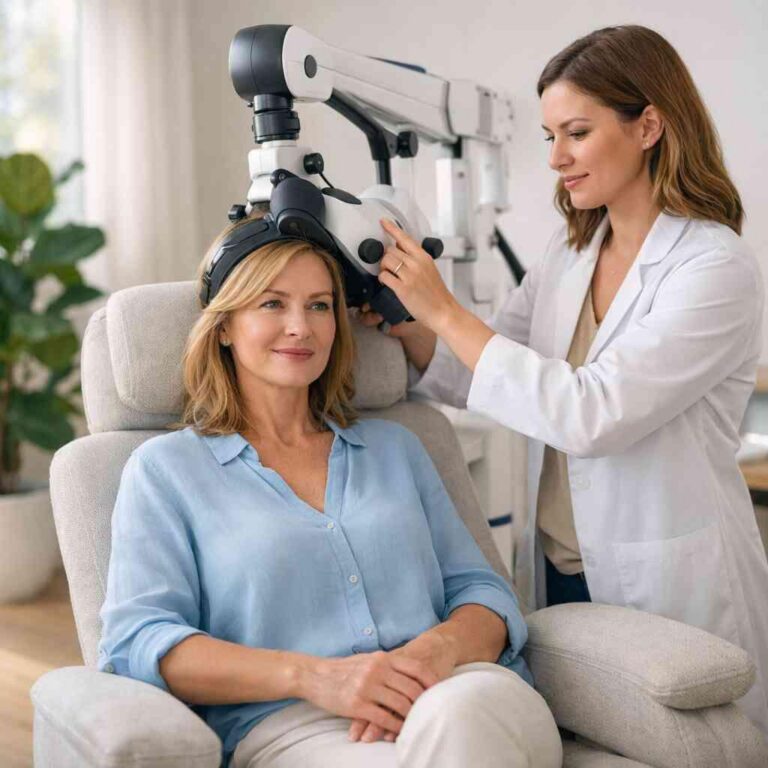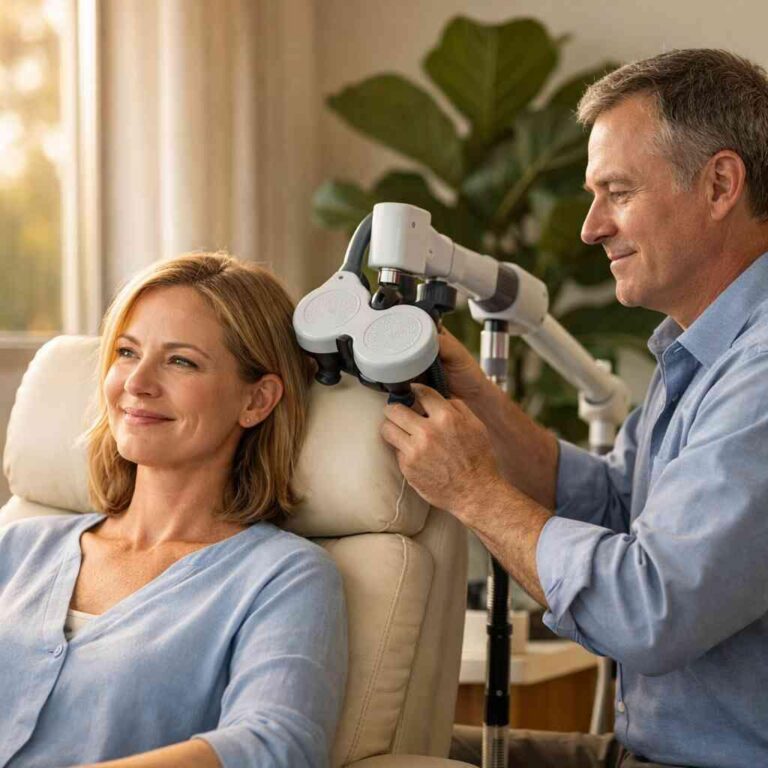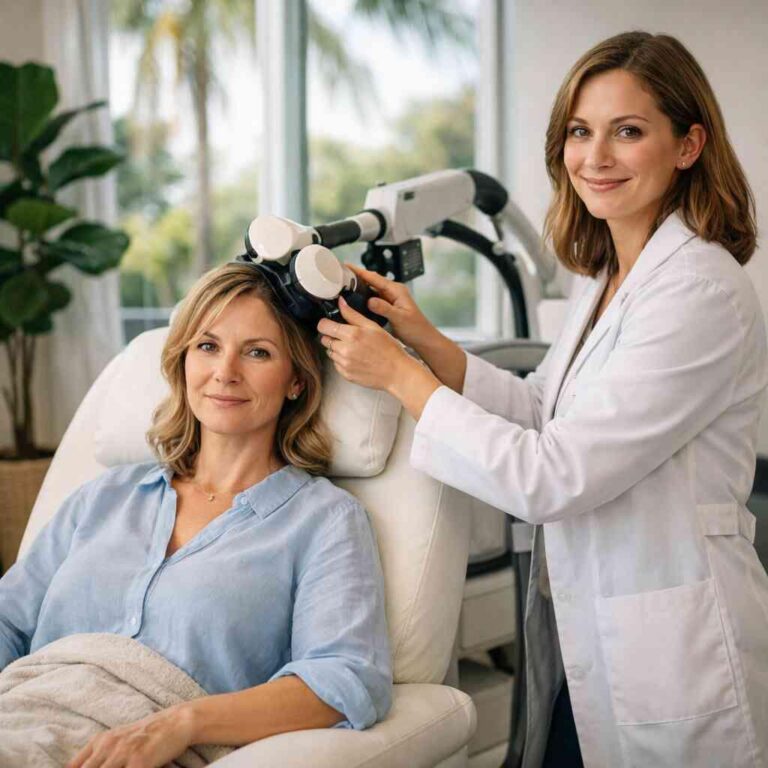
TMS therapy in Florida can help some people with OCD symptoms by using focused magnetic pulses to calm brain circuits involved in mental health obsessions and compulsions. It is a non-invasive brain stimulation option that may be appropriate after medications and talk therapy have not brought enough relief.
Key Takeaways
- TMS OCD therapy uses magnetic pulses to target brain networks linked to obsessive thoughts and compulsive behaviors.
- It is often considered when you have tried medications, therapy, or both without enough improvement.
- TMS is not a cure for OCD, and results vary, but it may be part of a broader plan that includes ERP and medication review.
- A Florida clinic should evaluate symptoms, history, safety, and coverage before treatment starts.
- If you are comparing options, ask about TMS cost Florida, TMS insurance coverage Florida, and whether a TMS psychiatrist Florida is involved.
Why OCD can feel louder when medications stop helping
When OCD symptoms keep breaking through medication or therapy, the day can start to feel ruled by fear, checking, counting, reassurance-seeking, or mental loops you cannot turn off. That is exhausting. If you are reading this because the medicine helped for a while and then stopped, that confusion is common and very real.
What OCD looks like when intrusive thoughts and rituals start running the day
OCD is not just “being neat” or “liking order,” and mental illness is not a character flaw. It often shows up as intrusive thoughts that feel sticky, disturbing, or impossible to ignore, followed by rituals meant to reduce the stress those thoughts create. Those rituals can be visible, like handwashing or checking locks, or hidden, like silent praying, reviewing, or repeating phrases in your head.
One person may spend an hour trying to “get it right” before leaving home. Another may know the fear is irrational and still feel unable to stop. That gap between insight and control is one reason OCD can feel so cruel. It also helps explain why simple advice rarely works.
A Florida mental health clinic should measure that burden carefully, not casually. Tools such as the Yale-Brown Obsessive Compulsive Scale, plus anxiety and depression screens like the PHQ-9, help show where the symptoms sit before treatment starts and whether they shift over time.
Why TMS treatment Florida can matter after failed medications and stalled talk therapy
TMS treatment Florida may matter when OCD has stayed stubborn after SSRIs, exposure work, or other care. For some people, the issue is not effort. It is that the brain patterns driving obsessions and compulsions stay too active. TMS gives clinicians another lever to pull without adding another daily drug.
Here is the part most people miss: OCD often travels with depression, anxiety, or both. That is why some clinics think in terms of TMS for anxiety, alternative depression treatment, and OCD support together rather than as separate silos. If you have already tried several medications, you may hear the phrase TMS after failed medications. That does not mean treatment is hopeless. It means the plan needs a different tool.
A client once described it like “my brain kept slamming the same door.” After several medication changes, the problem was not willpower. It was the pattern itself. That is the kind of case where a careful TMS evaluation can be useful, especially if you want a non-drug path that still respects the complexity of OCD.
What makes TMS OCD therapy different from the usual treatment path
TMS OCD therapy differs from standard care because it targets brain circuits linked to obsession and compulsion, rather than only trying to blunt symptoms with medication. It does not replace ERP for many patients, but it can support it. The best plans usually combine symptom mapping, medication review, and a realistic discussion of safety, time, and coverage. 
How transcranial magnetic stimulation therapy targets brain circuits tied to obsessions and compulsions
Transcranial magnetic stimulation therapy uses a magnetic coil placed over specific parts of the scalp. The coil sends brief pulses that influence activity in connected brain networks. In OCD, clinicians often focus on circuits involved in habit, error detection, and threat response. That is one reason people also call it magnetic brain therapy.
The research base is still growing, but it is not vague. TMS has stronger evidence in depression, including major studies such as the 2018 Stanford work by Carpenter and colleagues, and there is expanding research for OCD and other conditions. For depression, devices such as NeuroStar and BrainsWay have FDA clearance for certain uses; OCD protocols may differ by device and indication, so your clinic should explain exactly what is being offered and why.
Treatment pathWhat it targetsWhat you may expectMedication aloneBrain chemistry broadlyHelps some people, but side effects and partial response are commonERP therapyFear learning and response preventionStrong for OCD, but hard to sustain when symptoms are intenseRepetitive TMS / deep TMS therapySpecific brain circuitsNon-invasive, office-based, and often paired with other careFlorida patients often ask about deep TMS therapy versus standard repetitive TMS. The right choice depends on the device, the target, and the clinic’s protocol. A good TMS psychiatrist Florida will explain the difference in plain language, not marketing language.
Why non-invasive brain stimulation can fit into a plan that also includes ERP and careful medication review
Non-invasive brain stimulation works best as part of a plan, not as a standalone promise. For OCD, that often means combining TMS with ERP, checking whether current medication doses still make sense, and looking for hidden barriers such as sleep loss, substance use, or untreated trauma. The SAMHSA guidance on substance use treatment is useful here, because cravings, compulsions, and avoidance can overlap more than people realize; you can review that broader mental health context through the American Psychiatric Association and related clinical resources.
Some people also ask about a TMS and EMDR combination, especially when OCD sits next to trauma symptoms. That pairing may make sense in selected cases, but it should be guided by a licensed clinician who knows the whole picture. For Florida patients with dual diagnoses, a clinic may also discuss TMS addiction recovery, TMS for substance use disorder, or dual diagnosis treatment Florida if that is part of the clinical history.
A second client, this time from near Boca Raton, had OCD plus panic and long medication fatigue. What helped most was not a magic fix. It was a clearer map: which symptoms were OCD, which were anxiety, and which were medication side effects. That clarity made the next treatment decision feel less like guesswork.
If you want a broader primer on how this modality fits into care, the clinic’s guide to non-invasive brain stimulation is a useful place to start.
What should you ask before choosing a Florida TMS clinic for OCD?
Before you start TMS for OCD, ask how the clinic measures symptoms, who reviews your chart, how they handle safety, and what happens if you need medication changes during treatment. Also ask about insurance, total visit count, and whether they have experience with OCD specifically, not only depression. Clear answers matter more than glossy promises.
A practical comparison can help:
QuestionWhat a careful clinic should explainIs TMS appropriate for my OCD?How symptoms, history, and prior treatment failures support the recommendationWill insurance cover it?Whether does insurance cover TMS in Florida applies to your plan and diagnosisWhat about cost?The likely TMS cost Florida range after verification, not a guessWhich location fits me?Access from TMS clinic Miami, TMS Fort Lauderdale, TMS West Palm Beach, TMS Orlando, or TMS TampaFlorida access matters, too. People often search TMS near me Florida because commute time affects follow-through. That is especially true for patients coming from Aventura, Coral Gables, Delray Beach, Winter Park, or South Florida traffic corridors where a treatment schedule can feel like a second job. A clinic that understands those realities is easier to stay with.
If you are comparing providers, ask to see their OCD workflow, not just their general marketing. A thoughtful team should be transparent about TMS side effects safety, possible scalp discomfort or headache, and what they do if symptoms do not improve as hoped. You do not need hype. You need clarity.
For people who want a confidential Florida-based resource, TMS Treatment Florida can help you sort out whether TMS fits your situation, what questions to ask, and how to connect with the right clinic without pressure.
Frequently Asked Questions
Does TMS work for OCD symptoms?
It can help some people with OCD, especially when symptoms have not improved enough with medication or therapy alone. It is not a guaranteed fix, and response varies. A proper evaluation matters because OCD, anxiety, depression, and trauma can overlap.
How does TMS work for OCD?
TMS uses magnetic pulses to influence activity in brain circuits tied to obsession, habit, and threat response. Over time, that may reduce symptom intensity for some patients. The exact protocol depends on the clinic and device.
Is TMS safe for OCD treatment?
TMS is generally considered well tolerated, but side effects can include scalp discomfort, headache, or fatigue. A clinic should review seizure risk, implants, medication list, and other safety factors before starting.
What is the difference between deep TMS therapy and repetitive TMS?
Both use magnetic stimulation, but they differ in coil design and how deeply they may reach certain brain areas. Your clinician should explain why one protocol fits your symptoms better than the other.
Does insurance cover TMS in Florida for OCD?
Coverage varies by plan, diagnosis, and documentation. Many plans have stricter rules for OCD than for depression, so verification is important. Ask the clinic to check your benefits before treatment starts.
How long does TMS maintenance therapy last?
Maintenance plans vary. Some people need booster sessions or periodic follow-up, while others do not. A good clinic will discuss long-term planning before treatment begins.
Can TMS help if I also have depression or substance use concerns?
Yes, it may still be considered, but the treatment plan should account for all active conditions. Some clinics also evaluate TMS depression treatment Florida, TMS for PTSD Florida, or TMS for bipolar depression when those symptoms are part of the picture.