When meds stop moving the needle and the room still feels heavy
If you are reading this because the second or third medication still did not lift the weight, that frustration makes sense. Deep TMS therapy exists for that exact kind of stuck feeling. For many people, the hardest part is not starting treatment. It is realizing the usual path has not been enough.
Why deep TMS therapy feels different when SSRIs, therapy, or both have not brought relief
Deep TMS therapy uses transcranial magnetic stimulation therapy instead of another pill cycle. That matters when SSRIs flatten your energy, dull your focus, or simply stop helping. It also matters when therapy has helped you understand your patterns, but the heaviness still returns. You may know the work. Your brain may still feel welded shut.
This is why people often look for TMS depression treatment Florida after failed medication rounds. The goal is not to force hope. It is to give your brain another path forward through non-invasive brain stimulation. Many patients describe the relief of finally hearing a plan that does not begin with “let’s try yet another adjustment.” That shift can feel small. It is not small.
What medication resistant depression can look like in real life for people in Florida
Medication resistant depression does not always look dramatic. Sometimes it looks like getting the kids ready in Boca Raton, answering work emails, and feeling nothing in between. Sometimes it looks like sleeping too much in Orlando, then staring at the ceiling at 3 a.m. It can also mean you have tried therapy, exercise, supplements, and medication changes, yet the fog stays.
We hear this from people seeking TMS treatment Florida every week. Some have already been through a lot. Others feel guilty for needing more help. That guilt is common, but it is not useful. Your symptoms are real, and they deserve a real response. In clinical terms, this is where medication resistant depression and TMS after failed medications often enter the conversation.
Why the hum of non-invasive brain stimulation can feel like a different kind of hope than another prescription
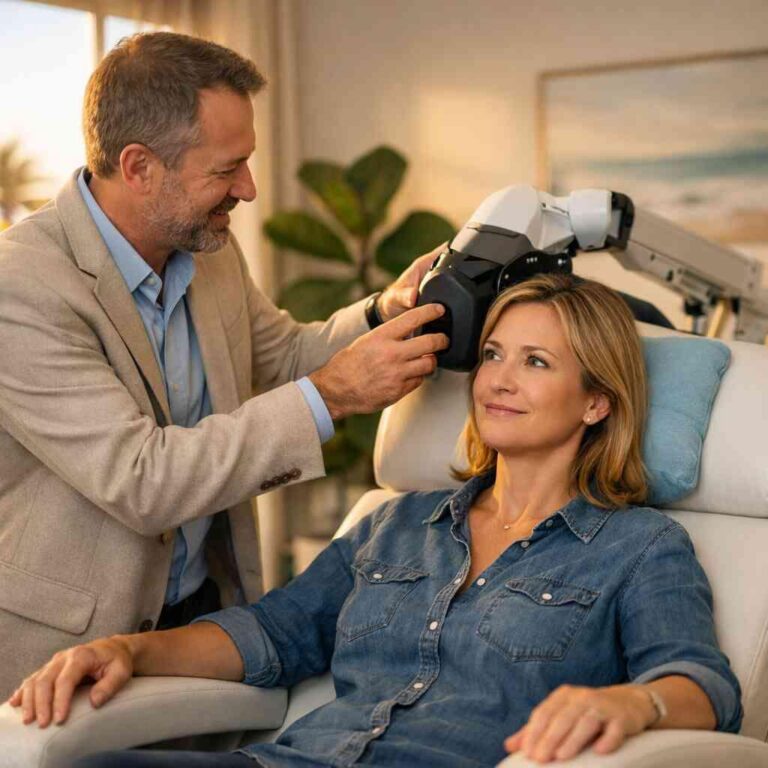
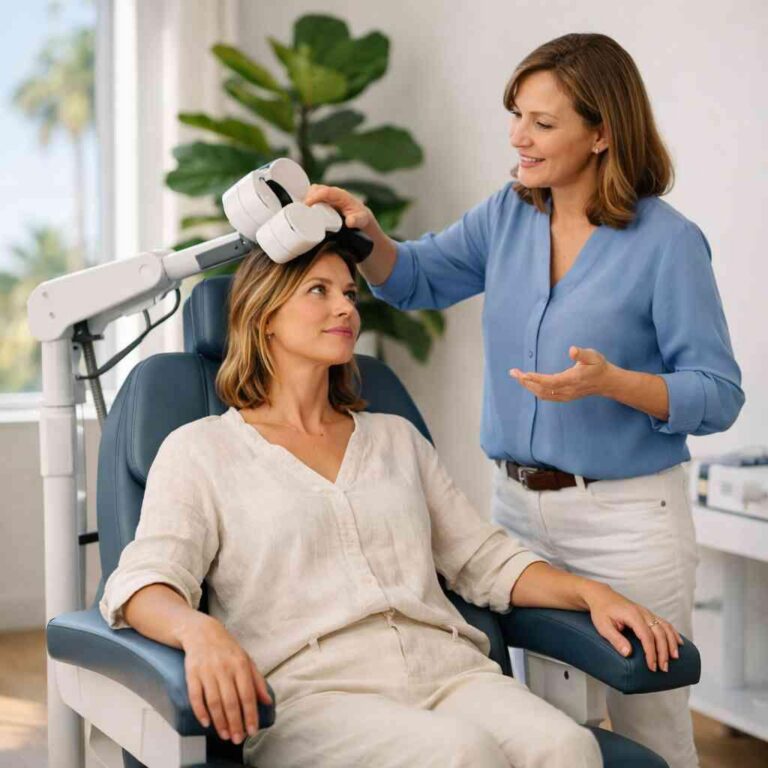
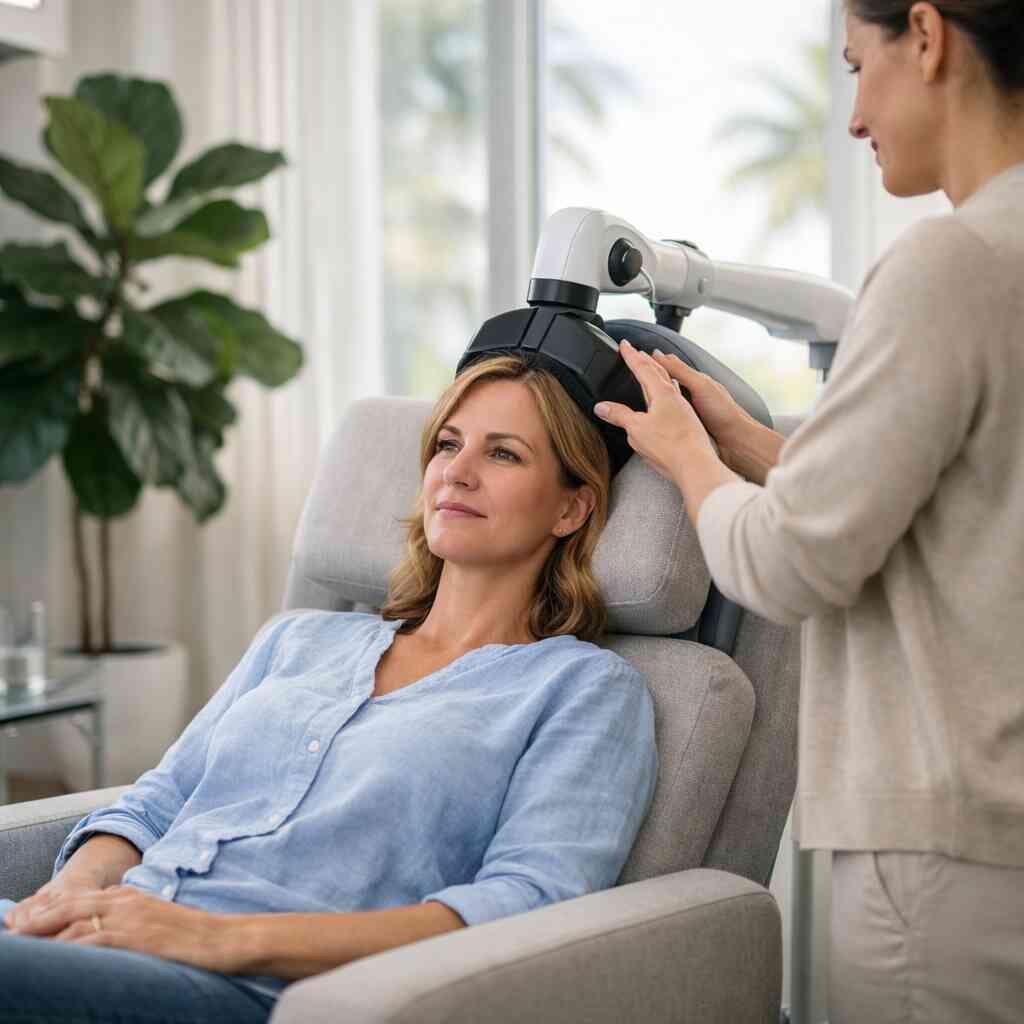
There is something grounding about a treatment that feels physical, precise, and repeatable. The chair. The quiet room. The soft clicking sound. For some people, that sensory experience matters because it feels concrete. It feels less like guesswork. It feels like someone is working with the machine and not just adding another bottle.
One client near Fort Lauderdale told us that after months of med changes, the calm of the TMS room felt strange at first. Then it felt reassuring. The staff explained every step, and that reduced the dread more than any pill label ever had. That is the part most people miss. Hope often starts as clarity, not excitement.
What deep TMS is actually doing inside the brain
Deep TMS is not magic, and it is not vague wellness language. It is a form of magnetic brain therapy that aims to influence circuits involved in mood, attention, and compulsive thinking. The science keeps evolving, and transcranial magnetic stimulation research has expanded far beyond early questions about whether it works at all.
How transcranial magnetic stimulation therapy uses magnetic pulses to speak to overactive brain circuits
How does TMS work in plain English? A coil placed near the scalp sends magnetic pulses into targeted brain areas. Those pulses create small electrical changes in the underlying tissue. The goal is to nudge networks that may be underactive or overactive in depression and related conditions. It does not involve anesthesia, surgery, or systemic medication.
This is why many clinicians describe it as a form of non-drug depression treatment. It tries to influence the brain directly, rather than through chemistry alone. The treatment is often discussed as an FDA approved depression treatment, but device-specific indications still depend on diagnosis and local clinical judgment. For depression, the evidence base is strongest, and the 2018 Stanford study by Carpenter and colleagues helped reinforce that seriousness. If you want a broader primer, the APA practice guidelines and the Clinical TMS Society consensus review are useful reference points.
Why repetitive TMS and deep TMS are related but not identical in reach and depth
People often use repetitive TMS and deep TMS as if they mean the same thing. They are related, but not identical. Standard repetitive TMS usually stimulates more superficial cortical areas. Deep TMS uses a different coil design to influence deeper and broader networks. That difference in reach is why patients sometimes compare them directly.
FeatureRepetitive TMSDeep TMSReachMore surface-levelBroader and deeperSession feelSimilar chair-based treatmentSimilar chair-based treatmentMain useMood and other conditionsMood and other conditionsCore differenceCoil design and depthCoil design and depthIf you are comparing options, the difference between deep TMS and standard TMS matters. So does the diagnosis. A clinic should explain why one protocol fits your case better than another. Good care sounds specific, not generic.
What clinicians usually look at before recommending FDA approved depression treatment for depression anxiety OCD or bipolar depression
A careful evaluation matters before anyone recommends a protocol. Clinicians look at diagnosis, prior medication history, symptom severity, and safety factors. They also ask whether your symptoms fit depression, anxiety, TMS OCD therapy, or TMS for bipolar depression. Sometimes the real picture includes more than one condition.
That is why a thoughtful Florida mental health clinic should not rush you. It should ask about sleep, appetite, panic, compulsions, trauma symptoms, and past responses to treatment. It should also review any current medications and current mood stability. If a clinic skips that work, keep looking. The right plan starts with the right map.
How tools like PHQ 9 or MADRS help track change without guessing
People deserve more than “I think it’s helping.” Clinicians often use rating tools such as the PHQ-9 or MADRS to measure symptoms over time. These tools do not replace your lived experience. They give it structure. They help the team see whether the treatment is changing the trend, not just the mood of the day.
That matters because memory gets distorted when you feel low. A bad morning can make the whole month feel hopeless. Objective tools help prevent that trap. They also help clinicians adjust the plan responsibly. In practice, this is part of what makes TMS long-term results easier to discuss honestly.
Why Florida patients ask about TMS from Miami to Orlando before they ask about more pills
Florida families are practical. They ask what treatment looks like, how long it takes, and whether the drive will be manageable. That is smart. If the plan is not workable in real life, it will not last.
What a TMS clinic Miami or TMS Fort Lauderdale visit can feel like compared with a traditional office appointment
A visit to a TMS clinic Miami or TMS Fort Lauderdale often feels more structured than a standard therapy appointment. You check in, settle into a chair, and the team positions the coil with care. The session may feel repetitive, but that repetition is part of the design. Most people appreciate knowing what comes next.
For many patients, that predictability lowers anxiety. It can also make treatment easier to fit around work. A receptionist in Coral Gables may schedule around lunch. A caregiver in Fort Lauderdale may plan around school pickup. That kind of fit matters more than fancy language.
How TMS South Florida access can matter for people commuting from Aventura Coral Gables Boca Raton or Delray Beach
Access changes adherence. If you live in Aventura, Coral Gables, Boca Raton, or Delray Beach, you already know traffic can shape the day. That is why TMS South Florida patients often ask about parking, commute time, and appointment windows before they ask about anything else. They are not being difficult. They are being realistic.
Here is what almost no online guide mentions: convenience can influence outcomes indirectly because it affects attendance. People who can show up consistently have fewer gaps. That is especially true for outpatient care. In this region, smooth logistics are part of good behavioral health care. They are not an afterthought.
What to know about TMS Orlando, TMS Tampa, and TMS West Palm Beach when you are looking for TMS near me Florida
Searches for TMS Orlando, TMS Tampa, and TMS West Palm Beach usually come from people who are comparing distance with consistency. A clinic may be close on a map, but not close in a real schedule. That is why TMS near me Florida should mean more than the shortest drive. It should mean a team that can actually support follow-through.
If you want location details, our Florida locations page can help you compare service areas. Seasonal residents often need that clarity even more. So do people splitting time between counties. The best plan is the one you can actually keep.
How Florida mental health clinic options fit with seasonal residents, busy work schedules, and outpatient care rules
Florida has a unique rhythm. Seasonal residents come and go. Families travel. Professionals work hybrid schedules. Add summer storms and unpredictable traffic, and you need a clinic that understands flexibility. The Florida Agency for Health Care Administration also sets rules for outpatient settings, so a serious clinic should operate with clear standards and documentation. 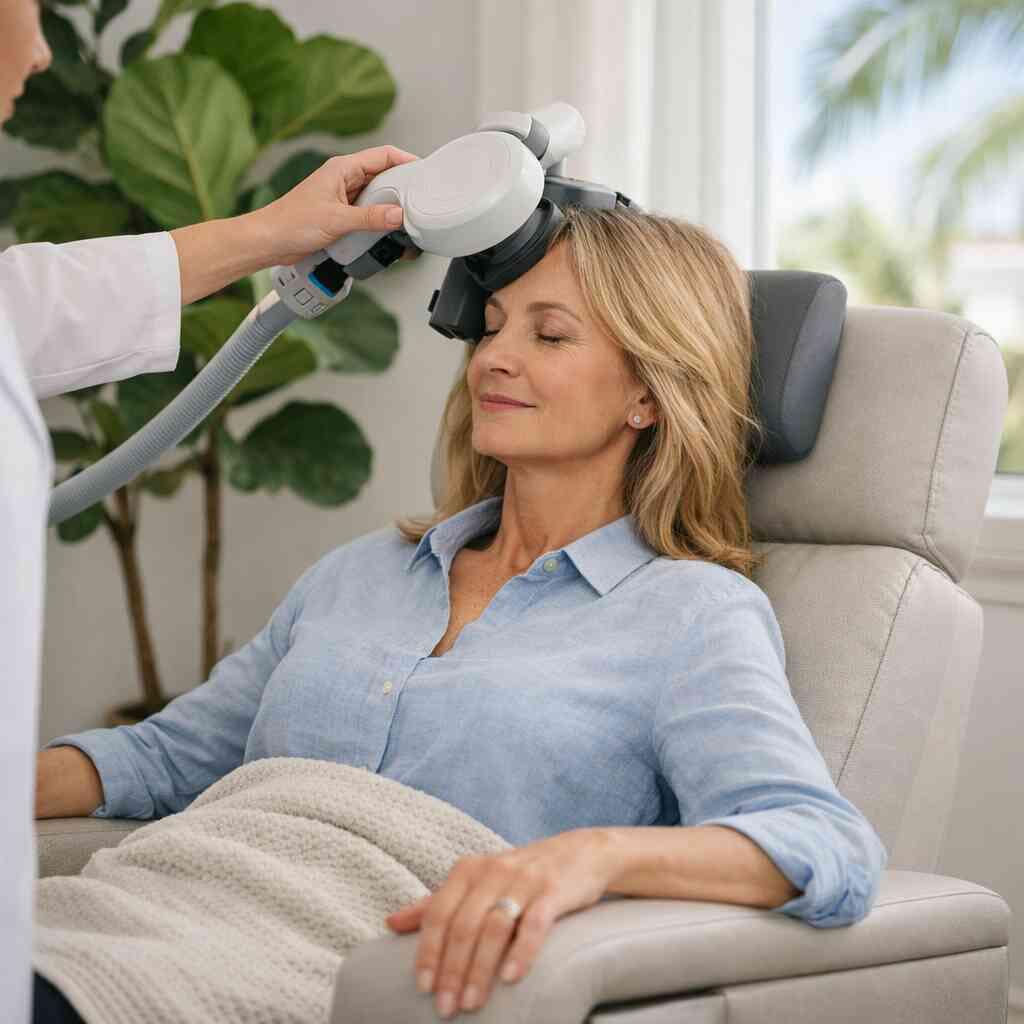
That matters for trust. It matters for safety. It also matters for timing, because many people prefer outpatient care that does not interrupt work or home life. If you are comparing a Florida behavioral health option, ask how they handle scheduling, monitoring, and communication. Those details tell you a lot.
What insurance verification often involves when people ask does insurance cover TMS in Florida or worry about TMS cost Florida
Insurance questions can feel awkward, but they should not. Ask them early. Does insurance cover TMS in Florida? Often the answer depends on diagnosis, prior treatments, and plan rules. That is why verification is usually part of the process. If you want a deeper look, our insurance and cost guide explains the usual questions. It can help you understand TMS insurance coverage Florida without guessing. The tricky part is that plans vary, so no honest clinic should promise an exact number before checking benefits. If someone does, be careful. Transparency is more useful than a polished pitch. How people decide whether deep TMS is the right next move
This decision is personal. It is also clinical. People usually reach TMS after a long stretch of trying, waiting, and adjusting. That history deserves respect.
When TMS after failed medications makes more sense than another switch or dose change
If you have tried several medications, TMS after failed medications may deserve real consideration. Another switch can still be reasonable, but repeated trial-and-error can wear people down. TMS offers a different mechanism. That is the main reason it enters the discussion.
A good clinician should help you compare options without pressure. Sometimes another medication makes sense. Sometimes alternative depression treatment is the better move. Sometimes ketamine treatment in Florida or other options may be discussed as well. The key is matching the tool to the problem, not chasing novelty.
Why TMS side effects safety often feels easier to tolerate than the side effects of another medication cycle
Most people ask about TMS side effects safety right away, and they should. The side effect profile is usually more local and more limited than many medication changes. People may notice scalp discomfort, headache, or fatigue. Serious risks are uncommon, but every patient needs a real screening conversation.
If you want a fuller breakdown, this safety overview is a helpful place to start. It is also where you can better compare TMS therapy success rate claims with actual clinical context. The honest version is simple: tolerability is often one reason people consider it. It is not the only reason.
How TMS for anxiety TMS OCD therapy TMS for PTSD Florida and TMS for bipolar depression fit different clinical stories
Not every brain story is the same. TMS for anxiety, TMS OCD therapy, TMS for PTSD Florida, and TMS for bipolar depression all require careful diagnosis. The symptom pattern matters. So does current mood state, especially with bipolar illness.
That is why a skilled TMS psychiatrist Florida should screen carefully. For OCD, the target network may differ from depression. For PTSD, trauma history matters. For bipolar depression, stability and medication context matter a great deal. The more precise the evaluation, the better the clinical fit.
Where TMS addiction recovery and TMS for substance use disorder fit alongside dual diagnosis treatment Florida and addiction rehab Florida
Interest in TMS addiction recovery has grown because cravings and compulsive use are tied to brain circuits, not just willpower. Research on TMS for substance use disorder and cravings continues to expand, including studies from centers like the Medical University of South Carolina. That said, this is still an evolving area. It should be discussed as promising, not guaranteed.
For patients in dual diagnosis treatment Florida or addiction rehab Florida, this matters because depression, anxiety, trauma, and substance use often overlap. The SAMHSA TIP materials on substance use emphasize integrated care, and that principle fits TMS discussions too. If a clinic ignores co-occurring issues, that is a warning sign.
Why some people also ask about TMS for smoking cessation, alcohol addiction brain stimulation, TMS for teen depression, TMS for young adults, and TMS and EMDR combination
People often ask about TMS for smoking cessation and alcohol addiction brain stimulation because they want relief from more than one loop. Others ask about TMS for teen depression and TMS for young adults because early treatment decisions can shape a whole season of life. Families often want something non-drug when side effects have already been discouraging. That is understandable.
Some also ask about TMS and EMDR combination. That combination can make sense in some cases, especially when trauma and mood symptoms overlap. A clinic should explain how those services might complement each other. It should never promise that one modality replaces another in every case. Real care is narrower than hype.
What a strong next step looks like when you are trying to choose a clinic
Choosing a clinic should feel calming, not confusing. The right team will help you sort the noise from the useful details. If the search feels endless, narrow it with clinical questions.
How to compare a best TMS clinic Florida search with a real clinical fit
A best TMS clinic Florida search should not end with the flashiest website. It should end with the clearest answer to your concerns. Ask about screening, diagnosis, staffing, monitoring, and coordination with your other providers. Ask how they handle TMS maintenance therapy if symptoms improve and then need ongoing support.
If you are looking for a luxury TMS center, remember that comfort should never replace competence. Clean space matters. Quiet rooms matter. But practical follow-through matters more. A clinic should feel grounded, not theatrical.
What to ask a TMS psychiatrist Florida about screening, treatment planning, and maintenance therapy
Before you commit, ask direct questions. Good clinicians welcome them. They should explain the protocol, the expected schedule, and what happens if progress stalls. They should also discuss whether TMS long-term results will likely require maintenance planning.
Useful questions include:
- What diagnosis are you treating?
- How do you measure progress?
- How do you decide if I am responding?
- What happens after the acute course?
- How do you handle medication coordination?
If you need team background, our about page can help you learn more about the practice style and approach. You deserve to know who is guiding care. That is basic trust, not extra polish.
How Florida behavioral health and a luxury TMS center should still feel grounded, practical, and transparent
A polished lobby does not equal better care. Florida behavioral health works best when the experience is calm, plainspoken, and transparent. You should know what each visit involves. You should know how insurance is verified. You should know who answers questions when something changes.
A good clinic also respects privacy and pace. Not everyone wants a big production. Many people want a quiet room, a skilled team, and honest answers. That is enough. More than enough.
What to look for in TMS reviews Florida without letting hype decide for you
TMS reviews Florida can be helpful, but read them carefully. Look for patterns, not praise alone. Do people mention clear communication? Do they mention scheduling ease? Do they mention feeling informed? Those are better signs than vague excitement.
Do not let a few polished reviews make the decision for you. Also do not let one irritated review scare you off. Clinical fit comes from a consultation, not a star rating. The purpose is to learn, not perform.
Why the clearest path is usually a consultation that checks diagnosis, goals, insurance coverage, and location fit before anything else
The smartest move is usually simple. Get a consultation that checks diagnosis, goals, insurance coverage, and location fit. That process can answer TMS cost Florida questions, verify benefits, and map out commute realities. It can also clarify whether your case belongs in depression care, OCD care, anxiety care, or a dual-diagnosis plan.
If you are comparing TMS clinic Miami, TMS Fort Lauderdale, or other Florida access points, start with the practical details. Then ask the clinical questions. You do not have to figure this out alone, and you do not have to figure it all out today. Start with one call, and ask for the kind of conversation that leaves you clearer than when you began.
Frequently Asked Questions
Question: What is deep TMS therapy, and how does it work in 2026 for people looking for TMS treatment Florida?
Answer: Deep TMS therapy is a form of transcranial magnetic stimulation therapy that uses magnetic pulses to target brain circuits involved in mood, attention, and compulsive thinking. In plain terms, it is non-invasive brain stimulation that aims to help the brain function more effectively without surgery or anesthesia. At TMS Treatment Florida, the focus is on providing a careful, personalized evaluation so the treatment plan fits your diagnosis, history, and goals. If you have been searching for a non-drug depression treatment or an alternative depression treatment after medication has not brought enough relief, deep TMS may be worth discussing with a qualified clinician. The best next step is a consultation where the team can explain how TMS works, review whether you may be a candidate, and answer questions about location, scheduling, and insurance.
Question: How is deep TMS therapy different from repetitive TMS, and why does that matter for TMS depression treatment Florida?
Answer: Deep TMS therapy and repetitive TMS are related, but they are not exactly the same. Repetitive TMS usually stimulates more surface-level brain areas, while deep TMS uses a different coil design intended to influence broader and deeper networks. That difference can matter when a clinician is deciding which protocol may be more appropriate for medication resistant depression, TMS for anxiety, TMS OCD therapy, or another condition. A thoughtful Florida mental health clinic should explain the difference between deep TMS therapy and standard repetitive TMS in a way that makes sense for your situation, not just in technical terms. At TMS Treatment Florida, patients can ask direct questions about the rationale for care, what the sessions feel like, and how the team tracks progress over time using tools like PHQ-9 or MADRS when appropriate.
Question: Does insurance cover TMS in Florida, and what should I know about TMS cost Florida before scheduling a consultation?
Answer: Does insurance cover TMS in Florida is one of the most common questions people ask, and the honest answer is that it depends on your diagnosis, your prior treatment history, and your plan details. Because coverage varies, TMS insurance coverage Florida usually has to be verified before treatment starts. A reliable clinic should not guess at your benefits or promise exact pricing without checking first. TMS Treatment Florida can help you understand the process, including how benefits are usually reviewed and what information your insurer may request. If you are comparing TMS cost Florida across clinics, it is smart to ask about verification, appointment frequency, and whether the office can help coordinate documentation. Clear financial communication matters just as much as clinical care, especially when you are already dealing with the stress of medication resistant depression or other ongoing symptoms.
Question: Can TMS Treatment Florida help with TMS for anxiety, TMS OCD therapy, TMS for PTSD Florida, or TMS for bipolar depression?
Answer: TMS may be considered for more than one condition, but the evaluation needs to be specific. TMS for anxiety, TMS OCD therapy, TMS for PTSD Florida, and TMS for bipolar depression all require careful screening because the symptom pattern, current mood state, and treatment history matter. A skilled TMS psychiatrist Florida should review your diagnosis, medications, sleep, mood stability, and any co-occurring concerns before recommending a protocol. At TMS Treatment Florida, the goal is to match the treatment to the clinical picture rather than offering a one-size-fits-all plan. That matters whether you are coming from a Florida mental health clinic background, looking for Florida behavioral health support, or trying to find a path after TMS after failed medications. The right approach can also be important for people considering TMS and EMDR combination care when trauma and mood symptoms overlap.
Question: What should I expect if I am searching for TMS clinic Miami, TMS Fort Lauderdale, TMS West Palm Beach, TMS Orlando, TMS Tampa, or TMS near me Florida?
Answer: If you are searching for TMS clinic Miami, TMS Fort Lauderdale, TMS West Palm Beach, TMS Orlando, TMS Tampa, or simply TMS near me Florida, the most important thing is finding a clinic that fits both your clinical needs and your daily life. Travel time, parking, appointment windows, and follow-up communication all affect whether treatment is realistic and consistent. TMS South Florida patients often need flexibility, and seasonal residents or busy professionals may need even more structure. A good clinic should explain what sessions look like, how often you will come in, how progress is monitored, and what happens if adjustments are needed. TMS Treatment Florida aims to offer that kind of practical clarity, along with compassionate support for people who have already tried a lot and are looking for a steadier next step. If you are comparing the best TMS clinic Florida options, look for transparency, thoughtful screening, and a team that treats your concerns seriously.
Question: Is deep TMS therapy a good option for TMS addiction recovery, TMS for substance use disorder, or dual diagnosis treatment Florida?
Answer: Deep TMS therapy is an area of growing interest for TMS addiction recovery and TMS for substance use disorder because cravings and compulsive use are linked to brain circuits, not just willpower. That said, this is still an evolving field, so it should be discussed as promising rather than guaranteed. For people in dual diagnosis treatment Florida or addiction rehab Florida, the bigger picture matters: depression, anxiety, trauma, and substance use often overlap, and treatment works best when those needs are addressed together. TMS Treatment Florida can help determine whether TMS might fit into a broader care plan that also supports mood symptoms and recovery goals. Some patients also ask about TMS for smoking cessation or alcohol addiction brain stimulation, and those conversations should always include careful expectations, safety discussion, and coordination with other providers when needed. If you are also interested in TMS maintenance therapy or long-term planning, the clinic can explain how follow-up is usually approached.