When SSRIs stop moving the needle and every refill feels like déjà vu
Why medication-resistant depression can feel like a slow trap, even when you are doing everything right
There is a particular exhaustion that comes from taking your medication exactly as prescribed and still feeling stuck. The bottle runs low, the refill comes in, and nothing in your chest feels lighter. That can feel discouraging, confusing, and deeply unfair. If you are reading this after another month of little change, that feeling makes sense.
Medication-resistant depression does not mean you failed. It usually means the depression circuit has not responded well enough to the treatments tried so far. Many people also notice side effects before they notice relief, especially with SSRIs or SNRIs. Dry mouth, brain fog, sleep changes, and emotional flattening can make the whole process feel like trading one burden for another.
We hear this from people across Florida, from Coral Gables to Aventura and from Boca Raton to Delray Beach. Some have tried therapy, medication adjustments, or both. Some have also worked through grief, burnout, trauma, or substance use at the same time. That pile-up is real, and it can make hope feel expensive.
The red flags that suggest it may be time to think beyond another prescription tweak
A good rule is simple: if several thoughtful medication trials have not given you meaningful relief, it is worth asking a bigger question. Have you had only a partial response, with symptoms returning again and again? Have you had side effects that limit dose increases? Have you spent months waiting for a breakthrough that never quite arrives?
Here are common signs people bring up before they look into TMS treatment in Florida for medication-resistant depression:
- You feel better for a week, then slide back.
- Your energy improves, but motivation stays flat.
- Sleep, appetite, or focus remain disrupted.
- Medication changes create more side effects than benefit.
- Therapy helps with insight, but the heaviness stays.
One client in South Florida described it as “living with a dimmer switch that never reaches normal.” That is a vivid way to describe it. It is also common. In those cases, the question is not, “Why are you not trying harder?” The question is, “What treatment is better matched to your brain right now?”
Where TMS treatment Florida fits when pills, therapy, or both have not brought relief
This is where TMS treatment Florida often enters the conversation. Transcranial magnetic stimulation therapy is a non-invasive brain stimulation option used for people with treatment-resistant mood disorders, especially medication-resistant depression. It is often discussed as an alternative depression treatment or non-drug depression treatment when standard approaches have not done enough. That does not mean it replaces every other treatment. It means it can sit beside them, or after them, when the path has gone quiet.
Many people search for TMS after failed medications because they want something that does not add another daily pill burden. Others want clarity about TMS depression treatment Florida because they are tired of guessing. If you are comparing options, you may also want to read more about TMS side effects and safety information, since safety questions are normal and important. Here is the part most people miss: the decision is not about optimism alone. It is about fit, evidence, access, and tolerance for side effects.
What actually happens when magnetic pulses meet a tired depression circuit
How transcranial magnetic stimulation therapy works in plain language without the jargon haze
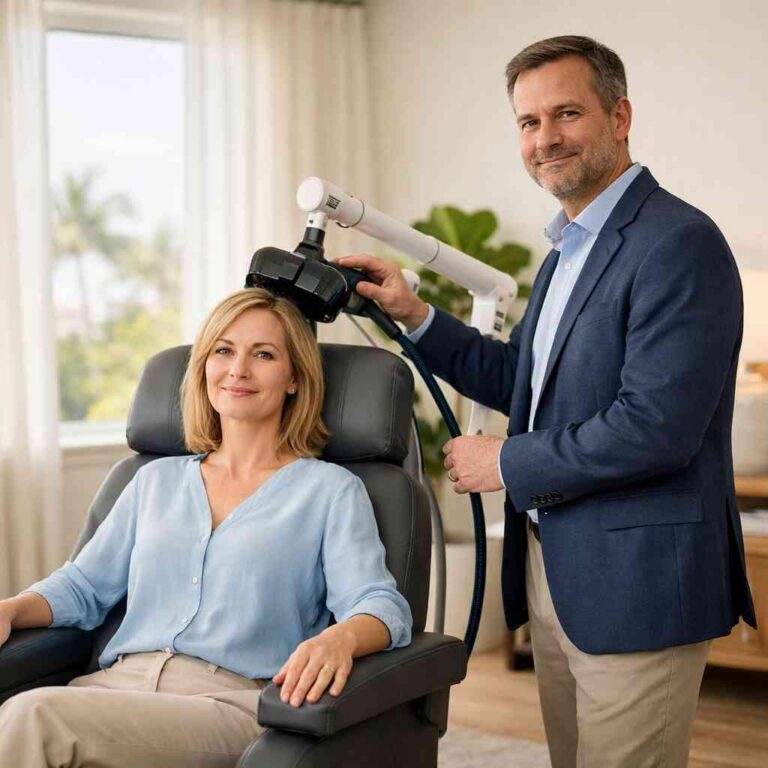
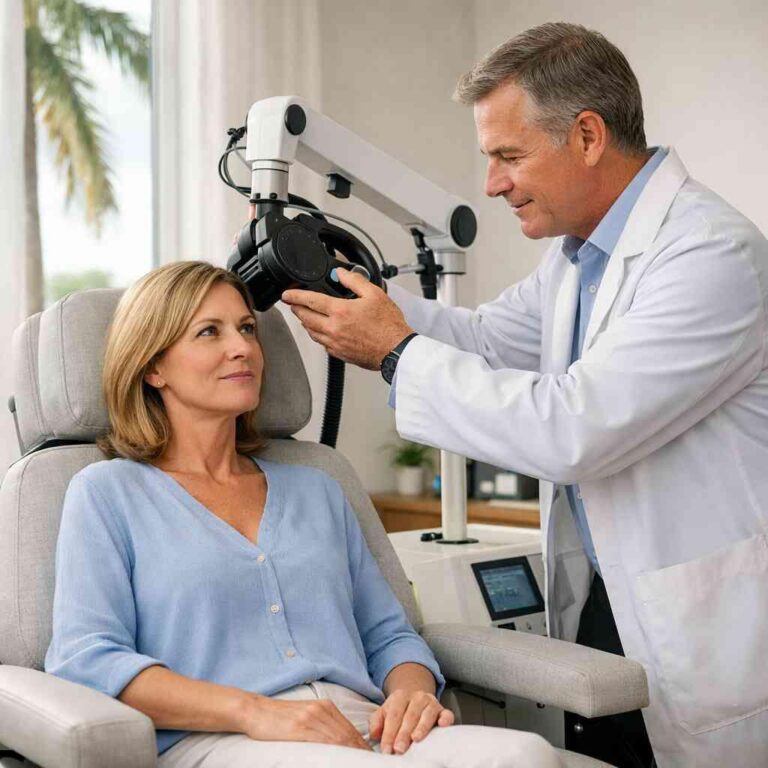
If the phrase “magnetic brain therapy” sounds abstract, you are not alone. The simplest explanation is this: a small coil rests against the scalp and sends magnetic pulses to specific brain areas involved in mood regulation. Those pulses are not shocks. They are focused signals that can help nudge activity in circuits that have become underactive or poorly coordinated.
That is why people often ask, how does TMS work? The answer is that it aims to change brain network activity over time through repeated stimulation. The research base includes transcranial magnetic stimulation research from academic centers, along with clinical experience in outpatient settings. For a deeper technical overview, some readers like The science behind transcranial magnetic stimulation in 2026.
A patient once told us the first session felt oddly ordinary. “It was a machine hum, not a dramatic event,” she said. That tracks with most clinical settings. The treatment is quiet, measured, and repetitive. It is not meant to knock you out. It is meant to meet the brain where it is.
Why non-invasive brain stimulation feels different from medication and talk therapy
Medication changes chemistry system-wide. Therapy changes patterns through insight, behavior, and relationship. Non-invasive brain stimulation works more directly on targeted neural circuits. That difference matters because it helps explain why some people respond to TMS after many medication trials have fallen short.
People sometimes ask if TMS is simply another version of hope. It is not. It is a structured intervention with protocols, measurement, and clinical follow-up. It also feels different day to day. You do not swallow it. You do not build a pill schedule around it. For many, that difference alone reduces the emotional drag.
Here is a simple comparison:
Treatment typeMain focusCommon feelMedicationWhole-body neurochemistryDaily, systemic, sometimes foggyTalk therapyThoughts, behavior, patternsReflective, gradualTMSTargeted brain circuitsBrief, office-based, repeatedThat table is not a ranking. It is a map. And maps matter when you have been lost for a while.
What to expect from repetitive TMS and deep TMS therapy in a Florida clinic setting
Most people hear about repetitive TMS first, then ask about deep TMS therapy. Repetitive TMS, often called rTMS, uses repeated magnetic pulses over a treatment session. Deep TMS uses a different coil design that reaches broader or deeper brain regions, depending on the protocol. The right choice depends on the condition treated, the device used, and the clinician’s assessment.
A Florida clinic setting should feel calm, organized, and predictable. The room is usually quiet. You sit in a chair. Staff position the coil carefully. Sessions are brief compared with a full therapy hour, but the schedule is consistent. People from TMS clinic Miami, TMS Fort Lauderdale, TMS West Palm Beach, TMS Orlando, and TMS Tampa often like that consistency because Florida traffic is already enough friction.
What we have seen in 2026 specifically is that scheduling flexibility matters almost as much as the protocol. Seasonal residents, commuters, and parents all need treatment plans that fit real life. That is why local access across TMS South Florida and beyond can make a serious difference.
How clinicians track progress with tools like PHQ-9 or MADRS instead of guessing
Good TMS care does not rely on vibes. Clinicians often use the PHQ-9 or MADRS to measure symptoms before treatment and during treatment. Those tools help track changes in sleep, mood, focus, motivation, and overall depression burden. They also make conversations more honest, because you can see trends instead of trying to remember how miserable last Tuesday felt.
That matters because hope can make people overestimate progress, and fear can make them miss it. Measurement keeps both in check. It also lets a TMS psychiatrist Florida team adjust the plan when needed. That is part of why a serious Florida mental health clinic should document symptoms rather than guessing.
If you are exploring the clinical side more deeply, the phrase repetitive magnetic brain stimulation may turn up in research summaries and patient education. It is another way people describe the same basic family of protocols. For many readers, the useful question is not the label. It is whether the clinic measures, adapts, and communicates clearly.
The decision that turns hope into a plan without overpromising a cure
What the evidence says about FDA-approved depression treatment and where the research is still evolving
TMS is widely discussed as an FDA-approved depression treatment for certain depression cases, especially when medications have not worked well enough. That said, device approval and individual response are not the same thing. The evidence is encouraging, but it does not promise the same result for every person. Responsible clinics say that plainly.
One landmark reference in this field is the 2018 Stanford study by Carpenter and colleagues, which helped reinforce the real-world value of TMS for depression in clinical practice. Broader guidelines from the APA and the Clinical TMS Society also support TMS as a serious option for selected patients. If you want a general research snapshot, what new transcranial magnetic stimulation research shows in 2026 is a useful starting point. Still, the smartest takeaway is simple: evidence is strong enough to take seriously, but honest enough to avoid hype.
A good clinic will also talk about the TMS therapy success rate carefully. That phrase gets searched a lot, but the honest answer depends on diagnosis, prior treatment history, protocol, and measurement method. A careful team will not sell certainty. It will talk about probability, fit, and follow-up.
How TMS side effects safety, TMS insurance coverage Florida, and TMS cost Florida usually get sorted before treatment starts
Before treatment begins, patients usually want three things: clarity, safety, and numbers. TMS side effects safety is often the first worry. Most people want to know whether the treatment hurts, whether it is tolerable, and what the rare risks look like. That is exactly why a good clinic should explain the experience in plain language and point you to TMS side effects and safety information.
Costs are the next pressure point. TMS cost Florida can vary by clinic, device, and insurance plan, and it is not useful to pretend otherwise. The real question is often, does insurance cover TMS in Florida? Sometimes yes, sometimes with prior authorization, documentation, and diagnostic requirements. You may find a full breakdown in TMS insurance coverage Florida or in the TMS cost in Florida and coverage options guide.
Here are the usual pieces that get checked:
- Diagnosis and prior treatment history
- Insurance benefits and authorization rules
- Session frequency and total treatment length
- Copay, deductible, and out-of-pocket estimate
- Follow-up or maintenance planning
That process can feel tedious. It is also where good admin support saves a lot of stress.
Why local access matters from TMS clinic Miami to TMS Fort Lauderdale, TMS West Palm Beach, TMS Orlando, and TMS Tampa
Local access matters more than people expect. Depression already steals energy. If your clinic is a two-hour drive each way, treatment becomes much harder to sustain. That is why searches like TMS near me Florida and best TMS clinic Florida are not just SEO phrases. They are practical survival questions. 
Florida’s geography and traffic patterns make proximity a real issue. South Florida patients may compare a TMS clinic Miami option with one in Broward or Palm Beach County. Central Florida patients often look at TMS Orlando, while west coast residents may need TMS Tampa or a nearby county clinic. A clinic page with clear location details, such as TMS clinic near me in Florida, can reduce friction quickly.
That is especially helpful for people juggling work, caregiving, or seasonal travel. A patient in Winter Park or near the Aventura corridor may need a plan that respects commute time and weather interruptions. Florida storms, bridge traffic, and summer humidity all affect adherence more than most brochures admit. Practical access is part of treatment quality.
When TMS can also make sense for TMS for anxiety, TMS OCD therapy, TMS for bipolar depression, and TMS after failed medications
TMS is most often discussed for depression, but the conversation often expands. Some patients ask about TMS for anxiety, especially when anxiety is tangled with low mood. Others ask about TMS OCD therapy, TMS for PTSD Florida, or TMS for bipolar depression. Each condition has its own evidence profile and clinical nuance, so the answer should never be generic.
For anxiety-specific concerns, a dedicated resource like TMS for anxiety disorders can help clarify fit. For OCD, TMS treatment Florida for OCD is worth reviewing. If mood symptoms sit within a broader dual-diagnosis picture, dual diagnosis treatment in Florida can help frame the conversation. TMS also appears in emerging discussions around TMS addiction recovery, TMS for substance use disorder, TMS for smoking cessation, and even alcohol addiction brain stimulation, though the evidence varies by use case and should be handled carefully.
The SAMHSA TIPs on substance use disorders still matter here. They remind clinicians to treat cravings, relapse risk, and co-occurring depression as connected, not separate silos. Some research, including work associated with the Medical University of South Carolina, has explored rTMS for craving reduction. That is promising, but it is not a miracle. It is a tool, and a useful one when paired with the right behavioral care.
What to ask a Florida mental health clinic about TMS maintenance therapy, TMS long-term results, and next steps if depression keeps returning
If you are considering TMS, ask about the full arc, not just the first session. TMS maintenance therapy may be discussed if symptoms return later. TMS long-term results should be framed honestly, with follow-up plans and relapse prevention in mind. You deserve a clinic that explains what happens after the acute course ends.
Ask these questions:
- How do you measure progress during treatment?
- What happens if my symptoms return?
- Do you coordinate with therapy or medication prescribers?
- What does the follow-up plan look like?
- How do you handle co-occurring anxiety, OCD, or substance use?
A strong clinic should answer those questions without rushing you. If it cannot, keep looking. You may also want to review the clinic’s general information about us and frequently asked questions before you commit to anything. If you want the most direct answer to “Can this help me?”, start with an evaluation, not a guess.
Frequently Asked Questions
Does TMS help with medication-resistant depression?
TMS can help some people with medication-resistant depression, especially when several medication trials have not worked well. It is best understood as a structured, non-drug option for selected patients. Clinicians usually use symptom scales like PHQ-9 or MADRS to track change over time. That makes the process more objective than relying on memory alone. The honest answer is that response varies, but the treatment is taken seriously in modern psychiatry.
How does TMS work compared with antidepressants?
Antidepressants change brain chemistry across the whole body. TMS uses magnetic pulses to stimulate targeted brain circuits linked to mood. That difference can matter if you have struggled with side effects, incomplete relief, or repeated relapse. TMS is also office-based, so you do not take it at home every day. Many people like the fact that it avoids adding another systemic medication.
Is TMS safe, and what side effects should I expect?
Most patients ask this first, and they should. Common side effects often include scalp discomfort, a brief headache, or mild fatigue. Clinics should explain safety clearly and review who is not a good fit. Rare risks exist, so a careful screening process matters. If you want more detail, ask the clinic for its side-effect education and emergency procedures before starting.
Does insurance cover TMS in Florida?
Sometimes it does, but coverage depends on your plan, diagnosis, and prior treatment history. Some insurers require documentation of failed medications and prior authorization. Others have narrower rules. A clinic with strong intake support can often help verify benefits before treatment starts. It is smart to ask for an estimate in writing so you can compare options clearly.
Can TMS be used for anxiety, OCD, or bipolar depression too?
It can be considered in some cases, but the answer depends on the condition and the clinical picture. TMS has a stronger and more established role in depression and some OCD protocols. For bipolar depression, careful screening is important because treatment planning differs. Anxiety and trauma symptoms may also be addressed when they sit alongside depression. The best approach is a personalized evaluation from a qualified clinician.
How long do TMS results last?
That varies. Some people maintain gains for a long time, while others need booster or maintenance sessions later. Good clinics should discuss relapse prevention before treatment ends. They should also explain what to do if symptoms creep back. Long-term planning matters because depression often returns in waves, not straight lines.
If you are weighing treatment-resistant depression options right now, you do not have to solve everything today. Start with one careful conversation, one insurance check, and one clinic call. If you are comparing options in Florida, a thoughtful Florida mental health clinic can help you sort the details without pressure.