If you are reading this after another medication made sleep worse, appetite feel strange, or your mood flatter, take a breath. That feeling is real. It is also common. Many families start searching for a TMS psychiatrist Florida option only after the pill routine stops making sense. That is often where better questions begin.
When a second opinion starts to matter more than another prescription
Why families in Florida start comparing TMS psychiatrist Florida options after medication side effects pile up
The call usually starts with frustration. A parent says the medication helped for a while, then the side effects piled up. A college student says they feel foggy, restless, or oddly numb. In that moment, families start looking for TMS treatment Florida options because they want something more structured than trial and error. They want a plan that respects both symptoms and daily life.
A careful psychiatrist should listen to the whole story, not just the diagnosis code. They should ask what changed after each medication, how long symptoms lasted, and which side effects became deal-breakers. That matters because medication resistant depression and TMS after failed medications are not slogans. They are clinical clues that shape next steps.
One mother from Palm Beach County told us her son could not tolerate the dry mouth and sleep disruption from three different medications. She was not looking for a miracle. She wanted a clear explanation, a safer path, and less guessing. That is the kind of moment where compassionate psychiatric care earns trust.
What a real psychiatric evaluation for TMS should uncover before anyone talks about treatment
A real psychiatric evaluation for TMS should do more than confirm sadness. It should map symptoms, triggers, treatment history, medical risks, and functional losses. It should also screen for bipolar features, trauma symptoms, substance use, and sleep problems. Without that, transcranial magnetic stimulation therapy becomes an oversimplified answer to a more complicated problem.
Good evaluations often use tools like the PHQ-9 or MADRS to create a baseline. Those scores do not tell the whole story, but they give you a place to compare progress later. A thoughtful clinician may also discuss prior therapy, current medication use, and whether non-drug depression treatment fits the bigger picture. If the visit feels rushed, that is a warning sign.
Families in Florida often tell us the best consultations feel calm and plainspoken. No pressure. No jargon. Just a clear explanation of what the symptoms suggest and what they do not suggest. That is the tone you want when asking about an FDA approved depression treatment or an alternative depression treatment plan.
How to tell whether depression, anxiety, OCD, PTSD, or bipolar depression belongs in the same care plan
This is where many people get stuck. Depression, anxiety, OCD, trauma, and bipolar depression can overlap. They can also respond differently to treatment. A skilled clinician knows not to toss them into one bucket. That matters because TMS for anxiety, TMS OCD therapy, TMS for PTSD Florida, and TMS for bipolar depression each require careful framing.
A good TMS psychiatrist should explain which symptom is primary. They should also explain what is secondary. For example, panic may follow depression, or obsessional thinking may coexist with trauma. That distinction changes how a personalized TMS treatment plan gets built. It also helps decide whether TMS and EMDR combination planning belongs in the conversation.
In the cases we have reviewed this year, the strongest families asked one simple question: “What are we treating first, and why?” That question keeps the visit grounded. It also protects you from confusing every mental health concern with one treatment lane. In Florida, where people often juggle work, school, and travel between seasonal homes, that clarity matters.
Why TMS after failed medications can feel like a smarter question than trying one more pill
There is a point where “one more medication” stops sounding hopeful. It starts sounding exhausting. That is often why people ask about TMS for medication resistant depression instead of another prescription. TMS is non-invasive brain stimulation, so it does not add another daily drug burden. For many families, that alone feels more manageable.
The evidence is part of the reason people take it seriously. Research has continued over the years, and transcranial magnetic stimulation research remains active. Still, no honest clinician should promise a specific outcome. That would go beyond the evidence.
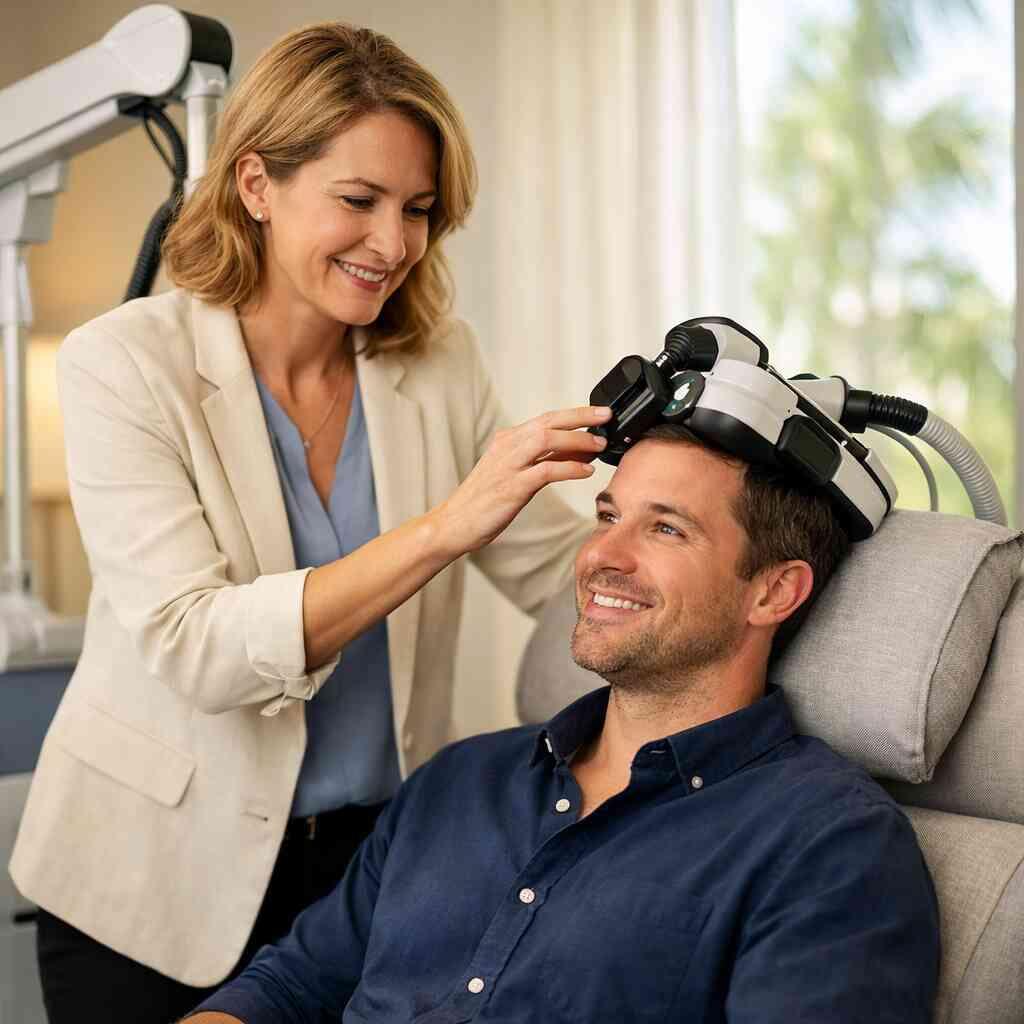
If you want a plain answer to how does TMS work, think of it as targeted magnetic pulses that help activate underperforming brain circuits. It is often described as magnetic brain therapy, but the real value is more specific than the nickname suggests. It is a structured, outpatient option for people who need something more focused than another medication swap.
The trust test every Florida family should use before choosing a TMS clinic
How to tell if the psychiatrist actually leads the plan or just signs off on it
Here is the part most families miss. A clinic can look polished and still feel impersonal. The real test is who leads the care. You want a psychiatrist-led TMS care process, not a setup where someone else does the talking and a doctor only signs forms. That difference shapes safety, follow-through, and trust.
Ask who performs the diagnostic review. Ask who adjusts the plan if symptoms shift. Ask how the psychiatrist stays involved during treatment. A strong clinic will answer directly. A weaker one will hide behind scheduling language and vague team descriptions.
If you need background on the care team, look for clear staff bios on a real Florida mental health clinic site, such as the clinic’s about page. You should know who is responsible for decisions. You should also know how outpatient follow-up works if symptoms worsen. That is not too much to ask.
What evidence based depression treatment should look like when a clinic talks about non-invasive brain stimulation
Evidence-based care should sound boring in the best way. It should include an assessment, a diagnosis, a treatment rationale, a safety review, and measurable outcomes. For depression, that often means using the PHQ-9 or MADRS again during treatment. It may also mean discussing whether deep TMS therapy or repetitive TMS fits the patient’s needs.
Strong clinics reference established sources, not marketing gloss. You should hear mention of the APA practice guidelines or the Clinical TMS Society consensus review. For equipment, many clinics discuss FDA-cleared systems such as NeuroStar or BrainsWay without overclaiming what those devices can do. That is the right tone: clear, conservative, and honest.
In Florida, this matters because families compare many Florida behavioral health options at once. Some are excellent. Some are not. If a clinic speaks mainly in adjectives, keep looking. If it explains the method, the measurement, and the follow-up, that is a better sign.
Why TMS reviews Florida should never matter more than clinical fit, safety, and follow-through
Reviews can help you spot patterns. They can also mislead you. A glowing TMS reviews Florida page says little about whether the clinic fits your diagnosis, schedule, or safety needs. A skeptical review does not automatically mean poor care either. What matters most is the actual process.
Use reviews as a starting point, not the finish line. Then ask about safety, cancellations, communication, and what happens if a session is missed. Ask how the clinic handles medication coordination and symptom changes. Ask whether there is a plan for TMS maintenance therapy if benefits hold over time.
One family near Aventura told us they almost chose a clinic because of perfect reviews alone. After asking about follow-up and emergency response, they realized the better option was the one that explained every step calmly. That is why fit matters more than star ratings. Trust should feel earned.
What Florida mental health clinic credentials, office rules, and outpatient standards should quietly reassure you
Florida has real outpatient standards, and that should comfort you. A legitimate clinic should operate under appropriate Florida Agency for Health Care Administration rules and follow sensible office procedures. That includes consent, documentation, infection control, and emergency planning. You do not need a legal lecture. You do need confidence.
Ask about outpatient flow, arrival times, and who supervises treatment rooms. Ask how insurance verification works and whether prior authorization is handled in-house. Ask how the clinic protects privacy. These details show whether the operation is steady or improvised.
If you are comparing a TMS clinic Miami option with one in Broward, or looking at TMS South Florida versus a TMS Orlando office, the same standards should apply. The zip code changes. The safety expectations should not. That is one reason families keep asking for the best TMS clinic Florida can offer.
What separates a careful TMS psychiatrist from a sales pitch
How does TMS work and why the answer should be simple enough for your teenager to understand
A good doctor should explain TMS in plain English. The machine places magnetic pulses near the head. Those pulses stimulate specific brain areas linked to mood and regulation. That is the short version. If your teenager cannot understand the explanation, the clinic probably uses too much marketing language.
This is where transcranial magnetic stimulation basics matter. A patient should know what the session feels like, how long it takes, and what the goals are. They should understand that TMS is not shock therapy. They should also know it is usually done in an outpatient setting. Clear understanding lowers fear fast.
The best clinicians explain the sensation honestly. It may feel like tapping. It may produce a scalp twitch. It is not supposed to feel dramatic. That kind of plain talk builds trust better than any brochure.
What deep TMS therapy and repetitive TMS mean when you are comparing TMS depression treatment Florida options
Families often hear two terms and think they are the same. They are related, but not identical. Repetitive TMS uses repeated magnetic pulses to target brain circuits. Deep TMS therapy uses a different coil design to reach broader or deeper regions. The right choice depends on diagnosis, equipment, and clinician judgment.
If you want a clean comparison, ask the clinic to explain the deep TMS therapy and repetitive TMS differences in writing. That keeps the conversation grounded. It also helps you compare TMS depression treatment Florida choices without guessing. A trustworthy clinic will not treat one method as universally superior.
Repetitive TMSDeep TMSDeliveryRepeated surface pulsesBroader coil-based stimulationTypical useMood and other symptom targetsOften discussed for broader network engagementDecision factorDiagnosis and clinician judgmentDiagnosis and available device### Why TMS side effects safety matters more than promises about TMS therapy success rate
This is where sales language gets dangerous. No ethical clinic should promise a specific TMS therapy success rate for your case. That depends on diagnosis, history, medications, consistency, and biology. What they should explain is TMS side effects safety.
Common side effects may include scalp discomfort, headache, or fatigue. Serious risks are uncommon, but they should still be discussed directly. A safe clinic will not rush past this. It will explain who should avoid treatment or get special review first. That is especially important for people with seizure risk or complex medication histories.
If you want a deeper safety overview, the clinic should be willing to point you toward its safety guidance. The point is not to scare you. It is to replace vague hope with informed consent. That is what careful care looks like.
How TMS insurance coverage Florida and TMS cost Florida should be explained before anyone schedules treatment
Cost confusion creates needless stress. A trustworthy clinic should explain TMS insurance coverage Florida before treatment begins. It should also answer the direct question: does insurance cover TMS in Florida? Sometimes the answer depends on diagnosis, prior treatment history, and policy rules. That should be spelled out early.
Ask for a written estimate. Ask what happens if authorization is delayed. Ask whether there are self-pay options. Ask what is included in the quoted number. A good Florida TMS treatment clinic will answer without pressure.
For more detail, families usually want a resource like TMS cost questions for families in Florida or the clinic’s insurance page. That helps you compare apples to apples. It also reduces the chance of surprise bills later.
Why location matters when you are looking for TMS clinic Miami, TMS Fort Lauderdale, TMS West Palm Beach, TMS Orlando, or TMS Tampa access
Location is not just convenience. It is adherence. TMS usually requires repeated visits, so the drive matters. Families from Boca Raton, Delray Beach, Winter Park, and Coral Gables often ask for the nearest option because traffic and school schedules are real constraints. That is especially true for TMS near me Florida searches. 
The right clinic should have accessible office hours and clear parking details. It should also help you compare offices across TMS clinic Miami, TMS Fort Lauderdale, TMS West Palm Beach, TMS Orlando, and TMS Tampa without making you feel rushed. If you live in TMS South Florida, proximity can decide whether treatment is sustainable.
A practical clinic will point you to its Florida locations page and help you choose the most workable site. That kind of support matters more than polished slogans. People stick with care they can realistically attend.
The decision frame that turns uncertainty into a clear next move
How to compare TMS for anxiety, TMS OCD therapy, TMS for PTSD Florida, and TMS for bipolar depression without mixing them into one bucket
These conditions overlap, but treatment planning should not blur them together. TMS for anxiety may focus on different symptoms than TMS OCD therapy. TMS for PTSD Florida brings trauma into the picture. TMS for bipolar depression requires extra caution, especially around mood switching risk. A careful psychiatrist separates them before recommending anything.
That is why the consultation matters so much. The best question is not, “Can TMS help?” It is, “Which symptoms are we targeting, and what is the evidence for this profile?” The answer should sound tailored, not generic. If it sounds copy-pasted, pause.
If you want a more detailed treatment reference, look at the clinic’s treatment options or treatment-specific pages. That can help you compare TMS treatment for depression in Florida, anxiety, OCD, and bipolar depression without confusion. Different problems deserve different plans.
When TMS addiction recovery, TMS for substance use disorder, and dual diagnosis treatment Florida belong in the same conversation
This is a growing area, and honesty matters. TMS addiction recovery and TMS for substance use disorder are being studied, especially for craving reduction and relapse support. Research from centers such as the Medical University of South Carolina has added momentum to the discussion. Still, this is not a stand-alone cure. It is one part of a broader behavioral plan.
That is where dual diagnosis treatment Florida comes in. If depression and alcohol use feed each other, both need attention. The same is true for anxiety, trauma, and nicotine dependence. A clinic should also know when TMS for smoking cessation or alcohol addiction brain stimulation ideas may be relevant, and when they are not.
For this population, SAMHSA TIP guidance on substance use treatment should frame the conversation. Good care is coordinated, not fragmented. If you need a starting point, the clinic’s addiction treatment information should explain how TMS fits alongside counseling and recovery support.
Why families ask about TMS for teen depression, TMS for young adults, and TMS maintenance therapy before they commit
Parents ask these questions because they are trying to protect time, money, and hope. TMS for teen depression and TMS for young adults raise special questions about school, family support, and symptom tracking. A clinic should explain who is a candidate and who needs another level of review first. That conversation should feel careful, not casual.
Families also ask about TMS maintenance therapy because they want long-term planning, not just short bursts of improvement. Maintenance is not guaranteed, and it is not the same for everyone. Still, it is reasonable to ask how the clinic thinks about relapse prevention. That question shows maturity, not pessimism.
If your child or young adult is struggling, ask how school schedules, transportation, and follow-up are handled. Those practical details affect success more than any brochure claim. The best clinic will respect that reality.
What to ask about TMS long-term results, transcranial magnetic stimulation research, and TMS and EMDR combination planning
Long-term planning should never be vague. Ask what the clinic tracks after treatment ends. Ask whether it uses symptom tools like the PHQ-9 over time. Ask what the follow-up schedule looks like if symptoms return. That is how you learn whether TMS long-term results are monitored or merely assumed.
You can also ask how the clinic reads the research. A thoughtful team should discuss transcranial magnetic stimulation research without overstating it. They should know what evidence supports depression care, what remains under study, and where patient selection matters. If trauma is present, ask whether TMS and EMDR combination treatment is appropriate in a coordinated plan.
A clinic that welcomes these questions is usually more trustworthy. The conversation feels slower, but it is safer. And in mental health care, slower often means better.
How to choose the best TMS clinic Florida for your situation and what to do after the consultation feels right
You are looking for three things: clarity, consistency, and follow-through. That is the real definition of the best TMS clinic Florida for your needs. If the psychiatrist explains the plan plainly, the office handles insurance cleanly, and the team treats you with patience, that is a strong sign. If anything feels rushed or vague, keep looking.
A good next move is simple. Review the clinic’s credentials, confirm the location, and send the paperwork. If you want a family-centered starting point, visit the clinic’s contact page after you compare options. You can also check their common questions about TMS treatment if you need a calmer read before you call.
You do not have to solve everything tonight. Start with one call, one question list, and one honest consultation. That is enough to move forward with more confidence.
Frequently Asked Questions
How do I know if TMS is right after failed medications?
If several medications helped only briefly, caused hard side effects, or never improved symptoms enough, TMS may be worth discussing. A psychiatrist should review your treatment history, diagnosis, and medical risks first. They should also explain whether TMS for medication resistant depression fits your case. The best next move is a full evaluation, not a rushed yes or no.
Does insurance cover TMS in Florida?
Sometimes, yes. Coverage depends on your insurer, diagnosis, prior medication trials, and documentation. Ask the clinic to verify TMS insurance coverage Florida before scheduling. You should also ask what prior authorization requires and whether self-pay options exist. A good clinic will explain this clearly.
What does a TMS session feel like?
Most people describe it as tapping or pulsing on the scalp. Some feel mild discomfort at first, and others adjust quickly. A session is usually outpatient and does not require anesthesia. Side effects can happen, so ask about TMS side effects safety before you start. The clinic should explain what is normal and what is not.
Is TMS safe for anxiety, OCD, or PTSD?
TMS may be considered for some people with these conditions, but the plan should be diagnosis-specific. TMS for anxiety, TMS OCD therapy, and TMS for PTSD Florida are not identical uses. The psychiatrist should explain why a certain protocol fits your symptoms. Safety review and follow-up matter just as much as the machine itself.
How long do TMS results last?
That varies. Some people maintain benefits for a long time, while others need maintenance sessions or additional care. Ask about TMS long-term results and how the clinic tracks progress after the main course ends. A strong clinic uses symptom measures and follow-up visits rather than guesswork.
Can TMS help with addiction or smoking cessation?
Research is growing, especially around cravings and dual diagnosis care. TMS addiction recovery, TMS for substance use disorder, and TMS for smoking cessation may be discussed in some cases, but they are not universal answers. These questions should be part of a broader recovery plan. Ask how the clinic coordinates with counseling or rehab supports.