How Does TMS Therapy in Florida Help With Medication Resistant Depression =========================================================================
TMS therapy in Florida can help with medication-resistant depression by using non-invasive brain stimulation to wake up underactive mood circuits when antidepressants have not brought enough relief. It does this without sedation, daily drug side effects, or a recovery period, which is why many people explore transcranial magnetic stimulation therapy after several failed medications.
If you are reading this after another prescription stopped working, that frustration is real. It can feel like you have already done the hard part and still ended up stuck.
Key Takeaways
- TMS treatment Florida offers a non-drug depression treatment that targets brain circuits linked to mood, attention, and motivation.
- Medication-resistant depression does not mean treatment is over; it often means the brain needs a different approach, not just another pill.
- Repetitive TMS and deep TMS therapy are both forms of non-invasive brain stimulation, and clinics choose between them based on symptoms and treatment goals.
- TMS is commonly discussed as an FDA approved depression treatment, but the right fit still depends on a full clinical evaluation.
- Florida patients often ask about TMS cost Florida, TMS insurance coverage Florida, and does insurance cover TMS in Florida before they commit to care.
When antidepressants stall out what TMS therapy in Florida can still reach
TMS therapy in Florida can help people whose depression has not responded well to antidepressants, especially when side effects, partial response, or relapse keep getting in the way. It is one of the most studied alternative depression treatment options for people looking for a non-drug depression treatment after multiple medication trials.
Why medication-resistant depression can feel like every pill has already been tried
Medication-resistant depression often shows up as a cycle: a medication helps a little, then fades, or it never helps enough to change daily life. Some people also deal with brain fog, sleep changes, weight shifts, sexual side effects, or emotional flattening, which makes staying on treatment feel exhausting. We hear this from patients who have tried several SSRIs or SNRIs and feel worn down, not unmotivated.
A woman from the Boca Raton area once described it this way: she could keep up with work, but only just. She had the structure of life, but none of the lightness. That is the kind of burden TMS is often discussed for, because it does not depend on swallowing another medication and hoping the chemistry works differently this time.
For many people, the question is not “Can I try harder?” It is “What else can reach this stubborn pattern?” That is where TMS after failed medications becomes a serious conversation rather than a last-ditch idea.
How transcranial magnetic stimulation therapy targets brain circuits that medicine may not fully reset
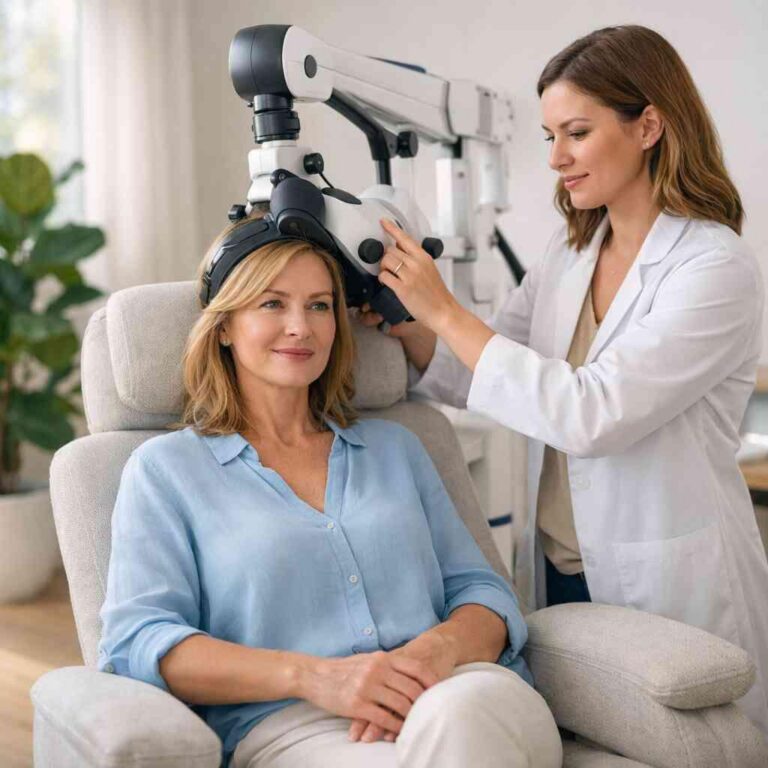
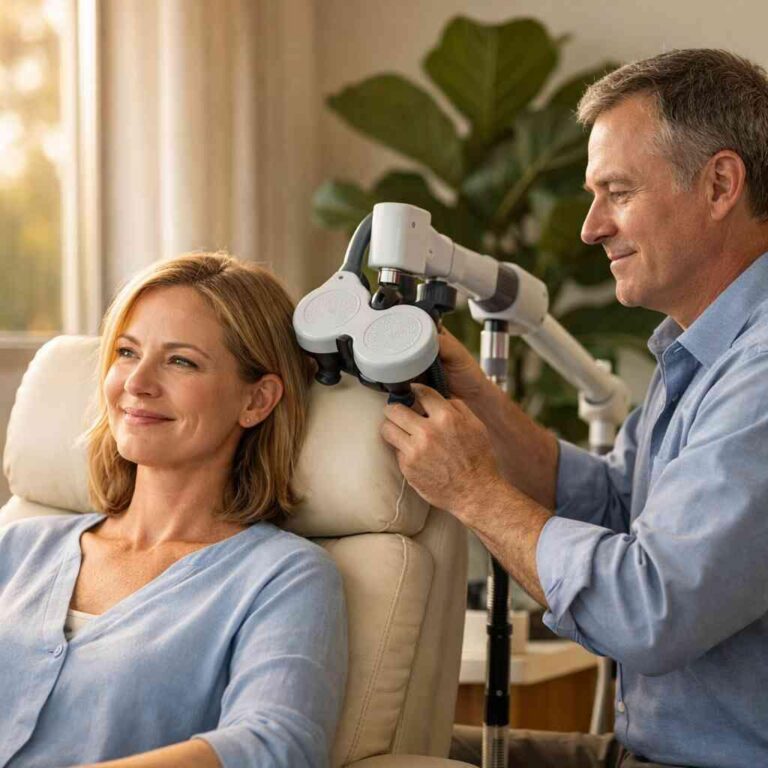
How does TMS work? It uses a magnetic coil placed against the scalp to send brief pulses into specific brain areas tied to mood regulation, most often the left dorsolateral prefrontal cortex. Those pulses are meant to encourage healthier activity in networks that can stay underactive in depression. Unlike medication, it does not circulate through your whole body.
The best-known depression research includes a Stanford-led study by Carpenter and colleagues, which helped strengthen the evidence base for TMS in major depression. Professional guidance from the American Psychiatric Association and the Clinical TMS Society consensus review also supports its role for appropriate patients. TMS devices such as NeuroStar and BrainsWay have received FDA clearance for certain psychiatric uses, but the right treatment still depends on clinical screening, not marketing language.
Here is the part most people miss: TMS does not “fix everything” in one place. It aims to change the brain’s pattern of firing over time, which is why clinicians often track progress with tools like the PHQ-9 or MADRS instead of guessing from a single good day.
What actually happens inside a TMS session and why the process feels so different
A TMS session usually feels calm and predictable. You stay awake, you do not need anesthesia, and you can drive yourself home afterward. For many Florida patients, that makes TMS feel far less disruptive than medication changes, inpatient stays, or other procedures.
The calm clinic rhythm from mapping to treatment without sedation or downtime
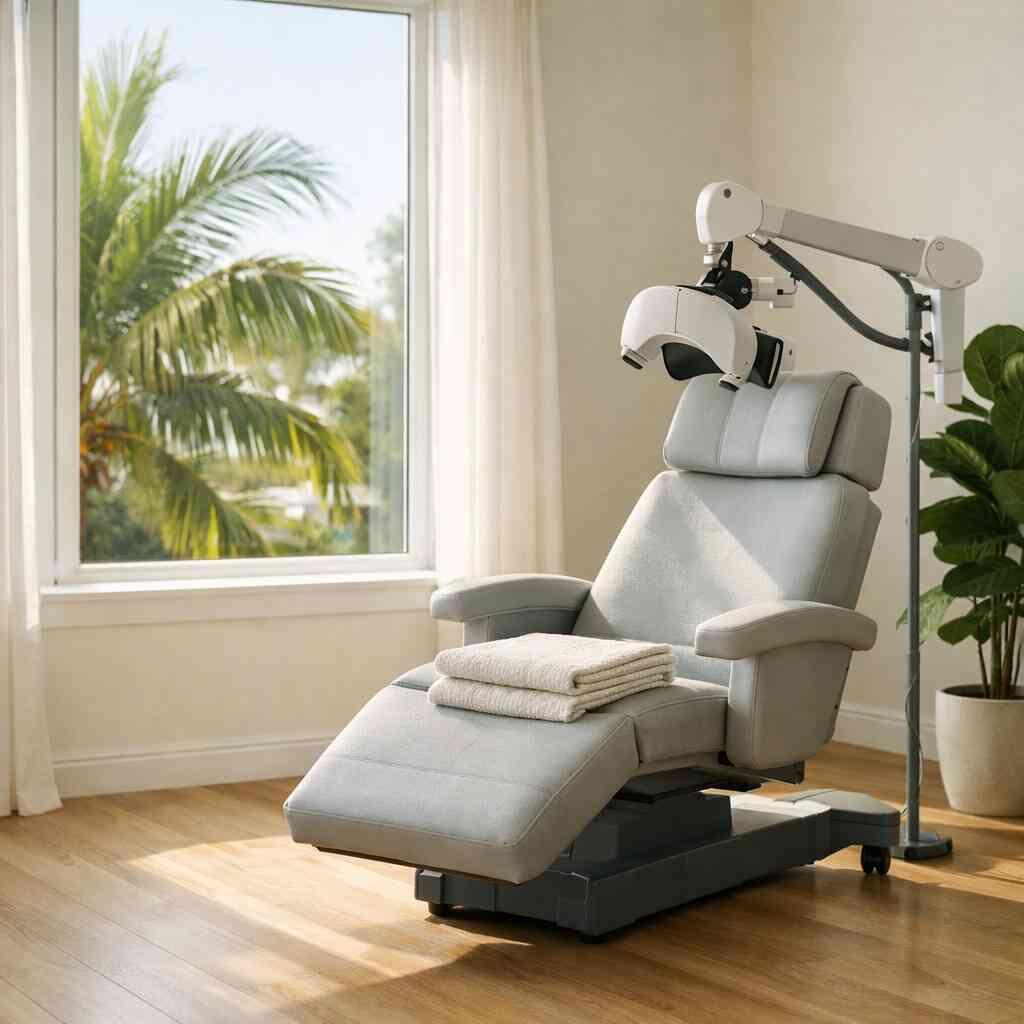
Most clinics start with a mapping visit. The team identifies the right stimulation spot, adjusts coil settings, and checks comfort. After that, sessions are usually brief and structured, with you seated in a chair while the device delivers rhythmic pulses. No sedation. No grogginess. No “lose the whole day” feeling. A patient near Fort Lauderdale told us the biggest surprise was how ordinary the room felt. A chair, a machine hum, a tech checking in, and then he was done. That low-drama rhythm matters when depression has already made everyday life feel heavy. 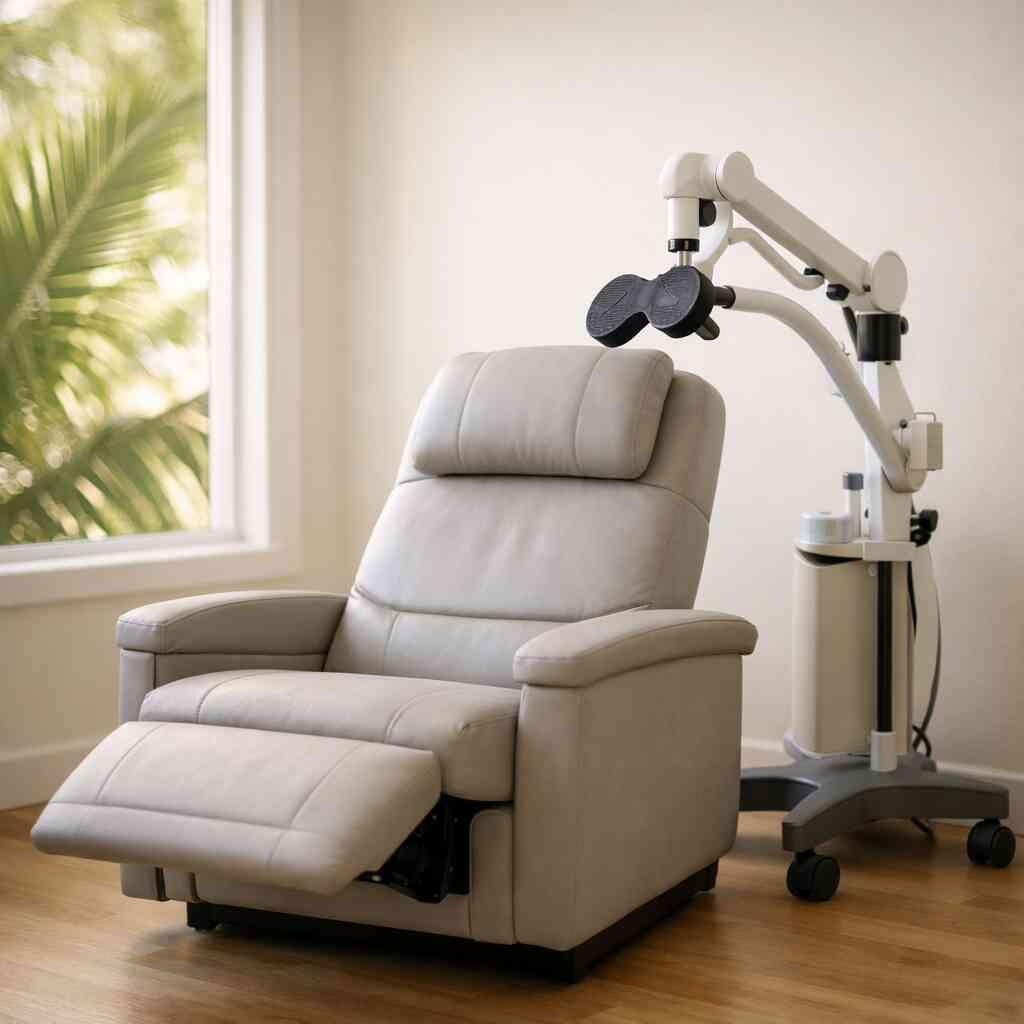
For people comparing options across TMS clinic Miami, TMS Fort Lauderdale, TMS West Palm Beach, TMS Orlando, or TMS Tampa, that routine is often a deciding factor. If you are searching for TMS near me Florida, it helps to ask whether the clinic offers scheduling that fits work, school, or family care.
How repetitive TMS and deep TMS therapy are chosen for depression anxiety and OCD patterns
Clinics may recommend repetitive TMS for depression because it has the longest track record. Deep TMS therapy uses a different coil design that reaches broader and slightly deeper brain regions, and it is often discussed for OCD and some other symptom patterns. The choice is not about which one sounds more advanced. It is about symptom profile, comfort, device availability, and clinical judgment.
TypeTypical useWhat it feels likeWhy a clinic may choose itRepetitive TMSDepression, sometimes anxiety symptomsFocused tapping or clicking at one siteStrong evidence base and targeted stimulationDeep TMS therapyDepression, OCD, some addiction-related protocolsBroader stimulation patternBroader field of stimulation and FDA-cleared device optionsFor people with mixed symptoms, TMS is often part of a larger plan. That may include therapy, sleep support, medication review, or referrals for TMS for anxiety, TMS OCD therapy, TMS for PTSD Florida, or TMS for bipolar depression when the clinical picture fits. If there is substance use in the picture, some programs also discuss TMS addiction recovery and TMS for substance use disorder alongside standard care, because the research on craving reduction is growing, including work from centers such as the Medical University of South Carolina.
Florida also adds practical concerns. AHCA-regulated outpatient clinics must follow state requirements for safe operation, and that matters when you compare a Florida mental health clinic in one county with another across the state. If you want to read more about treatment categories, the clinic’s own guides on TMS for depression and TMS treatment for anxiety disorders can help you sort out the basics before a consult.
For a broader look at related topics, the clinic’s science and innovation updates and depression treatment resources are useful starting points. If cost is your next concern, their insurance and costs page can help you prepare the right questions before you call.
What this means for Florida patients after failed medications and mixed diagnoses
For many Florida patients, TMS becomes appealing because it can fit alongside other care instead of replacing everything. That matters when depression overlaps with anxiety, PTSD, OCD, or bipolar depression. The right clinic will be honest about what TMS can support, what it cannot promise, and where additional treatment still matters.
How TMS depression treatment Florida can fit alongside care for anxiety PTSD bipolar depression and OCD
TMS depression treatment Florida is often considered when depression is the main problem, but the person also has anxious distress, intrusive thoughts, trauma symptoms, or mood swings. Some clinics also discuss TMS for teen depression and TMS for young adults when standard options have not helped enough and a specialist agrees it is appropriate. These decisions should always come after a careful evaluation, not a quick advertisement.
If you are also dealing with cravings, relapse risk, or dual diagnosis concerns, the conversation may broaden to dual diagnosis treatment Florida and addiction rehab Florida support. In those cases, TMS is usually one piece of care, not the whole plan. For people wondering about combined approaches, some clinicians also explore TMS and EMDR combination when trauma symptoms are part of the picture.
What the research and clinical guidelines really say about outcomes safety and maintenance therapy
The best research does not promise a guarantee. It shows that TMS can help a meaningful portion of people with depression, especially those who have not responded to medications. Clinics often track change with PHQ-9, MADRS, sleep, energy, and day-to-day function. Safety is part of the appeal: common TMS side effects safety issues are usually mild, such as scalp discomfort or headache, though a clinician should review seizure risk and other precautions.
There is still a lot to learn about TMS therapy success rate and TMS long-term results, because outcomes vary by diagnosis, treatment history, and follow-through. Some people benefit from TMS maintenance therapy after an initial course, while others do not need it. That is why a good clinic will talk in probabilities and monitoring, not promises.
If you want to compare options in South Florida, look closely at access, follow-up, and transparency about TMS cost Florida and TMS insurance coverage Florida. For broader mental health education, MedlinePlus mental health information and the National Alliance on Mental Illness (NAMI) are dependable places to cross-check basic facts before you decide what to ask a clinic.
The practical reality is simple: if medication has stalled, TMS may offer a different path without the same body-wide side effects. If that sounds close to your situation, TMS Treatment Florida can help you sort through confidential options and connect you with care resources across Florida, including TMS South Florida, TMS Miami, and nearby communities like Aventura, Coral Gables, Boca Raton, Delray Beach, and Winter Park.
If you want help figuring out whether this fits your situation, call the 24/7 helpline at +18886883036 and ask about next steps. You do not have to solve all of it today. One clear conversation can make the rest feel less heavy.
Frequently Asked Questions
Question: How does TMS work for medication resistant depression, and what makes transcranial magnetic stimulation therapy different from another medication change?
Answer: TMS treatment Florida uses non-invasive brain stimulation to target mood-related circuits that may be underactive in medication-resistant depression. Instead of adding another drug, transcranial magnetic stimulation therapy delivers focused magnetic pulses to specific brain areas, which is why many people view it as a practical non-drug depression treatment or alternative depression treatment after several failed prescriptions. The process is usually done awake, without sedation, and does not require a recovery period, so it can fit into real life more easily than many other options. A careful evaluation is still important, because the best plan depends on symptoms, treatment history, and safety screening.
Question: What happens during a TMS depression treatment Florida session, and is it different from repetitive TMS or deep TMS therapy?
Answer: A typical session starts with mapping, where the clinic identifies the right treatment area and adjusts the device for your needs. Then the patient sits in a chair while the system delivers rhythmic pulses to the targeted region. Repetitive TMS is often used for depression because it has a strong evidence base and a focused stimulation pattern, while deep TMS therapy uses a different coil design that reaches broader brain regions and may be considered for different symptom patterns. Both are forms of non-invasive brain stimulation, and a qualified TMS psychiatrist Florida team can help decide which option is most appropriate based on your diagnosis, goals, and comfort level.
Question: If I have anxiety, OCD, PTSD, or bipolar depression along with depression, can TMS Treatment Florida still help?
Answer: In many cases, yes, but the right approach depends on a full clinical review. TMS depression treatment Florida is often discussed for people whose depression is the main concern, but clinics also evaluate whether TMS for anxiety, TMS OCD therapy, TMS for PTSD Florida, or TMS for bipolar depression may fit the overall picture. Some patients also ask about TMS for teen depression, TMS for young adults, or TMS and EMDR combination when trauma symptoms are part of the concern. The important thing is that treatment should be personalized rather than one-size-fits-all, especially when depression overlaps with other behavioral health needs.
Question: How do TMS side effects safety, TMS insurance coverage Florida, and TMS cost Florida usually work before starting care?
Answer: Safety is one reason many people consider TMS. Common TMS side effects safety concerns are usually mild, such as scalp discomfort or headache, though every patient should be screened for medical factors that could change the risk profile. On the financial side, TMS cost Florida and TMS insurance coverage Florida can vary based on the plan, diagnosis, and documentation, so it is smart to ask early whether insurance covers TMS in Florida and what prior authorization may be needed. A good Florida mental health clinic will explain these details clearly and help you prepare the right questions before treatment begins.
Question: How can I know whether TMS after failed medications is a good fit, and what should I look for in the best TMS clinic Florida?
Answer: If antidepressants have helped only a little, stopped working, or caused side effects that made it hard to stay consistent, TMS after failed medications may be worth exploring. Many people search for TMS near me Florida or compare options like TMS clinic Miami, TMS Fort Lauderdale, TMS West Palm Beach, TMS South Florida, TMS Orlando, and TMS Tampa while looking for a center that feels supportive and organized. When choosing the best TMS clinic Florida, look for transparent communication, careful screening, clear follow-up, and a compassionate approach to TMS long-term results and TMS maintenance therapy. It is also reasonable to ask about TMS reviews Florida, how progress is tracked, and whether the clinic can help coordinate care for dual diagnosis treatment Florida, addiction rehab Florida, TMS addiction recovery, or TMS for substance use disorder when those concerns are present.
Question: Does TMS Treatment Florida only help with depression, or can it also support smoking cessation, alcohol addiction brain stimulation, and other behavioral health goals?
Answer: While the most established use is for depression, some clinics also discuss broader applications depending on the patient’s needs and the available evidence. That can include TMS for smoking cessation, alcohol addiction brain stimulation, and other symptom-specific discussions related to Florida behavioral health or dual diagnosis treatment Florida. The key is not to overpromise. A responsible clinic will explain where the evidence is stronger, where it is still developing, and whether your situation is better served by TMS alone or by a combined care plan. If you are exploring options because medication-resistant depression has affected your work, relationships, or motivation, a conversation with TMS Treatment Florida can help you understand whether this FDA approved depression treatment pathway may fit your next step.