When pills stop helping and the room still feels heavy, TMS starts to look different
If you are reading this because the meds helped and then stopped, that frustration makes sense. Many people feel stuck there. The daily effort gets old. The room still feels heavy, even after another prescription change. That is often the moment TMS treatment Florida starts to sound less like a buzzword and more like relief.
What medication resistant depression looks like when SSRIs and SNRIs stop doing enough
Medication resistant depression does not always look dramatic. Sometimes it looks like getting through work but nothing more. Sometimes it looks like sleeping too much, or not at all. Sometimes it looks like your brain has turned the volume down on life. You may have tried SSRIs, SNRIs, dose changes, or add-on drugs and still felt only partial relief. That pattern is exactly why people start looking for transcranial magnetic stimulation therapy for medication resistant depression.
Here is the part most people miss. Failure does not always mean the diagnosis was wrong. It often means the treatment path has not matched the biology yet. In Florida, we hear from people who have done the pharmacy shuffle for months or years. They do not want hype. They want something that feels credible, steady, and different.
Why non drug depression treatment matters for people who cannot tolerate side effects
A non-drug depression treatment matters when the medicine itself becomes part of the problem. Dry mouth can make every conversation feel sticky. Weight gain can wear down confidence. Emotional flattening can feel like losing your personality. Those side effects are not small when you live with them every day.
That is why many people compare TMS to another medication trial and quietly realize they want a different kind of care. Alternative depression treatment is not about rejecting medicine out of principle. It is about making room for a method that does not rely on adding another pill. For some patients, that shift feels like reclaiming a little control.
One client from the Boca Raton area described the process like this: every medication change felt like “waiting for the weather to break.” That is a hard place to sit. After several attempts, the question changed from “What else can we add?” to “What else can actually reach the problem?” That question is where TMS treatment Florida starts to matter.
How Florida patients often compare TMS treatment Florida with another round of medication changes
People usually compare time, tolerability, and effort. A medication change may be quick to prescribe, but it still asks you to wait through side effects and uncertainty. Transcranial magnetic stimulation therapy asks for a series of visits, but it does not ask you to keep absorbing systemic medication effects. That tradeoff matters to many Floridians balancing jobs, children, caregiving, or seasonal travel.
The best comparison is practical, not emotional. Which path fits your life right now? Which one has already failed? Which one is more likely to keep you engaged? Those are the real questions behind TMS after failed medications. If you want a focused starting point, the TMS treatment in Florida for non-drug depression relief page helps frame that decision clearly.
Where TMS near me Florida searches usually lead in Miami, Fort Lauderdale, West Palm Beach, Orlando, and Tampa
Searches for TMS near me Florida usually start when the current plan has gone flat. People in Miami, Fort Lauderdale, West Palm Beach, Orlando, and Tampa often want something local enough to fit into a workweek. Access matters. So does consistency. If travel becomes too hard, treatment slips.
That is why location pages matter more than glossy claims. For many people, the real question is whether a clinic can fit between traffic, school pickup, and a busy calendar. TMS clinic locations in Miami-Dade, Broward, and Palm Beach Counties can help you compare access without guessing. The point is simple: if care is too far away, even a good plan can stall.
What actually happens inside transcranial magnetic stimulation therapy and why it feels unlike talk therapy
People often expect TMS to feel intense or mysterious. It usually does not. It feels focused. It feels mechanical in a good way. And it feels very different from talk therapy, because it works on brain networks rather than conversation alone.
How does TMS work in plain language, from magnetic pulses to targeted brain network activity
So, how does TMS work? A coil sends brief magnetic pulses through the scalp. Those pulses stimulate a targeted area of the brain linked to mood regulation. The idea is to nudge underactive circuits toward healthier activity. That is why people also call it magnetic brain therapy or non-invasive brain stimulation.
Think of it as targeted stimulation, not shock. The treatment stays external. It does not require anesthesia. It does not require sedation. For a simple overview, the transcranial magnetic stimulation page gives a basic technical explanation, though clinical guidance should always come from a licensed team.
Why repetitive TMS and deep TMS therapy are built for specific symptom patterns
Repetitive TMS uses repeated pulse trains to influence brain activity over time. Deep TMS therapy uses a different coil design to reach broader or deeper regions. Both approaches aim at symptom patterns, but they are not identical. The choice depends on the condition, the clinical goal, and the device being used.
That difference matters when you compare treatment plans. Some people respond better to one setup than another. Others need a protocol tailored to depression, anxiety, OCD, or other concerns. If you want a deeper comparison, the difference between deep TMS and repetitive TMS guide explains the distinction without the jargon.
What a session feels like from the chair to the tapping sound to the return to daily life
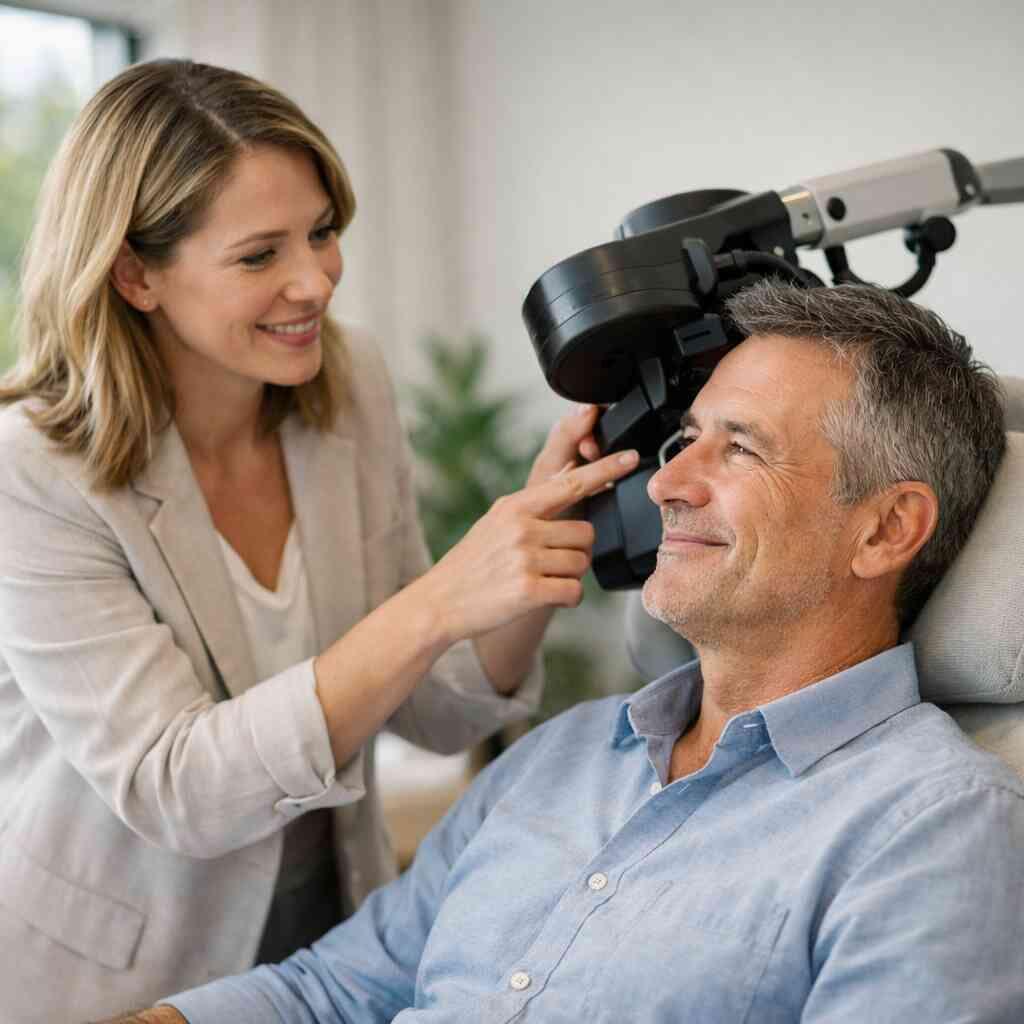
A typical session feels surprisingly ordinary. You sit in a chair. The team positions the coil. You hear a tapping sound. You feel a rhythmic sensation on the scalp. Then the session ends, and you usually return to daily life. That simplicity surprises people.
Most patients keep a normal routine around sessions. They drive, work, and run errands afterward. The common question is not “Will I be knocked out?” It is “Can I still function?” Usually, yes. That is why many people see TMS as a practical option rather than a dramatic one. If you want a patient-facing overview, the FDA approved depression treatment after failed medications page is a useful companion.
Which depression measures like PHQ-9 and MADRS clinicians may use to track change without overpromising
Good clinics track progress with tools, not vibes alone. The PHQ-9 and MADRS are common examples. These measures help clinicians monitor symptoms over time. They do not guarantee a result. They do, however, keep the conversation grounded.
That measured approach matters. The 2018 Stanford study by Carpenter and colleagues helped strengthen interest in TMS for depression, but no honest clinician turns that into a promise. The right mindset is simple: measure, adjust, and watch for meaningful change. That is how transcranial magnetic stimulation research keeps moving the field forward.
Why Florida patients ask about TMS instead of another prescription
A lot of people in Florida ask about TMS after they have already done the hard work of trying medications. That choice is rarely impulsive. It usually comes after disappointment, side effects, or both. The question is not whether medicine is useful. The question is whether another prescription is the best next move.
How FDA approved depression treatment differs from a medication based plan
An FDA approved depression treatment can still look very different from a medication-based plan. Pills affect the whole body. TMS targets the brain more locally. That distinction matters when you are trying to reduce systemic side effects while still treating depression.
The approval history also gives some people confidence. Devices such as NeuroStar and BrainsWay have received FDA clearance for certain uses. That does not mean every device fits every patient. It means the modality has a serious evidence base. People often feel better once they understand that difference.
Why TMS after failed medications can appeal to people tired of dry mouth, weight gain, and emotional flattening
TMS after failed medications appeals to people who are tired of the same cycle. They are tired of dry mouth. Tired of weight changes. Tired of emotional flattening. Tired of waiting weeks only to feel half better. That exhaustion is real.
One Miami patient we spoke with described the feeling as “being present, but not available to my own life.” That is the kind of language people use when side effects and symptoms overlap. TMS gives them another path to consider. It is still work. It is still treatment. But it can feel less burdened by the body-wide effects of medication.
What TMS side effects safety discussions usually cover before treatment starts
Any honest conversation about TMS side effects safety should cover comfort, headache, scalp sensation, and rare risks. It should also cover who is a good candidate and who needs another plan. Safety is not just a brochure topic. It is part of the intake process.
If you are comparing clinics, ask how they handle screening and follow-up. Ask how they explain risks. Ask what happens if you feel discomfort. The TMS side effects and safety information for patients page is a helpful place to start, but your own evaluation matters more.
How TMS therapy success rate should be understood without inflated claims or miracle language
TMS therapy success rate should never sound like a miracle ad. That kind of language helps no one. Results vary by diagnosis, treatment history, and adherence. Good clinicians talk about probabilities and clinical response, not guarantees.
A fair discussion often includes response rates from research, plus the reality that some people need maintenance care. The point is not to inflate hope. It is to make hope accurate. If you want a plain-language overview, the TMS success rate and treatment results for depression article is a solid reference.
The Florida clinic details people really want before they call
Before people call, they usually have three questions in mind: can I afford it, can I get there, and will the clinic communicate clearly? Those questions matter more than marketing or slogans. In Florida, they often decide whether treatment starts at all.
How TMS insurance coverage Florida and does insurance cover TMS in Florida questions usually get answered
TMS insurance coverage Florida varies by plan, diagnosis, and medical necessity criteria. So does the answer to does insurance cover TMS in Florida. That is normal, even if it is annoying. Some plans require prior authorization. Some ask for documentation of failed medications. Some need a psychiatrist’s evaluation. 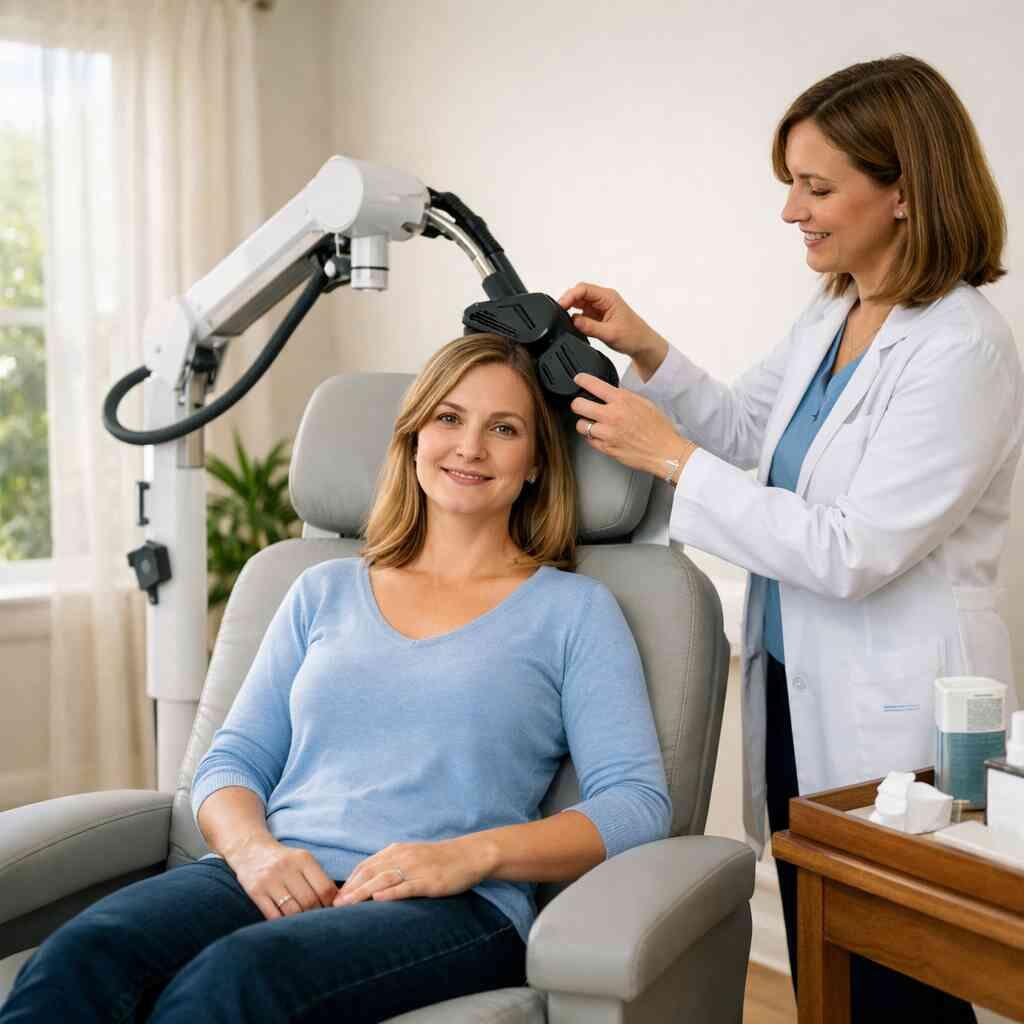
The right clinic will help you verify benefits before you commit. That process should feel organized, not vague. If a team cannot explain the basics, that is a warning sign. For a clearer breakdown, review TMS insurance coverage in Florida and cost questions.
What affects TMS cost Florida when a plan needs authorization or when benefits vary
TMS cost Florida depends on benefits, authorization, deductible status, and the treatment plan itself. Exact pricing should come from the clinic, because guessing helps nobody. Some patients pay less after coverage. Others face higher out-of-pocket costs because of plan structure.
That is why cost conversations should be direct. Ask what is verified. Ask what is pending. Ask what your share could be under different scenarios. Florida insurance rules can feel layered, especially for seasonal residents or people split between states. Clear billing talk saves stress later.
Why a best TMS clinic Florida search often comes down to access, location, and communication, not hype
A best TMS clinic Florida search should not be about who shouts loudest. It should be about access, respect, and clarity. Do they return calls? Do they explain the plan well? Can they fit your schedule? Those details matter more than flashy promises.
A clinic can be beautiful and still fail at communication. A smaller Florida mental health clinic can feel warmer and more responsive. What you want is a team that treats your time like it matters. The best clinics make the process feel understandable, even on difficult days.
How TMS psychiatrist Florida and Florida mental health clinic coordination can support a clearer care plan
A strong TMS psychiatrist Florida team coordinates with your broader care. That includes therapy, medications, and other behavioral health support. It also means speaking clearly about history, risks, and goals. Good coordination keeps treatment from becoming fragmented.
Florida patients often live between providers. Primary care, psychiatry, therapy, rehab, and insurance all tug in different directions. When those pieces talk to each other, the care plan gets lighter. If you want to learn more about the team behind the work, the about us page is the right place to look.
Where TMS clinic Miami, TMS Fort Lauderdale, TMS West Palm Beach, TMS South Florida, TMS Orlando, and TMS Tampa fit into real travel routes for working adults and seasonal residents
Location matters in a state as spread out as Florida. TMS clinic Miami, TMS Fort Lauderdale, TMS West Palm Beach, TMS South Florida, TMS Orlando, and TMS Tampa all serve different travel patterns. Aventura and Coral Gables patients think differently about timing than people driving from Boca Raton, Delray Beach, or Winter Park.
The good clinics understand that reality. Working adults need predictable appointments. Seasonal residents need scheduling that respects travel windows. If a clinic is easy to reach, people stay consistent. That consistency is often what keeps treatment moving.
From depression to cravings, what broader brain based care can and cannot promise
TMS is not only discussed for depression. People also ask about anxiety, OCD, PTSD, substance use, and bipolar depression. Those conversations are important. They also need caution. Brain stimulation is promising, but it is not magic.
Why TMS for anxiety, TMS OCD therapy, and TMS for PTSD Florida are discussed differently from depression care
TMS for anxiety, TMS OCD therapy, and TMS for PTSD Florida are discussed differently because the symptom targets differ. The evidence base is not identical for each condition. That means the clinical conversation should not be identical either. Careful matching matters.
If your anxiety shows up with panic, rumination, or physical tension, the treatment plan may shift. OCD often requires different targeting and different expectations. PTSD may involve trauma therapy as well. The TMS for anxiety and OCD recovery in Florida page can help you sort those differences.
What the research says about TMS for bipolar depression without pretending it replaces mood stabilizer care
TMS for bipolar depression has a growing research base, but it does not replace standard mood stabilizer care. That point matters. Bipolar depression can be complex. Safety and sequencing matter. A careful clinician will review history before suggesting treatment.
The goal is support, not substitution where substitution would be unsafe. TMS may be part of a broader plan, especially when depression remains stubborn. It should sit inside a thoughtful psychiatric framework. The TMS for bipolar depression care in Florida resource is one place to start.
How TMS addiction recovery and TMS for substance use disorder relate to craving circuits and dual diagnosis treatment Florida
TMS addiction recovery and TMS for substance use disorder are active areas of interest because cravings involve brain circuits tied to reward and control. Research from groups including the Medical University of South Carolina has helped shape this discussion. Still, this is an emerging field. It should be presented that way.
For patients with dual diagnosis treatment Florida needs, the plan must address both mental health and substance use together. That is where realistic expectations matter most. TMS may support cravings or mood, but it does not replace rehab, therapy, or recovery structure. If you want a focused overview, see TMS for substance use recovery and dual diagnosis care.
Why alcohol addiction brain stimulation, TMS for smoking cessation, and TMS and EMDR combination ideas need careful clinical matching
People also ask about alcohol addiction brain stimulation, TMS for smoking cessation, and TMS and EMDR combination care. Those ideas can make sense for some patients. They can also be a mismatch if the underlying symptoms are not aligned. The right sequence depends on diagnosis, readiness, and treatment goals.
A rehab setting may need more structure than a standard outpatient depression plan. EMDR may fit trauma work better than craving control. Smoking cessation may involve both behavioral and neurological support. The TMS protocol for smoking cessation page can help frame those questions.
What maintenance therapy and long term results may mean for someone trying to stay steady after the first course
TMS maintenance therapy is about staying steady after the first course ends. Some patients do well with a full acute series and then periodic follow-up. Others need a different rhythm. There is no single template that fits everyone.
TMS long-term results should be discussed honestly. Some people keep gains for a long time. Some need boosters. Some combine TMS with therapy, medication, or lifestyle support. The TMS therapy maintenance plans and long term results page can help you think ahead without assuming too much.
What choosing a non drug path looks like after you decide to move forward
Once you decide to explore TMS, the questions get more practical. Is this right for my age group? Can I get there reliably? Who manages the evaluation? What happens if I need therapy, rehab, or another service too? Those are the right questions.
How to tell whether TMS may fit a teen depression, young adult, or adult care plan
TMS for teen depression and TMS for young adults can be appropriate in some cases, but the evaluation has to be careful. Age, diagnosis, family support, and prior treatment history all matter. Adults may have more medication history, while younger patients may need more coordination with family and school.
A thoughtful clinic will not rush this. It will look at symptoms, safety, and goals. It will explain whether TMS fits now or later. If you are researching options for younger patients, the TMS treatment for teen depression and young adults page is a useful reference.
Why local access in Duval County, Orange County, Hillsborough County, Miami-Dade County, Broward County, and Palm Beach County can shape consistency
Consistency is everything with TMS. That is why local access in Duval County, Orange County, Hillsborough County, Miami-Dade County, Broward County, and Palm Beach County matters so much. If traffic, distance, or work schedules become barriers, attendance drops. Treatment works better when the plan is easy to keep.
Florida geography can be a real factor. A patient in Winter Park may not want to cross the whole metro every morning. A person in Aventura may need something that fits between meetings. Access is not a luxury. It is part of the treatment design.
What to ask a Florida behavioral health team about evaluation, safety, and coordination with therapy or rehab Florida care
Before scheduling, ask a Florida behavioral health team how they evaluate you. Ask what safety screening they use. Ask how they coordinate with your therapist, psychiatrist, or rehab Florida program. Ask who handles follow-up. Those answers tell you more than any brochure.
A good team should be comfortable explaining next steps. It should also be clear about what TMS can and cannot do. That honesty builds trust. The FAQ page can help you prepare smart questions before you call.
How to use /depression-tms/ /anxiety-tms/ /ocd-tms/ /addiction-tms/ /insurance-and-costs/ /locations/ /about-us/ and /faq/ to compare options before scheduling
If you want to compare services, use the site like a checklist. Start with the depression page. Then review anxiety, OCD, addiction, insurance, locations, about, and FAQ content. That path helps you match your needs with the right service line. It also keeps the process grounded.
The most useful pages are the ones that answer your real questions plainly. You do not need every answer today. Start with one call, one benefits check, or one location review. If you are ready to look deeper, the clinic’s own service pages can help you compare without pressure.
Frequently Asked Questions
Question: What makes What Makes TMS Therapy in Florida a Non Drug Depression Option different from another medication change for medication resistant depression?
Answer: For many people with medication resistant depression, the issue is not a lack of effort. It is that SSRIs, SNRIs, dose changes, or add-on medications have not brought enough relief, or the side effects have become hard to live with. That is where transcranial magnetic stimulation therapy can feel different. TMS treatment Florida offers a non-drug depression treatment that uses non-invasive brain stimulation instead of adding another systemic medication. This can be especially meaningful for people looking for an alternative depression treatment after TMS after failed medications. A careful clinic will talk through your history, symptoms, and goals, and explain whether repetitive TMS or deep TMS therapy may fit your needs. It is also appropriate to ask about TMS side effects safety, TMS insurance coverage Florida, and whether does insurance cover TMS in Florida based on your plan. The goal is not to promise a specific outcome, but to offer a credible next step when medication has not been enough.
Question: How does TMS work, and what does a session at a TMS clinic Miami, TMS Fort Lauderdale, or TMS West Palm Beach usually feel like?
Answer: People often ask how does TMS work because the treatment sounds more complex than it feels. In plain language, transcranial magnetic stimulation therapy uses magnetic pulses delivered through a coil placed near the scalp to stimulate targeted brain areas involved in mood regulation. That is why some people also call it magnetic brain therapy or non-invasive brain stimulation. A session is usually straightforward: you sit in a chair, the team positions the device, you hear a tapping sound, and you may feel a rhythmic sensation on the scalp. Most people are able to return to daily activities afterward, which is one reason TMS treatment Florida is often considered by working adults and seasonal residents looking for practical care in places like TMS clinic Miami, TMS Fort Lauderdale, TMS West Palm Beach, TMS South Florida, TMS Orlando, or TMS Tampa. A strong Florida mental health clinic should explain the process clearly, screen for safety, and help you understand what to expect without overpromising results.
Question: Is TMS therapy a good option for TMS for anxiety, TMS OCD therapy, or TMS for PTSD Florida too?
Answer: TMS treatment Florida is most commonly discussed for depression, but many people also ask about TMS for anxiety, TMS OCD therapy, and TMS for PTSD Florida. These are important conversations, but they need to be approached carefully because the evidence base and treatment planning are not identical for each condition. A thoughtful TMS psychiatrist Florida or Florida behavioral health team will look at your full history, symptoms, and prior care before suggesting a protocol. In some cases, deep TMS therapy or repetitive TMS may be discussed depending on the condition and the device used. If you are exploring options beyond depression, it helps to work with a team that understands both mental health and coordination with therapy or other supports. TMS reviews Florida can be helpful for learning about patient experiences, but they should not replace a real clinical evaluation. The most responsible approach is individualized care rather than a one-size-fits-all answer.
Question: What should I know about TMS insurance coverage Florida and TMS cost Florida before scheduling treatment?
Answer: It is smart to ask about TMS insurance coverage Florida early, because coverage can vary by plan, diagnosis, prior treatment history, and medical necessity requirements. The answer to does insurance cover TMS in Florida is often plan-specific, so a clinic should help verify benefits and explain what documentation may be needed. TMS cost Florida can also vary based on deductible status, authorization, and the treatment plan itself, so exact pricing should come from the clinic rather than guesswork. A trustworthy Florida mental health clinic will be transparent about benefits verification and out-of-pocket expectations before treatment begins. If you are comparing a best TMS clinic Florida option, look for clear communication, organized billing support, and a team that treats your financial questions with respect. This kind of honesty matters just as much as the clinical side of care.
Question: Who may be a candidate for TMS after failed medications, including TMS for teen depression, TMS for young adults, or TMS for bipolar depression?
Answer: People often consider TMS after failed medications when depression has not improved enough with standard treatment or when medication side effects are difficult to tolerate. TMS depression treatment Florida may be appropriate for adults, and in some cases TMS for teen depression or TMS for young adults may also be discussed, though those situations require a careful evaluation with family support and age-appropriate coordination. TMS for bipolar depression can also be part of a broader psychiatric plan, but it should never be treated as a replacement for responsible mood-stabilizing care when that is needed. The right clinic will review your history, current symptoms, and any concerns about TMS side effects safety before recommending a path forward. If you are also managing substance use, dual diagnosis treatment Florida needs, or addiction rehab Florida care, the team may talk with you about TMS addiction recovery or TMS for substance use disorder as part of a larger support plan. The best next step is a compassionate evaluation, not a guess.


