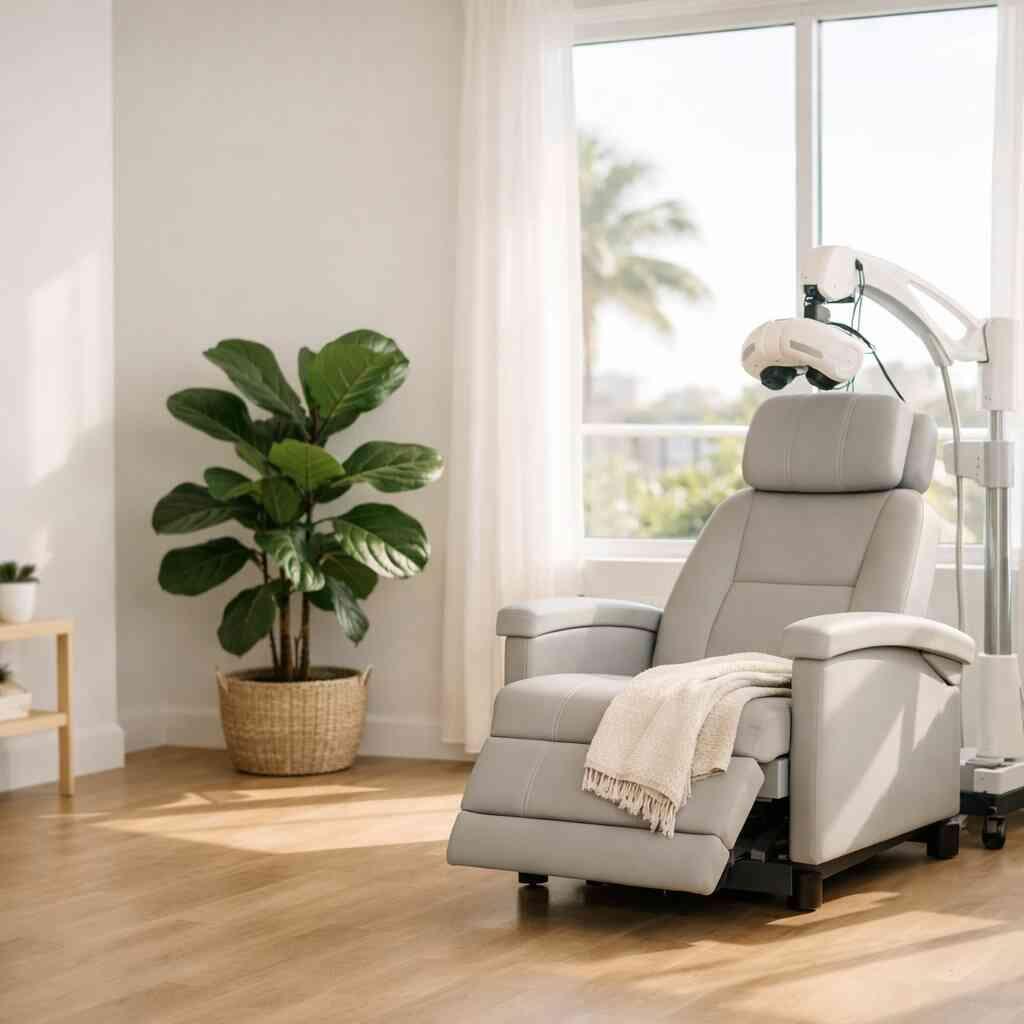
Transcranial magnetic stimulation therapy can help calm anxiety by using magnetic pulses to influence brain circuits involved in worry, threat response, and rumination. It is a non-invasive brain stimulation option that may be considered when therapy and medications have not brought enough relief.
Key Takeaways
- TMS for anxiety uses magnetic pulses to target brain networks that can stay overactive during chronic worry and panic.
- It is non-invasive brain stimulation, so there is no surgery, no anesthesia, and no systemic medication effect.
- A Florida clinic should start with mapping, symptom review, and a personalized plan, not a one-size-fits-all protocol.
- TMS is often discussed alongside medication-resistant depression, OCD, PTSD, and dual diagnosis treatment in Florida because anxiety rarely shows up alone.
- If you are comparing options, ask about TMS insurance coverage in Florida, TMS cost in Florida, side effects, and whether the clinic follows evidence-based screening and monitoring.
If you are reading this because your anxiety has started to feel bigger than your coping skills, that is a very common place to land. The hard part is that anxiety can look “managed” on paper while still running your day from the inside.
Why anxiety can still feel loud when medication and talk therapy have already helped
TMS for anxiety can make sense when SSRIs, benzodiazepines, or therapy help only partway, or stop moving the needle. Anxiety often involves brain circuits that keep firing too strongly even after you have learned coping tools. That is why some people look for alternative depression treatment or non-drug depression treatment that works on the brain more directly.
How TMS for anxiety can make sense after SSRIs, benzodiazepines, or therapy stop moving the needle
Medication can reduce symptoms, but it can also bring fatigue, sexual side effects, fogginess, or emotional blunting. Therapy can teach skills, but skills are harder to use when your nervous system is already on high alert. TMS treatment in Florida offers another lane: it uses magnetic brain therapy to modulate activity in regions linked to mood and anxiety without relying on daily medication changes.
Here is the part most people miss: anxiety is not just “too much thinking.” It can involve a loop of anticipation, body tension, sleep disruption, and constant scanning for danger. A person may look functional at work and still spend every night bracing for the next wave.
A common pattern we hear about is someone who has tried two antidepressants, added a short-term anti-anxiety medication, and still wakes up with a tight chest and a racing mind. They are not failing treatment. The treatment plan may simply need a different mechanism.
What the brain is doing during a flare-up and why non-invasive brain stimulation can feel different from coping skills alone
During an anxiety flare-up, networks tied to threat detection, attention, and emotional regulation can get stuck in a high-alert pattern. Skills help you respond better, but they do not always reset the loop by themselves. Non-invasive brain stimulation aims to influence those circuits more directly, which is why some people ask, how does TMS work when everything else has stalled?
A useful way to think about it is this: therapy teaches the brain what to do, while TMS may help make the brain more ready to do it. That is also why many clinics look at comorbid symptoms, not just one diagnosis. Someone with anxiety may also need TMS depression treatment in Florida or TMS OCD therapy, because rumination and worry often overlap.
For context, major professional groups such as the American Psychiatric Association and the Anxiety & Depression Association of America describe anxiety as a condition that can require layered care, especially when symptoms stay persistent.
What happens inside the machine when transcranial magnetic stimulation therapy meets an anxious brain
Transcranial magnetic stimulation therapy works by sending focused magnetic pulses through the scalp to influence activity in targeted brain regions. In anxiety care, the goal is not to “knock out” emotion. It is to help rebalance circuits involved in worry, threat scanning, and repetitive negative thinking, often through repetitive TMS or deep TMS therapy. 
How repetitive TMS and deep TMS therapy aim at brain circuits tied to worry, threat scanning, and rumination
Repetitive TMS delivers a series of pulses over a treatment session, usually while you sit in a chair and stay awake. Deep TMS therapy uses a different coil design that can reach broader or deeper areas of the brain, depending on the protocol. Both are forms of FDA-approved depression treatment technology, and the evidence base continues to grow across mood and anxiety-related conditions.
For depression, the literature has been especially influential. The Stanford-led work often cited in clinical discussions, including Carpenter et al., helped strengthen the case for TMS in medication-resistant depression. That matters for anxiety too, because anxiety and depression often travel together. The science is still evolving, but the pattern is clear: targeting brain circuits can matter when symptoms are not responding to talk therapy alone.
A quick comparison helps:
FeatureRepetitive TMSDeep TMS therapyDeliverySurface-level magnetic pulsesBroader coil designTypical feelRhythmic tappingRhythmic tappingCommon useMood and anxiety-related protocolsMood, OCD, and related protocolsSession settingOutpatientOutpatientIf you are also dealing with depression, you may want to read more about TMS for depression or the broader science behind TMS.
Why a Florida TMS clinic starts with mapping, pacing, and a treatment plan instead of guessing
A responsible Florida mental health clinic does not start by guessing at a coil placement. It begins with symptom review, medical history, and mapping the right treatment target. That process helps match the protocol to the person, which matters when anxiety shows up with bipolar depression, OCD, PTSD, or substance use concerns.
Florida access also affects the plan. Someone in Miami, Fort Lauderdale, West Palm Beach, Orlando, or Tampa may be looking for a TMS near me in Florida option that fits work, family, and commute demands. Seasonal residents and snowbird patterns can also shape scheduling, especially in South Florida and Palm Beach County.
A clinic should also discuss practical questions early:
- How long each session takes
- What monitoring is used
- Whether the clinic follows Florida outpatient rules under AHCA standards
- How insurance verification works
- Whether there is a plan for maintenance if symptoms return
For people comparing care options, the details matter. You can review location access through Florida clinic locations or the Palm Beach area page for TMS treatment in Palm Beach County.
TMS Treatment Florida is one option for people who want a calm, evidence-based place to ask questions without pressure. Their team focuses on helping people understand the process and connect with a Florida clinic that fits their needs, including those exploring TMS insurance coverage in Florida or trying to understand whether insurance covers TMS in Florida.
For a broader look at related care paths, it can also help to read anxiety treatment options or the site’s mental health and TMS category.
If your anxiety is tangled with depression, OCD, PTSD, or substance use, the next move is usually not to “try harder.” It is to match the treatment to the pattern you actually have.
What happens inside the machine when transcranial magnetic stimulation therapy meets an anxious brain
Inside the machine, magnetic pulses create brief electrical changes in targeted brain tissue. Those changes can influence how strongly different networks communicate, which may reduce the overactivation that fuels persistent worry. The session is usually brief, outpatient, and designed to be repeated over a course of care rather than felt as a one-time fix.
Frequently Asked Questions
Does TMS help anxiety?
TMS may help some people with anxiety, especially when anxiety co-occurs with depression or obsessive thinking. The best-supported uses are still strongest for depression and OCD, but many clinics also treat anxiety-related symptoms within broader protocols. A careful evaluation matters because not every anxiety presentation is the same.
How does TMS feel during treatment?
Most people describe a tapping or pulsing sensation on the scalp. It can feel strange at first, but sessions are typically tolerable. Some people notice a mild headache or scalp soreness early in treatment, and clinics should talk about TMS side effects safety before starting.
Is TMS safe?
TMS is generally considered a non-invasive outpatient treatment when delivered by trained clinicians with proper screening. A clinic should review seizure risk, metal implants, and medications before treatment. Safety discussions should be clear and honest, not rushed.
How long does a TMS session take?
Many sessions take about 20 to 40 minutes, depending on the protocol and device. Deep TMS and repetitive TMS schedules can differ. The full course often involves multiple sessions over several weeks, so consistency matters more than a single visit.
Does insurance cover TMS in Florida?
Sometimes, yes, but coverage depends on the plan, diagnosis, documentation, and prior treatment history. Many insurers focus on medication-resistant depression criteria first. A clinic that verifies benefits can help you understand your actual out-of-pocket costs.
Can TMS be used for OCD or PTSD too?
Yes, some clinics use TMS for OCD and may discuss TMS for PTSD in Florida as part of a broader treatment plan. The evidence and coverage rules differ by condition, so it helps to ask which protocol is being recommended and why.


