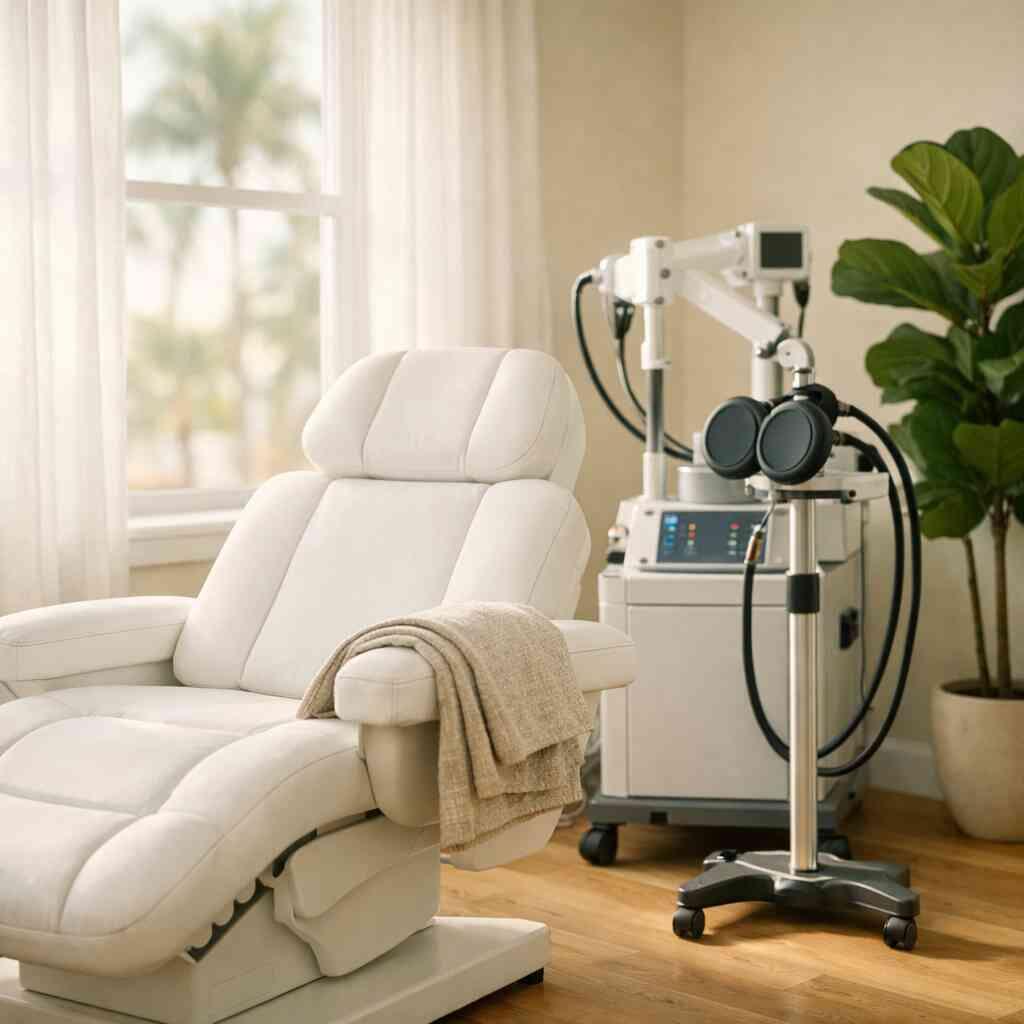
TMS maintenance therapy can help some people preserve the gains they made from transcranial magnetic stimulation therapy, especially when medication-resistant depression tends to return after treatment stops. Long-term results are usually steadier mood, fewer relapse spikes, and a better chance of maintaining daily function, though no treatment can promise a cure.
Key Takeaways
- TMS maintenance therapy is not a cure, but for some people it helps preserve the progress made after an initial course of repetitive TMS.
- Long-term results are usually measured by symptom stability, lower relapse risk, and better day-to-day function, not by a guaranteed permanent outcome.
- Maintenance schedules matter most when depression has returned after failed medications, or when stress, sleep disruption, or other triggers make symptoms more likely to come back.
- Researchers often track outcomes with PHQ-9 and MADRS scores, which helps show whether symptoms stay improved over time.
- Insurance, access, and follow-up planning in Florida matter, because staying consistent is often what makes maintenance useful.
Why TMS maintenance therapy sometimes matters after symptoms lift
TMS maintenance therapy sometimes matters because the brain can drift back toward old mood patterns after an initial response to treatment. For many people, the benefit of transcranial magnetic stimulation therapy is strongest when the care plan continues in a lighter, spaced-out way instead of ending abruptly.
What long-term results usually look like when the brain stops sliding back into old patterns
The long-term results of TMS maintenance therapy are usually best described as reduced relapse risk and more stable symptom control, not a permanent reset. Some people stay well for long stretches, while others need periodic sessions to hold onto gains from TMS Treatments for Depression. That difference is normal. Depression is uneven, and the brain does not stay changed at the same pace for everyone.
Here is the part most people miss: the goal is often maintenance, not repetition of the whole original course. A person who finished an acute series may need a few sessions every few weeks or months, depending on how quickly symptoms begin to creep back. We hear this from people who felt clear for the first time in years, then noticed sleep, energy, or focus slipping again after a hard stretch at work or home.
A short anonymous example: one patient in South Florida described it as “the floor getting soft again.” The depression had not returned all at once. It came as slower mornings, less motivation, and a familiar heaviness. That kind of pattern is exactly why follow-up planning matters.
Why maintenance schedules matter more for some people with medication-resistant depression than others
Maintenance schedules matter more for people with medication-resistant depression because their symptoms often return after failed medications, partial response, or side effects that made drug treatment hard to continue. If you have already tried several antidepressants, the odds of needing ongoing support can be higher than for someone with a first episode. 
A practical way to think about it:
- Higher need for maintenance: repeated relapse after stopping treatment, severe past episodes, long illness duration, or major stress triggers
- Lower need for maintenance: milder symptoms, longer remission, a strong support system, and stable sleep and routine
- Middle ground: occasional booster sessions after symptoms start to shift, but before a full relapse
That is why a TMS psychiatrist Florida or experienced clinician usually reviews more than mood alone. They look at sleep, appetite, anxiety, energy, work demands, and whether you have TMS after failed medications behind you. If the pattern is predictable, maintenance can be planned with much less guesswork.
What changes in the brain when repetitive TMS gets spaced out instead of stopped
When repetitive TMS gets spaced out instead of stopped, the treatment shifts from active symptom reduction to symptom protection. The brain does not simply “store” the result forever, but spaced sessions may help reinforce healthier network activity and mood regulation over time. ### How non-invasive brain stimulation can support steadier mood over time without promising a cure
Non-invasive brain stimulation works by using magnetic pulses to influence brain circuits involved in mood, attention, and emotional control. In depression care, rTMS is often used as an FDA approved depression treatment, and many people seek it as a non-drug depression treatment when medication side effects, weight changes, brain fog, or sexual side effects have become too much.
Spaced maintenance sessions may help keep those circuits from settling back into the same overactive or underactive patterns. That does not mean the treatment “fixes” the brain forever. It means the brain may benefit from periodic reinforcement, much like physical therapy exercises after an injury. Research on transcranial magnetic stimulation continues to grow, especially for people looking for an alternative depression treatment after multiple medication failures.
For readers comparing options in Florida, this is where How Does TMS Therapy in Florida Help With Medication Resistant Depression fits naturally with the broader question of long-term care. If you are asking how does TMS work, the short answer is this: it changes signaling in targeted brain networks, and maintenance helps some people hold onto that change longer.
What researchers mean by TMS therapy success rate when they track PHQ-9 and MADRS scores
When researchers talk about TMS therapy success rate, they usually do not mean one magic number. They measure whether symptoms improve on tools like the PHQ-9 and MADRS, and whether that improvement lasts across follow-up visits. That matters, because a treatment can look good in the short term but fade later if maintenance is not part of the plan.
A simple comparison helps:
MeasureWhat it tracksWhy it matters in maintenancePHQ-9Depression symptom severityShows whether mood gains hold or slipMADRSClinician-rated depression severityHelps track change with more detail over timeFollow-up relapse rateReturn of symptomsTells clinicians whether spacing sessions is enoughClinicians often pair these scores with lived signs: better sleep, less rumination, improved morning energy, and more follow-through at work or school. One client we spoke with said the change showed up in a small way first: they stopped canceling plans every weekend. That kind of shift may not sound dramatic, but it often tells you the brain is holding the line.
For people concerned about TMS side effects safety, maintenance also tends to feel easier than restarting from scratch. The sessions are still brief, and the treatment remains non-invasive, which is one reason many people in TMS treatment Florida look for a plan they can keep.
If you are in Miami, Fort Lauderdale, West Palm Beach, Orlando, or Tampa, follow-up access can shape whether maintenance really works in daily life. Long drive times and seasonal travel patterns across South Florida matter. So do insurance checks and clinic scheduling. That is why people often ask about insurance and costs before they commit to a maintenance plan. For broader support and practical education, the American Psychiatric Association and NAMI are useful starting points for reliable mental health information.
If medication has not held, and you are trying to avoid another cycle of stop-start care, TMS Treatment Florida can help you sort through options without pressure. You do not have to decide everything today. Start by asking how maintenance would fit your symptoms, your schedule, and your insurance, then call the confidential helpline at +18886883036.
Frequently Asked Questions
Question: What are the long term results of TMS maintenance therapy in the blog title What Are the Long Term Results of TMS Maintenance Therapy?
Answer: TMS maintenance therapy is designed to help some people hold onto the gains they made during an initial course of transcranial magnetic stimulation therapy. The long-term results are usually described as steadier mood, fewer relapse spikes, and better day-to-day function over time, rather than a guaranteed permanent cure. For people with medication-resistant depression or TMS after failed medications, maintenance may be especially helpful when symptoms tend to return after treatment ends. At TMS Treatment Florida, the goal is to build a realistic long-term plan that fits your history, symptoms, and schedule so you are not left guessing what comes next.
Question: How does TMS work over time, and why might a maintenance plan matter for non-invasive brain stimulation?
Answer: TMS, or repetitive TMS, uses magnetic pulses to target brain circuits involved in mood regulation, which is why many people view it as a non-invasive brain stimulation option and a non-drug depression treatment. Over time, some people notice that the benefits can fade if treatment stops completely, especially when stress, sleep disruption, or major life changes arise. A maintenance plan may help reinforce the progress made during the first phase of care. While no one can promise exact results, maintenance is often used to support stability and reduce the chance of slipping back into old patterns. That is one reason people looking for TMS treatment Florida often ask about long-term planning early in care.
Question: Is TMS maintenance therapy helpful for medication resistant depression, anxiety, OCD, or other conditions like TMS for PTSD Florida and TMS for bipolar depression?
Answer: TMS maintenance therapy is most often discussed in the context of depression, especially medication resistant depression, but TMS may also be considered for other mental health needs depending on the treatment plan and clinical evaluation. Some patients explore TMS for anxiety, TMS OCD therapy, TMS for PTSD Florida, or TMS for bipolar depression as part of a broader mental health strategy. The important thing to understand is that TMS is not one-size-fits-all, and maintenance decisions depend on the person, their response, and whether symptoms return after the acute phase. TMS Treatment Florida focuses on individualized care, so a clinician can review whether ongoing sessions make sense for your goals and history.
Question: What should I know about TMS therapy success rate, TMS side effects safety, and whether TMS insurance coverage Florida may apply to maintenance visits?
Answer: TMS therapy success rate is usually discussed in terms of symptom improvement and how long those improvements last, often measured with tools like PHQ-9 or MADRS rather than one fixed number. Because every patient is different, it is better to think in terms of possible stability and relapse prevention instead of guaranteed outcomes. TMS side effects safety is another reason many people consider it, since TMS is non-invasive and typically easier to tolerate than many medication changes, though side effects and suitability should always be reviewed by a qualified clinician. As for TMS insurance coverage Florida, coverage can vary depending on the plan and the medical situation, so it is best to confirm the details directly before starting or continuing maintenance care. The team at TMS Treatment Florida can help you understand the practical side of care, including next steps, scheduling, and what to ask your insurer.
Question: How do I know if TMS maintenance therapy is a good fit at a Florida mental health clinic near me, such as a TMS clinic Miami, TMS Fort Lauderdale, TMS West Palm Beach, TMS Orlando, or TMS Tampa?
Answer: A good fit usually depends on whether you responded well to your initial TMS course, whether symptoms started returning, and whether you need a structured plan to help maintain progress. People often search for TMS near me Florida when they want convenient follow-up care, because consistency can matter a lot in maintenance therapy. If you live in South Florida or elsewhere in the state and are comparing options like a TMS clinic Miami, TMS Fort Lauderdale, TMS West Palm Beach, TMS Orlando, or TMS Tampa, the most important questions are whether the clinic offers individualized follow-up, clear communication, and support for your long-term plan. TMS Treatment Florida aims to provide compassionate, personalized care for people seeking alternative depression treatment, deep TMS therapy, or long-term support after an initial course of care.


