When the Pills Stop Working: The Reality of Medication Resistant Moods
The bottle rattles with pills you have swallowed for months or years. You keep taking them because your doctor says to try. Yet each morning feels like dragging yourself through wet concrete. The depression still sits on your chest. The anxiety still hums in your bones. You wonder if something inside you is broken that nothing can fix.
Why Your Brain Might Not Respond to SSRIs Anymore
SSRIs work for about sixty percent of people who try them. That leaves a massive group of patients who get little to no relief. Your brain chemistry is unique, and sometimes serotonin-boosting drugs miss the mark. The receptors in your frontal cortex may not respond to chemical signals the way they should. Over time, your neural circuits can become less sensitive to medication, not more.
Many people describe the feeling as a slow fade. The first antidepressant gave them six months of clarity, then the fog rolled back in. The second drug caused side effects that felt worse than the depression itself. Weight gain, sexual dysfunction, and emotional numbness become the new normal. You start questioning whether feeling flat is better than feeling sad.
The medical term for this pattern is treatment-resistant depression. Psychiatrists define it as failing to respond to two or more adequate trials of antidepressant medication. This classification matters because it opens the door to alternative treatments like TMS. Your brain is not broken; it has just stopped responding to chemical manipulation alone.
Genetics play a huge role in medication resistance. Some people carry gene variants that make them poor metabolizers of certain drugs. Others have receptor polymorphisms that block the medication from binding effectively. Blood tests can now identify many of these issues, but finding the right drug can still take years.
The frustration of trial-and-error psychiatry wears on your hope. Each new prescription comes with a tiny flame of optimism. Then the flame flickers out when you realize this pill is also failing. You deserve better than a guessing game with your mental health.
The Blur of Failed Therapies and the Search for Something Different
You have probably sat in many therapy offices. You have talked about your childhood, your relationships, and your triggers. Cognitive behavioral therapy helped you understand your thought patterns, but it could not change your brain chemistry. Talk therapy gives you tools, not a neural reset.
You may have tried ketamine infusions or Spravato nasal spray. These treatments work for some people, but the relief often fades quickly. The cost adds up fast when you need frequent maintenance sessions. The dissociative experience can feel unsettling, especially if you have a trauma history.
Electroconvulsive therapy is another option that scares many patients. The memory loss associated with ECT is real and can be permanent. You might have watched a family member undergo ECT and come out confused. The stigma around shock therapy keeps many people from even considering it.
You have scrolled through forums reading about supplements, diet changes, and alternative medicine. Magnesium, fish oil, and vitamin D all help at the margins. None of them pulled you out of the deep end when you needed rescue. You are tired of being your own research scientist with your brain as the experiment.
What you really want is something that targets the problem directly. Something that does not require you to swallow another pill or endure another side effect. Something with actual scientific backing that does not feel like pseudoscience.
How TMS Treatment Florida Offers a Non-Drug Pathway to Relief
Transcranial magnetic stimulation therapy works on a completely different principle than medication. Instead of flooding your brain with chemicals, it uses magnetic fields to activate under-functioning neurons. The treatment directly stimulates the left dorsolateral prefrontal cortex, which is the part of your brain responsible for mood regulation.
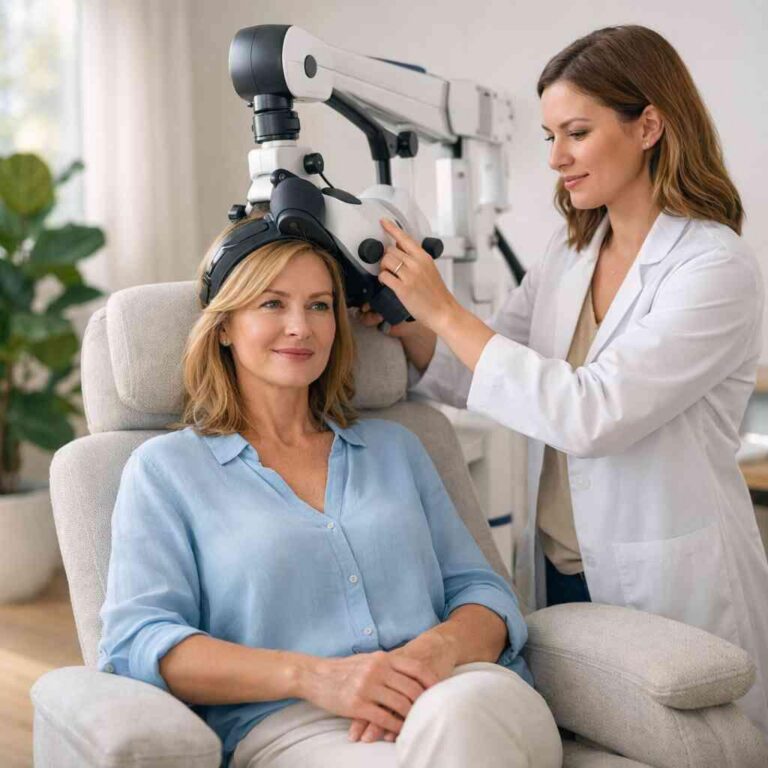
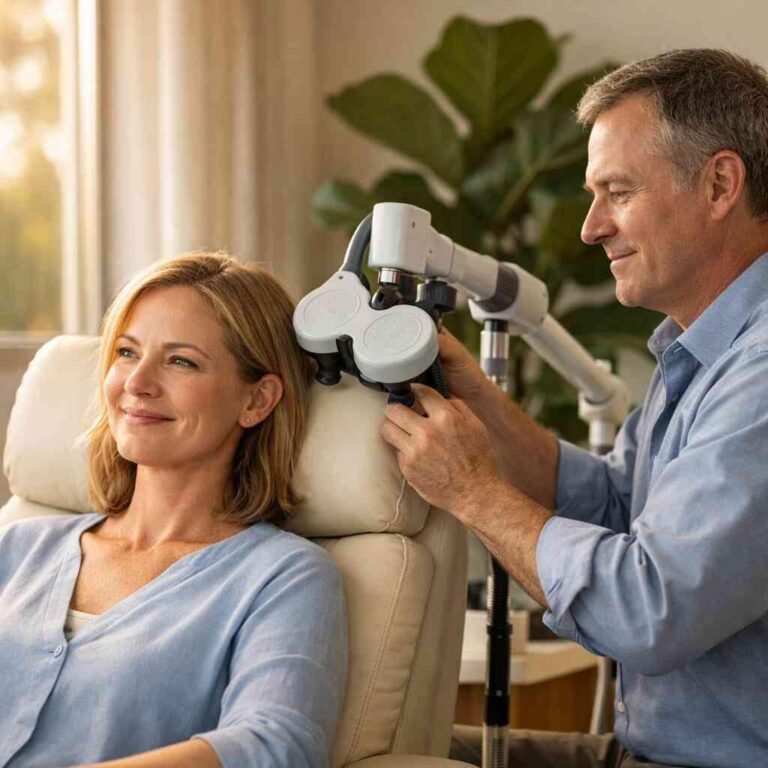
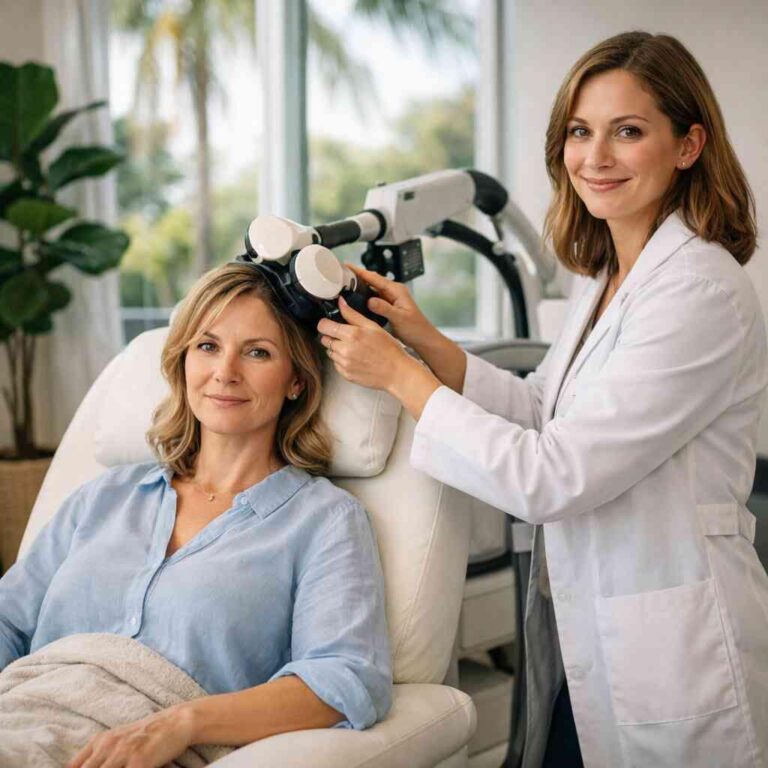
At TMS Treatment Florida, we use FDA approved depression treatment protocols that have been refined over years of clinical use. The process does not require anesthesia, incisions, or recovery time. You simply sit in a comfortable chair while the magnetic coil delivers gentle pulses. Most patients read a book or listen to music during their sessions.
The mechanism of action is fascinating and deeply biological. Magnetic pulses induce electrical currents in specific brain regions that are underactive in depression. This electrical activity triggers the release of neurotransmitters like dopamine, serotonin, and norepinephrine naturally. Your brain essentially relearns how to regulate its own mood chemistry.
Our clinic specializes in helping patients who have tried everything else. We see people who have failed multiple antidepressants, therapy, and even ECT. Many have been told their depression is chronic or that they just have to accept it. We do not accept that narrative for our patients.
The treatment is particularly effective for medication resistant depression because it works through a different pathway. Your brain does not need to metabolize a drug or activate a receptor. The magnetic stimulation directly changes the electrical activity in your neurons. This bypasses many of the genetic and metabolic barriers that block medication effectiveness.
TMS treatment Florida offers hope when other options have failed. Our patients come to us feeling exhausted and skeptical. They leave feeling lighter, clearer, and more like themselves than they have in years. The transformation happens gradually over several weeks, not overnight.
Rewiring the Brain Without Drugs: How TMS Targets Stubborn Mood Symptoms
Understanding how TMS works requires a small shift in how you think about depression. Your mood is not just about chemical balance. It is about how your brain cells communicate with each other. When that communication breaks down, your mood drops regardless of what medications you take.
What Happens During a TMS Session at a Florida Clinic
Your first visit to our clinic starts with a thorough evaluation. A board-certified psychiatrist reviews your history, current symptoms, and previous treatments. This assessment includes a MADRS or PHQ-9 scale to establish your baseline depression severity. We need to know exactly where you are starting to measure your progress.
The treatment room looks more like a spa than a medical facility. Soft lighting, comfortable reclining chairs, and quiet music create a calm atmosphere. The technician positions the magnetic coil against your scalp using a precise mapping process. This mapping ensures the stimulation reaches the correct brain region for your specific symptoms.
During the actual TMS session, you will hear a gentle tapping sound. The coil produces a clicking noise as it delivers each magnetic pulse. You feel a light tapping sensation on your scalp, similar to someone drumming their fingers. There is no pain, though some patients report mild discomfort during the first few sessions.
Each session lasts about twenty to thirty minutes. You remain fully awake and aware throughout the entire process. You can talk to the technician, listen to a podcast, or simply close your eyes. Many patients describe the experience as relaxing once they get used to it.
After the session ends, you get up and go about your day normally. There is no downtime, grogginess, or post-treatment confusion. You can drive yourself home, go to work, or pick up your kids from school. This convenience makes TMS a practical option for people with busy lives.
The Science of Magnetic Pulses and Neural Pathway Repair
The core science behind TMS is electromagnetic induction. A rapidly changing magnetic field creates an electric current in nearby conductive tissue. Your brain tissue happens to conduct electricity quite well. The magnetic coil acts like a generator that jumpstarts underactive neurons.
Depression literally shrinks certain parts of your brain over time. Chronic stress reduces the volume of the hippocampus and prefrontal cortex. These areas become less connected to each other, creating a neural bottleneck. Your brain cannot process emotions effectively when these circuits are weak.
TMS stimulates the process of long-term potentiation, which strengthens synaptic connections. Think of it as creating wider roads for electrical signals to travel. Over repeated sessions, your brain builds new neural pathways that support better mood regulation. The changes are structural and lasting, not just chemical.
Research from the Stanford study published in 2018 showed impressive remission rates for treatment-resistant patients. The study used an accelerated TMS protocol and achieved remission in nearly eighty percent of participants. Other large-scale trials have consistently shown that TMS works for about fifty to sixty percent of medication resistant patients.
The United States FDA cleared the NeuroStar and BrainsWay devices specifically for treating depression and OCD. These devices have undergone rigorous safety testing and clinical validation. The Florida Agency for Health Care Administration regulates our outpatient clinic to ensure we meet all safety standards.
Unlike medication, TMS does not circulate throughout your entire body. The magnetic field targets only the specific brain region being treated. This localized effect means you avoid systemic side effects like weight gain or sexual dysfunction. Your liver and kidneys do not have to process any foreign substances.
Why TMS Works for Depression, Anxiety, OCD, and Bipolar Depression When Meds Don’t
Medication resistance is not a single phenomenon. It can occur for different reasons across different disorders. Depression often involves underactivity in the left prefrontal cortex. Anxiety involves overactivity in the amygdala and related fear circuits.

TMS can be tailored to target the specific brain regions involved in your condition. For depression, we stimulate the left dorsolateral prefrontal cortex to boost activity. For anxiety, we sometimes target the right prefrontal cortex to reduce overactivity. This precision gives TMS an advantage over drugs that affect the whole brain.
Obsessive-compulsive disorder has a unique neural signature involving the cortico-striato-thalamo-cortical circuit. Deep TMS therapy uses a different coil design that reaches these deeper brain structures. The FDA has specifically approved deep TMS for OCD treatment based on strong clinical evidence.
Bipolar depression presents a particular challenge. Many antidepressants can trigger manic episodes in bipolar patients. TMS offers a safer alternative because it does not carry the same risk of mood switching. Our psychiatrists carefully screen bipolar patients to ensure TMS is appropriate for their condition. Learn more about TMS for bipolar disorder.
The success rate for TMS in medication resistant patients continues to improve. Maintenance therapy helps patients sustain their gains long after the initial treatment course ends. Many patients find they only need periodic booster sessions to maintain their mood stability.
The safety profile of TMS is excellent compared to other depression treatments. The most common TMS side effects are mild scalp discomfort and temporary headache. Serious side effects like seizures are extremely rare, occurring in less than one in thirty thousand sessions.
Combining TMS with Psychotherapy for Lasting Mood Stability
TMS changes your brain biology, but it does not automatically change your thought patterns. Psychotherapy helps you make the most of your newly functioning brain. This combination creates synergy that neither treatment achieves alone.
Many patients find that TMS makes therapy more effective. They can access emotions that were previously blocked by depression. They have more energy to examine their beliefs and behaviors. The cognitive fog lifts, allowing them to process insights more deeply.
Our clinic offers integrated treatment plans that combine TMS with evidence-based therapies. We use cognitive behavioral therapy, dialectical behavior therapy, and EMDR depending on your needs. The TMS and EMDR combination for trauma and depression in Florida has shown remarkable results for patients with PTSD.
TMS and psychotherapy integration for resistant moods in Tampa and across our Florida locations works through complementary mechanisms. TMS increases neuroplasticity, making your brain more receptive to learning. Psychotherapy provides the new learning that your brain needs to sustain recovery.
You do not have to choose between medication and TMS. Many of our patients continue taking their antidepressants while undergoing TMS. The combination can be more effective than either treatment alone. We work with your prescribing psychiatrist to coordinate care seamlessly.
The goal is not just symptom relief but lasting mood stability. We want you to reach a point where you can manage your mood without constant medical intervention. TMS builds the neural foundation, and therapy builds the psychological framework on top of it.
Getting TMS in Florida: What to Expect for Cost, Insurance, and Your First Visit
The practical questions about TMS often feel overwhelming. How much does it cost? Will insurance pay for it? Where do I even go? These concerns keep many people from pursuing a treatment that could change their lives.
Does Insurance Cover TMS in Florida and How to Verify Your Benefits
Insurance coverage for TMS has expanded significantly in recent years. Most major insurance plans now recognize TMS as a medically necessary treatment for medication resistant depression. This includes Medicare, Medicaid, Blue Cross Blue Shield, Cigna, Aetna, UnitedHealthcare, and many others.
The key requirement for coverage is documented failure of previous medication trials. Insurance companies typically want to see that you have tried at least two antidepressants without adequate response. Your medical records must show that these trials were of adequate dose and duration.
Our insurance verification team handles the entire process for you. We contact your insurance company to determine your specific benefits and out-of-pocket costs. We help you understand your deductible, copay, and any prior authorization requirements. There is no charge for this service. Review our complete insurance guide.
The TMS cost Florida patients pay varies based on their insurance plan. Some patients have zero out-of-pocket costs after meeting their deductible. Others may have copays per session similar to what they pay for specialist visits. Our team gives you an accurate estimate before you commit to treatment.
We also offer financing options for patients whose insurance does not cover treatment. The cost of a full course of TMS is comparable to a year of brand-name antidepressants. When you consider the lifetime cost of medication resistance, TMS becomes a cost-effective investment.
The Typical TMS Treatment Schedule and How Long Results Last
A standard course of TMS involves daily sessions Monday through Friday for four to six weeks. Each session lasts about twenty to thirty minutes. The total number of sessions typically ranges from twenty to thirty-six. This schedule fits into most people’s work and family routines.
Most patients begin noticing improvements around the second or third week. The changes come gradually, like fog lifting slowly rather than a light switch turning on. You wake up one morning and realize you felt okay getting out of bed. The critical inner voice has quieted down.
Full benefits usually emerge by week four to six of treatment. Patients report improvements in sleep, appetite, energy, and motivation. The dark thoughts that once consumed their mind start to fade. They feel pleasure in activities again, a concept called hedonic recovery.
TMS long-term results depend partly on whether you receive maintenance therapy. About half of patients who respond to initial TMS will eventually need a booster session. These maintenance sessions are typically one per month or less. The risk of relapse is lower if you combine TMS with ongoing psychotherapy.
Some patients maintain their gains for years without additional treatment. Others return for periodic booster sessions when they feel their mood dipping. Our clinic monitors your progress and adjusts your treatment plan as needed. We do not simply discharge you and forget about you.
Your TMS psychiatrist Florida doctor will help you develop a personalized maintenance plan. This plan might include monthly sessions, quarterly sessions, or as-needed boosters. The goal is to keep you stable with the least amount of intervention required.
Finding a TMS Clinic Near You in Miami, Fort Lauderdale, Orlando, or Tampa
TMS Treatment Florida has multiple locations throughout the state for your convenience. Our TMS clinic Miami location serves patients from Dade, Broward, and Palm Beach counties. We are easily accessible from Aventura, Coral Gables, and Boca Raton.
Our TMS Fort Lauderdale location covers Broward County including Hollywood, Pompano Beach, and Weston. The office is located near major highways for easy access. Patients from Delray Beach and Boca Raton also find this location convenient.
TMS Orlando location serves Orange County and surrounding communities including Winter Park and Kissimmee. This location offers the same high-quality care with a team that understands the Central Florida community. TMS Tampa location covers Hillsborough County and the greater Tampa Bay area.
TMS West Palm Beach location serves Palm Beach County including Wellington, Jupiter, and Palm Beach Gardens. TMS South Florida coverage ensures that most residents are within driving distance of a clinic. We are continuously expanding to serve more communities. See all areas we serve.
When you search for TMS near me Florida online, our clinics appear prominently. We prioritize same-week consultations for new patients. You do not have to wait weeks to start your evaluation and begin treatment.
TMS for Complex Cases Including Dual Diagnosis and Substance Use Disorder
Many patients with treatment-resistant mood disorders also struggle with substance use. The two conditions feed each other in a vicious cycle. Depression drives you to self-medicate with alcohol or drugs. Substance use then worsens your depression and makes treatment less effective.
TMS for dual diagnosis and substance use disorder in Florida offers a unified treatment approach. We address both conditions simultaneously rather than treating one first. Research from the Medical University of South Carolina shows that TMS can reduce cravings for alcohol and cocaine.
TMS addiction recovery works by targeting the brain’s reward circuitry. The same prefrontal cortex that regulates mood also helps control impulsive behavior. Strengthening this area helps you resist cravings and make better decisions. The effects on substance use are often independent of the mood effects.
Our clinic offers TMS for substance use disorder as part of a comprehensive dual diagnosis program. We coordinate with addiction specialists and recovery coaches. We understand that addiction is a chronic brain disease, not a moral failing. Read about our dual diagnosis protocols.
TMS for smoking cessation also uses similar protocols to reduce nicotine cravings. Many patients find it easier to quit smoking after completing TMS for depression. The combination improves both your mental health and your physical health.
TMS for PTSD Florida patients often have comorbid depression that requires careful treatment planning. Our trauma-informed approach ensures you feel safe throughout the treatment process. The TMS and EMDR combination is particularly powerful for this population.
Our luxury TMS center environment supports healing in every way possible. We create a space where you feel cared for, respected, and understood. The treatment itself is powerful, but the context in which it occurs matters too.
Frequently Asked Questions About TMS for Medication Resistant Moods
How long does it take for TMS to work for depression?
Most patients notice some improvement by the second or third week of daily treatment. Full benefits typically emerge after four to six weeks of consistent sessions. The changes are gradual, which actually helps your brain build lasting neural pathways.
Can TMS be used with other treatments like ketamine or psychotherapy?
Yes, TMS works well alongside other treatments. Many patients continue taking their regular medications during TMS. The combination of TMS and psychotherapy gives you both biological and psychological support. Your treatment team will help coordinate all your care.
Is TMS covered by Medicare in Florida?
Medicare covers TMS for treatment-resistant depression when specific criteria are met. You must have documented failure of at least one antidepressant trial during this episode. Medicare also requires that you receive TMS from a certified provider.
What is the success rate of TMS for medication resistant depression?
Clinical studies show that about fifty to sixty percent of medication resistant patients respond to TMS. Approximately one-third of patients achieve full remission of their symptoms. The success rate increases when TMS is combined with psychotherapy.
Are there any long-term side effects of TMS therapy?
TMS has an excellent long-term safety profile with no known cumulative side effects. The risks are limited to short-term scalp discomfort and mild headache during treatment. Unlike medication, TMS does not cause weight gain, sexual side effects, or organ damage.
How do I know if I am a good candidate for TMS?
Good candidates have tried at least two antidepressant medications without adequate response. You should be in a stable living situation and able to attend daily sessions for several weeks. A thorough evaluation with our psychiatrist will determine if TMS is right for you.
Does TMS hurt or cause any memory problems?
TMS is not painful, though you may feel a tapping sensation on your scalp. Some patients experience mild headache that resolves quickly. TMS does not cause memory loss or cognitive impairment like ECT can. In fact, many patients report improved concentration and mental clarity after treatment.