
When PTSD keeps replaying the same scene, what does TMS in Florida actually change?
If you are reading this because your mind keeps snapping back to the same moment, that heavy feeling makes sense. PTSD can stay loud long after the danger is gone. Sleep gets choppy. Sounds feel sharper. Even a normal day can feel like your body is bracing for impact.
Why trauma can stay loud even after therapy and medication
Talk therapy can help you make meaning of trauma, and medication can reduce some symptoms. Still, many people feel stuck when the nervous system keeps firing as if the threat is still present. That is often the hardest part. You can know you are safe and still feel unsafe.
Here is what many people do not hear enough: trauma is not just a memory problem. It also lives in attention, arousal, and threat detection. That is why someone can finish a solid therapy session and still flinch at a car backfiring on the street. It is frustrating, and it can feel defeating.
How transcranial magnetic stimulation therapy speaks to the overactive circuits behind hypervigilance and shutdown
Transcranial magnetic stimulation therapy uses focused magnetic pulses to stimulate areas of the brain tied to mood regulation and stress response. It is a form of non-invasive brain stimulation, which means there is no surgery and no anesthesia. In PTSD support, the idea is not to erase memory. The goal is to help the brain’s regulation systems work with less strain.
In Florida, people often ask about TMS treatment Florida after trying therapy, medication, or both. That search usually comes from exhaustion, not curiosity alone. Some are dealing with hypervigilance, while others feel numb, shut down, or both in the same week. TMS for PTSD Florida enters the conversation because it may fit when symptoms stay stubborn.
A clinician will usually frame it as part of a broader plan, not a magic fix. That honesty matters. What we know from transcranial magnetic stimulation research is that targeted stimulation can help certain symptom clusters, especially when depression rides alongside trauma. The best conversations stay grounded in evidence, including careful symptom tracking and realistic expectations.
What people in Florida often mean when they search for TMS for PTSD Florida or TMS treatment Florida
Sometimes the search is about relief. Sometimes it is about access. A person in Aventura may want something closer than a long drive across county lines. Someone in Coral Gables or Boca Raton may want a place that understands both trauma care and insurance questions.
On the ground in Florida behavioral health, location matters more than people expect. Seasonal residents, traffic along I-95, and busy work schedules can all make consistency hard. That is one reason searches like TMS near me Florida, TMS clinic Miami, TMS Fort Lauderdale, TMS West Palm Beach, TMS Orlando, and TMS Tampa are so common. People are trying to make care workable.
One client in South Florida told us the hardest part was not deciding to get help. It was finding something that did not feel like another dead end. That is a familiar story. The right conversation should start with what has already been tried, what helped a little, and what still feels broken.
Why a brain-based PTSD treatment can feel different from another round of talk therapy
A lot of people worry that asking about TMS means giving up on therapy. It does not. Most of the time, it means you are adding another tool when the current mix is not enough. That can feel like relief, and it can also feel confusing. Both reactions are normal.
Where TMS fits beside EMDR, medication management, and trauma-informed care
TMS therapy in Florida can sit beside EMDR, medication management, and trauma-informed counseling. In some cases, a team may use TMS to reduce the intensity of mood symptoms so therapy feels more usable. In other cases, a clinician may focus first on stabilization, then coordinate care with a therapist who understands trauma triggers.
There is a real difference between more talk and different support. EMDR works through memory processing. Medication management works through chemistry. TMS works through circuit-level stimulation. For some people, that combination creates enough breathing room for daily life to feel less punishing.
If you are comparing options, this is where a TMS treatment in Florida for depression conversation can also matter. PTSD and depression often travel together. When mood drops, shame rises. When shame rises, avoidance grows. That cycle can keep trauma symptoms active far longer than anyone wants.
When non-invasive brain stimulation may be considered after failed medications or stalled progress
Many people search for TMS after failed medications because the usual antidepressant path has not delivered enough change. That does not mean medications were useless. It means the brain may need another route. TMS can be discussed when someone has medication-resistant depression, persistent anxiety, or trauma symptoms that have stalled despite solid effort.
The evidence base is strongest for depression, especially with FDA-cleared systems such as NeuroStar and BrainsWay. Studies, including the 2018 Stanford work often cited in the field and broader consensus reviews, helped push this treatment into mainstream care. For PTSD, the research is still growing, and good clinics should say that plainly. They should not oversell.
You may also hear people describe TMS as an alternative depression treatment or non-drug depression treatment. Those phrases are common because many patients want something that does not add sedation, weight gain, or fog. If you are already drained by side effects, that matters.
Why TMS is not sedation, not surgery, and not a one-size-fits-all promise
TMS is not sedation. It is not surgery. It is not a promise that every symptom will vanish. That blunt truth builds trust faster than any glossy brochure ever could.
The treatment uses repetitive TMS or, in some clinics, deep TMS therapy, depending on the device and the target. The point is to stimulate specific brain networks over a series of visits. For depression, this is a recognized FDA approved depression treatment. For PTSD, it is better described as an emerging, brain-based support option that may help some people, especially when depression or anxiety is part of the picture.
If you are also managing substance use, a clinic may coordinate with a Florida mental health clinic, a therapist, or an addiction team. That is where TMS addiction recovery and TMS for substance use disorder may come up. The treatment is not a substitute for rehab or therapy, but it can be part of a larger plan.
What happens inside a Florida TMS clinic when the goal is steadier mornings and fewer trigger spikes
The first visit can feel oddly formal and deeply personal at the same time. You are answering clinical questions, but you are also telling the story of how hard it has been. That mix can be uncomfortable. It can also be the first time someone maps your symptoms carefully instead of rushing past them.
What a real evaluation can look like at a Florida mental health clinic or TMS psychiatrist Florida visit
A thoughtful evaluation usually starts with symptoms, history, and safety. A TMS psychiatrist Florida visit may review past medications, therapy response, sleep, panic symptoms, trauma exposure, and medical factors. If a clinic follows good practice, it should also check for contraindications and explain what the treatment can and cannot do.
In Florida, good outpatient centers also pay attention to state rules and documentation. AHCA standards matter because they shape how clinics operate, especially for safety and recordkeeping. That does not make the visit colder. It makes it more reliable.
The strongest clinics in Florida behave less like a sales desk and more like a Florida behavioral health team. They ask about what happens on your hardest mornings. They ask which triggers still ambush you. They ask what treatment felt tolerable, and what felt like a waste of energy.
How doctors may track change with PHQ-9, MADRS, and symptom check-ins over time
Good care depends on measurement, not guesswork. Clinics often use the PHQ-9 for depression and the MADRS for symptom change. They may also use PTSD symptom check-ins, sleep questions, and anxiety scales. That gives you and the clinician a clearer picture of what is changing.
This matters because PTSD rarely shifts in a straight line. One week may bring less panic, while another brings better sleep but more irritability. If nobody measures change, people can miss real progress. They can also miss when a plan needs adjustment.
Here is the part most people miss: outcome tracking helps protect you from false hope and unfair pessimism. A bad week does not mean treatment failed. A single good day does not mean treatment is done. Consistent measurement keeps the conversation honest.
What a session feels like, from the chair placement to the tapping sound, and why that matters for comfort
A session usually begins with you sitting in a chair while staff position the treatment coil. You stay awake the entire time. Most people describe the sensation as tapping or clicking on the scalp. The sound can be surprising at first, but it becomes routine for many patients.
That steady rhythm matters more than people expect. It gives your body a pattern to settle into. If you have lived with hypervigilance, predictability helps. Some clinics also adjust protocol details to improve comfort and tolerability.
One patient described it like this, without drama: “It felt strange for two minutes, then just loud.” That is often the truth. Not magical. Not awful. Just unfamiliar, then manageable.
How PTSD support intersects with depression, anxiety, OCD, and addiction care in the same treatment map
PTSD seldom arrives by itself. It often brings depression, anxiety, sleep problems, obsessive thinking, or substance use. That is why a narrow treatment plan can miss the bigger picture. A wider treatment map usually works better.
Why trauma often travels with medication resistant depression and TMS for anxiety
If trauma has worn you down for years, depression may start to look like your new baseline. That is where TMS depression treatment Florida conversations become especially relevant. People who search for TMS for anxiety are often chasing two things at once: a calmer nervous system and fewer physical stress symptoms. A careful clinician may discuss TMS treatment in Florida for anxiety disorders alongside trauma care. The research is not as mature as it is for depression, but the clinical logic is understandable. If the brain is stuck in alarm mode, helping regulatory circuits may reduce the volume. 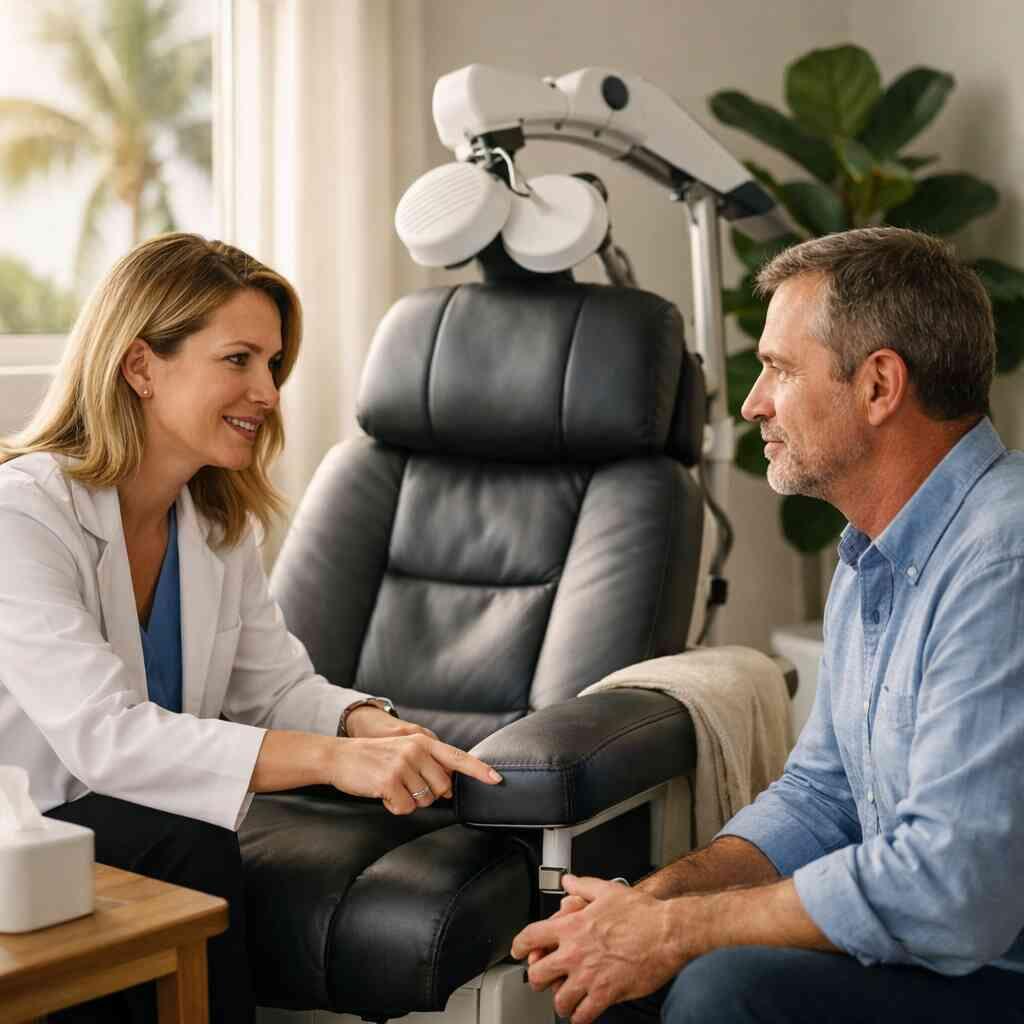
For readers who are also comparing terms online, magnetic brain therapy and alternative depression treatment are common phrases. They are useful search terms, but the clinical value depends on the full assessment. That is why the best clinics keep the conversation personal, not generic.
Where TMS for bipolar depression, TMS OCD therapy, and TMS addiction recovery may enter the conversation
PTSD can overlap with other diagnoses in complicated ways. A person might have bipolar depression, intrusive thoughts, or compulsive checking on top of trauma symptoms. In those cases, TMS for bipolar depression or TMS OCD therapy may become part of a broader plan, depending on clinical fit.
If you are researching TMS treatment in Florida for OCD care, you are probably already familiar with the exhaustion of looping thoughts. OCD and PTSD can look similar from the outside, but they feel different inside. A good assessment should sort that out carefully. That matters because treatment targets differ.
Addiction also belongs in this conversation. TMS addiction recovery and TMS for smoking cessation are active areas of research, along with studies on craving reduction and reward circuitry. Some teams also discuss alcohol addiction brain stimulation in the context of broader behavioral care. The evidence is promising in some areas, but it is not a replacement for addiction rehab Florida programs or counseling.
How dual diagnosis treatment Florida and TMS and EMDR combination planning can support people with substance use disorder or alcohol cravings
When trauma and substance use happen together, the plan needs more than one lane. That is the logic behind dual-diagnosis treatment Florida. The SAMHSA TIP guidance for substance use disorders supports integrated care, because trauma, cravings, and relapse risk often feed each other. If one piece is ignored, the others can spiral.
A TMS and EMDR combination may make sense when a person needs both nervous system support and trauma processing. TMS may help reduce mood drag and stress reactivity, while EMDR addresses memory networks. That pairing does not work for everyone, but it deserves discussion.
If you want to read more about the depression side of the equation, a clinic may point you toward How TMS therapy in Florida supports medication resistant depression. That kind of context can help you compare your own situation with the evidence, instead of guessing in the dark.
If you are comparing clinics in Florida, what should guide the next decision
Choosing a clinic is not only about equipment. It is about the people, the follow-up, and the honesty of the intake conversation. You deserve clear answers. You also deserve a pace that does not rush your nervous system.
What to ask about TMS insurance coverage Florida, TMS cost Florida, and whether your plan may cover care
Cost questions are practical, not shallow. Ask about TMS insurance coverage Florida, preauthorization, and whether the clinic helps verify benefits. Ask if they work with your plan, and ask what happens if coverage is partial. If someone gives you a neat price without context, keep asking.
The phrase does insurance cover TMS in Florida sounds simple, but the answer depends on diagnosis, policy, and medical necessity. For depression, coverage is often more likely when documentation supports medication-resistant depression. For PTSD, coverage may be more variable, so the billing conversation matters early.
A clinic should also be willing to talk through TMS cost Florida without pressure. You want clarity before commitment. You do not need a sales pitch. You need a plan.
How to think about TMS side effects safety, TMS maintenance therapy, and long-term results without hype
TMS side effects safety is one of the most important questions you can ask. Common side effects may include scalp discomfort, headache, or fatigue, especially early on. Serious side effects are uncommon, but a clinician should review risks and screening in plain language. That is the standard you should expect.
People also ask about TMS maintenance therapy and TMS long-term results. Maintenance may be considered if symptoms improve and then start to creep back. Long-term data look encouraging in some depression cases, but no ethical clinic should promise a fixed outcome. That would be hype, not medicine.
Here is a simple way to compare options:
TopicWhat to askWhy it mattersSafetyWhat side effects are most common?Helps you plan around headaches or discomfortCoverageIs my plan likely to help?Prevents surprise billsFollow-upWhat happens after the acute series?Clarifies maintenance planningFitHow do you treat trauma plus depression?Shows whether the clinic sees the whole pictureFor location and access, many patients narrow their choices by county first. If you want to see where services are offered, you can review TMS treatment in South Florida locations and then compare convenience from places like Delray Beach, Winter Park, and nearby communities.
Why location matters for access in Miami, Fort Lauderdale, West Palm Beach, Orlando, Tampa, and beyond, and what to do next if you want a local consult
Florida geography changes care more than people expect. A clinic in downtown Miami may fit someone in Aventura or Coral Gables. A Broward option may be easier from Fort Lauderdale. Palm Beach County can work better for Boca Raton or Delray Beach. Orange County or Hillsborough may make more sense if you are closer to Orlando or Tampa.
That access issue matters because TMS works best when sessions are consistent. Missed appointments can slow the rhythm. Seasonal residents and storm disruptions add another layer. The best plan is the one you can realistically keep.
If you want to compare nearby options, local pages can help you sort by county and travel time. You might also want to see the clinic team, their process, and how they answer basic questions before the consultation. A good place to start is the clinic’s About Us page, then move to a local call when you feel ready.
For a trauma-focused route, some readers also look for Guide to TMS Treatment Florida for PTSD Support in 2026 and decide from there whether the fit feels right. You do not have to solve everything in one sitting. Write down three questions tonight. Then pick one Florida clinic tomorrow and ask them plainly how they treat trauma, depression, and access together.
Frequently Asked Questions
Does TMS work for PTSD in Florida?
TMS is best established for depression, and PTSD research is still growing. Some people with PTSD notice help when depression, anxiety, or sleep symptoms improve. A good Florida clinic should explain that TMS for PTSD Florida is usually discussed as part of a broader trauma-informed plan, not as a guaranteed stand-alone cure. The clearest path is a thorough evaluation and symptom tracking over time.
How does TMS work for trauma-related symptoms?
TMS uses magnetic pulses to stimulate targeted brain areas linked to mood regulation and stress response. It does not erase memories. Instead, it aims to help the brain regulate better, which may reduce the intensity of hypervigilance or shutdown for some people. Clinicians often pair it with therapy, medication management, or EMDR when appropriate.
Is TMS safe if I already take psychiatric medication?
Often, yes, but the prescribing team must review your full medication list and medical history. The main concerns involve seizure-risk screening and treatment fit. Most people describe only mild side effects, such as scalp discomfort or headache. Your clinician should explain safety screening clearly before treatment starts.
Does insurance cover TMS in Florida?
Sometimes, especially for depression when medical necessity criteria are met. Coverage for PTSD alone may be less predictable. It helps to ask about TMS insurance coverage Florida, prior authorization, and diagnosis requirements before you commit. A good clinic should verify benefits and explain your likely responsibility in plain language.
What is the difference between deep TMS therapy and repetitive TMS?
Both use magnetic stimulation, but they differ in device design and stimulation depth. Deep TMS therapy may reach broader or deeper cortical areas, while repetitive TMS uses a more focused coil pattern. Which one fits depends on diagnosis, goals, and clinic equipment. Your provider should explain the practical differences without jargon.
Can TMS help with depression, anxiety, OCD, and addiction at the same time?
It can be part of a broader plan, but not every symptom responds the same way. TMS has the strongest evidence for depression, and there is growing support for OCD and some addiction-related craving research. For trauma, anxiety, and substance use, the best results usually come from integrated care, not one therapy alone.
How do I choose the best TMS clinic in Florida?
Start with the evaluation process, not the marketing. Ask how they screen for PTSD, depression, anxiety, and substance use. Ask how they track progress with PHQ-9 or MADRS, and ask about insurance, maintenance, and safety. If you want location convenience, compare Miami, Fort Lauderdale, West Palm Beach, Orlando, and Tampa options before booking a consult.