Top 5 Ways TMS Treatment Florida Boosts OCD Recovery
1) How TMS Reprograms the Stubborn OCD Brain Loop
The Neurobiology of an Overactive Threat Detector
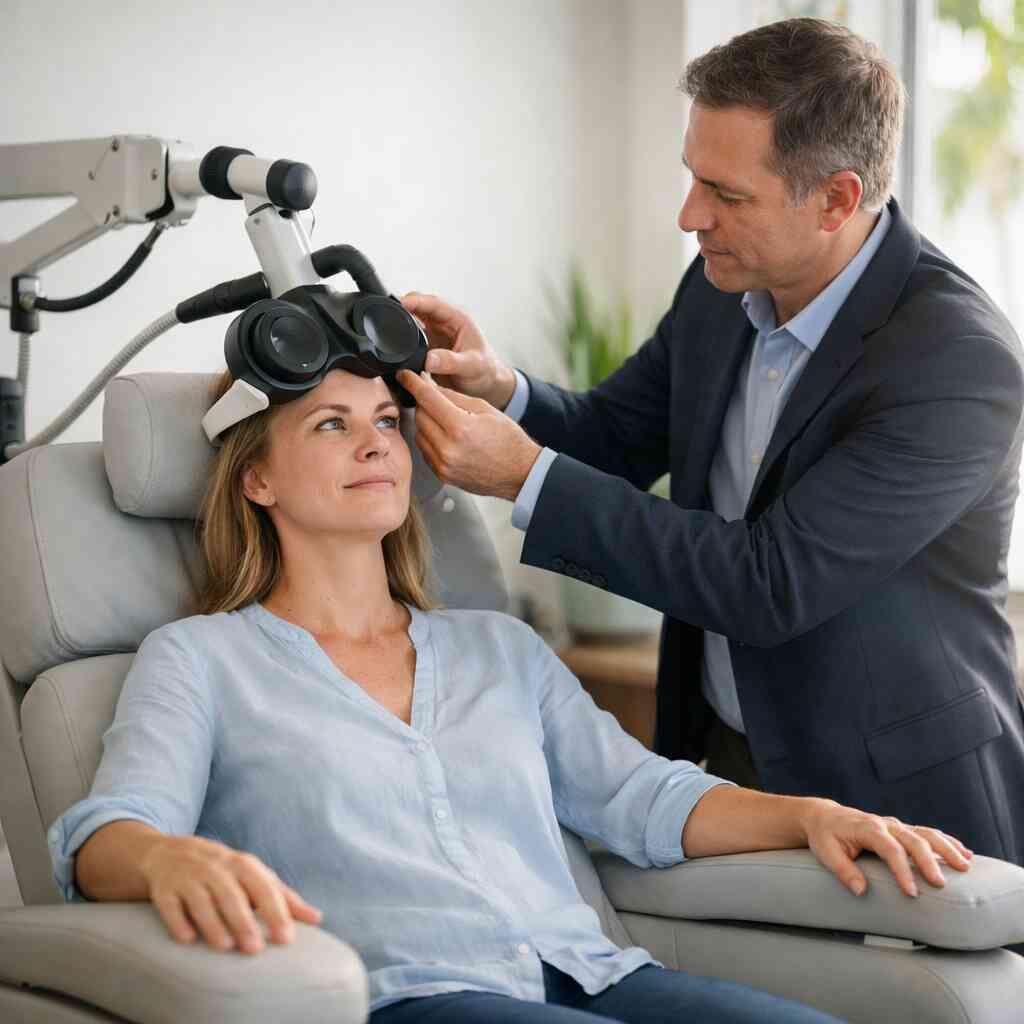
Your brain’s threat detector sits in a loop that never powers down. The orbitofrontal cortex and the caudate nucleus fire together in a relentless rhythm when OCD takes hold. This circuit scans for danger even when the room is quiet and safe. The anterior cingulate cortex marks small uncertainties as full-blown emergencies. Your body responds with a surge of cortisol, tight shoulders, and a churning stomach despite no real threat. Magnetic pulses from transcranial magnetic stimulation for OCD neural modulation can interrupt that locked emergency signal. The magnetic field passes through the scalp and skull without surgery or sedation. It nudges neurons in the overactive regions back toward a flexible, balanced state. You sit in a comfortable chair while the coil rests against your head and a soft tapping sensation repeats. Many patients in South Florida describe the feeling as a gentle reset that no pill ever achieved.
The threat-detection loop also hijacks your ability to dismiss a stray thought. Your brain treats a scary image as if it were happening right now. You try to argue with the thought, but the argument only feeds the loop. TMS therapy options for obsessive-compulsive disorder target the exact networks that keep the alarm ringing. Research demonstrates that high-frequency pulses increase activity in underactive control centers. In OCD, the dorsolateral prefrontal cortex often struggles to apply the brakes. The result is a raw, unfiltered stream of intrusive content that wears you down hour by hour. Magnetic stimulation slowly restores the brain’s natural gating mechanism. With each session, the threat detector learns to stand down when the environment is safe. Your mind gets more room to breathe.
Florida clinics have seen patients describe the change as quietness arriving where noise used to live. A woman in Delray Beach told her clinician that the thoughts did not vanish on day one. Instead, the volume knob turned down enough for her to hear her own voice again. That early shift often proves crucial because hope rebuilds itself through small, repeated relief. The first change many families notice is a softening around the eyes. The person begins to linger at the dinner table a few minutes longer. transcranial magnetic stimulation for OCD in Florida opens that window when medications have left the glass fogged. The neurobiology driving the disorder is not a character flaw. It is a measurable, treatable circuit pattern that responds to directed energy.
Dorsolateral Prefrontal Cortex Stimulation Breaks the Grip of Obsessive Thoughts
The dorsolateral prefrontal cortex acts as the brain’s rational supervisor. It evaluates incoming signals and decides whether a worry deserves action. In OCD, that supervisor grows tired and inconsistent. It lets intrusive thoughts rush into conscious awareness without proper screening. Repetitive TMS pulses applied over this region wake the supervisor from its slumber. The pulses trigger tiny electrical changes that strengthen the area’s regulatory power. Imagine a sentry who had been drifting off to sleep suddenly getting a strong cup of coffee. The sentry now notices when a false alarm sounds and calmly silences it. That image mirrors what many OCD patients report after several TMS sessions. The obsessions still try to knock on the door, but the mind no longer flings it open.
Clinicians at TMS clinics serving OCD patients across Florida often combine stimulation on the left dorsolateral prefrontal cortex with deep TMS coils that reach wider networks. The left side typically governs positive approach behaviors and logical analysis. When its activity increases, the brain’s brake system works more effectively. Patients in West Palm Beach have described the effect as gaining a pause button between the urge and the reaction. That pause creates space for choice. You start to feel like a person who can observe a thought without obeying it. The tapping sensation during treatment serves as a rhythmic anchor that many clients find oddly reassuring. After twenty minutes, the machine stops and you stand up with a clarity that deepens over the full treatment course.
This cortical stimulation also communicates with deeper structures through white-matter pathways. The dorsolateral prefrontal cortex sends calming signals to the striatum and thalamus. Those signals reduce the emotional weight attached to intrusive content. Over three to four weeks, the loop begins to lose its chokehold. A businessman from Aventura noted that his morning commute suddenly felt lighter. He realized he had driven past a particular intersection without performing his usual silent counting ritual. That moment felt like freedom, he said, tasting salt air through the open window instead of counting. The brain had learned a new default. top TMS techniques for OCD relief in Florida leverage that precise anatomical target consistently.
Neuroplasticity in Action Rewiring Intrusive Thought Patterns
Neuroplasticity is the brain’s ability to reshape connections based on experience. TMS harnesses that natural capacity on a cellular level. Each magnetic pulse encourages neurons to fire together in healthier sequences. Over time, the circuits that carry obsessive content weaken, while control circuits strengthen. This process resembles building a new trail through a dense Florida hammock. The old path of compulsive reaction grows over with palmetto and sawgrass. The new path becomes the brain’s preferred route. You notice the change first in small moments. A forgotten lock-check feels tolerable instead of terrifying. A worry about contamination drifts away before you reach for the hand sanitizer.
The brain’s remodeling requires repetition and intensity. A standard OCD protocol delivers five sessions per week for several weeks. That consistency triggers long-term potentiation, the cellular basis of learning and memory. The dorsolateral prefrontal cortex literally thickens its connections to inhibitory circuits. Magnetic brain stimulation for OCD ritual reduction works because it does not simply mask symptoms. It changes the underlying architecture that sustained them. A college student in Coral Gables described her mind as a house where the furniture had been rearranged overnight. The old triggers sat in the corners, but they no longer blocked the doorways. She could walk through her own thoughts without bumping into fear. That image captures neuroplasticity in a way that scans and graphs cannot always convey.
Maintaining those new pathways requires continued practice. The brain appreciates exercise just like a muscle. Many Florida clinics pair TMS with structured therapy to reinforce the gains. After the stimulation opens the window of plasticity, talk therapy and exposure exercises cement the change. The combination often yields results that neither approach could achieve alone. A mother in Winter Park noticed her son started smiling again during family movie night. He had not laughed out loud in months. Those human details underscore that neuroplasticity is not an abstract concept. It is the lived texture of recovery. The hum of the machine becomes background music to a reclaiming of ease.
Why Medication-Resistant OCD Responds to Magnetic Brain Therapy
Many people with OCD have tried two, three, or even four SSRIs without lasting relief. The medications aim to boost serotonin, but OCD involves more than just serotonin imbalance. The core problem lives in the electrical wiring of specific circuits. Pills bathe the entire brain in chemical changes, often causing fatigue, weight gain, and emotional numbness. TMS takes a different road entirely. It uses focused magnetic fields to reach the circuits that pills cannot selectively target. The FDA cleared deep TMS for OCD based on studies showing significant symptom improvement in patients who had failed medications. BrainsWay’s device received that clearance because the data proved electrical remodeling works where chemistry alone fails.
The side-effect profile separates magnetic therapy from medication even further. Pills can flatten libido, dull cognitive sharpness, and cause dry mouth that tastes like chalk. TMS side effects remain mostly limited to mild scalp discomfort or a brief headache that fades quickly. There is no systemic fog, no weight creeping up, no numbed inner life. A teacher from Fort Lauderdale described the difference as moving from waterlogged wading to crisp, clear swimming. She could finally think about the lesson plan instead of the endless contamination fears. That clarity allowed her to return to the classroom with genuine enthusiasm. TMS treatment Florida OCD recovery offers that path for people who felt stuck on the medication merry-go-round.
Medication resistance often creates a deep sense of failure. You might blame yourself for not getting better. Clinical evidence reframes the problem. The resistance sits in the circuit, not in your willpower. Magnetic stimulation speaks the language of the circuit directly. Studies from the Clinical TMS Society confirm that rTMS and deep TMS produce response rates of 40 to 60 percent in treatment-resistant OCD. Those numbers mean something real for a person who has cried in the psychiatrist’s office after the fourth failed trial. A woman in Boca Raton told her clinician that she finally felt heard by a treatment that worked with her brain’s rhythm, not against her body’s chemistry. That sense of partnership often proves as healing as the symptom reduction. Recovery begins to feel possible again.
2) The Compulsion Kill Switch Deactivating Hyperactive OCD Pathways
Deep TMS and the Orbitofrontal Cortex Caudate Nucleus Connection
Deep TMS uses a specialized H-coil that sends magnetic pulses farther into the brain than traditional figure-eight coils. This depth matters enormously for OCD because the orbitofrontal cortex and caudate nucleus sit below the surface. These structures act as the ignition switch for compulsive rituals. When they fire in a locked loop, you feel an unbearable pressure to check, wash, or count. The H-coil delivers energy that dampens that hyperactive exchange. Patients often describe the relief as a physical loosening in the chest. A retired carpenter in Tampa said the urge to arrange his tools in perfect symmetry suddenly felt boring instead of mandatory. That shift meant he could finally enjoy his workshop again.
The orbitofrontal cortex evaluates the emotional significance of events. It attaches a danger tag to neutral situations, fueling obsessive worry. The caudate nucleus then translates that tag into a motor routine. The two structures form a bridge between anxiety and action. Deep TMS breaks that bridge by modulating both ends of the connection simultaneously. The pulses encourage the orbitofrontal cortex to downgrade false danger signals. At the same time, they quiet the caudate’s impulse to initiate a ritual. The result feels like a double lock clicking open. People in South Florida who had tried years of exposure therapy without success often find this dual modulation the missing piece. The therapy reaches the root of the compulsion circuitry, not just the surface anxiety.
Florida’s climate and lifestyle can amplify OCD triggers. Humidity makes contamination fears feel stickier. Seasonal residents returning to their condos in Delray Beach face the sudden stress of unpacking and reorganizing. Deep TMS gives those individuals a tool that works with their unique brain architecture. A snowbird from Michigan described her first fall migration after treatment as peaceful. She had not realized how much energy the counting rituals consumed. Walking through her condo door, she simply set down her bags and made tea. That ordinary moment held extraordinary weight. TMS for OCD in Palm Beach County Florida brings that possibility into reach for residents who divide their year between two homes.
Repetitive TMS Protocols That Quiet Urges in Florida Patients
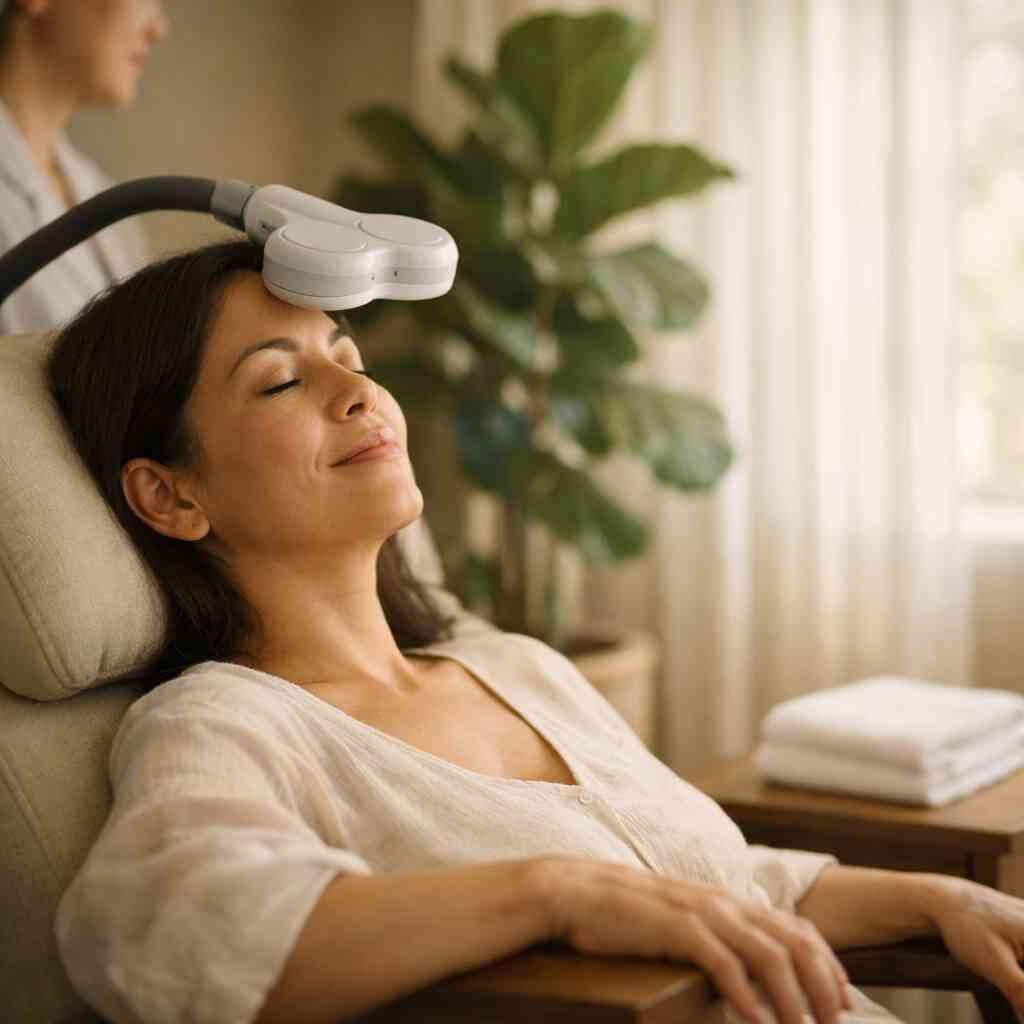
Repetitive TMS protocols for OCD typically apply high-frequency pulses to the left dorsolateral prefrontal cortex and low-frequency pulses to the right orbitofrontal region. The high-frequency side excites the control network. The low-frequency side dampens the overactive alarm. This combination creates a push-pull effect that resets the circuit’s balance. The tapping sensation during the high-frequency train feels like a woodpecker drumming a steady beat. Many patients find the rhythm almost hypnotic. They settle into the recliner, watch the palm trees sway outside the clinic window, and let the pulses do their work. The low-frequency trains feel softer, more like a distant patter on a tin roof. Together, the dual protocol reshapes the brain’s daily habit of generating compulsive urges.
Timing matters with repetitive protocols. Most acute treatment phases run four to six weeks with twenty to thirty total sessions. The brain needs consistent stimulation to build new patterns. Skipping sessions early on can dilute the momentum, much like missing antibiotic doses weakens the cure. Florida clinics coordinate closely with patients who have demanding work schedules. A nurse from Orlando arranged her appointments right after her hospital shift. She arrived in scrubs, sat with her eyes closed, and left thirty minutes later feeling lighter. Her hours spent scrubbing her hands at the sink began to shrink. She noticed she could trust the first wash instead of needing ten. The data supports her experience. Studies using Y-BOCS scales show meaningful score drops after a full acute course.
Protocol adjustments happen naturally throughout treatment. Clinicians map motor thresholds at each session to ensure the pulse intensity matches the patient’s physiology. Fluctuations in sleep, hydration, and stress can shift that threshold slightly. The team at the clinic watches those numbers the way a pilot watches an altimeter. Small corrections keep the treatment precise and safe. A surfer from Cocoa Beach appreciated the scientific rigor behind the soothing setting. He said the process felt less like a medical procedure and more like a finely tuned instrument recalibrating his mind. The waxed board under his arm felt less burdened by mental noise. He could paddle out and let the Atlantic drown out the residual static. OCD protocol success with TMS in Florida 2026 confirms that these tailored protocols yield robust results.
Magnetic Brain Stimulation for OCD Ritual Reduction
Rituals consume time and spirit in equal measure. The average person with severe OCD spends hours each day trapped in washing, checking, or ordering behaviors. Magnetic brain stimulation targets the neural underpinnings that make those rituals feel necessary. The pulses reduce the error-detection signal that screams, “Something is wrong, do it again!” When that signal quiets, the compulsion loses its emotional fuel. You still recognize that the door exists, but you no longer feel a magnetic pull to touch the handle seventeen times. A mother in Coral Gables described watching her daughter leave the bathroom without a thirty-minute sink ritual. She wept quietly at the breakfast table, grateful for a normal morning that once seemed impossible.
The reduction unfolds gradually. Early sessions might shave a few minutes off a ritual. By week three, the ritual might feel optional rather than urgent. By week six, many patients reach a point where the behavior no longer dominates their day. That progression mirrors the brain’s slow, steady rewiring. The basal ganglia learns that not performing the ritual does not lead to catastrophe. A small business owner in West Palm Beach noticed he stopped his nightly checking of store locks after treatment. He had performed that ritual for twelve years. One evening, he drove home, made dinner, and only realized his omission the next morning. He laughed at the absurd gift of forgetting. The brain had finally let go.
Measuring that change involves both clinical scales and personal narratives. Y-BOCS scores quantify severity and track improvement. The Yale-Brown Obsessive Compulsive Scale breaks symptoms into obsessions and compulsions separately. A reduction from severe to mild range often signals that the person can reengage with work, family, and leisure. Many Florida clinics celebrate alongside their patients when those numbers cross key thresholds. The clinical room can feel joyful in those moments. High-fives replace assessment forms. A college advisor in Tampa framed her Y-BOCS graph and hung it above her desk as a reminder of the distance traveled. Such tangible markers of progress reinforce commitment to maintenance strategies. neurostimulation for obsessive-compulsive disorder is steering the entire field toward non-invasive, personalized tools that respect the brain’s natural resilience.
Neural Circuit Modulation and the Quieting of Compulsive Loops
Neural circuit modulation describes the way TMS tunes the conversation between brain regions. Think of the OCD circuit as a feedback loop with the gain stuck too high. The microphone picks up its own speaker output, creating a piercing squeal. TMS acts like a sound engineer sliding the gain knob down. The loop continues, but the distortion disappears. This metaphor resonates with patients who describe the mental noise of OCD. They hear a constant shriek of doubt beneath every decision. After modulation, the shriek becomes a whisper that can be ignored. The quiet allows other sounds to emerge: birdsong outside the clinic window, a spouse’s laughter, the simple click of a door properly closed once.

Modulation occurs through changes in inhibitory and excitatory neurotransmitter balance. The magnetic pulses increase GABAergic tone in hyperactive regions. GABA is the brain’s natural brake fluid. More GABA means the overexcited orbitofrontal cortex slows its relentless firing. Simultaneously, glutamatergic transmission strengthens in the dorsolateral prefrontal cortex, boosting the executive control network. This dual chemical shift creates a neural environment hostile to compulsive loops. A therapist in Fort Lauderdale who also received TMS likened the experience to tuning a guitar that had been painfully out of tune for years. The chords finally resonated in harmony. She could hold a note of peace long enough to complete a session with her own clients without intrusive fears hijacking her attention.
Long-term modulation persists after the acute course ends. The brain retains the new gain settings through mechanisms of metaplasticity. Regular maintenance sessions preserve the adjustment and prevent the squeal from creeping back. Florida’s emphasis on wellness and longevity aligns perfectly with this model. Patients schedule tune-ups the way others schedule dental cleanings. A retired couple in Delray Beach coordinates their TMS maintenance visits with their grandchildren’s school breaks. They prioritize brain health as naturally as they prioritize walking on the beach. The normalcy of that approach reduces the stigma that once surrounded psychiatric care. The humming coil becomes as unremarkable as a treadmill. The result is sustained quiet in the mind, a gift that keeps giving. TMS OCD treatment near Miami-Dade County Coral Gables provides that care with a gentle, community-rooted touch.
3) Precision Mapping How Brain Guided TMS Personalizes OCD Recovery
Using Brain Mapping to Locate Dysfunctional Networks Before Treatment
Precision starts with understanding exactly where the trouble lives. Brain mapping uses EEG or functional MRI data to create a detailed picture of your unique circuitry. No two brains are identical, and OCD can settle into slightly different networks from person to person. A map reveals which areas show excessive theta or delta activity, markers of an idling brain stuck in repetitive loops. The clinician studies the map the way a mechanic studies an engine schematic. Hot spots glow red on the screen, pinpointing the regions that need modulation. TMS therapy options for obsessive-compulsive disorder incorporate this mapping step because blank-coil approaches leave too much to guesswork.
The mapping session is completely non-invasive. You wear a cap dotted with sensors while resting quietly. The machine records electrical activity from your scalp and translates it into coherence measures. Poor coherence between the frontal lobe and the limbic system often signals an OCD signature. The map reveals asymmetry that explains why talk therapy alone did not hold. A young artist in Winter Park saw her own map with curiosity instead of fear. The visual representation turned her struggle into a solvable puzzle. That shift in perspective alone reduced some hopelessness she had lugged like a heavy backpack. The map became a starting line, not a verdict.
Mapping also guides stimulation intensity and angle. The dorsolateral prefrontal cortex sits a measurable distance from the skull surface. Knowing that distance allows the clinician to set the magnetic field to reach the exact depth containing the target neurons. The result is a treatment calibrated to your anatomy rather than a generic template. Florida clinics pride themselves on this level of individualized care. They serve a diverse population with varying skull thickness and brain sizes. An elderly man in Boca Raton requires different parameters than a teenage athlete in Orlando. Mapping accounts for those differences with scientific elegance. The days of one-size-fits-all psychiatry are ending quickly.
Treating the Root Origin of Intrusive Thoughts Not Just Symptoms
Intrusive thoughts bully you from inside your own head. They can be violent, sexual, or blasphemous images that clash with your values. Attempts to suppress them typically backfire. TMS guided by brain mapping goes beyond surface symptom management. It targets the networks that generate the thoughts at their origin. The anterior cingulate cortex, often hyperconnected to the insula in OCD, receives precise stimulation to reduce false error signals. When the error signal drops, the intrusive thought loses its power to terrify. It passes through like a cloud across a summer sky, noticed but no longer threatening. That shift transforms the internal landscape from a war zone to a meadow.
Treating the root also means addressing the underlying oscillatory rhythms. Deep TMS for OCD Florida often uses theta-burst patterns that mimic the brain’s natural learning rhythms. These patterns disrupt the pathological beta synchrony that keeps the loop spinning. The disruption feels gentle but biologically profound. A librarian from Aventura described the sensation as a resetting of her internal tempo. She had always felt her thoughts raced at an anxious allegro. After theta-burst, the pace slowed to a calm andante. The change allowed her to read a passage without her mind inserting terrifying images between the lines. She rediscovered the joy of a quiet page, a profound gift for someone who loves books.
Symptom-focused treatments often require indefinite medication. Root-focused TMS aims to produce durable, drug-free remission. The brain’s own neurochemistry shifts toward a balanced state that can maintain itself with minimal upkeep. This does not mean therapy is a quick fix. It requires a series of sessions and active participation. But the direction points toward healing rather than perpetual management. TMS OCD recovery outcomes Florida 2025 documented that many patients achieved response or remission status after a full course. Those outcomes reflect the difference between treating the soil and treating the weeds. When the soil is healthy, fewer weeds spring up.
Florida TMS Clinic Expertise in Tailored Coil Placement for OCD
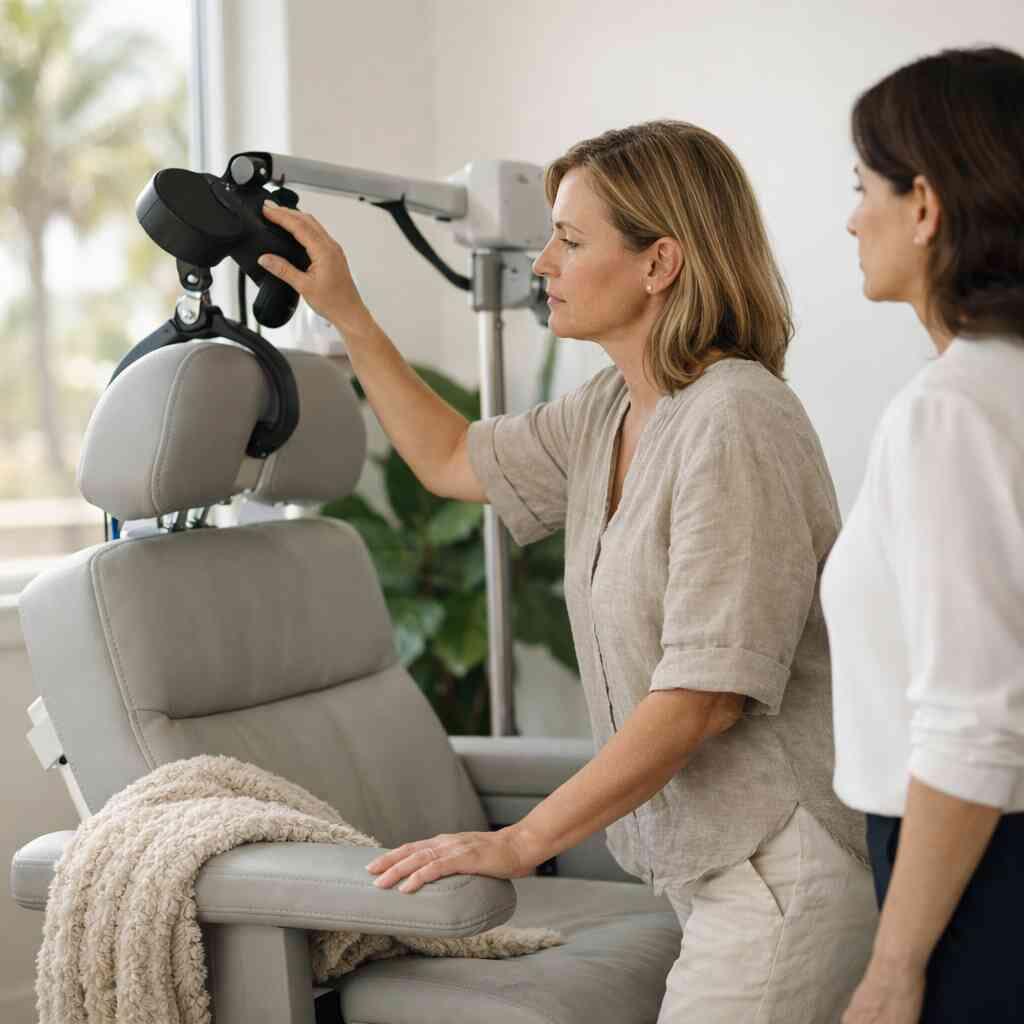
Coil placement for OCD differs from placement for depression. The standard depression target sits roughly over the left dorsolateral prefrontal cortex. OCD protocols often require a secondary target over the medial prefrontal cortex or supplementary motor area. Expert clinicians in Florida use external landmarks, motor threshold mapping, and often neuronavigation to pinpoint these spots. Neuronavigation uses infrared cameras to align the coil with your unique MRI scan. The process resembles a GPS guiding a driver to an exact address. A twentysomething in Coral Gables appreciated the high-tech support because it gave her confidence that the treatment was not guesswork. She felt her brain was being cared for with the same precision as a Swiss watch.
Motor threshold determination ensures the stimulation is strong enough to reach the cortex but not so strong as to cause unnecessary discomfort. The clinician finds the lowest intensity that makes your thumb twitch during a single pulse. That number becomes the calibration anchor. All subsequent pulse trains scale off that threshold. The thumb twitch is a brief, curious sensation that many patients describe as amusing rather than alarming. It feels like your hand is waving hello to the machine. Once the threshold is set, the session proceeds with rhythmic tapping at the treatment intensity. The personalized calibration accounts for individual differences in skull conductivity. A petite woman in Tampa might need far less power than a broad-shouldered fisherman from the Gulf Coast. Both receive exactly what their neurons require.
Florida clinics also consider lifestyle factors when designing coil placement. A patient who drives a school bus in Delray Beach might benefit from earlier morning sessions to avoid afternoon fatigue. The coil placement and protocol timing work in concert to optimize the person’s daily function. That holistic awareness marks the difference between a factory-style clinic and a boutique center that knows your name. You are not just a magnet setting on a chart. You are a person with a morning coffee ritual, a dog waiting at home, and a need to function well by noon. The team adjusts accordingly. TMS for obsessive-compulsive disorder in Broward County brings that level of care to communities from Fort Lauderdale to Pembroke Pines.
Safety and Accuracy in Non Invasive Brain Stimulation for OCD Relief
Safety sits at the heart of every TMS session. The equipment undergoes rigorous calibration checks before each appointment. The coil stays cool to the touch, and the machine monitors impedance continuously. Any anomaly triggers an instant pause. Patients sit comfortably while a trained operator remains present throughout. The FDA-cleared devices used in Florida clinics have undergone extensive clinical testing. Contraindications are screened carefully beforehand. People with metal implants near the head or a history of seizures undergo thorough evaluation. The safety record for TMS in OCD treatment is excellent. Mild headache remains the most common side effect, usually responding to a glass of water and a short rest.
Florida’s regulatory environment adds another layer of protection. The Agency for Health Care Administration sets standards for outpatient clinics that offer brain stimulation. These regulations govern staffing ratios, emergency protocols, and record-keeping. Patients can verify that their chosen clinic meets those standards. That transparency builds trust. A father in Boca Raton said the AHCA licensure gave him peace of mind when he brought his teenage son for treatment. He felt the clinic was held to the same high bar as a surgical center. The paperwork bore the state seal, a quiet promise of accountability. That confidence allowed his son to relax into the recliner and let the magnets work.
Accuracy also involves monitoring outcomes session by session. Clinicians track symptom reduction using validated scales like the Y-BOCS and the Clinical Global Impression scale. Objective data guides decisions about protocol adjustments. The combination of precision mapping and careful monitoring creates a feedback loop of safety and efficacy. Patients feel that their care evolves with them, rather than stagnating on a rigid script. The non-invasive nature means you can drive yourself home afterwards. You can return to work or stop for a smoothie. Life continues without sedative hangovers. That practical benefit resonates deeply with busy Floridians who cannot afford downtime. non-invasive brain stimulation for OCD offers a gentle, effective path back to baseline functioning, and Florida clinics lead the way in safe implementation.
4) Therapy Synergy TMS as an Amplifier for Exposure Response Prevention
Why SSRIs Alone Often Fall Short and How TMS Fills the Gap
Selective serotonin reuptake inhibitors help many people but leave a significant minority still gripping the same obsessions. The pills increase the availability of serotonin in the synaptic cleft. That chemical shift can take weeks to build and often plateaus at partial relief. The fundamental circuit problem remains untouched by chemistry alone. TMS fills that gap by directly altering the electrical firing patterns that medications never reach. The combination of TMS and medication can sometimes work synergistically, but TMS also shines as a standalone option. Patients who cannot tolerate SSRI side effects finally have a viable alternative. A chef in Orlando found that SSRIs dulled his sense of smell, a devastating loss for his profession. TMS spared his culinary senses while quieting his contamination fears.
Medication fatigue weighs on people who have cycled through multiple prescriptions. Each failed trial brings a new wave of side effects and a fresh disappointment. The insurance process for TMS can feel daunting, but many Florida plans now cover the treatment for OCD after step-therapy requirements are met. The initial paperwork is worth the potential payoff. A real estate agent in West Palm Beach described the insurance authorization as a stressful hurdle but one that led to genuine freedom. She closed more sales during her treatment months because her mind was not obsessively checking listing details at three in the morning. The return on investment showed up in her commission checks and her sleep log.
The mechanism of TMS also explains why it helps where pills stall. SSRIs primarily influence serotonin receptors scattered throughout the brain and body. TMS targets the precise cortical and subcortical nodes of the OCD circuit. It corrects the aberrant theta-gamma coupling that drives intrusive thoughts. This neurophysiological approach addresses the temporal dimension of OCD-the rhythm of distress-not just the chemical volume. The tapping of the coil seems to teach the brain a new beat. A musician in Coral Gables grasped that concept intuitively. She said TMS felt like a metronome resetting her internal tempo after years of chaotic jazz. The harmony returned not just to her thinking but to her playing. TMS treatment Florida OCD recovery builds a bridge between biological psychiatry and lived experience.
Enhancing Neuroplasticity During ERP Sessions in Palm Beach County
Exposure response prevention therapy asks you to face feared situations without performing rituals. The work is hard. It requires courage that can waver when anxiety spikes too high. TMS given immediately before ERP sessions can lower that spike. The magnetic pulses prime the brain for learning, making the exposure more potent. The dorsolateral prefrontal cortex, freshly stimulated, exerts stronger top-down control. You can stand in front of the feared trigger and feel the anxiety rise and naturally fall. The natural fall teaches the amygdala that the threat is false. A woman in Palm Beach County practiced touching a public door handle without washing her hands immediately after a TMS session. She felt the urge crest and then recede like a wave on the shore. That organic wave was a new experience she had not been able to achieve with ERP alone.
Timing the TMS session to coincide with the therapy hour creates a neuroplastic window. The brain is most receptive to new learning in the minutes right after stimulation. Clinics in Palm Beach coordinate schedules carefully. A patient arrives, receives TMS, and then walks down the hall to meet the therapist. The transition is seamless. The therapist often notes the patient is more open and less defensive. The usual chatter of self-criticism quiets. The exposure exercise sinks deeper into the brain’s rewiring process. A grandfather in Delray Beach who had avoided public restrooms for thirty years finally entered one with his therapist. The TMS boost gave him enough calm to stay put until the panic dissolved. He later celebrated with a slice of key lime pie at a busy café, using the public restroom before leaving. The victory tasted sweeter than any dessert.
Palm Beach County offers a unique backdrop for this synergy. The abundance of outdoor spaces allows therapists to conduct in vivo exposures in parks, malls, and beachfronts. A patient who fears contamination can practice touching sand and sea oats right after TMS. The sunshine and salt air provide a multisensory environment that enhances learning. The brain encodes the exposure memory with cues of calm Florida beauty rather
Frequently Asked Questions
Question: What exactly is transcranial magnetic stimulation for obsessive-compulsive disorder and how does it work at a Florida clinic like TMS Treatment Florida?
Answer: Transcranial magnetic stimulation for obsessive-compulsive disorder is a non-invasive brain stimulation technique that uses focused magnetic pulses to calm the overactive circuits driving obsessions and compulsions. At TMS Treatment Florida, we target the dorsolateral prefrontal cortex and deeper structures like the orbitofrontal cortex and caudate nucleus with protocols such as deep TMS for OCD Florida. During a session, a coil placed against your scalp delivers rhythmic taps that feel like a gentle reset. These pulses encourage neuroplasticity, weakening the stubborn loops of intrusive thoughts while strengthening the brain’s natural brake system. Our clinics across South Florida, from Miami to West Palm Beach, use personalized brain mapping to guide coil placement so every patient receives care tailored to their unique neural architecture.
Question: I have tried multiple medications without success. Can TMS treatment Florida offer a real breakthrough for medication-resistant OCD?
Answer: Absolutely. Many people with obsessive-compulsive disorder find that SSRIs provide only partial relief or come with burdensome side effects. TMS treatment Florida OCD recovery programs are specifically designed for medication-resistant OCD breakthrough TMS because magnetic brain therapy speaks directly to the malfunctioning circuits rather than flooding the whole brain with chemicals. The FDA cleared deep TMS for OCD based on trials showing significant symptom reduction in patients who had failed two or more medications. Our patients often describe the difference as moving from a fog of dulled emotions to a crisp clarity where the urge to ritualize simply loses its power. We see this daily in our Florida centers, where individuals who felt stuck on the medication merry-go-round finally experience genuine, drug-free relief and long-term OCD recovery.
Question: The blog titled Top 5 Ways TMS Treatment Florida Boosts OCD Recovery mentions combining TMS with exposure response prevention. How does that synergy work?
Answer: The blog highlights how TMS acts as an amplifier for exposure response prevention. At our Palm Beach County and other Florida locations, we often schedule a TMS session immediately before ERP therapy. The magnetic pulses prime the brain’s dorsolateral prefrontal cortex, boosting top-down control so that when you face a feared trigger, anxiety rises and naturally falls without the usual compulsion. This creates a neuroplastic window where new learning sticks. Patients report that afterward, touching a contaminated surface or skipping a ritual feels manageable rather than terrifying. By integrating TMS with structured ERP, we reinforce the gains on a neural level, making recovery faster and more durable-a true synergy that medications alone rarely achieve.
Question: How safe is repetitive TMS for OCD, and what side effects should I expect during treatment at a Florida clinic?
Answer: Safety is at the core of everything we do. Repetitive TMS protocols for OCD have an excellent safety record with no systemic side effects like weight gain or sedation. The most common sensation is a mild tapping on the scalp and perhaps a light headache that fades with water and rest. Our equipment at TMS Treatment Florida undergoes rigorous calibration, and we screen every patient for contraindications. You remain awake and alert throughout the session and can drive yourself home immediately afterward. Unlike medications that bathe the entire body in chemicals, non-invasive brain stimulation for OCD relief precisely targets the problem circuits, so your personality and cognitive sharpness stay fully intact. Our state-licensed clinics from Fort Lauderdale to Tampa adhere to the highest AHCA standards, giving you peace of mind as you reclaim your life.
Question: What kind of success rates and long-term outcomes can I realistically expect from TMS for obsessive-compulsive disorder at TMS Treatment Florida?
Answer: While individual results vary, research and our own Florida TMS clinic specialized OCD outcomes show that 40 to 60 percent of treatment-resistant patients achieve a clinically meaningful response. Many see their Y-BOCS scores drop from severe to mild, regaining hours lost to rituals. Long-term recovery is supported by personalized maintenance therapy; after the acute course, periodic tune-up sessions help the brain retain its new, healthier patterns. Patients across South Florida describe the change as a quietness arriving where noise used to live-obsessions still flicker, but they no longer dominate. By combining precise neural circuit modulation TMS OCD with ongoing care, we empower you to enjoy lasting stability. To explore how TMS can work for your unique situation, reach out to TMS Treatment Florida for a consultation.