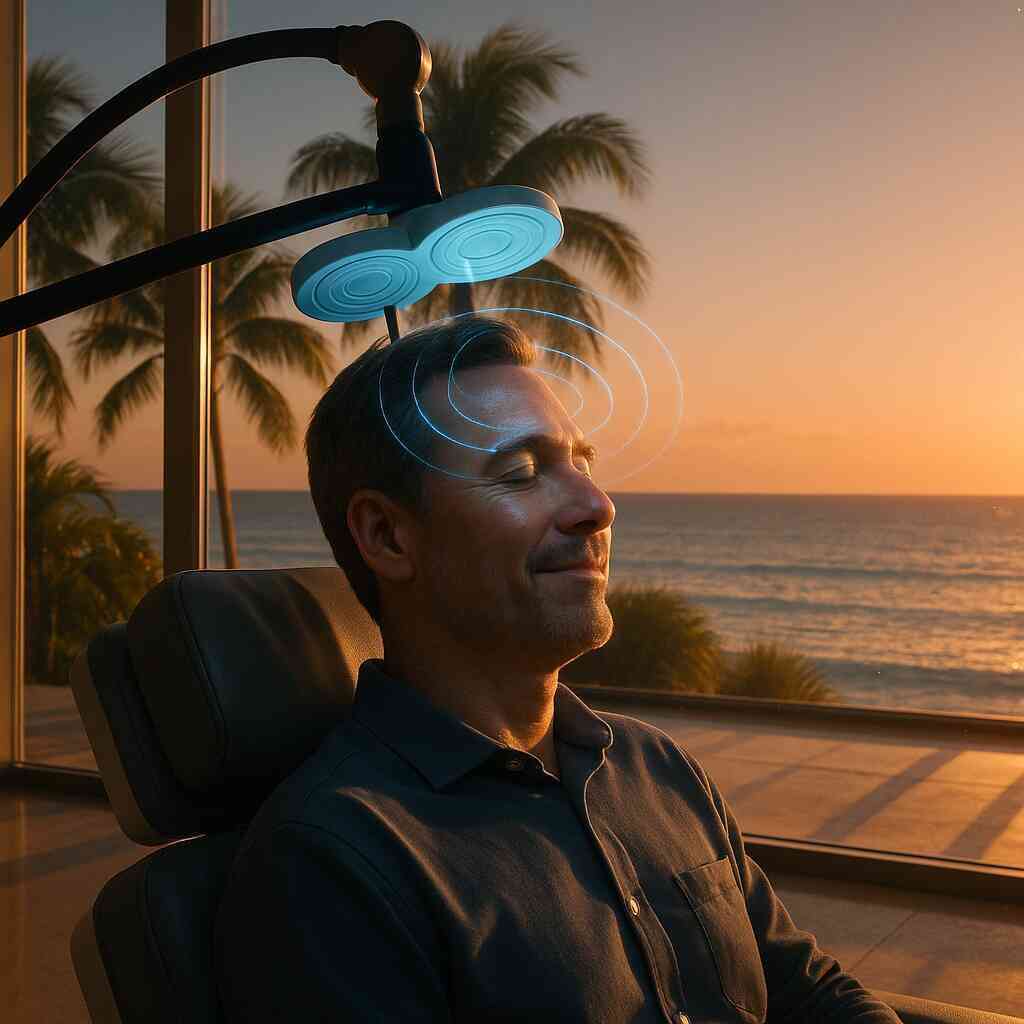
Opening the Neural Gateways to Bipolar Stability
Why drug resistant bipolar depression demands new solutions
Medication-resistant episodes exhaust even the most resilient spirits, eroding confidence in long-term recovery. When multiple pharmacologic switches fail, hope often narrows to a pinhole. Families witness the roller-coaster of lingering lows and destabilizing highs, unsure where to turn next. Research now confirms that electrical and chemical imbalances can coexist, explaining why pills alone sometimes cannot realign cortical circuits. In response, Targeted TMS care for bipolar disorder has emerged as a science-driven answer, offering circuit-focused modulation without systemic side effects.
Transcranial Magnetic Stimulation for bipolar depression acts directly on neural networks implicated in mood regulation. Focused magnetic pulses travel non-invasively through the skull, inducing tiny currents that nudge dormant neurons back into synchrony. This gentle entrainment may counteract the very circuits that fuel suicidal despair or manic overdrive. Because TMS does not rely on liver metabolism, patients avoid weight gain, sedation, and cognitive dulling frequently linked to polypharmacy. Clinicians therefore recognize magnetic neuromodulation as a pivotal addition to drug-resistant bipolar depression solutions, widening the pathway toward sustained stability.
From medication fatigue to non invasive brain stimulation hope
Living with chronic mood swings often demands daily pill boxes, blood draws, and dietary restrictions-an exhausting regimen called “medication fatigue.” Each new prescription brings anticipation and worry, especially after previous drugs lost efficacy. Many Floridians describe feeling trapped between lingering symptoms and daunting side effects, unsure which burden outweighs the other. Non-invasive brain stimulation bipolar disorder approaches, such as TMS, bypass gastrointestinal systems entirely, creating an appealing alternative for those weary of medication roulette. By targeting overactive left prefrontal regions, clinicians can recalibrate circuits without adding chemical load.
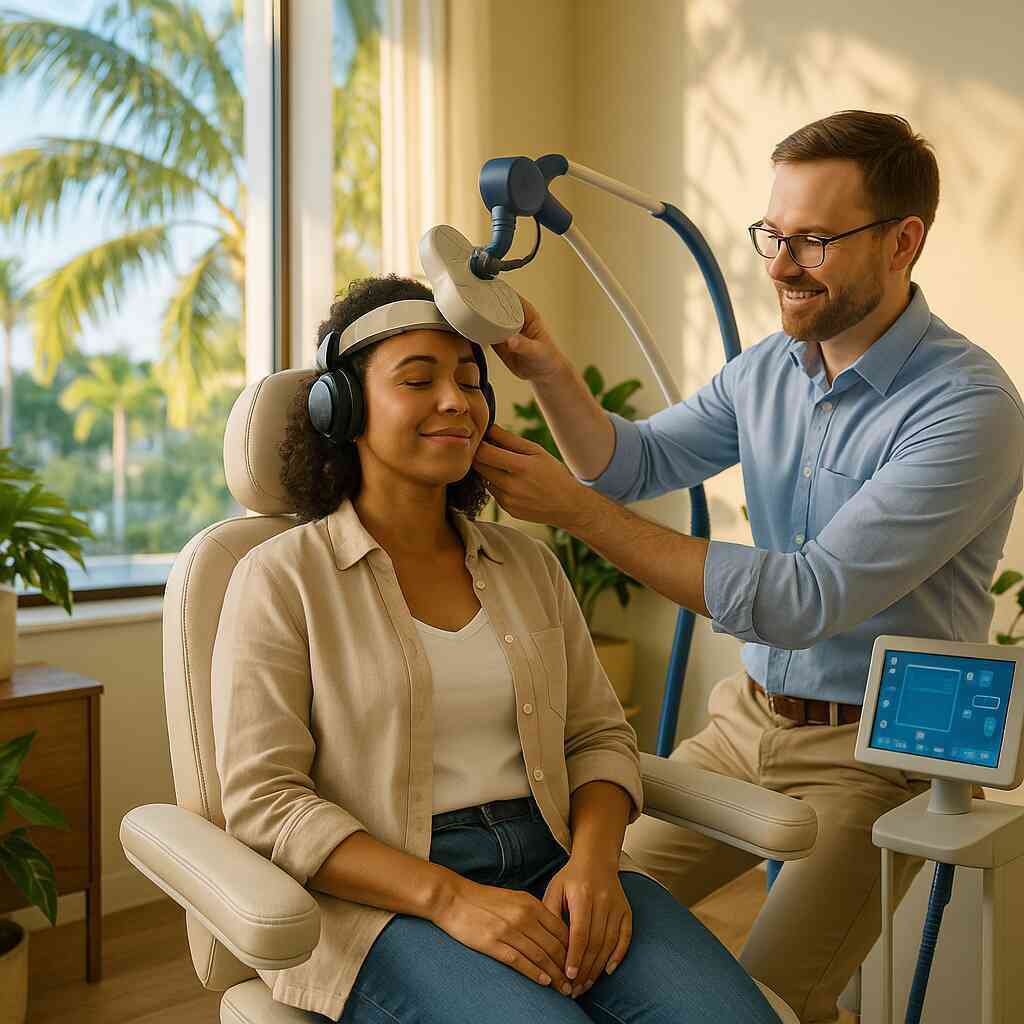
Patients frequently report that the tactile tap of the magnetic coil feels surprisingly gentle compared with needle injections or electroconvulsive shock. Sessions occur while patients sit comfortably, fully awake, and often listening to calming music. The process avoids anesthesia, driving restrictions, and the memory issues associated with more aggressive neuromodulation. Over several weeks, rapid relief bipolar depression TMS protocols can kindle neuroplastic changes that medications failed to spark. The result is renewed optimism, improved energy, and a tangible sense that another chapter in recovery is still possible.
Florida TMS clinic perspectives on rapid relief
Clinicians at leading Florida TMS clinic for bipolar treatment centers witness daily the transformative potential of magnetic pulses. They observe that circuit-specific stimulation can shorten depressive episodes, reduce mixed-state agitation, and enhance the therapeutic window for psychotherapies. By employing FDA-cleared parameters-and adjusting frequency or coil positioning when necessary-providers tailor treatment to each unique mood profile. Their experience underscores how outpatient neuromodulation integrates seamlessly with existing care teams, ensuring continuity rather than disruption of psychiatric support.
Equally important, these specialists emphasize accessibility. Clinics now operate across coastal and inland regions, bringing non-pharmacological mood stabilization South Florida residents once traveled hours to receive. Collaborative networks streamline referrals and insurance authorizations, making first-line adjunctive therapy bipolar disorder strategies more attainable. While every individual responds differently, many notice meaningful changes within the first few weeks, motivating continued engagement. As neuroscience advances, Florida’s practitioners remain committed to refining personalized TMS protocols in South Florida, ensuring each magnetic pulse moves patients closer to enduring balance.
Magnetic Neuromodulation Blueprint for Mood Balance
Transcranial magnetic stimulation for bipolar depression and circuit recalibration
Transcranial Magnetic Stimulation for bipolar depression delivers precise pulses that synchronize neuronal firing patterns. This approach strengthens brain circuit modulation for bipolar disorder without chemical burden. By directing energy at the dorsolateral prefrontal cortex, clinicians reduce hyper-connectivity that fuels mood swings. Patients often describe sessions as gentle tapping rather than invasive intervention. Many begin therapy after exploring Circuit-focused TMS for depressive symptoms and recognizing its targeted reach.
Non-invasive brain stimulation bipolar disorder research shows that properly timed pulses foster neuroplastic rewiring. Magnetic neuromodulation for mixed episodes can dampen racing thoughts while lifting energy. Because coils never breach the skull, infection risk stays nearly zero. Hearing protection and calibrated intensity further enhance comfort. Results reveal that magnetic pulses stabilize mood swings sooner than expected in many drug-resistant cases.
TMS therapy benefits for mood stabilization versus traditional pharmacology
TMS therapy benefits for mood stabilization include negligible weight gain, restored cognition, and daytime alertness. Patients who compared TMS versus medication for bipolar disorder frequently cite reduced hospitalizations. Unlike pills processed by the liver, stimulation sidesteps metabolic pathways entirely. This distinction matters when polypharmacy already strains physical health. A quick review of the Treatment menu of advanced TMS protocols highlights options adaptable to each tolerance level.
Drug-resistant bipolar depression solutions once centered on electroconvulsive shock, yet TMS offers a kinder path forward. Clinical trials confirm a favorable TMS side effects and safety profile with minimal dropout rates. Headache and scalp tingling usually fade after the first week. Many individuals regain work productivity because treatments occur during lunch breaks. As neurotechnology evolves, circuit-specific approaches continue to outpace blanket pharmacology.
Personalized TMS protocols in South Florida and neuroplasticity gains
Personalized TMS protocols in South Florida adjust frequency, coil angle, and session length to maximize neuroplasticity benefits bipolar brains crave. Advanced mapping tools identify sluggish regions before therapy begins, ensuring efficiency. Outcomes improve when clinicians integrate sleep patterns and nutritional data into session planning. These features set TMS apart from one-size-fits-all drug schedules. Patients appreciate how Accessible neuromodulation near Broward County eliminates long commutes.
The outpatient TMS program Florida residents follow blends seamlessly with work and family duties. A robust Regional TMS network across Florida counties allows for continuity when travel is necessary. Data pooling across clinics refines stimulation parameters rapidly. Practitioners share findings on magnetic pulses that best encourage dendritic growth. This collaborative model accelerates breakthroughs in personalized care.
Combining TMS and ketamine therapy for integrative mood disorder care
Combining TMS and ketamine therapy activates both electrical and chemical pathways for stronger symptom relief. Each modality enhances the other’s neuroplastic surge, leading to faster stabilization. Individuals often start by Comparing TMS versus ketamine for mood balance before choosing an integrative plan. A staggered schedule reduces clinic fatigue and optimizes receptor recovery time. Providers monitor heart rate and mood metrics to fine-tune dosing windows.
Ketamine treatment Florida for bipolar depression adds glutamatergic modulation to cortical recalibration, offering another route when serotonin agents fail. Ketamine therapy in Florida for mood disorders is administered in medical settings with continuous oversight. The ketamine clinic Florida integrative care model collaborates closely with TMS technicians. This synergy can reduce suicidal ideation within days while TMS builds long-term stability. Together they form an integrative mood disorder clinic Florida patients trust.
Safe TMS options during depressive and mixed episodes
Safe TMS options during depressive episodes employ lower stimulation thresholds to prevent emotional flooding. Clinicians gradually escalate intensity while monitoring speech speed, sleep length, and appetite. First-line adjunctive therapy bipolar disorder guidelines now recommend early neuromodulation to avoid crisis escalation. Rapid relief bipolar depression TMS protocols often shorten episode duration by half. Family members notice calmer mornings and steadier evenings.
Mixed states require vigilant parameter control because agitation can spike unexpectedly. Magnetic neuromodulation for mixed episodes therefore switches coil placement mid-session to balance hemispheres. Real-time EEG feedback alerts staff to over-arousal signs. This proactive stance surpasses medication titration speed. Patients gain confidence knowing safety adjustments happen instantly rather than over weeks.
TMS maintenance sessions and insurance coverage for relapse prevention
Bipolar maintenance therapy with TMS involves periodic booster pulses that reinforce healthy circuitry. These intervals mirror dental cleanings: routine, brief, and preventive. Ongoing TMS maintenance sessions for relapse prevention lower hospitalization risk and preserve professional momentum. Insurance carriers increasingly recognize their cost-saving value. Patients schedule future boosters through Direct contact for personalized TMS planning, simplifying logistics.
TMS insurance coverage bipolar treatment varies, yet documentation of functional gains strengthens approval odds. Therapists supply objective mood charts and cognitive assessments to support requests. Comprehensive mood disorder treatment South Florida teams coordinate peer support and lifestyle coaching. Advanced neuromodulation technologies Florida clinics monitor data remotely, ensuring booster timing aligns with subtle mood shifts. This proactive framework keeps equilibrium sustainable.
Charting a Future of Sustained Equilibrium
Holistic bipolar care pathway at our integrative mood disorder clinic Florida
Whole-person healing starts the moment a patient enters our integrative mood disorder clinic Florida residents trust. Initial evaluations explore sleep habits, nutritional patterns, and social support alongside symptom history. This expansive lens identifies triggers medication lists often overlook, allowing holistic bipolar care with TMS to begin immediately. We then collaborate with nutritionists, exercise physiologists, and psychotherapists who understand neuromodulation’s unique rhythm. Their expertise ensures lifestyle upgrades synchronize with magnetic sessions instead of competing for energy or time.
Just as circuits require repetitive stimulation to rewire, daily routines need consistent reinforcement to stick. Patients therefore receive personalized wellness plans outlining stepwise goals, from mindfulness exercises to gradual cardio increases. Regular check-ins confirm that each recommendation remains realistic amid job demands or family obligations. When challenges arise, coordinators pivot strategies quickly, preventing frustration and relapse. This responsive framework transforms comprehensive mood disorder treatment South Florida into a lived, empowering experience.
Lifestyle alignment with outpatient TMS program for long term wellness
Our outpatient TMS program Florida offers flexibility that traditional inpatient models seldom match. Morning, midday, and late-afternoon slots accommodate work schedules, preserving income and social identity during therapy. Such adaptability promotes non-pharmacological mood stabilization South Florida seekers find essential for dignity and motivation. Because sessions rarely exceed thirty minutes, clients can integrate exercise, healthy meals, and rest periods into the same day. These reinforcing activities magnify synaptic changes sparked by each magnetic pulse.
Long-term success also hinges on predictable booster sessions, known as bipolar maintenance therapy with TMS. Calendar reminders and telehealth check-ins reduce missed appointments, keeping neural gains intact. Family members often join virtual meetings to learn subtle relapse cues and supportive language. Their involvement strengthens accountability without creating pressure or shame. Over time, households report smoother communication, steadier energy flow, and fewer emergency room visits.
Steps toward evidence based relief with advanced neuromodulation technologies
Scientific rigor guides every decision inside our treatment suites. Clinicians track evidence-based TMS outcomes bipolar disorder studies while refining individual protocols daily. Real-time dashboards display heart rate variability, sleep metrics, and cognitive scores, confirming magnetic pulses stabilize mood swings rather than merely masking them. When data suggest plateau, staff adjust coil angle or frequency to optimize brain circuit modulation for bipolar disorder. This agile methodology positions neuromodulation as first-line adjunctive therapy bipolar disorder guidelines increasingly endorse.
Collaboration extends beyond our walls through a robust Regional TMS network across Florida counties. Shared databases accelerate discovery of advanced neuromodulation technologies Florida innovators pioneer. Collective insights shorten learning curves, allowing rural clinics to implement urban breakthroughs within weeks. Patients therefore benefit from statewide expertise without traveling far from home. Knowledge exchange also fosters transparent outcome reporting, reinforcing public trust.
Invitation to explore ketamine therapy in Florida alongside TMS
Some individuals require an additional chemical catalyst to unlock entrenched neural pathways. For them, ketamine treatment Florida for bipolar depression offers a rapid glutamatergic reset that complements magnetic entrainment. Our physicians design combining TMS and ketamine therapy schedules that avoid overstimulation while maximizing neuroplastic windows. Close monitoring ensures blood pressure, dissociative sensations, and mood lifts occur within safe thresholds. Patients often describe relief arriving like dawn light breaking through heavy clouds.
Those curious about ketamine therapy in Florida for mood disorders can attend free education sessions led by anesthesiologists and psychiatrists. We also collaborate with ketamine clinic Florida integrative care partners to streamline referrals and insurance coordination. This synergy mirrors research behind Synergistic TMS-ketamine care near Broward, showing blended protocols reduce suicidal thinking faster than standalone options. When readiness aligns, our team guides each step with clarity, empathy, and unwavering commitment to safety.
 Frequently Asked Questions
 Frequently Asked Questions
Question: How does Transcranial Magnetic Stimulation for bipolar depression work differently from traditional medication, and why is it viewed as a first-line adjunctive therapy for drug-resistant cases?
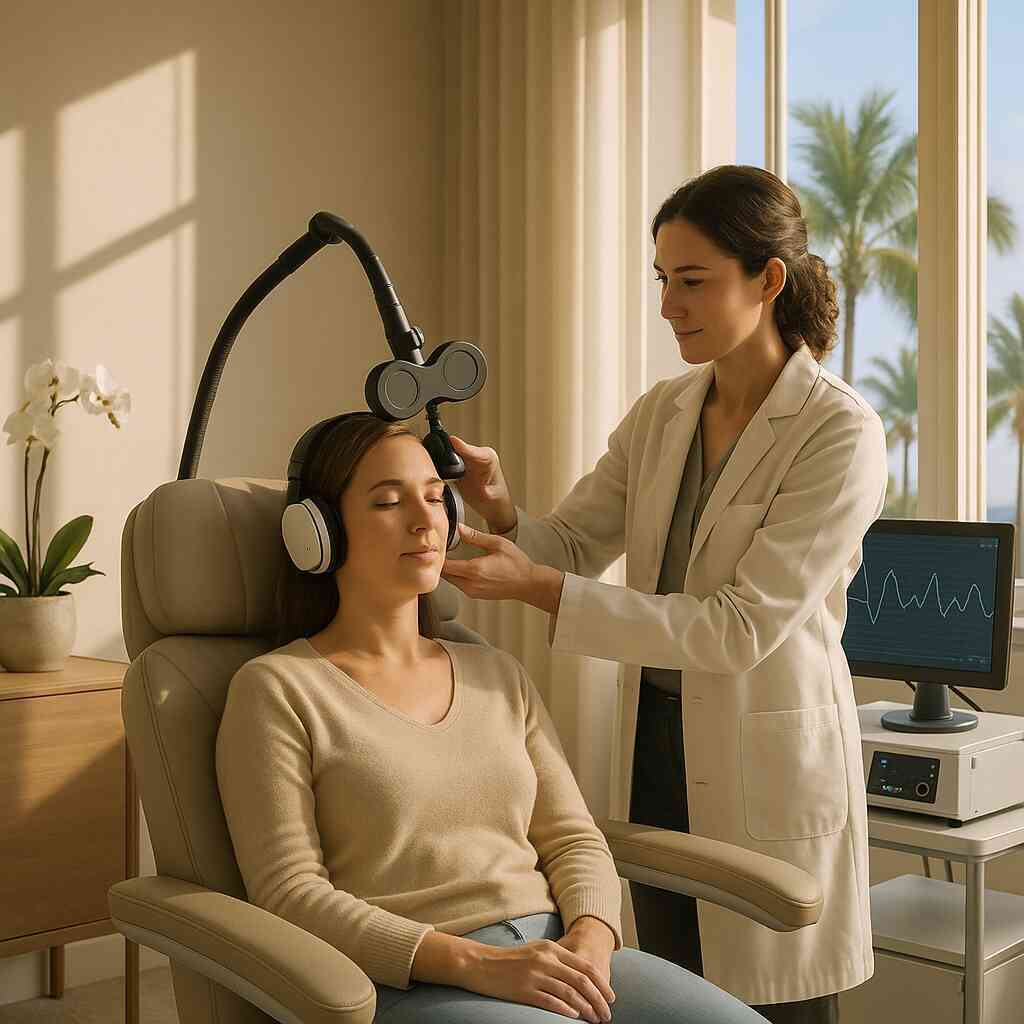
Answer: Medications circulate through the bloodstream and rely on liver metabolism, which is why side effects like weight gain, fatigue, or cognitive dulling are common. Transcranial Magnetic Stimulation for bipolar depression bypasses those chemical pathways entirely. A calibrated magnetic coil sits on the scalp and delivers pinpoint pulses that nudge the dorsolateral prefrontal cortex back into a healthy rhythm. Because the energy is localized, patients keep full alertness and avoid systemic complications. Clinical data show that magnetic pulses stabilize mood swings even after multiple pharmacologic switches have failed, which is why leading guidelines now recognize TMS as a first-line adjunctive therapy for bipolar disorder. At TMS Treatment Florida, every course is overseen by board-certified psychiatrists who fine-tune coil position, frequency, and session length to maximize neuroplasticity while protecting comfort.
Question: In the blog Understanding TMS’s Role in Treating Bipolar Disorder you highlight personalized TMS protocols in South Florida. What makes your outpatient TMS program Florida so customizable, and how do you ensure safe TMS options during depressive and mixed episodes?
Answer: No two bipolar profiles are identical, so we start with high-resolution brain mapping to locate over- or under-active circuits. Parameters such as pulse frequency, train duration, and coil angle are then tailored around sleep patterns, medication load, and daily stressors. During depressive episodes we begin with gentle thresholds and gradually escalate intensity, watching speech tempo, appetite, and heart-rate variability in real time. For mixed states our team may switch hemispheres mid-session or incorporate EEG feedback to prevent over-arousal. All of this occurs in a calm outpatient suite that lets clients return to work or family within 30 minutes. The result is non-invasive brain stimulation bipolar disorder care that feels both precise and reassuring.
Question: Can combining TMS and ketamine therapy provide faster relief for mood swings, and what ketamine clinic Florida integrative care options do you offer?
Answer: Yes-combining TMS and ketamine therapy activates complementary neural pathways. Ketamine’s glutamatergic surge can lift severe depressive weight within hours, while TMS sustains and deepens that neuroplastic window over subsequent weeks. Our ketamine clinic Florida integrative care model schedules low-dose infusions on separate days from magnetic sessions to prevent fatigue and optimize receptor recovery. Board-certified anesthesiologists monitor vitals continuously, and psychiatrists adjust TMS settings as mood improves. Many clients experience a sharp drop in suicidal ideation within days and steadier energy as magnetic entrainment locks in long-term gains.
Question: What are the TMS therapy benefits for mood stabilization versus the side effects of pharmacology, and how does TMS Treatment Florida manage insurance coverage for bipolar treatment?
Answer: TMS therapy benefits for mood stabilization include negligible weight gain, restored daytime alertness, and improved cognition-advantages rarely seen with polypharmacy. Reported side effects are typically limited to mild scalp tingling or transient headache during the first week. Because sessions are outpatient, there’s no anesthesia, memory loss, or driving restriction. Our administrative team documents evidence-based TMS outcomes bipolar disorder metrics-such as PHQ-9 and work-attendance scores-to strengthen pre-authorization requests. Most major carriers now recognize the cost savings of reduced hospitalizations, so approval rates are higher than ever. We walk patients through every form and appeal to keep focus on healing, not paperwork.
Question: How often are bipolar maintenance therapy with TMS booster sessions needed, and what advanced neuromodulation technologies Florida patients can expect for long-term relapse prevention?
Answer: After the initial 4-to-6-week acute phase, most clients transition to bipolar maintenance therapy with TMS boosters every 4-8 weeks. These brief tune-ups reinforce healthy circuitry much like dental cleanings prevent cavities. Our clinics employ advanced neuromodulation technologies Florida researchers helped pioneer, including neuronavigation, real-time heart-rate variability dashboards, and cloud-based mood tracking. If subtle mood drift appears, we can schedule an extra session before a full relapse occurs. This proactive strategy, combined with lifestyle coaching and telehealth check-ins, keeps stability sustainable for the long haul.