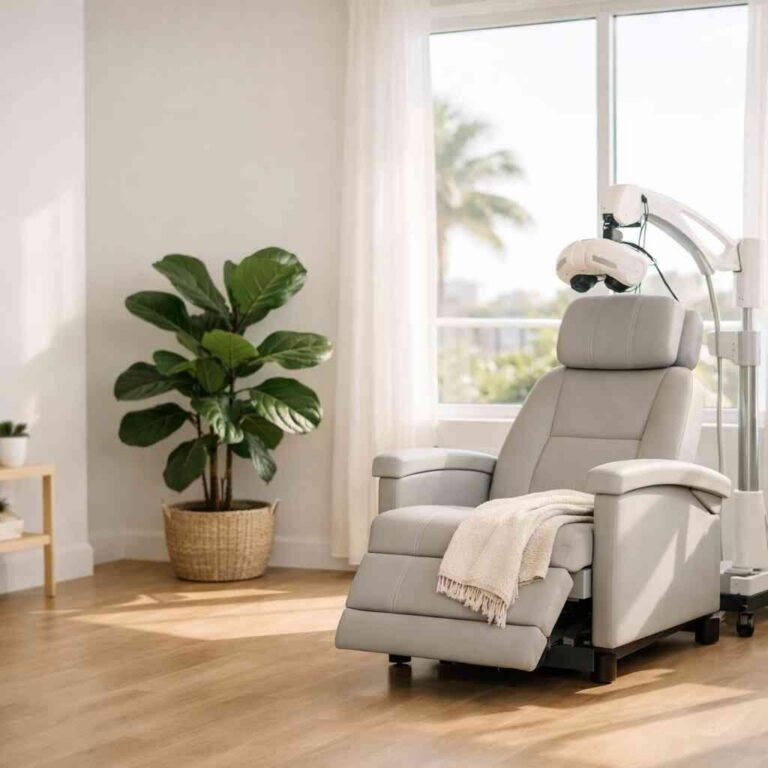
Deep TMS usually feels calmer and more ordinary than people expect. You sit in a chair, wear a fitted cap or coil system, hear a tapping or humming sound, and leave without anesthesia or recovery time.
Key Takeaways
- Deep TMS therapy is a non-invasive brain stimulation treatment that uses magnetic pulses to target brain networks involved in depression, OCD, anxiety, and some addiction-related symptoms.
- Most first visits focus on mapping, comfort, and safety, not treatment intensity. The clinic measures your head, reviews your history, and explains what the tapping will feel like.
- People with medication-resistant depression often arrive skeptical, especially after trying several medications, but the evaluation should still be clear, careful, and realistic.
- A typical session is brief and outpatient, with no sedation. You can usually drive yourself home unless your clinician advises otherwise.
- Florida clinics should explain insurance, cost, and location access up front, especially for patients comparing options from Miami, Fort Lauderdale, West Palm Beach, Orlando, and Tampa.
Why deep TMS feels so different when you sit down in a Florida clinic
Deep TMS feels different because it is hands-on, highly structured, and physically noticeable in a way talk therapy is not. The first visit is usually quiet and practical. You are being evaluated, measured, and oriented to a treatment that uses magnetic pulses rather than medication, which can be reassuring if pills have stopped helping and exhausting if you have already tried too many.
The hum, the cap, and the map on your head: what the first minutes usually feel like
The first minutes usually involve a calm explanation, a head measurement, and a fitting process so the coil can target the right area. You will hear the machine before you fully understand it. The sound is rhythmic, and the sensation is often described as tapping or pulsing on the scalp rather than pain.
At a good TMS clinic in Miami, patients often notice that the room is more like a medical office than a procedure suite. There is no IV, no sedation, and no long prep. For many people seeking TMS treatment Florida, that simplicity is the relief: the treatment does not ask you to “gear up” for a major event. It asks you to sit still for a short time and let the system do its work.
One patient from the Boca Raton area once described the first session as “less dramatic than I feared, but more real than I expected.” That reaction is common. The unknown is often harder than the treatment itself.
Why people with medication-resistant depression or those exploring TMS for anxiety often arrive with more skepticism than hope
If you are dealing with medication-resistant depression, it makes sense to be cautious. Many people reach TMS depression treatment Florida after SSRI side effects, partial responses, or relapse after a promising start. Others ask about TMS for anxiety after therapy alone has not touched the physical tension, worry loops, or sleep disruption.
That skepticism is not a barrier. It is part of the process. A careful clinic should welcome questions about how does TMS work, TMS side effects safety, and whether it is considered an FDA-approved depression treatment for the condition being treated. For depression, TMS is typically used when medications have not been enough, and the clinician should say plainly whether you fit that profile.
If you want a plain-language overview before visiting, this guide to non-invasive brain stimulation explains the broader category in a way many patients find grounding. It is also reasonable to ask for outcome tracking with tools like the PHQ-9 or MADRS so you can see whether your symptoms change in a measurable way.
What Florida patients from Miami to Orlando usually want to know before they even book a visit
Florida patients usually want three things before they book: clarity, convenience, and confidence. They want to know if the clinic treats the condition they have, whether insurance may help, and how far they will need to drive each week. That matters if you are comparing TMS South Florida, TMS Fort Lauderdale, TMS West Palm Beach, TMS Orlando, or TMS Tampa. Here is the part most people miss: the right clinic should answer practical questions before asking you to commit. That includes screening, likely scheduling frequency, transportation needs, and whether the treatment plan fits your life. If you are searching for TMS near me Florida, the best next move is not to chase the flashiest ad. It is to find a clinic that explains the process without pressure.
For location context, you can review the clinic’s service areas on the locations page and then compare that with your commute from places like Aventura, Coral Gables, Delray Beach, or Winter Park. Seasonal resident patterns can also affect scheduling, so asking early helps.
What the room, the schedule, and the brain map are actually doing behind the scenes
Behind the scenes, deep TMS is doing three things at once: mapping the correct brain area, delivering repeated magnetic pulses, and tracking whether your symptoms shift over time. The room looks simple because the real work is in precision. A solid clinic uses evaluation, protocol choice, and safety monitoring to make transcranial magnetic stimulation therapy as targeted as possible. 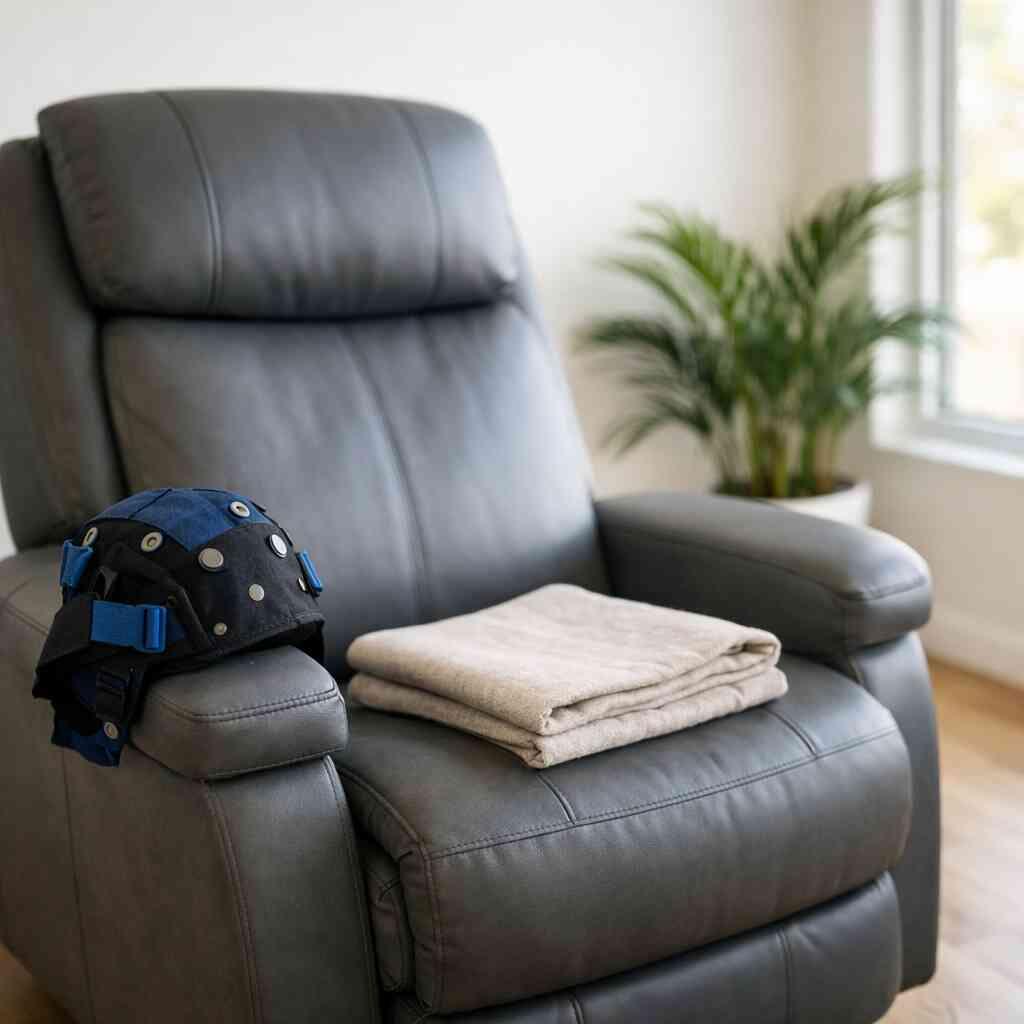
How transcranial magnetic stimulation therapy gets targeted for depression, OCD, and bipolar depression
Transcranial magnetic stimulation therapy uses magnetic fields to stimulate specific brain circuits. For depression, that often means networks linked to mood, motivation, and rumination. For TMS OCD therapy, the target and protocol differ because obsessive-compulsive symptoms involve different circuits. For TMS for bipolar depression, clinicians need to be especially careful about diagnosis, current mood state, and whether depression is the active problem rather than mania or mixed symptoms.
A strong evaluation should also look at related concerns like TMS for PTSD Florida, TMS addiction recovery, and TMS for substance use disorder, because many patients have more than one condition. Dual diagnosis cases are common in Florida behavioral health settings, especially when depression and substance use reinforce each other. Research on rTMS and cravings continues to grow, including work from centers such as the Medical University of South Carolina, but clinics should present it as an evolving area rather than a guaranteed fix.
For depression-specific details, see the clinic’s TMS depression treatment page. If anxiety is the main concern, the anxiety treatment page is the better fit.
What a typical session looks like from check-in to the chair to the moment you walk back out
A typical session is straightforward. You check in, confirm your history, sit in the chair, and the team positions the coil. Then the machine delivers short bursts of stimulation for a set period. Most visits are outpatient and brief enough that you can return to work, errands, or home life afterward.
A common schedule is five sessions a week during the active phase, though your clinic may adjust timing based on protocol and response. Some patients describe the sensation as tolerable but unusual. Others need a few sessions to settle in. The sound, the tapping, and the stillness can feel odd on day one, then routine by week two.
A few practical points usually help:
- Wear comfortable clothing.
- Skip heavy hair products if the clinic advises it.
- Tell the team about headaches, jaw tension, or past seizures.
- Ask how the clinic tracks side effects and symptom changes.
- Confirm whether you can drive yourself home.
If your question is partly about cost and coverage, review the insurance and costs page before your visit. It can help you prepare for the financial side of care, including the common question of does insurance cover TMS in Florida.
Why deep TMS therapy and repetitive TMS are discussed differently when a clinic is choosing a protocol
Deep TMS therapy and repetitive TMS are related, but they are not identical in how clinics talk about them. Repetitive TMS, or rTMS, describes the repeated pulse pattern. Deep TMS usually refers to a coil design that reaches broader or deeper cortical regions. The protocol choice depends on the diagnosis, device, and treatment goal.
ApproachWhat it meansWhy a clinic might choose itRepetitive TMSRepeated magnetic pulses over a targeted brain areaOften used for depression and other protocol-specific indicationsDeep TMSA coil design intended to stimulate deeper or broader regionsOften discussed for patients who need a different target profile or device setupClinics should not oversell either method. They should explain the rationale, the expected visit length, and what they are monitoring. That is especially important for TMS for bipolar depression, TMS OCD therapy, and TMS for smoking cessation, where protocol selection matters and the evidence base differs by condition.
For a deeper look at device approach and clinical rationale, this internal explanation of why the Florida team uses deep brain stimulation tech is a useful companion. For broader clinical context, the APA patient resources are a reliable external reference.
If you are sorting through TMS cost Florida, TMS insurance coverage Florida and TMS therapy success rate, ask the clinic to explain what they can verify and what they cannot promise. A trustworthy team will not fabricate outcomes. They will explain the evidence, discuss monitoring tools, and tell you where your situation fits.
For people comparing clinics, the question is not just “Is TMS available?” It is “Will this clinic evaluate me carefully, explain the process clearly, and adjust the plan if needed?” That is the standard you should use whether you are looking in Miami, Fort Lauderdale, West Palm Beach, Orlando, or Tampa. If you want a confidential place to sort through the options, TMS Treatment Florida can help you understand the process and connect you with care without pressure. Call +18886883036 when you are ready to talk through next steps.
Frequently Asked Questions
Question: What should I expect during my first deep TMS therapy appointment at a Florida clinic?
Answer: During the first visit, the focus is usually on orientation, safety, and comfort rather than full treatment intensity. At TMS Treatment Florida, a typical appointment may include a review of your mental health history, discussion of symptoms such as depression, anxiety, OCD, or bipolar depression, and a careful explanation of how transcranial magnetic stimulation therapy works. The team will usually measure and map the treatment area, explain the tapping or pulsing sensation, and answer questions about TMS side effects safety, scheduling, and what the session will feel like. Because this is a non-invasive brain stimulation treatment, there is no anesthesia or recovery period, and many people are able to return to normal activities afterward. If you are searching for TMS treatment Florida or TMS near me Florida, the most helpful first step is a clinic that explains the process clearly and without pressure.
Question: How does TMS work for medication resistant depression and other conditions like TMS for anxiety or TMS OCD therapy?
Answer: TMS uses magnetic brain therapy to stimulate specific areas of the brain involved in mood, focus, and repetitive thought patterns. For medication-resistant depression, the goal is often to support brain circuits that may not have responded well to antidepressants alone. For TMS for anxiety and TMS OCD therapy, the treatment plan and target area may differ because the underlying brain networks are not exactly the same. TMS Treatment Florida approaches each case with an individualized evaluation so the protocol matches the condition being addressed. This is one reason people often look into alternative depression treatment or non-drug depression treatment after trying several medications. If you are asking how does TMS work, the simplest answer is that it uses repeated magnetic pulses to encourage healthier activity in targeted brain networks, while remaining a non-invasive treatment option.
Question: In What to Expect During Deep TMS Therapy at a Florida Clinic, what does a typical session feel like and how long does it take?
Answer: A typical deep TMS session is usually brief, structured, and outpatient. You sit in a comfortable chair, the coil is positioned carefully, and then the device delivers a series of magnetic pulses. Most people describe the sensation as tapping, clicking, or pulsing on the scalp rather than pain. Sessions are generally scheduled several times per week during the active phase, and many patients can drive themselves home afterward unless their clinician gives different instructions. The room may feel more medical than dramatic, which often surprises people who expected something more invasive. If you are comparing TMS clinic Miami, TMS Fort Lauderdale, TMS West Palm Beach, TMS South Florida, TMS Orlando, or TMS Tampa, the core experience is often similar, but the quality of explanation and support can make a big difference in how comfortable you feel.
Question: Does insurance cover TMS in Florida, and what should I know about TMS cost Florida before starting treatment?
Answer: Insurance coverage can vary, so it is important to ask directly whether your plan may help with treatment and what documentation is needed. Many people looking into TMS insurance coverage Florida want to know whether their case qualifies under policy guidelines, especially if they have tried multiple medications already. TMS Treatment Florida encourages patients to ask practical questions early, including does insurance cover TMS in Florida, what out-of-pocket costs may apply, and how many visits are typically involved. Exact pricing can depend on your plan, diagnosis, and treatment protocol, so it is best not to guess. A reliable Florida mental health clinic should be transparent about what it can verify and should never pressure you into a decision before you understand the financial side. If you are searching for a luxury TMS center experience, that should still include clarity, respect, and honest communication about cost.
Question: Can deep TMS help people with dual diagnosis treatment Florida needs, including TMS addiction recovery or TMS for substance use disorder?
Answer: Deep TMS may be discussed as part of care for people who have both mood symptoms and substance-related concerns, but it should always be considered within a broader treatment plan. In dual diagnosis treatment Florida settings, the most important step is a careful evaluation of both mental health and substance use history so the clinic can determine whether TMS is appropriate and what other supports may be needed. Some people ask about TMS addiction recovery, TMS for substance use disorder, alcohol addiction brain stimulation, or TMS for smoking cessation because cravings and mood symptoms can overlap. The evidence base continues to evolve, so a responsible clinic should avoid promising results and instead explain what is known, what is still being studied, and how treatment might fit alongside therapy, medication management, or other support. If you are comparing options for addiction rehab Florida or Florida behavioral health care, choose a clinic that is patient-centered, realistic, and careful with recommendations.
Question: How do I know whether TMS Treatment Florida is a good fit if I am looking for the best TMS clinic Florida or TMS psychiatrist Florida?
Answer: The best fit is usually a clinic that listens carefully, explains the treatment plan in plain language, and matches care to your diagnosis and history. TMS Treatment Florida emphasizes personalized, non-invasive treatment planning for people seeking help with depression, anxiety, OCD, bipolar depression, or related concerns. If you are comparing TMS reviews Florida, asking about TMS therapy success rate, or looking for a TMS psychiatrist Florida, it helps to focus on the quality of evaluation rather than marketing claims. A trustworthy clinic should explain whether you may be a candidate for TMS after failed medications, discuss possible side effects, review whether maintenance therapy might ever be considered, and help you understand long-term planning without making guarantees. People searching for TMS for teen depression, TMS for young adults, or TMS and EMDR combination should also ask whether their care team can coordinate with other providers. Ultimately, the right clinic should feel supportive, clear, and clinically grounded rather than rushed or vague.