What Miami readers get wrong when depression keeps winning after meds
The call usually sounds tired. You have tried the pills, adjusted the dose, waited weeks, and still feel trapped in the same gray loop. That frustration is real. It can also make every new option feel suspicious, especially if you have already had side effects, stop-start progress, or a relapse after hope returned. Many people search for the best TMS clinic Miami option only after that kind of disappointment.
Why SSRIs can stall out and leave you feeling stuck in the same loop
SSRIs and related antidepressants help many people, but they do not help everyone. Some people get partial relief, then plateau. Others get the dreaded tradeoff: less sadness, more numbness, or a stomach, sleep, or sexual side effect they never wanted in the first place. If you are reading this while your medication bottle sits untouched on the counter, that feeling makes sense.
Here is the part most people miss. Depression is not one single switch. It can involve mood circuits, attention, motivation, and stress response all at once. That is why medication resistant depression often needs a different kind of intervention, not just more waiting. For some patients, TMS after failed medications becomes the conversation that finally feels practical.
How TMS depression treatment Florida offers a different path for medication resistant depression
Transcranial magnetic stimulation therapy uses magnetic pulses to stimulate specific brain regions linked with depression. It is a form of non-invasive brain stimulation, and it does not require anesthesia or surgery. In many clinics, it is used as an FDA approved depression treatment for adults with major depression, especially when medications have not helped enough. That makes TMS depression treatment Florida a serious option, not a last-ditch rumor.
The strongest early evidence that many clinicians still reference includes the 2018 Stanford study by Carpenter et al. on accelerated TMS approaches for depression, along with a much larger body of transcranial magnetic stimulation research and professional guidance. The APA practice guidelines and the Clinical TMS Society consensus review both support its use for appropriate candidates. If you want a plain-language version, TMS gives clinicians a way to target circuits rather than only changing chemistry system-wide. For many people, that difference matters.
What makes a TMS clinic Miami search so urgent when the old plan stops working
The urgency is not about chasing a trendy service. It is about time, function, and the emotional cost of waiting through another season of “maybe this med will kick in.” If you live in Miami, the search for a TMS clinic Miami can feel urgent because traffic, work hours, and family schedules already squeeze the day. Add depression, and simple errands can feel like climbing stairs with wet sand in your shoes.
We hear this from people all the time: “I can keep trying, but I cannot keep feeling this flat.” That sentence usually comes after months of appointments that changed little. A local clinic matters because consistency matters. If you need the best TMS clinic in Miami for depression recovery, the real question is not flash. It is whether the clinic can fit your life and your diagnosis.
Where non-invasive brain stimulation fits beside therapy, medication, and lifestyle changes
TMS is not meant to erase every other treatment. It usually fits beside therapy, medication management, sleep work, movement, and social support. That is true for alternative depression treatment planning and also for non-drug depression treatment discussions. When used well, it can widen the lane instead of replacing the road.
A man from Broward once described his treatment history like a broken relay race. Medication helped for a while, therapy helped with insight, and exercise helped some mornings. Yet his depression kept taking the baton back. His clinician added TMS, tracked symptoms carefully, and adjusted the rest of the plan around it. That kind of layered care is often what people need when the old single-track plan stops working.
The Miami clinic signals that matter more than glossy ads
A polished website can hide a lot. So can a friendly ad. The better question is not “Who looks impressive?” It is “Who can safely and thoughtfully treat my specific pattern of depression, anxiety, OCD, or bipolar symptoms?” That is where best TMS clinic Miami choices separate from marketing.
Why best TMS clinic Miami options should start with clinical fit not promises
Start with diagnosis fit, not promises. A clinic should explain whether you meet typical criteria for depression TMS, and it should be honest about what TMS may or may not address. If you are searching for the best TMS clinic Florida, ask how the team screens for seizure risk, medications that lower the threshold, and any history of mania. Those questions are normal.
Look for clear communication about the treatment plan. Good clinics discuss session frequency, expected monitoring, and what happens if symptoms change. They also avoid vague claims about guaranteed results. A responsible clinic will talk about TMS therapy success rate in population terms, not personal promises, because individual outcomes vary widely. That honesty is a strength.
What to look for in a TMS psychiatrist Florida patients can trust with complex care
A TMS psychiatrist Florida patients can trust should know more than the machine. They should understand mood disorders, medication interactions, suicide risk screening, and when to coordinate with therapy or addiction care. They should also know when TMS may not be the right tool, especially if the problem is better explained by untreated bipolar disorder or a substance issue that needs stabilization first.
On the projects and evaluations we have seen this year, the best clinics document symptoms with structure, not guesswork. They ask about sleep, agitation, cravings, and functioning. They also know how to talk about TMS side effects safety without minimizing concern. For more context on provider philosophy and team standards, many readers like to review a clinic’s about us page before they call.
How deep TMS therapy and repetitive TMS differ in real treatment planning
People often hear deep TMS therapy and repetitive TMS used almost interchangeably. They are related, but not identical. Repetitive TMS, or rTMS, is the broader category: repeated magnetic pulses delivered to targeted brain areas. Deep TMS uses a different coil design that can reach somewhat deeper regions, depending on the system and protocol.
FeatureRepetitive TMSDeep TMSCore ideaRepeated magnetic pulsesRepeated magnetic pulses with a deeper coil designTypical useDepression, anxiety, OCD, and other protocolsDepression and some other indications, depending on the systemPlanning focusTargeting, dosing, symptom trackingTargeting, dosing, symptom trackingThe right choice depends on the diagnosis, anatomy, insurance rules, and clinic equipment. It is not about which label sounds more advanced. It is about what matches your case. If you want a broader explanation, the deep TMS and standard TMS comparison can help frame the discussion.
Why location matters for South Florida schedules from Aventura to Coral Gables to Boca Raton
Location sounds ordinary until you live it. Then it is everything. A clinic that works for someone in Aventura may feel impossible for someone in Boca Raton if traffic, bridge time, and work shifts pile up. That is why TMS South Florida searches usually end up comparing convenience as much as care quality.
Miami readers also deal with seasonal residents, school calendars, and storm days that change commute patterns fast. A clinic near Coral Gables may suit one schedule. Another in Fort Lauderdale or West Palm Beach may suit another. If you need a TMS treatment in Miami-Dade County for medication resistant depression, access matters as much as empathy. So does knowing the clinic can help you coordinate care across the week.
Inside the room where magnetic brain therapy actually happens
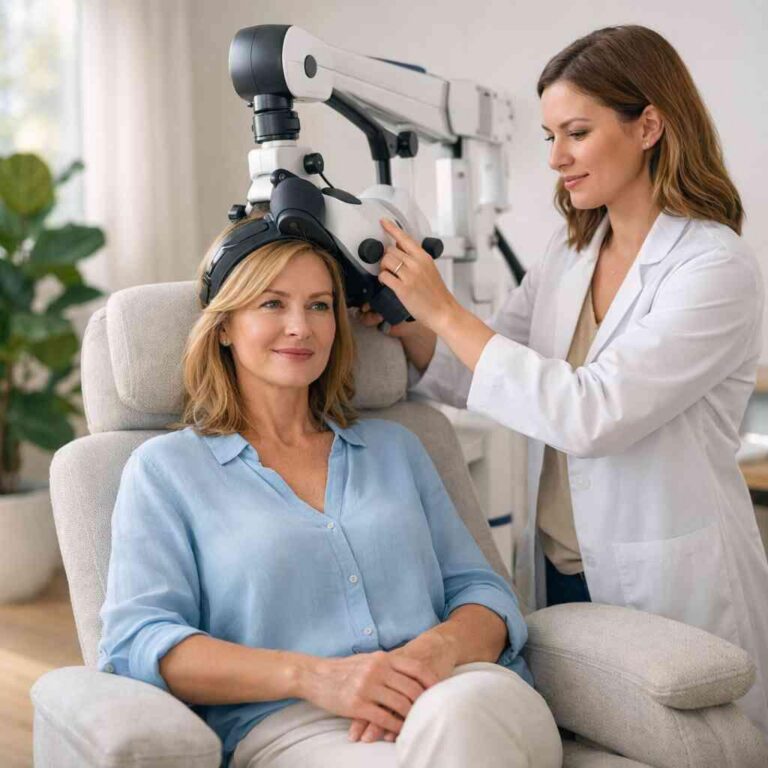
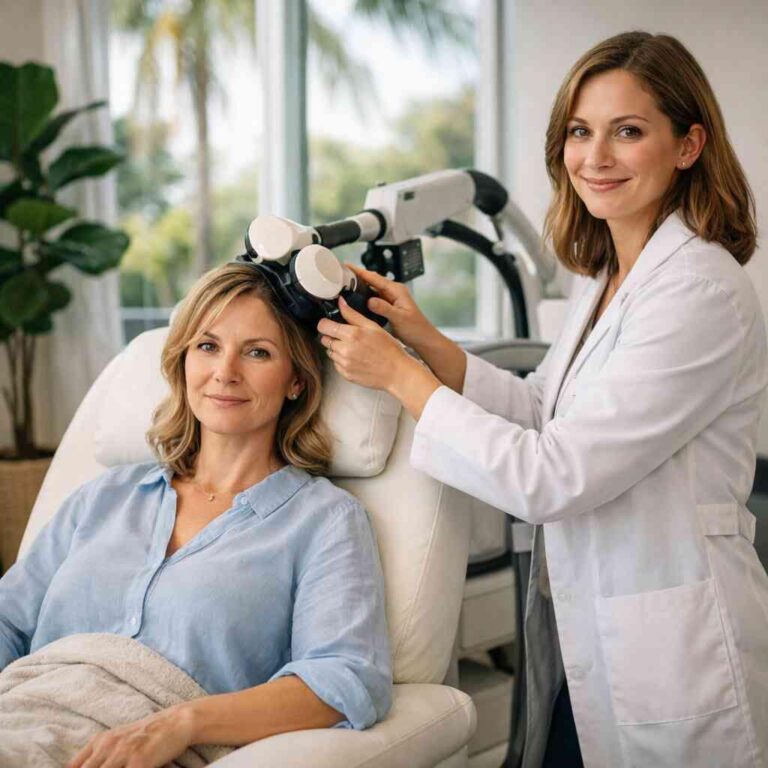
Most people picture something futuristic. The reality is calmer. A chair. A coil. A machine with a steady hum. A technician checking placement. A clinician reviewing symptoms. The experience is clinical, but it is also human, and that matters when you already feel worn down.
How does TMS work when the coil targets brain circuits tied to mood and focus
If you are asking how does TMS work, the short answer is this: a magnetic coil sits near the scalp and sends pulses that influence brain networks involved in mood regulation. Over repeated sessions, those pulses aim to strengthen underactive pathways tied to depression. That is why people sometimes call it magnetic brain therapy, though the medical term remains transcranial magnetic stimulation. The science sounds abstract, but the goal is simple. Clinicians use the treatment to affect circuits linked to attention, motivation, and emotional regulation. That is also why TMS can sometimes be discussed alongside TMS for anxiety, TMS OCD therapy, or TMS for PTSD Florida when symptoms overlap. A good clinician will explain the target and the reason for it. 
What a session feels like from the chair to the hum to the time it takes
A typical session usually begins with positioning. The team maps the target area, then adjusts the coil. You stay awake the whole time. You hear a repetitive clicking sound. You feel tapping on the scalp. It is not pleasant for everyone, but most people describe it as tolerable.
The first few sessions often feel the strangest because your brain is noticing something new. After that, many patients settle into a routine. They bring headphones, a water bottle, and whatever helps the time pass. One young professional in Fort Lauderdale told us the sound felt like a tiny metronome at first. By week two, it was just part of the day. That kind of adjustment is common.
Why TMS side effects safety matters when comparing non-drug depression treatment choices
Safety questions deserve direct answers. Common side effects can include scalp discomfort, mild headache, or a temporary tired feeling. Those effects often change as the body gets used to treatment. Serious risks are uncommon, but they still require screening and honest consent.
This is why TMS side effects safety matters when you compare non-drug depression treatment options. A clinic should explain what to expect before the first pulse. It should also review contraindications, metal implants, and any seizure history. People sometimes ask for a luxury TMS center, but luxury should mean clear communication and careful care, not just a nicer waiting room.
How providers track progress with PHQ-9 or MADRS instead of guessing
Good care does not rely on mood by memory. It uses measurement. Many clinics track symptoms with the PHQ-9 or MADRS, then compare scores over time. That helps teams see whether a patient is improving, plateauing, or needs a plan adjustment.
That approach protects patients from false hope and false pessimism. Some days feel better, then the next week feels flat again. Scores help separate a bad day from a genuine trend. They also make it easier to talk about TMS long-term results without exaggeration. If you want to see how a clinic handles treatment questions, the TMS FAQs about treatment, safety, and coverage page is often a useful place to start.
When TMS maintenance therapy and long-term results become part of the plan
Not everyone needs maintenance care, but some do. TMS maintenance therapy may enter the plan if symptoms begin to drift after a successful acute series. That decision usually depends on history, symptom return, and functional impact. There is no single rule for every patient.
The larger point is this: recovery can need follow-through. TMS long-term results are strongest when the clinic thinks beyond the initial series and watches the whole picture. Medication adjustments, therapy, sleep, and life stress all still matter. TMS is one tool. The best teams treat it that way.
The decision map for Florida patients who need more than one lane of care
Depression rarely arrives alone. Anxiety shows up. OCD patterns tighten. Trauma symptoms surface. Sometimes addiction sits underneath everything. That is why the real decision is not only “Should I try TMS?” It is “Which TMS plan fits the rest of my care?”
How insurance coverage questions shape TMS cost Florida and access in practice
Money questions come early, and they should. TMS cost Florida varies by clinic, protocol, and insurance. Some plans cover treatment when medical criteria are met. Others need prior authorization. That means the phrase does insurance cover TMS in Florida has a real answer only after benefits review.
In practice, access depends on documentation. Clinics may need records showing prior medication trials, diagnosis history, and symptom severity. If you are comparing TMS insurance coverage Florida options, ask for a benefits check before you commit to a schedule. For a more detailed breakdown, the TMS treatment in Florida insurance and cost guide is worth reviewing. It can reduce guesswork fast.
Why TMS for anxiety OCD therapy and TMS for PTSD Florida may call for different plans
Anxiety, OCD, and trauma are not interchangeable. A patient with panic and rumination may need a different protocol than someone with classic depression symptoms. That is why TMS therapy for anxiety disorders in Florida and TMS therapy for OCD in Florida require careful planning. The same goes for TMS for PTSD Florida, where symptoms may overlap with sleep disturbance, vigilance, and emotional reactivity.
A protocol should fit the symptom map, not the label alone. Some clinics combine TMS with psychotherapy, and some patients ask about a TMS and EMDR combination when trauma symptoms are part of the picture. That can be reasonable in the right hands, but it should never be automatic. If anxiety is central, a TMS therapy for anxiety disorders in Florida conversation may help clarify next steps.
When TMS addiction recovery and TMS for substance use disorder fit into dual diagnosis treatment Florida
Addiction changes the picture. So does craving. Research on TMS addiction recovery and TMS for substance use disorder is growing, including work on cravings from centers such as the Medical University of South Carolina. The evidence is promising, but it is still an evolving area. That means a clinic should speak carefully, not dramatically.
This matters a lot in dual diagnosis treatment Florida. Someone can have depression and alcohol misuse at the same time. Another person may be trying to quit nicotine and manage mood symptoms together. In those cases, alcohol addiction brain stimulation or TMS for smoking cessation may be discussed as adjunctive options, but always with a full substance-use plan. The most useful resource here is often the addiction treatment page for understanding how mood and craving care may intersect.
How TMS for bipolar depression TMS for teen depression and TMS for young adults change the conversation
Bipolar depression needs special care. So do younger patients. TMS for bipolar depression can be considered in some cases, but screening for mania history is critical. The wrong plan can make things worse. That is not something to rush.
For TMS for teen depression and TMS for young adults, the conversation usually includes family support, school pressure, sleep, and substance exposure. Younger patients also need close monitoring and realistic expectations. A clinic should not treat age as a footnote. It should treat it as part of the diagnosis. If you are comparing regional access, the TMS clinics in Florida areas we serve page can help you see how care may fit your community.
What to ask before you book at a Florida mental health clinic and move toward care
Bring questions. Good ones. Ask who evaluates you, how the protocol is chosen, how progress is measured, and what happens if symptoms change mid-treatment. Ask about prior authorizations, follow-up visits, and whether the clinic coordinates with your therapist or prescriber. Ask how they handle Florida mental health clinic referrals when depression overlaps with trauma or addiction.
Here is a simple checklist you can use today:
- What diagnosis are you treating first?
- How will you measure change?
- Who reviews safety concerns?
- What does insurance need from me?
- What happens if I need maintenance later?
If you are comparing TMS reviews Florida and looking for a clinic that feels steady, not flashy, that list will help. You do not have to figure this out alone, and you do not have to sort all of it out tonight. Start with one call, one benefits check, and one honest conversation with a clinic that treats depression with care.
Frequently Asked Questions
Question: What should I look for when choosing among best TMS clinic Miami options for depression recovery in 2026?
Answer: The most important factors are clinical fit, safety, and coordination of care. A strong TMS clinic Miami option should explain whether transcranial magnetic stimulation therapy is appropriate for your diagnosis, how they evaluate medication resistant depression, and what the treatment plan looks like from start to finish. It should also be clear about TMS side effects safety, follow-up, and how progress is measured with tools like the PHQ-9 or MADRS instead of relying on guesswork. At TMS Treatment Florida, the focus is on compassionate, individualized care that supports depression recovery with TMS while staying honest about what treatment can and cannot do. If you are comparing a best TMS clinic Florida choice, look for transparent communication, thoughtful screening, and a team that treats you like a person, not a number.
Question: How does TMS work, and why is it considered a non-invasive brain stimulation option for medication resistant depression?
Answer: If you have been wondering how does TMS work, the basic idea is that a magnetic coil delivers repeated pulses to targeted brain areas involved in mood regulation. This is why many people describe it as magnetic brain therapy or non-invasive brain stimulation. Unlike medication, it does not affect the whole body systemically, and it does not require anesthesia or surgery. For adults with medication resistant depression, TMS depression treatment Florida can be a practical alternative depression treatment or non-drug depression treatment when medications have not provided enough relief. TMS Treatment Florida uses this approach as part of a careful clinical evaluation, and the team can help you understand whether TMS after failed medications may be a reasonable next step.
Question: Does insurance cover TMS in Florida, and what should I know about TMS cost Florida before I get started?
Answer: Coverage can vary, so the best answer is that it depends on your plan and medical criteria. Many patients ask does insurance cover TMS in Florida because TMS cost Florida is a major concern, and that is completely understandable. In many cases, insurers require documentation of prior medication trials, diagnosis history, and symptom severity before approving TMS insurance coverage Florida. The team at TMS Treatment Florida can help you review benefits and understand what documentation may be needed before treatment begins. That kind of support matters because it reduces confusion and helps you plan with more confidence. If you are searching for TMS near me Florida and want clarity on access, a benefits check is often one of the smartest first steps.
Question: Can TMS help with more than depression, such as TMS for anxiety, TMS OCD therapy, or TMS for PTSD Florida?
Answer: Yes, TMS may be discussed for several mental health concerns, but the right protocol depends on your symptoms and diagnosis. Many clinics use TMS for anxiety, TMS OCD therapy, or TMS for PTSD Florida only after a careful evaluation, because these conditions can overlap with depression in different ways. The same is true for TMS for bipolar depression, where screening is especially important. TMS Treatment Florida approaches care through a Florida mental health clinic lens that considers your full picture, including sleep, stress, trauma, and any dual diagnosis treatment Florida needs. In some cases, treatment planning may also consider TMS and EMDR combination support alongside therapy, though that depends on the individual. The key is not to chase a label, but to match the treatment to the person.
Question: What should patients know about TMS for young adults, TMS for teen depression, and long-term support like TMS maintenance therapy?
Answer: Younger patients often need extra care because school pressure, family support, sleep issues, and substance exposure can all affect symptoms. TMS for teen depression and TMS for young adults should always involve careful screening, realistic expectations, and close monitoring. For some patients, TMS maintenance therapy may later be part of the plan if symptoms begin to return after an initial series, but that depends on the clinical picture. TMS Treatment Florida emphasizes thoughtful follow-up and symptom tracking so care is not rushed or one-size-fits-all. The same careful approach can also apply to TMS long-term results, since recovery is usually best supported by a combination of treatment, therapy, and lifestyle support rather than a single intervention alone.