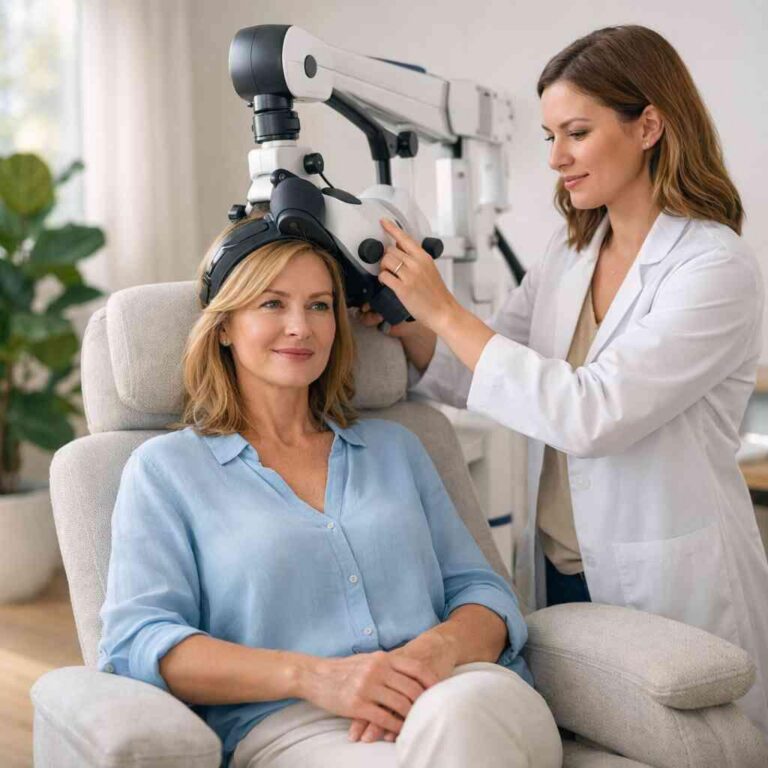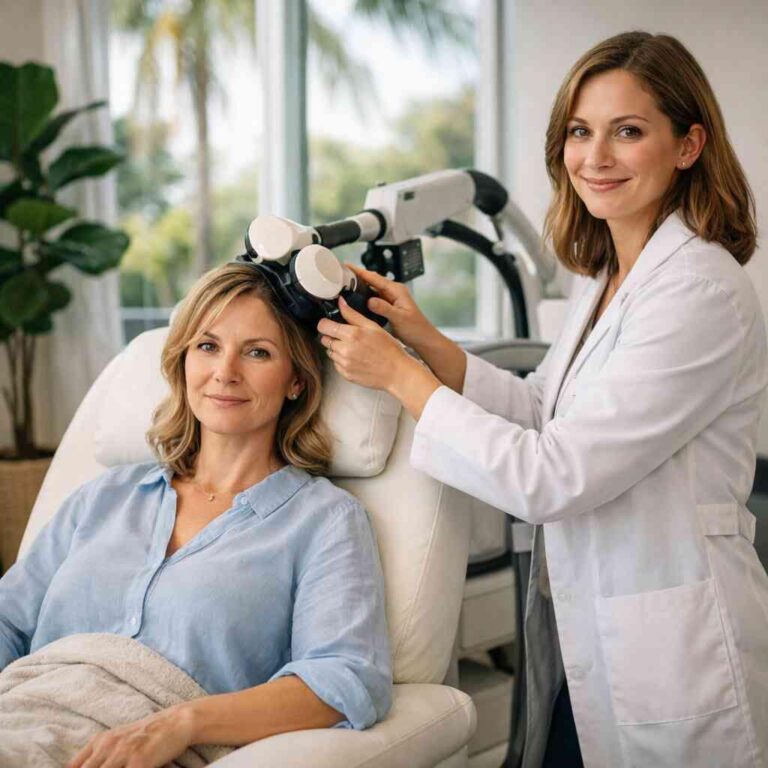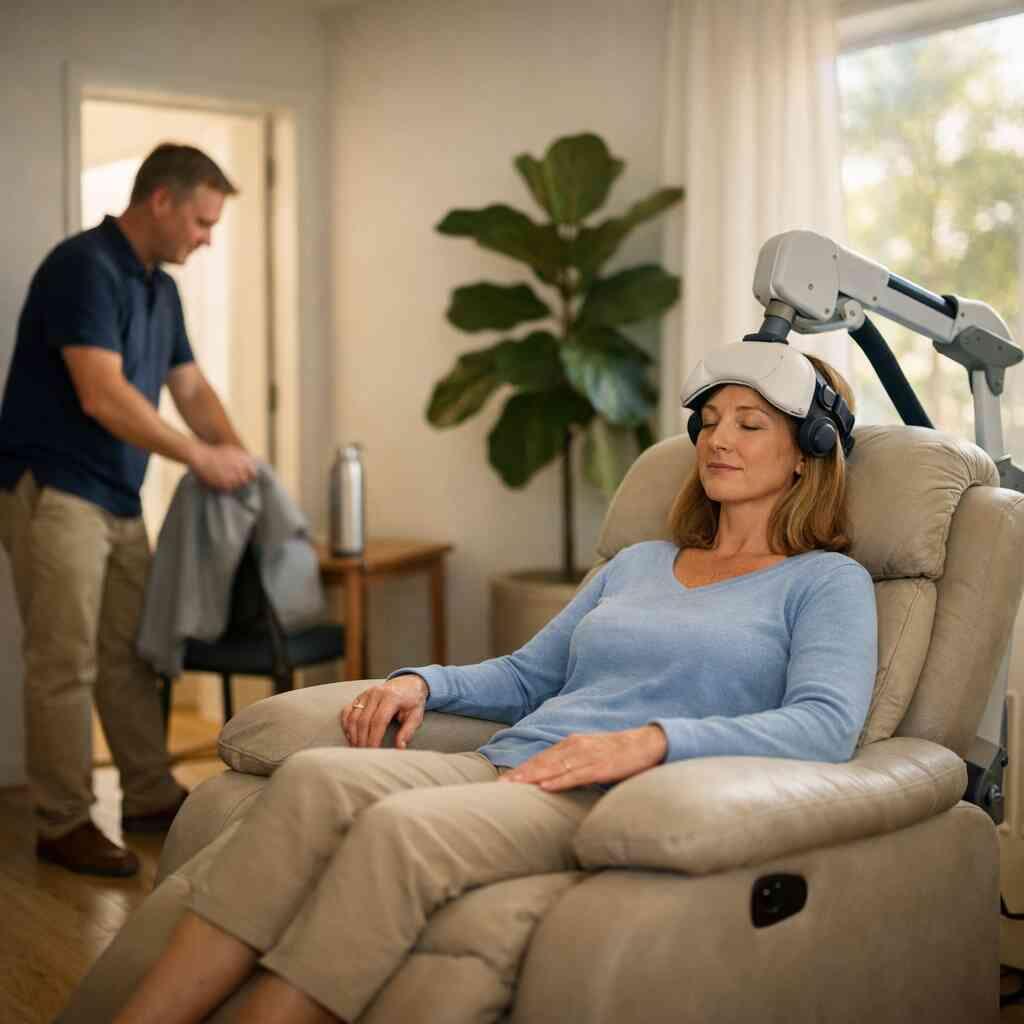
When a loved one starts TMS and the whole house feels out of sync
The first week before family support tips for TMS treatment in Florida often feels louder than people expect. The kitchen gets tense. Sleep gets lighter. Everyone tries not to say the wrong thing, and that strain can sit in the room like humidity. If you are reading this because the mood at home has shifted, that reaction makes sense.
Why family stress often spikes before the first transcranial magnetic stimulation therapy visit
Families usually feel relief and fear at the same time. Relief comes from finally having a plan. Fear comes from not knowing how transcranial magnetic stimulation therapy will feel in real life. That mix can make everyone overtalk, overexplain, or hover. Here is the part most families miss: worry often sounds like help, but it can land as pressure.
In the cases we have seen this year, the biggest stress point is not the appointment itself. It is the waiting. People start imagining side effects, costs, work disruptions, and whether hope is safe this time. If your loved one has already tried several medications, that history can sharpen the nerves even more. For many families, this is the emotional weight of supporting a loved one during TMS therapy in Florida.
What changes in the home when depression, anxiety, OCD, or bipolar symptoms get louder
When depression deepens, the whole house often slows down. When anxiety rises, the room can feel busy even when nobody moves. OCD can pull routines into rigid shapes. Bipolar depression can make energy, sleep, and irritability swing in ways that leave relatives guessing. You may find yourself walking on eggshells, and that is exhausting.
One family we worked with in Broward County described their mornings as “a traffic jam before sunrise.” Breakfast went untouched. Doors opened and closed twice. Everyone kept checking the clock. That kind of tension is common when someone starts transcranial magnetic stimulation therapy for depression in Florida, because old coping habits are still in place. Healing often begins inside a home that still feels wounded.
The quiet mistakes families make when they mean well but add more pressure
The biggest mistake is trying to cheer someone into readiness. You may say, “This will fix everything,” because you want comfort to land fast. But false certainty can feel lonely to someone who has been disappointed before. Another common mistake is pushing for details when your loved one wants privacy. Curiosity is human. Timing matters more.
A quieter mistake is turning treatment into a test of gratitude. That can happen with phrases like, “After all this, you should feel better.” People with TMS for anxiety or TMS therapy for obsessive-compulsive disorder in Florida may already feel guilty for struggling. Pressure adds weight where steadiness is needed. Support works best when it lowers the temperature in the room.
How Florida support can look different for people driving in from Miami Orlando Tampa or West Palm Beach
Florida logistics change the emotional picture. A person coming from Miami may face a longer drive, tolls, and a tighter schedule. Someone in Orlando may juggle school pickups or shift work. Tampa traffic can turn a simple visit into a long day. West Palm Beach and South Florida patients often plan around bridge traffic, weather, and seasonal crowding.
This is why family support in Florida is partly practical. If the route crosses Florida locations for TMS care in Miami-Dade County, Broward County, Palm Beach County, or Orange County, the day needs breathing room. A loved one who feels rushed arrives more tense. A little planning can make TMS Treatment Florida feel less like another demand and more like a workable part of life.
What supportive families get right before the machine hums even once
Support starts before the chair. Before the first pulse. Before anyone asks, “Did it work?” The best families get honest, calm, and specific. They do not pretend the road is easy, and they do not make it heavier than it already is.
How to talk about TMS treatment Florida without sounding hopeful in a fake way
Start with plain language. You can say, “I know this has been hard, and I want to help without crowding you.” That sentence works because it respects the pain already in the room. It also avoids the empty shine of forced optimism. If your loved one is wary, match their pace.
When you talk about TMS treatment Florida, you do not need a speech. You need honesty. Say what you know and admit what you do not. That kind of talk builds trust, especially around non-invasive brain stimulation and alternative depression treatment. Calm language often does more than big promises.
The questions worth asking the TMS psychiatrist Florida before treatment starts
Ask how they screen for fit. Ask what symptoms they track. Ask what tools they use, such as PHQ-9 or MADRS, to monitor change over time. Ask what the plan looks like if the person also has anxiety, OCD, PTSD, or bipolar depression. Those are practical questions, not skeptical ones.
You should also ask how they handle TMS depression treatment Florida after failed medications. Families deserve clear answers about scheduling, follow-up, and communication. If the clinic serves TMS clinic Miami, TMS Fort Lauderdale, or TMS West Palm Beach, ask how they help people across counties stay consistent. A steady plan often matters more than a polished sales pitch.
Why medication resistant depression and TMS after failed medications need a steadier home rhythm
Medication resistant depression can wear people down in a special way. The disappointment stacks. So does the exhaustion from side effects, missed work, and repeated hope. If someone has already tried several prescriptions, the home may need more structure, not more urgency. TMS works best when life is not chaotic around it.
The healthiest homes keep rhythm simple: wake-up time, transport plan, meals, quiet after sessions. That rhythm matters for TMS after failed medications because the brain responds better when the body is not always bracing. Families who understand this often support non-drug depression treatment more effectively than families who keep asking for quick proof.
How to plan around work school traffic and clinic visits in South Florida and beyond
The best plans are boring on purpose. They account for parking, traffic, and the small delays that can spiral into conflict. In South Florida, a ten-minute delay can feel like a moral failure if nobody planned for it. That is why a buffer matters. It protects the day from turning sharp.
If you are helping someone attend visits in TMS South Florida, TMS Orlando, or TMS Tampa, build the routine around real life. Pack snacks. Keep headphones ready. Confirm who is driving. Ask about how to prepare for TMS sessions in Florida before the week gets busy. Small logistics often decide whether support feels steady or chaotic.
The seven family support habits that make the biggest difference during care
The seven habits below are simple, but they are not small. They protect energy. They reduce conflict. They help treatment feel manageable. Most of all, they make the house feel less like a medical obstacle course.
How to protect the morning before sessions when energy is thin and nerves are loud
Keep the morning quiet. Use low light if possible. Offer one clear next step, not five. If your loved one is already anxious, too many questions can feel like static. A calm start matters more than a perfect pep talk.
One person in Boca Raton told us that their best treatment days began with a banana, water, and ten minutes of silence. That is not dramatic. It is practical. For people receiving repetitive rTMS, a protected morning can reduce friction before the session even starts. Sometimes the most caring thing you can do is make the room quieter.
What to say after a session when your loved one feels tired foggy or guarded
Do not demand a report. Try, “Do you want quiet, food, or a ride home?” That gives control back without abandoning them. After a session, some people feel tired or a little foggy. Others just want to be left alone for a bit. Both reactions are normal.
Keep your tone steady if the answer is short. Guardedness is not rejection. It is often recovery. If someone is in TMS for PTSD Florida or TMS for bipolar depression, emotional energy may already be stretched thin. Gentle presence helps more than performance.
Why meal cues sleep routines and gentle reminders matter more than pep talks
Brains heal better with routine. Meals, water, and sleep are not side notes. They are part of the support system. If your loved one forgets lunch or stays up too late, symptoms can get louder the next day. Pep talks do not fix that. Rhythm does.
Use reminders that do not sound like criticism. Say, “I put dinner in the fridge,” instead of, “You need to eat better.” That small shift changes the emotional temperature. It also supports magnetic brain therapy by reducing avoidable stress. Families often underestimate how much these plain habits matter.
How to lower conflict at home when OCD anxiety or bipolar depression flares
Cut the number of decisions. Keep arguments short. Do not try to solve every fear in one conversation. If OCD is active, endless reassurance can feed the loop. If anxiety is high, debate can feel like a threat. If bipolar depression is present, fatigue can turn any request into a burden.
Use boundaries without sharp edges. “We can talk after dinner” is kinder than “I am done with this.” That difference matters. It keeps the house safer. People using TMS OCD therapy or TMS for anxiety often do better when the household tone stays consistent.
When encouragement becomes pressure and how to back off without disappearing
Support can turn into surveillance fast. That happens when every comment becomes about progress. You may mean well, but “Are you better yet?” can sting. So can comparing one day to another too closely. People need room to have an uneven response.
Back off by changing the job, not the love. Offer transport. Handle a meal. Sit nearby. Then let silence do its work. If you want a benchmark, use a practical one, not a dramatic one. The clinic may track change with TMS therapy success rate tools like PHQ-9, but home support should feel human, not clinical.
How to keep substance use triggers out of sight during TMS addiction recovery
If TMS is part of addiction recovery, the home environment matters a lot. Remove visible triggers. Lock up alcohol. Avoid casual references that can spark cravings. Keep routines predictable. That is especially true when the person is also dealing with depression, trauma, or anxiety.
This is where TMS addiction recovery and TMS for substance use disorder intersect with family habits. Research on rTMS for cravings, including work associated with the Medical University of South Carolina, suggests that cue exposure and stress both matter. If you are supporting someone in dual diagnosis treatment Florida or addiction rehab Florida, reducing triggers is not optional. It is smart care.
Why small wins deserve attention even when progress feels slow or uneven
Do not wait for a huge breakthrough. Notice the smaller things. A calmer drive. Better sleep. Less dread before the appointment. A cleaner breakfast plate. These are not trivial. They often show the brain is shifting.
Families sometimes miss these moments because they are chasing a miracle. But TMS long-term results are usually built from many small, steadier days. If you want a good habit, celebrate consistency. That applies to TMS maintenance therapy too. Progress can be quiet before it is obvious.
What families should understand about safety side effects and realistic expectations
This part matters because fear grows in the gaps. Families often imagine worse side effects than they are likely to see. At the same time, they sometimes expect a dramatic overnight change. Reality sits between those extremes. 
How does TMS work in plain language and why non-invasive brain stimulation feels different from meds
TMS uses magnetic pulses to stimulate targeted brain regions involved in mood and behavior. It does not require anesthesia. It does not involve a systemic drug dose. That is why many people describe it as non-invasive brain stimulation rather than another medication trial. The sensation feels different from pills because the body is not processing a new chemical load.
Families often ask, “How does TMS work?” The simplest answer is that it aims to influence neural activity and plasticity. Studies like the 2018 Stanford work by Carpenter and colleagues helped build confidence in depression care, alongside FDA-cleared devices such as NeuroStar and BrainsWay. If you want the deeper science, look at transcranial magnetic stimulation research and treatment basics. The evidence is strongest when care is matched to the right patient and monitored carefully.
What TMS side effects safety usually means for headache scalp discomfort or fatigue
Most families want to know about TMS side effects safety. In plain terms, the common issues people discuss are headache, scalp discomfort, and fatigue. Some people also feel briefly tense afterward. Those reactions may improve as the brain gets used to treatment. The clinic should explain what is typical and what needs a call.
Safety also means screening. A responsible clinic looks at seizure risk, medications, diagnosis, and history before treatment. In Florida, outpatient clinics also work within AHCA rules. That matters because safe care is not just about the machine. It is about the full setting, the team, and the plan.
Why TMS therapy success rate should never be treated like a promise
People search for numbers because they want hope they can measure. That is understandable. Still, no honest clinic should promise a specific result. TMS therapy success rate varies by diagnosis, severity, prior treatment history, and consistency. The right way to talk about it is as a probability, not a guarantee.
If you are comparing options, ask how the clinic measures change. Ask whether they use PHQ-9, MADRS, or another scale. Ask how they respond when progress is slow. Strong TMS reviews Florida should feel grounded, not glossy. Real trust comes from honest measurement.
How TMS insurance coverage Florida and does insurance cover TMS in Florida questions usually get handled
Insurance questions arrive early for a reason. They affect whether care feels possible. In Florida, coverage can depend on diagnosis, prior medication history, documentation, and plan type. So yes, people often ask, “Does insurance cover TMS in Florida?” The honest answer is: sometimes, but verification is essential.
If cost is part of your worry, review TMS insurance coverage Florida before the schedule gets crowded. Ask for preauthorization help. Ask for a plain explanation of TMS cost Florida. Families who handle the insurance piece early usually feel less pressure later. That frees up energy for care.
What families should know about deep TMS therapy repetitive rTMS and maintenance therapy
Deep TMS therapy and repetitive rTMS are related, but not identical. The distinction matters less than whether the clinic explains the device, target, and plan clearly. Deep TMS uses specialized equipment designed to reach deeper brain regions. Repetitive rTMS refers to repeated magnetic pulse patterns. Both fit under the larger umbrella of TMS care.
Maintenance matters too. Some people need TMS maintenance therapy after the first course. That can support TMS long-term results without making promises the brain cannot keep. If your family is weighing best TMS clinic Florida options, ask how they think about follow-up, relapse prevention, and team communication.
The next right move when support at home is not enough
There comes a point when love and logistics need backup. That is not failure. It is good judgment. If symptoms stay heavy, if the house keeps unraveling, or if safety becomes a concern, reach out for clinical guidance sooner rather than later.
When to ask about TMS depression treatment Florida or TMS for anxiety rather than waiting it out
If medication side effects have piled up, if the person has had multiple failed medications, or if daily functioning keeps slipping, ask about care sooner. That is especially true for TMS depression treatment Florida and TMS for anxiety. Waiting can turn a hard month into a harder season. Early conversations often create more options.
The same is true for TMS for PTSD Florida, TMS for teen depression, and TMS for young adults. If symptoms are affecting school, work, or safety, do not let uncertainty keep you stuck. A careful evaluation is better than a silent spiral.
How to compare TMS clinic Miami TMS Fort Lauderdale TMS West Palm Beach TMS Orlando and TMS Tampa without chasing hype
Start with fit, not flash. Ask about location, parking, scheduling, and follow-up. Then ask how they screen patients and what conditions they treat. A good clinic should explain their approach without sounding like an ad. That holds whether you are comparing TMS clinic Miami, TMS Fort Lauderdale, TMS West Palm Beach, TMS Orlando, or TMS Tampa.
If you want a shortcut, use this checklist:
- Clear explanation of diagnosis fit
- Transparent insurance verification
- Consistent communication
- Practical scheduling
- Comfortable location access
- Transparent team credentials
For people searching TMS near me Florida, the best choice often feels steady, not flashy. That is especially true in South Florida, where access from Aventura, Coral Gables, Boca Raton, Delray Beach, and Winter Park can shape the entire experience.
What makes a Florida mental health clinic feel steady trustworthy and easy to work with
A steady Florida mental health clinic does a few things well. It answers questions plainly. It documents carefully. It treats families like partners, not interruptions. It explains the plan without overpromising. And it respects the reality of Florida life, including traffic, weather, and seasonal residents.
If you are comparing a Florida mental health clinic or Florida behavioral health, ask how they support continuity. Ask how they handle missed visits. Ask who answers the phone. That is not small talk. It is the structure that keeps care usable.
Why the smartest next call may be about insurance verification location fit or team credentials rather than symptoms alone
Sometimes the most useful call is not about the symptom list. It is about logistics and trust. Verify benefits. Ask about the nearest location. Confirm who is on the team and where you can read about them. If you want to check background details, review the clinic’s about us page before deciding. That protects you from guessing.
If you need more practical help, the FAQ section can answer common questions about scheduling and care. The article How TMS Treatment Florida Supports Families During Care can also help you prepare for the household side. You do not have to fix the whole picture today. Start with one call, one question, and one clear plan for tomorrow.
How to keep support going after the schedule changes and treatment becomes part of normal life
As care settles in, keep the same steady habits. Protect mornings. Lower conflict. Track small wins. Watch for drift in sleep, meals, and stress. That rhythm helps after the novelty wears off and treatment becomes part of the week.
If your loved one is moving through TMS maintenance therapy or considering follow-up support, the household still matters. Families can quietly shape outcomes by making life simpler, calmer, and more predictable. If you are ready to talk through fit, insurance, or location, reach out to TMS Treatment Florida and ask the questions you have been holding back. You do not have to sort it all out alone, and you do not have to sort it out tonight.
People Also Ask
How long does it take to see results with TMS?
TMS does not work on a fixed clock for everyone. Some people notice early changes in sleep, energy, or mood, while others need more sessions before anything feels different. Clinicians often track progress with tools like PHQ-9 or MADRS, because feelings alone can be hard to measure day by day. The most honest answer is that consistency matters more than a single session. If you are supporting someone, focus on routine and follow-up rather than expecting an instant shift.
Is TMS safe for people with anxiety or OCD?
TMS can be used for anxiety-related symptoms and OCD in some treatment plans, but the clinic should screen carefully. Safety depends on diagnosis, history, medication list, and the device protocol. Families should ask how the team adjusts care when anxiety spikes, because the home environment still matters during treatment. A good clinic will explain side effects, scheduling, and what to do if symptoms feel intense. That clarity usually helps everyone relax a little.
Does insurance usually cover TMS in Florida?
Sometimes it does, but not always. Coverage often depends on diagnosis, prior medication history, documentation, and the specific plan. Families should verify benefits before treatment starts, because that can prevent painful surprises later. Ask the clinic to help with preauthorization and to explain any out-of-pocket costs in plain English. If you are comparing clinics, insurance support is often a major sign of how organized the practice is.
What should family members avoid saying during TMS treatment?
Avoid anything that sounds like a deadline for healing. Phrases like “you should feel better by now” can create shame fast. It also helps to avoid repeated reassurance questions, since those can feel like pressure instead of care. Better choices sound calm and practical, such as “Do you want help with dinner?” or “Do you want quiet after your session?” Short, respectful language usually works best.
Can TMS help after medications have failed?
Yes, that is one of the main reasons people ask about it. TMS is often discussed for medication resistant depression and for people who have had tough side effects or a poor response to prior treatment. It is not a promise, and it is not right for every case. Still, it offers a non-drug option that may fit when pills have not. A careful evaluation helps determine whether it belongs in the plan.
What should I ask before choosing a TMS clinic near me in Florida?
Ask about diagnosis fit, location access, insurance support, and who will oversee care. You should also ask how they measure progress and how they handle missed sessions or side effects. If you live in South Florida or drive in from nearby counties, logistics matter as much as clinical language. Good clinics answer without rushing you. That usually tells you more than marketing ever will.
Frequently Asked Questions
Question: What are the most helpful family support tips for someone starting transcranial magnetic stimulation therapy at TMS Treatment Florida?
Answer: The most helpful support usually starts with keeping the home calm, predictable, and low-pressure. Families can help by protecting the morning before appointments, offering simple choices after sessions, and avoiding questions that make treatment feel like a test. The blog TMS Treatment Florida Shares 7 Family Support Tips for Care focuses on practical ways to reduce stress around transcranial magnetic stimulation therapy, especially for people coping with depression, anxiety, OCD, or bipolar symptoms. At TMS Treatment Florida, the goal is to make care feel manageable, compassionate, and personalized so families can support progress without adding more tension.
Question: How does TMS work for medication resistant depression, TMS for anxiety, and TMS OCD therapy?
Answer: In simple terms, TMS uses non-invasive brain stimulation to send magnetic pulses to targeted areas of the brain involved in mood and behavior. It is often discussed as an alternative depression treatment and non-drug depression treatment option for people with medication resistant depression or TMS after failed medications. Depending on the treatment plan, it may also be considered for TMS for anxiety or TMS OCD therapy. The clinic should always explain how the protocol fits the person’s diagnosis, history, and goals. At TMS Treatment Florida, the emphasis is on careful evaluation and clear communication so patients and families understand the process without feeling overwhelmed.
Question: What should families ask before choosing a TMS clinic Miami, TMS Fort Lauderdale, TMS West Palm Beach, TMS Orlando, or TMS Tampa?
Answer: Families should ask how the clinic screens for treatment fit, how progress is measured, what happens if symptoms are slow to change, and how insurance verification is handled. It is also smart to ask about location access, parking, scheduling, and how the team supports consistency across visits. If you are searching for TMS near me Florida, those practical details often matter just as much as the treatment itself. TMS Treatment Florida encourages families to ask direct questions so they can feel confident about fit, logistics, and communication before starting care.
Question: Is TMS side effects safety a concern, and what should families expect during treatment?
Answer: TMS side effects safety is an important part of the conversation, and families should always get a clear explanation from the clinic. Commonly discussed effects can include headache, scalp discomfort, or temporary fatigue, though experiences vary. A responsible clinic also reviews medical history, medications, and any risk factors before treatment begins. Families should never feel rushed through safety questions. TMS Treatment Florida supports a careful, compassionate approach so patients and loved ones know what to expect and what to do if something feels off.
Question: Does insurance cover TMS in Florida, and what affects TMS cost Florida?
Answer: Coverage can vary based on diagnosis, prior treatment history, documentation, and the specific insurance plan. That is why families often ask does insurance cover TMS in Florida very early in the process. The most reliable next step is to verify benefits before treatment begins and ask the clinic for help with preauthorization and cost questions. Since TMS cost Florida can depend on coverage details and individual circumstances, it is best to get a plain-language explanation before scheduling. TMS Treatment Florida helps families navigate this part of care so financial questions do not become a barrier to getting evaluated.
Question: Can TMS help with TMS for PTSD Florida, TMS for bipolar depression, TMS for teen depression, or TMS addiction recovery?
Answer: TMS may be considered in some treatment plans for complex mental health concerns, including symptoms related to depression, anxiety, OCD, PTSD, bipolar depression, teen depression, and young adults. It may also be part of a broader discussion about TMS addiction recovery, TMS for substance use disorder, alcohol addiction brain stimulation, or dual diagnosis treatment Florida when a person is facing overlapping challenges. The right plan depends on careful screening, clinical judgment, and the person’s full history. At TMS Treatment Florida, the focus is on personalized care and thoughtful evaluation rather than one-size-fits-all promises, so families can explore options with clarity and trust.