
When anxiety and OCD start running the day, why does TMS feel like the option people wish they had found sooner
If you are reading this because your mind will not shut off, that feeling makes sense. Anxiety can turn ordinary choices into constant alarms. OCD can turn tiny doubts into rituals that steal hours. Many people turn to TMS treatment in Florida for anxiety and OCD after medication and therapy have helped, but not enough. That gap is exhausting, and it can make hope feel expensive.
What TMS treatment Florida actually means when medication and therapy still leave symptoms stuck
TMS treatment Florida means using transcranial magnetic stimulation therapy as a non-invasive brain stimulation option. It does not require anesthesia. It does not involve surgery. It uses focused magnetic pulses to influence brain networks tied to mood and repetitive thinking. For people with medication resistant depression, and for many who also have anxiety or OCD symptoms, that matters.
Here is the part most people miss. TMS is often discussed as an FDA approved depression treatment, but the same brain circuits can overlap with anxiety and compulsive loops. That is why people who try TMS after failed medications often ask whether a different approach could help when pills only flatten them or leave side effects behind. If you want a broader overview, the treatment model also fits within non-invasive brain stimulation in Florida for mood care.
A client near Coral Gables once described it this way: every day felt like refreshing the same browser tab in her head. She had tried two SSRIs and a round of talk therapy. What finally made the conversation different was not a promise. It was a plan.
How transcranial magnetic stimulation therapy targets the brain loops behind worry, rumination, and compulsions
With anxiety, the brain can stay stuck in threat mode. With OCD, the brain can get trapped in error-checking and relief-seeking. Transcranial magnetic stimulation therapy aims at those loops through repeated magnetic pulses, usually over targeted regions linked to regulation and control. That is why many clinicians talk about magnetic brain therapy in practical terms rather than mystical ones.
The evidence base is strongest for depression, including the 2018 Stanford study by Carpenter and colleagues on symptom reduction in treatment-resistant patients. For anxiety and OCD, the science is still growing, but the logic is grounded in brain network research and clinical observation. The important thing is not hype. It is matching the right tool to the right pattern.
Why non-invasive brain stimulation can feel different from another round of meds or talk therapy
Medication changes chemistry broadly. Talk therapy changes skills and meaning. TMS changes the conversation at the circuit level. That is why some people describe it as a non-drug depression treatment that feels more concrete than yet another dose adjustment.
This difference matters when you are tired of trial and error. The mouth dryness. The fog. The weight gain. The emotional flattening. Those side effects can make even a good medication feel like a bad bargain. TMS can be appealing because it does not usually carry those systemic medication burdens, though TMS side effects and safety still need a careful review.
When TMS after failed medications becomes a practical conversation instead of a last resort
People often hear about TMS only after years of frustration. That is backwards. It should be discussed earlier when symptoms persist and functioning drops. The phrase TMS therapy for medication resistant depression may sound clinical, but the lived reality is simple: you have tried enough, and you still feel stuck.
A patient from Boca Raton told us she thought TMS was “the thing after everything else fails.” What changed her mind was learning that a real evaluation could clarify whether her anxiety, OCD, and low mood all belonged in the same treatment plan. That is a practical conversation, not a desperate one. If you are looking for a place to start that conversation, a TMS psychiatrist in Florida for treatment planning should review the whole picture, not just one diagnosis.
What happens inside a session and why the hum of the machine matters less than the plan around it
The machine gets the attention. The plan does the work. That sounds plain, but it is true. A good TMS program starts with screening, symptom review, and clear goals. It also includes careful monitoring of response, especially when anxiety, OCD, and depression overlap.
How does TMS work in plain language and what the treatment map looks like from start to finish
So, how does TMS work? In simple terms, a coil sits near your scalp and delivers brief magnetic pulses. Those pulses stimulate targeted brain areas. Over repeated sessions, clinicians aim to shift activity in circuits that have become underactive, overactive, or poorly connected. This is why TMS is often described as a form of repetitive TMS.
The process usually begins with mapping. Then comes a schedule of office visits. During treatment, you sit awake in a chair while the device clicks rhythmically. Most sessions are shorter than people expect. The real value comes from consistency and from the clinical team adjusting the plan based on your symptoms and tolerance.
What deep TMS therapy and repetitive TMS are trying to change in anxiety and OCD patterns
Deep TMS therapy uses a different coil design to reach broader and deeper neural networks. Repetitive TMS uses repeated pulses to influence brain activity over time. Both approaches aim to interrupt loops that keep anxiety and OCD active. For some patients, that means less mental grinding. For others, it means more room between a trigger and the compulsion that follows.
If OCD is the main issue, the goal often centers on reducing the intensity of intrusive thoughts and the urgency of rituals. That is why many people seek TMS treatment for obsessive-compulsive disorder in Florida. For a closer look at the approach, deep TMS therapy in Florida for anxiety symptoms explains one method Florida patients often ask about.
What a typical visit looks like in a Florida mental health clinic from check-in to chair time
A visit at a Florida mental health clinic is usually calm and routine. You check in. You may complete symptom forms like the PHQ-9 or other rating scales. Then staff confirm your comfort and the treatment settings. You sit in the chair while the session runs. Afterward, most people go back to normal activities.
That structure matters because anxiety hates uncertainty. The predictable rhythm can feel grounding. One young adult from Winter Park said the hardest part was the first five minutes. After that, the routine felt easier than he expected. Here is a basic snapshot:
- brief check-in and symptom review
- positioning and treatment calibration
- session with steady clicking sounds
- quick follow-up before you leave
What TMS side effects safety usually involves and what should be discussed before treatment starts
Most people ask about discomfort first. That is fair. Some feel tapping, scalp sensitivity, or a mild headache. Others feel little beyond the noise. Serious risks are uncommon, but TMS side effects and safety should always be reviewed before treatment starts. That review should include seizure risk screening, medication history, and any prior neurological issues.
If you want a plain-English safety breakdown, TMS side effects and safety in Florida is the kind of resource patients usually want before committing to treatment. The right clinic will not rush this. It will explain what is normal, what is not, and how to reach the team if something changes.
Why the right TMS psychiatrist Florida patients can trust should review history, symptoms, and goals carefully
A thoughtful evaluation changes everything. The best outcome conversations do not start with a machine. They start with a clinician who asks about sleep, triggers, panic, compulsions, meds tried, and how long symptoms have lasted. That is especially important for people with trauma, bipolar features, or substance use concerns.
A strong TMS psychiatrist Florida patients can trust should also know when TMS is not the whole answer. The APA practice guidelines and the Clinical TMS Society consensus review both support careful screening and measurement-based care. If you want to see how that kind of planning looks, How to Choose a TMS Psychiatrist Florida Families Trust is worth reading before you choose a clinic.
Why Florida patients ask about insurance, cost, and clinic access before they ask anything else
That question is practical, and it is not shallow. If you live between work, school pickups, and traffic on I-95, logistics matter. If you are comparing clinics from Miami to Tampa, commute time matters. If you are trying to understand benefits, it can feel like a second language. 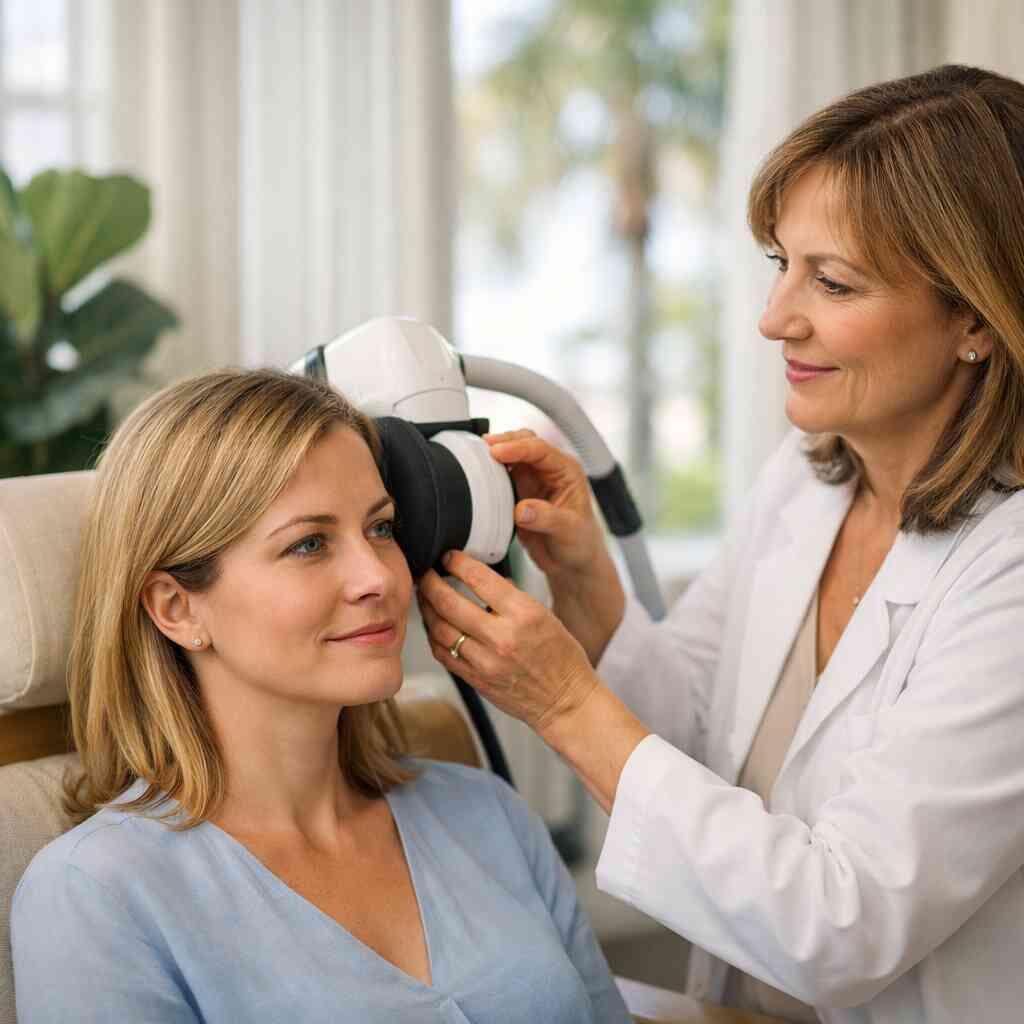
Does insurance cover TMS in Florida and what usually needs to be verified before care begins
The short answer is: sometimes, but it depends. Does insurance cover TMS in Florida? Many plans do for depression when medical criteria are met, but the exact requirements vary. Most clinics verify diagnosis history, prior medication trials, and sometimes psychotherapy attempts before submitting authorization. That is why TMS insurance coverage Florida is not a one-size-fits-all answer. A benefits check should happen early, not after weeks of guessing. If you want a guide built for this exact question, How TMS Treatment Florida Explains Insurance Coverage in 2026 can help you understand what usually gets reviewed. ### What shapes TMS cost Florida patients may see and why exact pricing should be confirmed directly
TMS cost Florida patients see can vary by diagnosis, number of sessions, device type, and insurance status. There is no honest way to give you a universal price without context. Some clinics offer financing discussions. Some verify coverage before quoting anything. That is the responsible way to do it.
Exact pricing should always come directly from the clinic because self-pay, copay, and authorization scenarios differ. If you are comparing options, Guide to TMS Cost Florida and Payment Options in South Florida is a better source than a random estimate. You deserve numbers that are real, not decorative.
How TMS insurance coverage Florida can differ by plan and why outpatient rules matter at AHCA regulated clinics
Insurance rules change by plan type. Some require prior medication failures. Some ask for specific documentation. Some cover only certain diagnoses. That complexity is why outpatient clinics in Florida must keep tight records and clear workflows. It also matters that clinics stay aligned with AHCA expectations for outpatient care and with standard medical documentation.
This is where a quality Florida behavioral health clinic earns trust. It does not bury you in codes. It explains them. It also knows when to coordinate with your therapist or psychiatrist. Good paperwork can save you weeks.
Where people look for a TMS clinic Miami, TMS Fort Lauderdale, TMS West Palm Beach, TMS Orlando, and TMS Tampa when access and commute time matter
Access shapes follow-through. That is especially true for TMS, because treatment works best when visits stay consistent. People often search for a TMS clinic Miami, TMS Fort Lauderdale, TMS West Palm Beach, TMS Orlando, or TMS Tampa based on commute reality, not just diagnosis. That is normal.
If you want a directory view, Area We Serve for TMS Treatment and Therapy makes it easier to compare geography. For more local detail, TMS Treatment in Miami-Dade County, TMS Treatment in Broward County, and TMS Treatment in Palm Beach County can help if you live nearby.
Why TMS near me Florida searches often point to South Florida, Central Florida, and seasonal resident patterns
People search TMS near me Florida for all kinds of reasons. Some need convenience. Some need privacy. Some split time between states and want a clinic that can plan around seasonal travel. In South Florida, especially around Aventura, Coral Gables, Boca Raton, and Delray Beach, patients often care about access and parking as much as treatment details.
What we see in Florida is simple. If logistics feel manageable, follow-through improves. That is why location pages and realistic scheduling matter. If Orlando or Tampa fits your drive better, it is better to know that early than to abandon care later.
What a serious next move looks like when anxiety and OCD are still stealing focus
A serious next move is not dramatic. It is informed. It asks the right questions, compares options honestly, and avoids pretending every symptom comes from the same root. Anxiety, OCD, trauma, mood shifts, and substance use can overlap in messy ways.
How to tell whether TMS for anxiety or TMS OCD therapy fits better than another medication change
Sometimes the answer is obvious. Other times it is not. TMS for anxiety may fit best when worry, tension, and panic dominate. TMS OCD therapy may fit better when intrusive thoughts and rituals keep looping despite exposure work or medication. A careful assessment should sort that out.
If depression is part of the picture, TMS treatment for medication resistant depression may also matter. The point is matching symptoms to the right treatment map. Not every rough week needs a new prescription. Sometimes it needs a different tool.
When to ask about TMS for PTSD Florida, TMS for bipolar depression, or TMS for teen depression if symptoms overlap
Some patients arrive with more than one concern. That is common. You might hear about TMS for PTSD Florida when trauma symptoms and hyperarousal sit beside anxiety. TMS for bipolar depression may come up when depression is real, but mood history requires extra caution. TMS for teen depression can be discussed for older adolescents, depending on clinical fit and provider judgment. TMS for young adults also comes up often, especially when school, work, and symptoms collide.
This is exactly where measured care matters. Symptom overlap is not a nuisance. It is the case. A serious clinic will review history before recommending anything.
How TMS addiction recovery, TMS for substance use disorder, and TMS for smoking cessation fit into dual diagnosis treatment Florida
Research on rTMS and cravings is growing, including work from places like the Medical University of South Carolina. That does not mean TMS is a magic answer for addiction. It means the field is paying attention to brain circuits involved in craving, cue reactivity, and self-control. TMS addiction recovery, TMS for substance use disorder, and TMS for smoking cessation may be considered in some settings, especially with dual diagnosis treatment Florida patients who also have mood symptoms.
SAMHSA guidance for substance use disorders still matters here. So does coordination with counseling and medical care. A clinic should not oversell this. It should explain where TMS fits and where it does not. If addiction is part of your story, TMS for Substance Use Disorder Florida deserves a real conversation.
Why some people compare magnetic brain therapy with alternative depression treatment, TMS and EMDR combination, or other Florida behavioral health options
People often compare magnetic brain therapy with alternative depression treatment because they want something beyond standard medication cycling. Others ask about TMS and EMDR combination because they have trauma plus mood symptoms. Those comparisons are fair. They are also personal. The right choice depends on what hurts most, what has already failed, and what your clinician can realistically support.
A good clinic will never force a shiny answer. It will explain options and limits. That is what Florida behavioral health should feel like: direct, careful, and human. If you want to review the bigger picture, About TMS Treatment Florida should help you see who is making the clinical decisions.
What to ask from the best TMS clinic Florida so the plan feels grounded, local, and worth moving forward with
Ask clear questions. Ask about screening. Ask how progress is measured. Ask how side effects are handled. Ask whether the team reviews response with scales like the MADRS or PHQ-9. Ask what happens if your symptoms do not improve as expected. Real expertise welcomes those questions.
If you are comparing clinics, look for transparency and calm, not pressure. That is often what separates the best TMS clinic Florida patients recommend from the rest. You can also review Frequently asked quenstions about TMS before you call. You do not have to figure this out alone, and you do not have to figure it all out today. Start with one phone call and one honest benefits check.
Frequently Asked Questions
Is TMS worth trying for anxiety and OCD?
It can be, especially when symptoms have stayed active after medication and therapy. TMS is not a cure-all, and it is not the same for every diagnosis. Still, many people like that it is non-invasive and that it focuses on brain circuits linked to looping thoughts. A clinician should review your history before deciding if it fits.
How long does a TMS treatment course usually take?
Most treatment plans run over several weeks with frequent visits. The exact schedule depends on diagnosis, device type, and how you respond. Some patients continue with maintenance therapy after the main course if symptoms begin to drift back. Your clinic should explain the plan in plain language before you start.
What does TMS feel like during a session?
Most people feel tapping or clicking on the scalp. Some find it easy to tolerate, while others need a few sessions to get used to the sound and sensation. You stay awake and can usually resume normal activities afterward. If discomfort shows up, the team should adjust within safe limits.
Does insurance cover TMS in Florida for OCD or anxiety?
Coverage depends on the plan and the diagnosis. Many insurers are more likely to cover TMS for depression than for anxiety or OCD, though each case is different. Clinics usually verify benefits and prior authorization requirements before treatment starts. That saves time and lowers surprises.
What are the most common TMS side effects?
The most common side effects are mild scalp discomfort, headache, or brief fatigue. Serious side effects are uncommon, but screening matters. A good clinic will review seizure risk, medications, and neurological history before treatment. If anything feels off during care, you should tell the team right away.
Can TMS be combined with therapy or other treatments?
Yes, often it can. Many patients continue psychotherapy, medication management, or other behavioral health support while doing TMS. In some cases, clinicians may discuss combinations like TMS and EMDR, depending on trauma history and symptom pattern. The right plan depends on your goals and your full clinical picture.