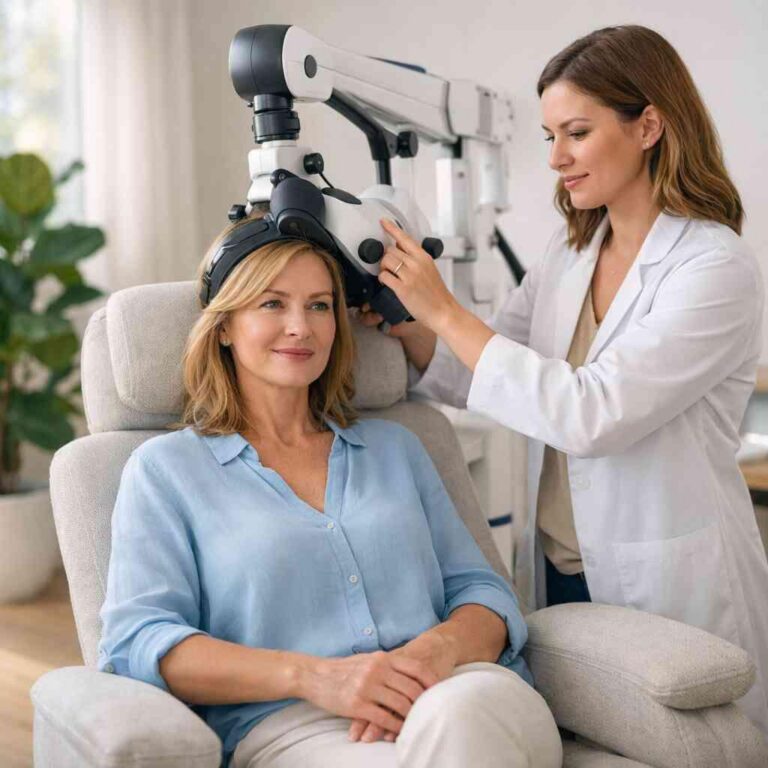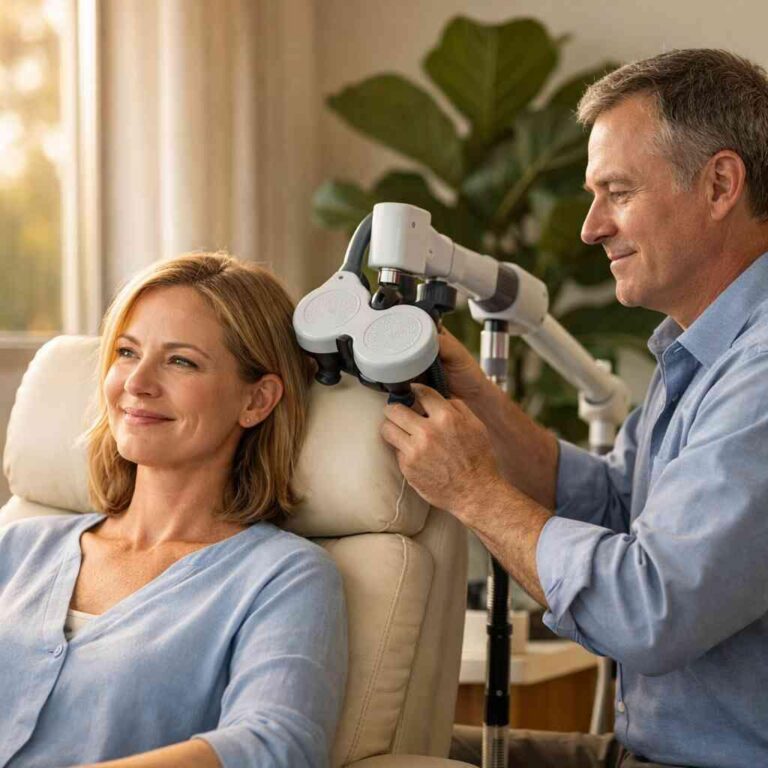
TMS treatment Florida can help with both PTSD-related symptoms and bipolar depression, but it is not the same plan for each condition. The safest path depends on which symptoms are driving your life right now, because transcranial magnetic stimulation therapy targets brain circuits differently in trauma, depression, and mood instability.
If you are reading this while exhausted, stuck, or unsure whether your symptoms fit one diagnosis or two, that uncertainty is real. This is genuinely confusing for most people, and we hear it often from patients who have already tried therapy, sleep changes, or medication adjustments that did not last.
Key Takeaways
- TMS for PTSD Florida and TMS for bipolar depression are not interchangeable. PTSD care often focuses on trauma-linked hyperarousal and intrusive symptoms, while bipolar depression care focuses on depressive episodes without pushing mood too high.
- TMS is a non-invasive brain stimulation option. It does not require anesthesia or daily sedation, and many people choose it after failed medications or unwanted side effects.
- The evaluation matters more than the chair time. A good Florida clinic should review diagnosis, medication history, sleep, substance use, and current mood stability before treatment starts.
- Safety planning is essential. TMS side effects safety, maintenance therapy, and bipolar screening should be discussed before the first session.
- Florida patients should ask about insurance, location, and support. Coverage, access, and follow-up can shape the plan as much as the device itself.
When PTSD and bipolar symptoms both feel louder than the room can hold
PTSD and bipolar depression can look similar on the surface, but they usually need different treatment goals. Trauma can drive insomnia, startle response, irritability, and panic. Bipolar depression can bring heavy fatigue, slowed thinking, hopelessness, and loss of interest. TMS treatment Florida may help either picture, but only after a careful review of which symptoms are active.
Why trauma spikes, sleep loss, and mood swings can blur into one hard-to-read picture
PTSD can leave your nervous system stuck in high alert. Bipolar disorder can swing between depression, agitation, and periods of increased energy or reduced sleep. When those overlap, you may feel tense, wired, flat, and tired all at once.
That is why a simple label is not enough. A clinic should ask about sleep timing, panic episodes, past antidepressant reactions, and any history of mania or hypomania. One patient we spoke with from the Boca Raton area thought their “depression” was worsening, but the deeper issue was a trauma cycle that spiked every time sleep dropped below five hours. The treatment plan had to reflect that pattern, not just the headline diagnosis.
What Florida patients often ask before choosing TMS treatment Florida for PTSD or bipolar depression
Most people want the same clear answers: how does TMS work, will it fit my diagnosis, and can I keep taking my medications? They also ask about TMS depression treatment Florida, TMS for anxiety, and whether insurance covers a referral after failed medication trials. Those are reasonable questions, especially if you have already spent months trying to feel like yourself again.
For general education, the National Institute of Mental Health has solid plain-language material on mood and trauma disorders in its mental health topics, and the CDC mental health resources page is useful for broad public health context. Neither replaces a clinical evaluation, but both can help you sort out the basics before you talk to a TMS psychiatrist Florida.
Why the same transcranial magnetic stimulation therapy plan may not fit both conditions the same way
PTSD and bipolar depression do not respond to the same target, pace, or clinical goal. PTSD care may focus on calming hyperactive threat circuits, while bipolar depression care must avoid triggering mood elevation. That means the provider may adjust coil placement, frequency, and session strategy based on your history and current stability.
Here is the part most people miss: the best TMS plan is diagnosis-specific, not template-driven. A patient with bipolar depression and a history of antidepressant activation needs a different safety conversation than someone whose main issue is trauma-related insomnia. In Florida, where many people split time between seasonal homes and local care, that flexibility matters even more.
Clinical focusPTSD-related symptomsBipolar depressionMain goalReduce hyperarousal, intrusions, and reactivityImprove depressed mood without increasing mania riskCommon concernSleep disruption and startle responseMood switching or mixed featuresTreatment fitMay pair well with trauma therapyNeeds careful screening and monitoringFollow-upSymptom tracking and sleep reviewMood charting and medication coordinationWhat TMS actually changes in the brain when depression, trauma, and mood instability keep looping
TMS changes activity in brain networks that regulate mood, attention, and emotional control. Repetitive TMS and deep TMS therapy use magnetic pulses to influence those circuits without surgery, sedation, or the fog that can come with medication changes. For many people, that makes TMS a practical alternative depression treatment or non-drug depression treatment after other options stall.
How repetitive TMS and deep TMS therapy work without medication fog or daily sedation
Repetitive TMS sends focused magnetic pulses to specific areas of the cortex. Deep TMS therapy reaches a broader network, which some clinics use when symptoms are more complex or when standard approaches have not been enough. Neither approach requires anesthesia, and most people return to normal activities right after a session.
That difference matters if you are juggling work, school, or family care in places like Miami, Fort Lauderdale, West Palm Beach, Orlando, or Tampa. A person can often schedule treatment, drive home, and keep the rest of the day relatively intact. That practical piece is one reason people search for TMS near me Florida instead of looking only at medication changes.
Clinical evidence for depression has grown over time. A widely cited Stanford study by Carpenter and colleagues helped support the broader clinical case for TMS in treatment-resistant depression, and device clearances for systems such as NeuroStar and BrainsWay reflect the field’s move into mainstream care. For a deeper overview of the method, this guide to non-invasive brain stimulation explains the basic idea in plain language.
Why TMS for PTSD Florida and TMS for bipolar depression rely on different targets, timelines, and symptom goals
PTSD treatment is often symptom-driven. The question may be whether intrusive memories, hypervigilance, and emotional overreactivity become less intense. Bipolar depression treatment is more guarded. The question is whether mood lifts without triggering agitation, insomnia, or a manic shift.
That is why one person might need a longer screening phase before starting TMS for bipolar depression than someone pursuing trauma-focused care. A good clinic will review prior antidepressant responses, manic history, and current sleep stability. If you want a direct look at how the clinic frames bipolar care, their bipolar depression treatment page offers a focused overview.
What safety conversations should include with TMS side effects safety, TMS maintenance therapy, and TMS after failed medications
A responsible TMS visit should cover headaches, scalp discomfort, fatigue, and the rare but important seizure risk. It should also address medication history, because TMS after failed medications is often the reason people come in, but medications still need review during treatment. If you have bipolar disorder, the team should ask specifically about prior hypomania or mania.
Ask these questions before treatment starts:
- How will you confirm the diagnosis?
- What symptoms will you track, and how often?
- What happens if sleep worsens during treatment?
- Is maintenance therapy likely to be discussed later?
- How will you coordinate with my current prescriber?
The TMS therapy success rate and TMS long-term results vary by diagnosis, symptom pattern, and follow-through. For that reason, it is better to ask for outcome tracking with tools like the PHQ-9 or MADRS than to rely on a vague promise. The Clinical TMS Society consensus review is a strong professional reference if you want to see how experts frame appropriate use.
A Florida patient in Delray Beach once came in after two antidepressants made them feel jittery and restless. The actual issue turned out to be bipolar depression with mixed features. That history changed the plan immediately, because the clinic needed to protect mood stability before thinking about symptom reduction.
If addiction or trauma is also part of the picture, the conversation gets broader. Research on rTMS and cravings is growing, including work discussed in addiction programs at places such as the Medical University of South Carolina, and this matters for dual diagnosis treatment Florida. For substance use questions, the SAMHSA National Helpline is a solid support resource, especially if you are dealing with TMS addiction recovery, TMS for substance use disorder, or alcohol addiction brain stimulation alongside mood symptoms.
How TMS Treatment Florida compares for PTSD and bipolar in real care decisions
The biggest difference is not the machine. It is the clinical decision-making around the machine. PTSD treatment often centers on reducing threat sensitivity and improving daily function, while bipolar depression treatment must protect against mood destabilization. If you are comparing a Florida mental health clinic or a luxury TMS center, the quality of the evaluation should matter more than the décor.
What a good Florida evaluation should cover before treatment starts
A careful intake should look at: 
- Current diagnosis and symptom pattern
- Past antidepressant response
- Any history of mania, hypomania, or mixed features
- Sleep quality and circadian rhythm
- Substance use, including nicotine, alcohol, or cannabis
- Current therapy, especially if you are considering TMS and EMDR combination care
- Insurance questions, referral needs, and visit frequency
That kind of review is especially important if you are searching for a TMS clinic Miami, TMS Fort Lauderdale, TMS West Palm Beach, TMS South Florida, TMS Orlando, or TMS Tampa. A clinic should be able to explain the process without pressure and help you understand whether the fit is truly right.
How insurance screening, cost questions, and TMS insurance coverage Florida can shape the plan before the chair ever hums
Coverage can change the timing, site choice, and paperwork. Many people ask does insurance cover TMS in Florida or what TMS cost Florida might look like if coverage is partial. Those answers depend on diagnosis, prior medication history, plan rules, and medical necessity documentation, so it helps to verify benefits before scheduling a full series.
If you are comparing options, use the insurance and costs guide to prepare your questions. Florida’s insurance landscape can be uneven, especially for seasonal residents and people crossing county lines for care. If you live near Aventura, Coral Gables, Boca Raton, Winter Park, or along the Palm Beach County corridor, location convenience can matter as much as clinical fit. For local access, see the locations page.
When TMS and EMDR combination care, anxiety treatment, OCD treatment, and addiction rehab Florida may point to a different path
Sometimes TMS is the right center of care. Sometimes it should sit beside other treatment. If PTSD symptoms dominate, trauma therapy such as EMDR may stay essential. If OCD is active, a clinic may need to discuss TMS OCD therapy or other targeted options. If anxiety is the main issue, a different protocol may fit better, as outlined on the anxiety TMS page.
For people with substance use concerns, pairing mental health care with recovery support can be critical. The best path may include addiction TMS treatment, outpatient rehab, or a formal dual-diagnosis plan. That is especially true if cravings, alcohol use, or smoking cessation are tied to mood swings or trauma triggers. The goal is not to force TMS into every situation. The goal is to match the treatment to the problem.
If you want a team that can help you sort through that mix with confidentiality and steady guidance, TMS Treatment Florida is one reasonable place to start. Their role is to help people understand non-invasive brain stimulation and connect with care that fits the diagnosis, not to oversell one answer for every person. If you are looking for TMS reviews Florida, it can also help you compare patient experience and clinic fit.
Frequently Asked Questions
Is TMS better for PTSD or bipolar depression?
It depends on the symptom pattern. TMS may help both, but PTSD and bipolar depression usually need different screening and treatment goals. PTSD care often focuses on hyperarousal and intrusive symptoms, while bipolar depression care must avoid mood elevation. A clinic should evaluate diagnosis, sleep, medications, and any history of mania before deciding.
Can TMS make bipolar symptoms worse?
It can if the diagnosis is incomplete or if mood stability is not reviewed carefully. That is why bipolar screening matters before treatment. A responsible clinic checks for past mania, hypomania, and mixed symptoms, then monitors mood during the course. This reduces the chance of treating depression while missing a bipolar pattern.
How does TMS work for trauma-related symptoms?
TMS uses magnetic pulses to influence brain circuits involved in mood and regulation. For trauma-related symptoms, the aim is often to reduce overactive threat responses and improve emotional control. It is non-invasive and does not involve sedation, which is why some people prefer it over medication changes when trauma symptoms keep looping.
Does insurance cover TMS in Florida?
Sometimes, but it depends on your plan, diagnosis, and prior treatment history. Most insurers want documentation of medication resistance and medical necessity. It is smart to verify benefits before scheduling. If coverage is unclear, ask for a benefits review and a written estimate so you can compare options without surprises.
What are the common side effects of TMS?
Common side effects include scalp discomfort, headache, facial twitching, or mild fatigue. Most are short-lived. Serious risks are uncommon but still need to be discussed, especially if you have a seizure history or unstable medical conditions. Good clinics review these issues upfront and check in regularly during treatment.
Can TMS be combined with therapy like EMDR?
Yes, it often can. For PTSD, TMS and EMDR combination care may make sense when trauma symptoms and mood symptoms both need attention. The two treatments do different jobs. EMDR works through trauma processing, while TMS targets brain circuitry tied to mood and regulation. A clinician can help decide the timing and order.
Where can I get help if I am also dealing with substance use?
If substance use is part of the picture, ask for a dual-diagnosis evaluation. TMS may be one piece of care, but recovery support matters too. You can also contact the SAMHSA helpline for confidential help finding services. That is especially useful if cravings, alcohol use, or smoking are making mood symptoms harder to manage.
If you want to talk through your options without pressure, TMS Treatment Florida can help you compare PTSD and bipolar care and see whether a Florida TMS clinic fits your needs. Call the 24/7 confidential helpline at +18886883036 when you are ready to talk through the next practical step.