TMS treatment in Florida usually starts with a careful consultation, a brief in-office procedure, and a treatment plan built around your symptoms, schedule, and safety needs. Most people find the process more structured than scary, and the biggest surprise is often how ordinary the visits feel once the team explains each step.
Key Takeaways
- TMS treatment Florida is a non-invasive brain stimulation option that uses magnetic pulses during outpatient visits.
- A first visit usually includes a review of medication history, mood symptoms, and safety screening before treatment starts.
- Mild scalp tapping or brief discomfort can happen, but most people tolerate sessions without major disruption.
- Consistent visits matter because TMS depression treatment Florida and TMS for anxiety work best as a course, not a one-time session.
- Progress is often tracked with tools like PHQ-9 or MADRS, and the plan may be adjusted if symptoms change.
-
The hum of the machine and the moment it stops feeling mysterious
The first TMS visit is usually a calm intake, not a dramatic event. You can expect questions about your symptoms, past treatments, current medications, and safety history before anyone starts. That first conversation helps the team decide whether transcranial magnetic stimulation therapy fits your needs and whether you are a good candidate for outpatient care.
What the first TMS consultation in Florida usually asks before anything starts
If you are feeling worn out by medications that helped for a while and then stopped, this part can feel relieving. We hear that a lot. A good TMS consultation Florida should feel practical and respectful, with clear questions about depression, anxiety, OCD, trauma symptoms, sleep, and substance use concerns. If you are comparing options like TMS Treatments for Depression or TMS Treatment for Anxiety Disorders, this is where the conversation starts to get specific.
A Florida clinic may also ask about prior therapies, because TMS after failed medications is one of the most common reasons people seek care. If you are looking into FDA approved depression treatment after several medicines have not been enough, the consultation helps map out whether the next step should be standard repetitive TMS or a deeper coil placement approach. The goal is not to rush you. It is to make the plan fit.
Why your provider checks medication history, mood scores, and safety details before the chair reclines
Here is the part most people miss: the screening is not red tape. It protects you. A team should review seizure history, implanted devices, prior head injury, and current prescriptions because TMS side effects safety depends on good screening and the right protocol. For depression, the clinic may use a baseline PHQ-9 or MADRS score so there is a clear starting point later.
That structure matters for medication resistant depression and for conditions like TMS for PTSD Florida, TMS OCD therapy, or TMS for bipolar depression when a psychiatrist is weighing the safest route. The Clinical TMS Society notes that standardized evaluation supports better treatment planning, and the APA’s practice guidance on depression emphasizes careful diagnosis before neuromodulation. If you want a deeper look at how the treatment works, How Does TMS Therapy in Florida Help With Medication Resistant Depression is a useful place to start.
-
The map of a session from check-in to coil placement
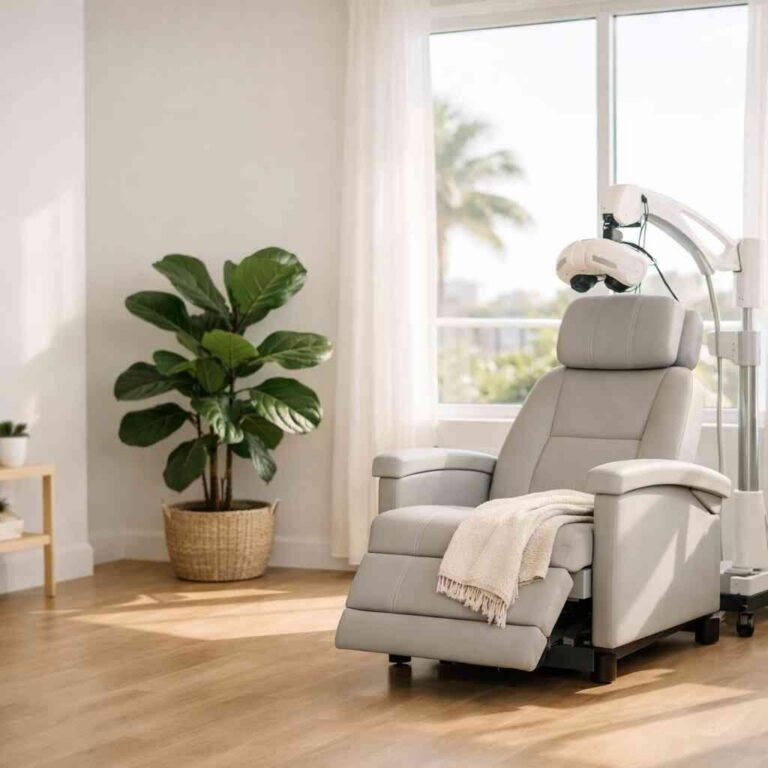
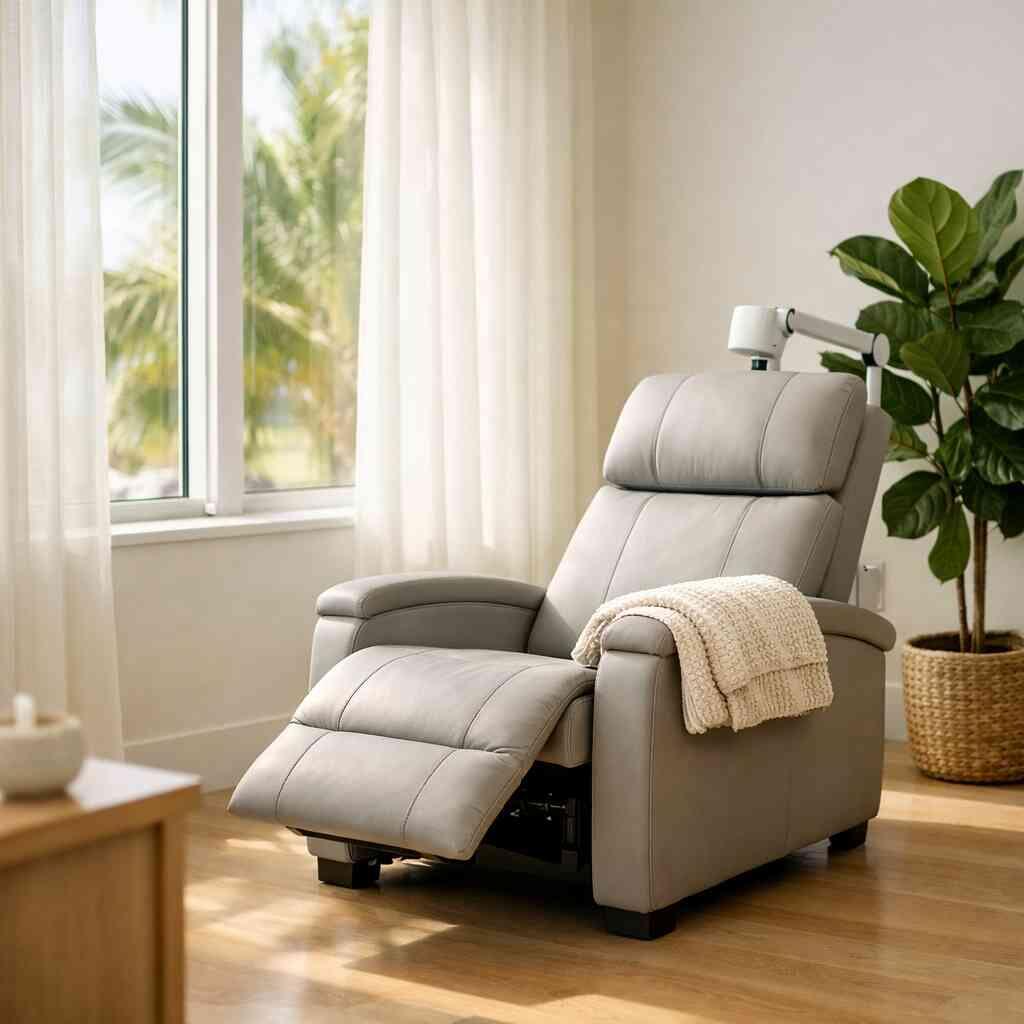
A TMS session is usually short, quiet, and repetitive by design. You check in, settle into a chair, and the team places the coil at a precise spot on your scalp. The room feels clinical but not cold, and most people are surprised by how little downtime the appointment requires.
What the room feels like when transcranial magnetic stimulation therapy begins
The first session often feels strange for about two minutes, then ordinary. You may hear a clicking sound and feel a tapping sensation on the scalp, which is part of how magnetic brain therapy works. The clinician stays nearby, checks your comfort, and makes small adjustments as needed. If you have been nervous about the unknown, that steady pace can help.
One client from the Boca Raton area described the session as “less intense than the waiting.” That is a common theme. People often spend more energy worrying about the appointment than the appointment itself. If your interest is non-drug depression treatment or a modern alternative depression treatment, the in-room experience is usually more manageable than expected.
How the team finds the right spot for repetitive TMS without making the visit feel rushed
The team uses measurements and device guidance to find the target area. For depression, that often means the left dorsolateral prefrontal cortex; for OCD or anxiety, the target may differ. The exact setup can vary between deep TMS therapy and standard repetitive TMS, which is why some clinics explain the differences in advance. If you want to compare protocols, What to Expect During Deep TMS Therapy at a Florida Clinic explains the basics well.
This is also where Florida location matters. A TMS clinic Miami may schedule differently than a TMS Fort Lauderdale or TMS West Palm Beach clinic because traffic and commute times shape real life. If you are searching TMS near me Florida, many patients in Aventura, Coral Gables, Delray Beach, or Winter Park ask for appointment blocks that fit work and school. A thoughtful clinic will try to help.
-
The strange normal of side effects that feel louder than the treatment
Most side effects during TMS are mild and brief, but they can still feel noticeable. The most common reports are scalp discomfort, a tapping sensation, or a mild headache after the session. These reactions usually fade quickly, and the team should tell you what is normal and what deserves a call.
What mild scalp discomfort or tapping sensations can feel like during TMS side effects safety
The sensation is not pain for most people, though it can be annoying at first. Some describe it as a quick drumbeat on one side of the head. That feeling often softens after the first few visits as your body gets used to the rhythm. With TMS therapy success rate, the real point is not to promise a result. It is to say many people tolerate the process well enough to complete a full course.
For people considering TMS for teen depression or TMS for young adults, transparency matters even more. If a clinic hand-waves side effects, that is a problem. A credible team should explain what to expect, how they manage discomfort, and when they would pause or adjust settings. If you want a broader overview of brain stimulation options, the Guide to Non Invasive Brain Stimulation for Anxiety in Florida is a helpful companion.
When a Florida patient should speak up about headaches, sleep changes, or anxiety during treatment
Speak up early if something feels off. Headaches that linger, increased anxiety, jaw tension, or sleep changes should be reported, especially if you already struggle with TMS for anxiety or mood swings. A good clinic will treat this as useful data, not a nuisance. That is part of safe outpatient mental health treatment.
A small note from the field: one patient in Palm Beach County kept saying the sessions felt “too loud.” The team lowered stimulation increments, coached breathing, and the visit became easier. That kind of adjustment is ordinary. It is also why Florida patients should feel comfortable asking questions instead of toughing it out in silence.
-
The rhythm your week takes on when TMS becomes part of routine
Consistency is one of the main reasons TMS gets scheduled the way it does. Most people come in several times a week for a defined course. That rhythm can feel demanding at first, but it is also what helps the treatment build momentum over time.
Why consistent visits matter for TMS depression treatment Florida and TMS for anxiety
The clearest research on depression comes from trials like the 2018 Stanford-led work by Carpenter and colleagues, which helped strengthen the evidence base for TMS in treatment-resistant depression. That does not mean every person responds the same way. It does mean the treatment has real clinical support, especially when paired with careful monitoring and realistic expectations. If depression is your main concern, TMS Treatments for Depression gives a straightforward overview. 
For TMS depression treatment Florida and TMS for anxiety, routine matters because the brain is being nudged over time, not shocked into change in one appointment. Some clinics discuss TMS maintenance therapy if symptoms return later or if a booster schedule seems wise. That planning is part of what makes treatment feel less like a gamble and more like a managed process.
How clinics in Miami, Orlando, Tampa, Fort Lauderdale, and West Palm Beach build schedules around real life
Florida clinics know people are juggling commutes, school pickups, seasonal travel, and work shifts. A TMS Orlando or TMS Tampa schedule may look different from a downtown Miami one, but the goal is the same: make attendance realistic. Some clinics offer early appointments or compact scheduling to support adherence.
Scheduling factorWhat it may look likeVisit frequencySeveral sessions per week during the active courseAppointment lengthOften a brief outpatient visitTravel planningAdjusted for I-95 traffic, bridge crossings, and work hoursSupport needsInsurance verification and reminder planningIf you are asking does insurance cover TMS in Florida, the answer depends on your plan, diagnosis, and prior treatment history. For details on coverage questions and TMS cost Florida, see How to Compare TMS Cost and Insurance Coverage in Florida. Florida’s insurance landscape can be uneven, so verification before treatment is smart, not pessimistic.
-
The quiet shift from hoping for relief to watching the plan get adjusted
TMS works best when progress is measured, not guessed at. Teams often track symptoms with PHQ-9 or MADRS scores and compare those numbers over time. If the response is slower than hoped, the protocol may be adjusted instead of abandoned too soon.
How teams track progress with PHQ-9 or MADRS scores and decide whether the protocol should change
This part feels ordinary from the outside, but it is crucial. A psychiatrist or supervising clinician may review mood changes, sleep, motivation, focus, and side effects after a set number of sessions. If scores improve, the plan may continue. If they stall, the settings, target, or treatment length may be revisited. That is standard practice in modern Florida behavioral health care.
For people exploring TMS OCD therapy, TMS for bipolar depression, or TMS addiction recovery, the same idea applies: monitor, measure, and adjust. Research on rTMS for cravings and substance use disorders, including work from centers such as the Medical University of South Carolina, continues to grow, and the SAMHSA TIP resources remain an important reference point for substance use care. If you want help understanding TMS for substance use disorder, Guide to TMS Treatment Florida for Substance Use Recovery can offer context.
What maintenance therapy and next-step planning can look like after the initial course of non invasive brain stimulation
After the main course ends, some people move to booster visits, while others transition to therapy, medication management, or combined care such as TMS and EMDR combination when trauma symptoms are also present. That next phase is not a failure. It is care planning. For some patients, especially those with chronic relapsing symptoms, the conversation turns to long-term support rather than a single fix.
If you are looking for a Florida mental health clinic that can explain options without pressure, TMS Treatment Florida is a solid place to start. The team can help you understand whether a local clinic, a luxury TMS center, or a more standard outpatient setting is the right fit for your needs. For more details, visit the TMS Treatment Florida homepage or Contact TMS. If you want direct guidance, call the 24/7 confidential helpline at +18886883036.
Frequently Asked Questions
What does a first TMS session feel like?
A first session usually feels like a quick tapping or clicking sensation on the scalp. The visit is outpatient, so you stay awake the entire time. Most people feel more nervous before the appointment than during it. The team should explain each step, check your comfort, and adjust the setup if needed. If you want to know more about logistics, FAQ resources can help.
Does TMS work for medication-resistant depression?
TMS has strong evidence for some people with medication-resistant depression, especially when prior medications have not been enough. Results vary, and no clinic should promise a specific outcome. What matters is careful screening, steady attendance, and tracking changes with tools like PHQ-9 or MADRS. The treatment is often considered when antidepressants have failed or caused side effects.
Are side effects from TMS usually serious?
Most side effects are mild. People most often report scalp discomfort, a brief headache, or sensitivity during early sessions. Serious side effects are uncommon, but screening matters because safety depends on medical history and the right protocol. If anything feels unusual, tell the clinic right away. Good care includes honest reporting, not pushing through discomfort in silence.
How long does a typical course of TMS take?
A typical course often lasts several weeks with repeated visits, though exact timing depends on the protocol and diagnosis. Some people attend sessions five days a week at first. The schedule may shift based on progress and tolerance. Clinics in South Florida often build hours around work and commuting needs so patients can stay consistent.
Does insurance cover TMS in Florida?
Sometimes, yes, but coverage depends on the plan, diagnosis, and prior treatment history. Florida patients often need documentation of failed medications and sometimes psychotherapy attempts before approval. It is smart to verify benefits before starting. A clinic that checks coverage early can save you time and stress.
Can TMS help with anxiety, OCD, or substance use concerns?
TMS is most established for depression, but it is also used in some settings for anxiety, OCD, and certain addiction-related symptoms. Evidence is still growing, especially for cravings and substance use disorders. The best path depends on your diagnosis, history, and whether you need single-issue care or dual diagnosis treatment Florida support.