When family support matters more than the glossy brochure
Why a Miami search feels different when depression, anxiety, or OCD is already wearing everyone down
If you are searching for a TMS clinic Miami because home feels strained, that pressure is real. Depression can flatten routines, anxiety can keep everyone on edge, and OCD can turn ordinary decisions into long debates. Families usually start this search after months of fatigue, side effects, or stalled progress. That is why choosing a TMS clinic in Miami for family support should feel calmer than the problem that brought you here. The right clinic understands that treatment affects everyone under the same roof.
In our work, we hear the same thing often: the patient is exhausted, and the caregiver is exhausted too. A spouse may be tracking missed work, canceled plans, and medication changes. A parent may be wondering how to help without pushing too hard. That emotional load matters. It shapes how you evaluate transcranial magnetic stimulation therapy and the people who provide it.
Here is the part most families miss. A polished brochure can hide a weak support process. You need a clinic that explains TMS treatment Florida in plain language, answers follow-up questions without rushing, and respects the stress already in the room. A search for TMS near me Florida should lead to more than convenience. It should lead to trust.
What families usually miss when they compare a TMS clinic Miami by price alone
Price gets attention fast. That is understandable. But TMS cost Florida is only one piece of the decision. If a clinic does not help with scheduling, insurance checks, medication coordination, or caregiver communication, the “cheaper” option can become the more expensive one in time and stress. Families often forget to ask how the office handles paperwork before the first visit.
You may also want to ask how the clinic explains TMS insurance coverage Florida and whether they help verify benefits. Some offices do that well. Some leave patients guessing. If you are already overwhelmed, guessing is not a plan. It is a delay.
One family we spoke with had already called three places in Broward and Miami-Dade. The lowest quote looked appealing until they learned the office could not clearly explain authorization steps. They chose the clinic that answered the insurance question in ten minutes, not ten days. That kind of clarity matters when everyone is tired.
The signs that a clinic understands caregiver support and not just appointment slots
A clinic that truly supports families usually does a few simple things well. It explains the schedule without jargon. It asks who helps at home. It gives a name and number for questions. It also talks about consent, privacy, and how much family involvement feels appropriate.
Look for these signs:
- The team explains next steps without pressure.
- Staff can talk through logistics for work, school, and caregiving.
- The office gives realistic expectations about visit flow.
- Someone discusses how family members can support treatment without taking over.
- The clinic treats questions as part of care, not as an interruption.
That last point is huge. A respectful office makes room for uncertainty. It does not pretend the decision is easy. It helps you move through it.
What separates a real TMS clinic from a place that just advertises magnetic brain therapy
How does TMS work when medication resistant depression has not improved with standard care
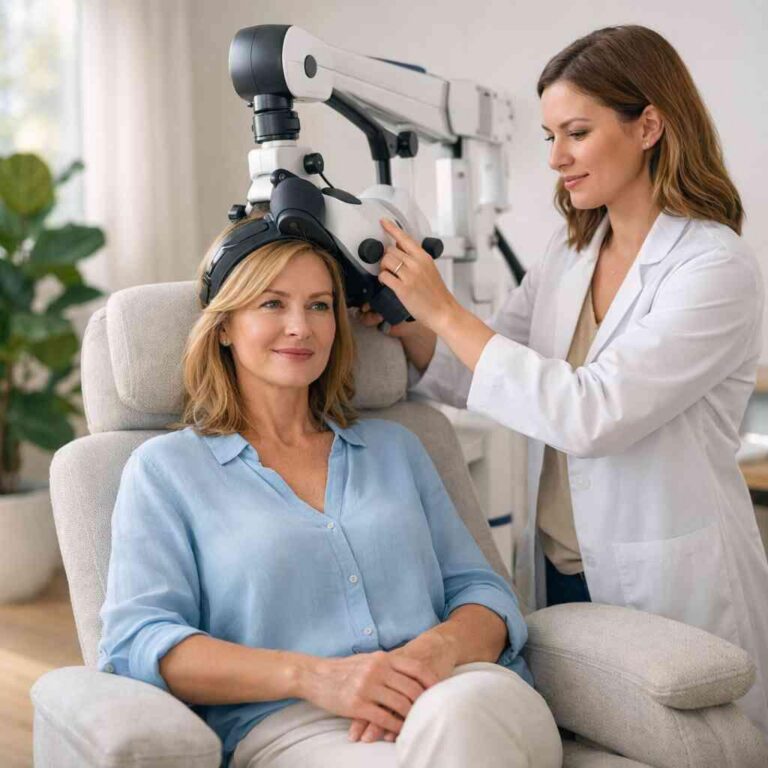
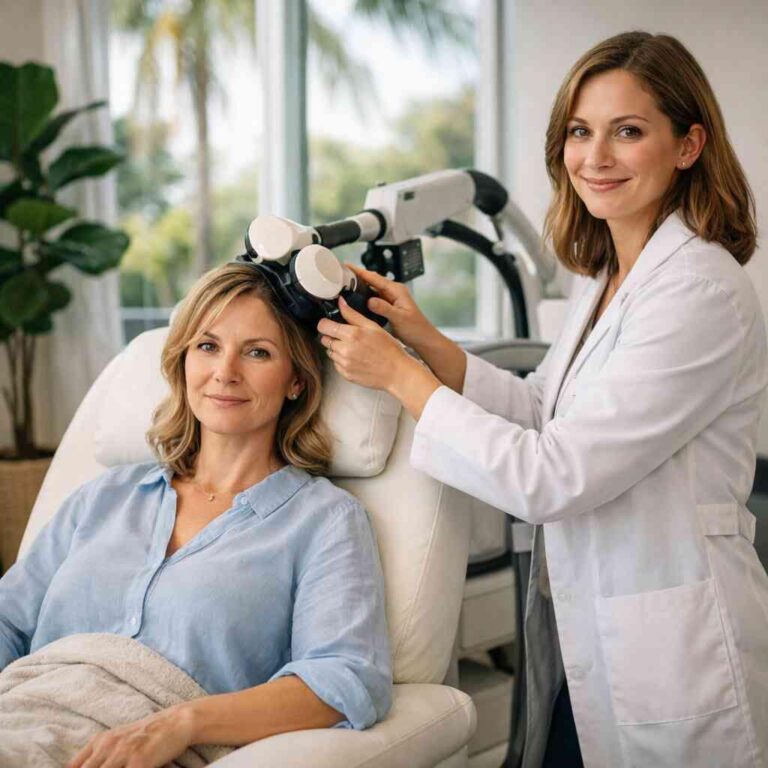
How does TMS work? In plain terms, it uses focused magnetic pulses to stimulate parts of the brain involved in mood regulation. It is a form of non-invasive brain stimulation, which means there is no surgery and no anesthesia. Most people stay awake and go home after the session. For medication resistant depression, that matters because many patients have already tried several standard options without enough relief.
This is where careful evaluation matters. The best clinics do not oversell FDA approved depression treatment as magic. They explain it as a medical option with a growing evidence base. The 2018 Stanford study by Carpenter and colleagues, along with broader transcranial magnetic stimulation research, helped strengthen the field’s credibility. So did ongoing guidance from the Clinical TMS Society and other professional groups. Still, no ethical clinic should promise a specific result.
If you are comparing TMS depression treatment Florida options, ask how the clinic defines candidacy. Ask what happened after failed medications. Ask how they measure progress. A good answer will sound clinical, steady, and humane.
Why a strong TMS psychiatrist Florida team should explain evaluation tools like PHQ-9 and MADRS in plain language
A thoughtful TMS psychiatrist Florida team should not hide behind acronyms. They should explain why tools like the PHQ-9 and MADRS matter. These tools help measure symptoms before, during, and after treatment. They do not replace your lived experience, but they give structure to the process. That structure helps families see changes more clearly.
If a clinic cannot explain how it tracks progress, pause there. Ask how often they score symptoms. Ask who reviews the numbers. Ask what happens if scores do not improve as expected. These are not annoying questions. They are the backbone of responsible care.
The same standard should apply to TMS therapy success rate conversations. A trustworthy team will avoid blanket claims. They may discuss general research trends, but they will also say that each person’s course differs. That honesty is a good sign. It means the clinic respects both science and uncertainty.
What to look for in TMS depression treatment Florida, TMS for anxiety, and TMS OCD therapy without getting lost in jargon
A clinic serving Florida mental health clinic patients should be able to discuss more than depression. Many people ask about TMS for anxiety and TMS OCD therapy because symptoms overlap. Others ask about TMS for PTSD Florida or TMS for bipolar depression. The important part is not the label itself. It is whether the clinic explains what evidence exists, what remains exploratory, and how treatment fits into the larger care plan.
You want clear distinctions. For example, TMS after failed medications is a common use case. That does not mean every diagnosis responds the same way. A clinic should explain when it is building on established practice versus when it is working from a smaller evidence base. That is especially important in Florida behavioral health, where many clinics market broad services without much detail.
TMS for anxiety and TMS OCD therapy should also be discussed carefully. Ask what protocols they use, how they measure response, and whether they coordinate with psychotherapy. If they can explain those pieces in ordinary language, you are in better hands.
When deep TMS therapy or repetitive TMS may come up in the conversation and why that matters
You may hear deep TMS therapy and repetitive TMS in the same conversation. They are related, but not identical. Repetitive TMS refers to the repeated magnetic pulses used in treatment. Deep TMS therapy uses a different coil design and may target deeper brain regions. A clinic should explain why it recommends one over the other, if it does.
This is where a comparison table helps.
Topic|Why it matters|What to ask Repetitive TMS|Common treatment framework|What protocol do you use? Deep TMS therapy|Different coil and targeting approach|Why choose this for my symptoms? Medication review|Safety and coordination|How do you handle current prescriptions? Outcome tracking|Shows progress over time|How often do you score PHQ-9 or MADRS?
If the answer sounds rushed, keep looking. A strong clinic does not need to impress you with buzzwords. It needs to earn your confidence.
The family checklist that protects your time, trust, and treatment plan
How to ask about TMS insurance coverage Florida and whether the office helps verify benefits before the first visit
Insurance can feel like a second diagnosis. That is especially true in Florida, where plan rules, authorizations, and network details can vary. Before you book, ask directly: does the office help verify benefits, and do they explain what your plan may cover? If they cannot answer clearly, that is useful information.
You should also ask whether the clinic has experience with does insurance cover TMS in Florida questions for your specific plan type. Some offices are excellent at this. Others treat it as your problem. It should not be your problem alone. A support-focused clinic understands that benefit checks reduce stress before treatment even starts.
If you want a deeper look at cost and coverage questions, our insurance and costs guide explains the process in more detail. That kind of transparency helps families move forward with fewer surprises.
Why TMS side effects safety and medication review should feel calm, clear, and specific
Safety conversations should feel steady, not scary. TMS side effects safety is a legitimate question, and a good clinic welcomes it. Common side effects can include scalp discomfort or a headache. Serious complications are uncommon, but every responsible office should discuss screening and monitoring. They should also review seizure risk factors and current medications before starting.
This is also where magnetic brain therapy should be explained with care. The term sounds broad, but the real question is whether the clinic follows a safe protocol and adapts it to you. If they gloss over medication review, that is a red flag. If they explain what they are checking and why, that is reassuring.
For a more detailed breakdown, see TMS side effects and safety in Florida. Good safety information should lower your blood pressure, not raise it.
What outpatient logistics should look like for busy families coming from Miami, Fort Lauderdale, West Palm Beach, South Florida, Orlando, or Tampa
Outpatient care should fit real life. Families across Miami, Fort Lauderdale, West Palm Beach, South Florida, Orlando, and Tampa often need visits that do not blow up the school run or the workday. Ask how long each session takes, where parking is, and how quickly the office can help with rescheduling. A practical clinic thinks about those details before you have to ask. This matters even more for seasonal residents and families splitting time between regions. We see that pattern across Florida. People want consistency without long drives. If a clinic serves multiple regions well, it should be able to explain access from Miami-Dade, Broward, Palm Beach, and Orange County with real clarity. Our location page can help you map that out. The best offices make the process feel manageable. They do not pretend life pauses for treatment. They work around life. 
How to think about TMS cost Florida without letting one number hide the real value of patient-centered care
Cost matters. Of course it does. But a single price quote rarely tells the whole story. You need to know what is included, how many visits may be recommended, and whether support services are built in. You also need to know whether the clinic explains TMS cost Florida in a way that helps you compare apples to apples.
Ask for a written breakdown if possible. Ask whether there are separate fees for consultation, mapping, or follow-up. Ask whether the clinic helps with TMS cost in Florida and coverage details. That kind of transparency helps you judge value, not just sticker price.
TMS reviews Florida can help, but reviews should never be the only tool. Look for comments about communication, not just convenience. A clinic with strong patient-centered care often earns trust in the small moments, not the flashy ones.
Why family involvement, consent, and communication style matter for teen depression, young adults, and caregiver support
Family involvement can be helpful, but it must be handled carefully. That is especially true for TMS for teen depression in Florida and TMS for young adults. Young patients may need privacy, while parents still need enough information to support care. A good clinic balances both. It explains consent, communication limits, and what family members can realistically do.
If you are asking about support at home, you may also want our guide on family support for TMS treatment in Florida. It can help you think through roles before treatment starts. That matters because supportive families do not need to manage everything. They need a clear lane.
For teens, ask how the clinic handles school schedules, parent updates, and symptom tracking. For young adults, ask how they protect autonomy while still involving support when appropriate. The right tone is calm, respectful, and specific.
Choosing the clinic that fits your home, your schedule, and what happens next
What a thoughtful Florida mental health clinic should offer for depression, PTSD, bipolar depression, OCD, and substance use concerns
A thoughtful Florida mental health clinic should look at the whole picture. Depression may sit beside trauma, anxiety, or compulsive behavior. Some families also deal with substance use concerns. That is why the clinic should know when TMS for PTSD Florida, TMS for bipolar depression, or TMS OCD therapy may fit, and when other care is needed too. Good care is not random. It is coordinated.
If the clinic also discusses TMS addiction recovery or TMS for substance use disorder, ask how those conversations fit with existing treatment. The strongest offices stay grounded in the evidence while staying open to complex cases. For depression, the depression TMS page can help you compare the basics. For OCD, the OCD TMS page is a useful starting point.
How dual diagnosis treatment Florida can shape the conversation when addiction recovery and mood symptoms overlap
Dual diagnosis treatment Florida matters when mood symptoms and substance use affect each other. A person may be drinking to sleep, using cannabis to blunt anxiety, or smoking more during depressive episodes. In those cases, the clinic should discuss TMS addiction recovery as part of a broader plan, not as a shortcut. The SAMHSA TIP guidance for substance use disorders supports coordinated care, not siloed care.
Research on rTMS and cravings continues to grow, including studies from the Medical University of South Carolina. That does not mean TMS alone solves addiction. It means some clinics are thoughtfully exploring a broader role for neurostimulation in recovery support. If you are comparing addiction treatment options, ask how the clinic handles collaboration with rehab, therapy, and medication management. That coordination is where the real work happens.
When to ask about TMS for smoking cessation, alcohol addiction brain stimulation, or TMS and EMDR combination as part of broader care
You may hear about TMS for smoking cessation or alcohol addiction brain stimulation and wonder if those are appropriate for you or your family member. Sometimes they are discussed as emerging options. Sometimes they belong in a broader conversation about recovery supports. The same is true for TMS and EMDR combination, especially when trauma and mood symptoms overlap. The clinic should be clear about what is established and what is still being studied.
If a provider explains these options, they should also explain limits. That honesty is more useful than enthusiasm. Ask how they decide when to combine TMS with therapy, especially for trauma-related symptoms. If the answer is careful and specific, you are hearing from a clinic that understands nuance.
Why clinic location, access from Aventura, Coral Gables, Boca Raton, Delray Beach, or Winter Park, and TMS near me Florida searches should lead to real convenience
Location should reduce friction, not create it. Families in Aventura, Coral Gables, Boca Raton, Delray Beach, and Winter Park often search TMS near me Florida because the drive matters. It is not just about miles. It is about whether visits fit around school pickup, work shifts, and traffic on I-95 or the Palmetto. That is real life in South Florida.
A clinic with multiple access points can make treatment easier to sustain. If you are comparing TMS Fort Lauderdale, TMS West Palm Beach, TMS South Florida, TMS Orlando, or TMS Tampa, think about where consistency will be easiest. Our Miami-Dade County location page can help if you want to anchor the search locally. Convenience is not a luxury here. It is part of adherence.
The decision frame that helps families choose the best TMS clinic Florida with a clear next move and no pressure
The best TMS clinic Florida for your family is the one that makes the next step feel understandable. It should answer medical questions plainly, explain scheduling without confusion, and treat caregiver stress as part of the picture. It should also respect that not every family wants the same level of involvement. Some want frequent updates. Others want a light touch.
Use this quick frame:
- Does the clinic explain how TMS works in simple terms?
- Do they discuss safety, medications, and expected logistics clearly?
- Will they verify insurance before you commit?
- Can they speak to depression, anxiety, OCD, trauma, or substance use concerns without exaggeration?
- Do they make the process feel respectful, not rushed?
If you are still comparing options, start with one call and one written question list. Ask about family communication, benefit checks, and follow-up structure. You do not have to sort out every detail today, and you should not have to do it alone.
Frequently Asked Questions
Question: How can families decide whether TMS Treatment Florida is the right TMS clinic Miami for family support in How to Choose a TMS Clinic Miami for Family Support 2026?
Answer: Families often want more than convenient scheduling when they search for a TMS clinic Miami. They want a clinic that explains transcranial magnetic stimulation therapy clearly, treats family concerns with respect, and helps everyone understand the treatment path without adding more stress. TMS Treatment Florida focuses on patient-centered, compassionate mental health support, which means we aim to make the process easier to understand from the first call onward. We talk through TMS depression treatment Florida options, whether TMS may be considered for anxiety or OCD, and how the care process is typically organized in an outpatient setting. If you are comparing Florida mental health clinic options, look for clear communication, thoughtful follow-up, and a team that does not rush your questions. That is often what separates a helpful clinic from one that simply advertises magnetic brain therapy.
Question: How does TMS work, and why is it often discussed as a non-drug depression treatment for medication resistant depression?
Answer: How does TMS work is one of the most important questions families ask when they are exploring alternative depression treatment. In general, transcranial magnetic stimulation therapy uses focused magnetic pulses to stimulate areas of the brain involved in mood regulation. It is considered non-invasive brain stimulation, so there is no surgery or anesthesia involved. For people living with medication resistant depression, that can matter because they may have already tried several standard treatments without enough relief. TMS Treatment Florida approaches this conversation carefully and realistically. We explain repetitive TMS, and when appropriate, deep TMS therapy, in plain language so families understand what each approach means. We also discuss that no ethical clinic should promise specific outcomes. Instead, the focus should be on a clear evaluation, a personalized TMS treatment plan, and honest expectations about the process.
Question: What should families ask about TMS insurance coverage Florida, TMS cost Florida, and does insurance cover TMS in Florida before starting treatment?
Answer: Insurance and cost questions can feel overwhelming, especially when a household is already under emotional strain. A good clinic should help verify benefits and explain what your plan may or may not cover before treatment begins. That is why families should ask directly about TMS insurance coverage Florida, whether the office helps with authorization, and how they handle does insurance cover TMS in Florida questions for different plan types. TMS cost Florida should also be explained clearly and without pressure, including whether there are separate fees for consultation, mapping, or follow-up. TMS Treatment Florida values transparency because it helps families compare options fairly and reduce surprises later. If you are checking other TMS reviews Florida or comparing a luxury TMS center versus a more standard outpatient setting, remember that clear insurance support and communication can be just as important as location or appearance.
Question: Can TMS Treatment Florida help with TMS for anxiety, TMS OCD therapy, TMS for PTSD Florida, or TMS for bipolar depression?
Answer: Many families begin with depression and later ask about TMS for anxiety, TMS OCD therapy, TMS for PTSD Florida, or TMS for bipolar depression because mental health symptoms often overlap. TMS Treatment Florida can discuss these concerns in the context of your history, current symptoms, and overall treatment goals. The key is not to treat every diagnosis as identical. A responsible Florida behavioral health clinic should explain where the evidence is stronger, where more individualized planning is needed, and when additional care should be part of the plan. We also encourage coordination with psychotherapy and medication management when appropriate. For some patients, questions about TMS after failed medications are central; for others, the discussion may include TMS maintenance therapy or long-term planning. The point is to create a thoughtful, personalized conversation rather than a one-size-fits-all answer.
Question: What should families know about TMS side effects safety, TMS therapy success rate, and TMS long-term results when comparing the best TMS clinic Florida options?
Answer: Safety conversations should feel calm, clear, and specific. When families ask about TMS side effects safety, a good clinic should explain common experiences like scalp discomfort or headache, along with the screening and monitoring process used to support patient safety. TMS Treatment Florida takes that responsibility seriously and believes these discussions should lower anxiety, not increase it. Families also often ask about TMS therapy success rate and TMS long-term results, but those topics should always be discussed carefully. It is not appropriate to promise a particular outcome, because responses can vary from person to person. A trustworthy provider can discuss general transcranial magnetic stimulation research, explain how progress is measured with tools like PHQ-9 or MADRS, and review when follow-up or maintenance planning may be considered. When comparing the best TMS clinic Florida choices, look for honesty, structure, and a team that respects uncertainty while still offering hope.
Question: Does TMS Treatment Florida support families looking for TMS near me Florida in areas like TMS Fort Lauderdale, TMS West Palm Beach, TMS South Florida, TMS Orlando, or TMS Tampa?
Answer: Yes, many families search TMS near me Florida because convenience matters when treatment is part of an already busy life. Whether someone is looking from Miami, Fort Lauderdale, West Palm Beach, South Florida, Orlando, or Tampa, the goal is usually the same: find care that is accessible, understandable, and consistent. TMS Treatment Florida serves patients across Florida and understands that practical details can make a major difference in whether treatment feels manageable. Families often need help with scheduling, commute planning, and visit flow, especially when balancing work, school, or caregiving responsibilities. We also encourage patients to ask about family involvement in mental health care, especially for TMS for teen depression and TMS for young adults, where communication and consent matter a great deal. A clinic that respects those needs is often the one families feel most comfortable trusting.