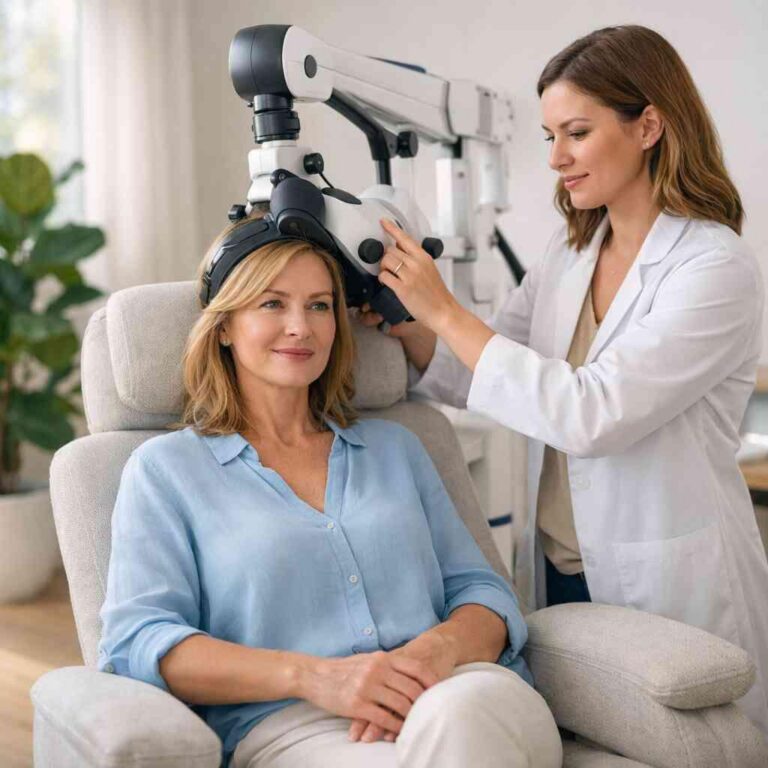
TMS therapy in Florida is a non-invasive brain stimulation treatment that uses magnetic pulses to help target mood-related brain circuits, most often for depression. If medications and therapy have not brought enough relief, transcranial magnetic stimulation therapy may be a reasonable next option to ask about.
Key Takeaways
- TMS treatment Florida refers to outpatient magnetic stimulation used mainly for depression, and sometimes for anxiety, OCD, and related conditions.
- TMS depression treatment Florida is often considered when someone has medication resistant depression or depression that keeps returning after failed medications.
- TMS is typically done without anesthesia, and most people drive home the same day after each session.
- The treatment is generally described as non-drug depression treatment and is often compared with other alternatives after multiple medications have not helped enough.
- Insurance rules vary, so TMS insurance coverage Florida and clinic access in cities like Miami, Fort Lauderdale, West Palm Beach, Orlando, and Tampa usually need a real benefits check.
Why depression can feel stuck even after medications and therapy should have worked
Depression can feel stuck because the problem is not always a lack of effort. Sometimes the brain does not respond well enough to standard treatment, and that leaves you tired, frustrated, and unsure what to try next. TMS for depression is often discussed at that point, especially when symptoms keep returning or stay heavy despite good care.
When SSRIs fade out and the room still feels heavy in Florida heat
When SSRIs stop helping, the change can be subtle at first. You may sleep more, lose motivation, or feel flat even on a bright morning in South Florida. The heat, the long commutes, and the pressure to “keep going” can make it harder to notice what is happening until you are already worn down.
We hear this from people in Aventura, Coral Gables, Boca Raton, and Delray Beach: they did the hard work, took the medication, tried therapy, and still felt pinned in place. That is why TMS after failed medications matters. It gives people an option that does not add another daily pill or another round of side effects to manage.
Here is the part most people miss: depression is not only sadness. It can show up as irritability, brain fog, a heavy body, and the sense that every task costs too much. If that sounds familiar, tools like MedlinePlus mental health information and the American Psychiatric Association can help you understand symptoms, but they do not replace a clinical evaluation.
What medication resistant depression looks like before TMS enters the picture
Medication resistant depression usually means you have tried one or more antidepressants at an adequate dose and still have significant symptoms. It does not mean you failed. It means your current plan may not be enough, or the fit may be wrong for your brain chemistry, diagnosis, or life stressors.
A careful clinic will usually review several things before discussing FDA approved depression treatment options like TMS:
- Which medications you tried
- How long you took them
- Side effects, such as weight gain, emotional blunting, or sexual dysfunction
- Whether anxiety, OCD, PTSD, bipolar depression, or substance use is also present
- Your symptom scores, often using the PHQ-9 or MADRS
A woman in West Palm Beach once described it like this: “The pills kept me afloat, but not living.” That is a common reason people ask about alternative depression treatment or compare TMS with other options such as ketamine. If you want a broader overview of care paths, the site’s depression treatment guide and non-drug option overview can help frame the conversation.
What actually happens during transcranial magnetic stimulation therapy in a Florida clinic
Transcranial magnetic stimulation therapy uses focused magnetic pulses to stimulate specific brain areas linked to mood regulation. In a Florida clinic, it is usually an outpatient process with no anesthesia, no recovery room, and no need to miss the whole day. People typically receive a series of sessions over several weeks, then discuss follow-up or maintenance therapy if needed.
How deep TMS therapy and repetitive TMS use magnetic brain therapy without anesthesia
Repetitive TMS delivers repeated magnetic pulses at set intervals. Deep TMS therapy uses a different coil design that can reach broader brain networks, which is one reason some clinics discuss it for depression, OCD, and other conditions. The method is still non-invasive, and it does not require surgery, sedation, or medication changes for the procedure itself. Research has supported TMS for depression for years, including the well-known Stanford study by Carpenter and colleagues and later clinical consensus reviews. Device clearances for systems such as NeuroStar and BrainsWay also helped move TMS into mainstream psychiatric care. For deeper reading on the science, see the site’s TMS science articles and the Clinical TMS Society-style guidance. A practical comparison helps here: 
FeatureTMSTypical medication approachDeliveryIn-office magnetic pulsesDaily oral medicationSedationNot neededNot neededDowntimeUsually minimalUsually minimalCommon useDepression, OCD, anxiety, and some other casesBroad psychiatric useMain tradeoffRequires repeated visitsSide effects and trial-and-error dosingThat is why people looking for TMS for anxiety, TMS OCD therapy, or TMS for PTSD Florida often start with one question: how does it feel? The honest answer is that many people describe tapping or clicking on the scalp and a brief sense of pressure, but the experience is usually manageable.
What a session looks like from check in to the hum of the coil and the same day drive home
A typical visit starts with check in, a quick symptom check, and placement of the coil. The clinician then confirms the treatment site and settings, often based on your evaluation and motor threshold testing. Sessions are commonly short, and you can usually return to work, errands, or home right after.
A typical flow looks like this:
- Check in and confirm symptoms.
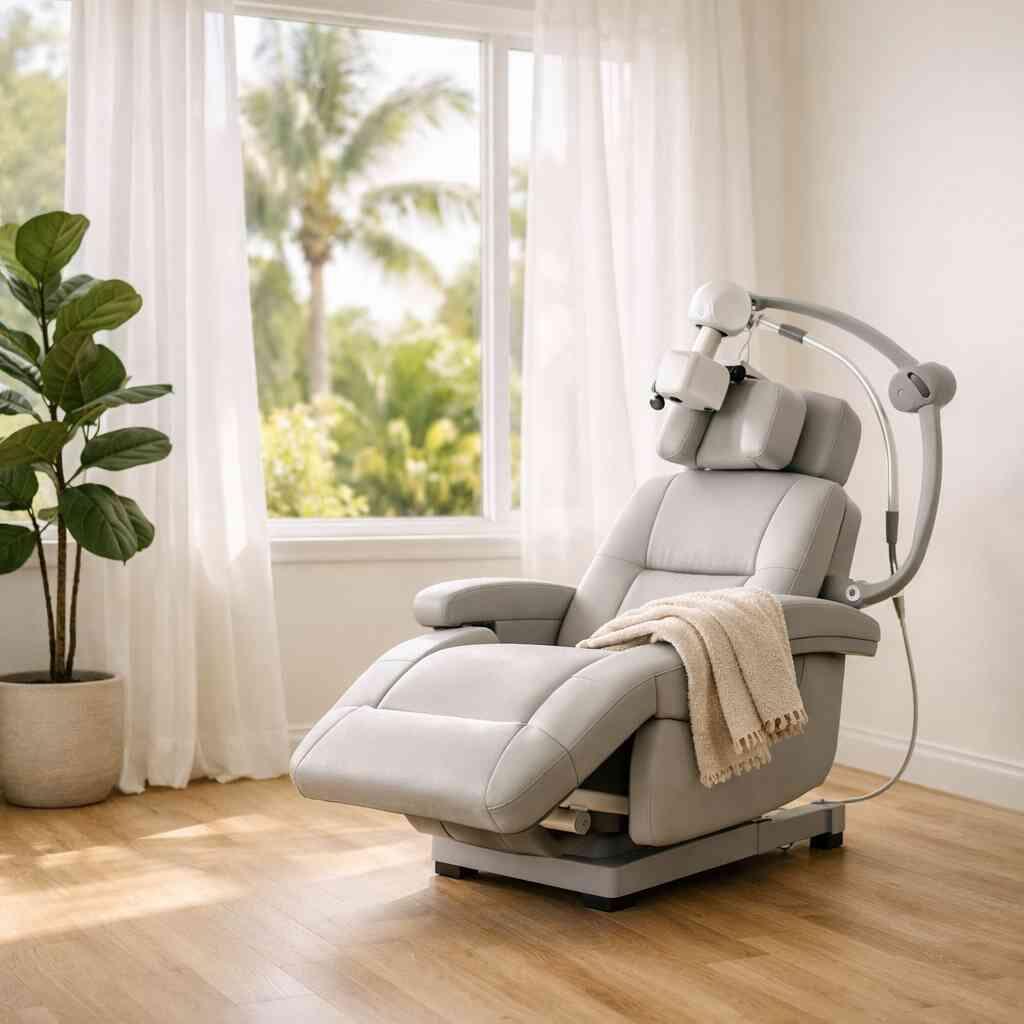
- Sit in the treatment chair with the coil positioned.
- Hear a steady clicking or humming sound.
- Feel brief tapping on the scalp.
- Leave the clinic the same day.
For most people, the practical questions are the ones that matter most: TMS side effects safety, TMS cost Florida, and does insurance cover TMS in Florida. Mild headache or scalp discomfort can happen, but serious side effects are uncommon when the treatment is properly screened and supervised. For insurance and benefit questions, review coverage and costs and clinic access through the Florida locations page.
Florida also has its own reality: people often split time between regions, so access matters. A patient may ask about a TMS clinic Miami option one day and a TMS Tampa or TMS Orlando option the next. That is why location planning, transportation, and scheduling often shape the decision as much as the clinical question does.
When TMS becomes the decision that finally makes sense for depression relief
TMS makes sense when you want a non-drug option backed by clinical research, you have already tried several treatments, or side effects have become too much to tolerate. It also makes sense when you need a structured plan for long-term care, not just another short medication trial. For some people, that includes maintenance therapy and close symptom tracking over time.
Who tends to ask about TMS after failed medications or TMS for bipolar depression and why that matters
People usually ask about TMS after failed medications when they are tired of cycling through prescriptions without enough benefit. Others ask about TMS for bipolar depression or TMS for bipolar disorder when depressive symptoms are the main problem and a psychiatrist wants a non-drug path to consider carefully. Some also ask about TMS addiction recovery or TMS for substance use disorder, especially when depression and cravings overlap.
That overlap matters because the whole picture matters. Research on rTMS for cravings is growing, including work from centers such as the Medical University of South Carolina, and SAMHSA’s guidance on substance use treatment reminds clinicians to screen carefully for co-occurring disorders. If you are dealing with both mood symptoms and substance use, a dual diagnosis treatment Florida plan can be more helpful than treating either problem alone.
A careful clinic should also discuss when TMS may not be the right fit, especially if mania risk, unstable substance use, or untreated medical issues are part of the picture. If you are comparing options, the site’s bipolar depression treatment page and addiction support page can help organize the questions you want to ask a clinician.
How insurance coverage, clinic access in Miami Fort Lauderdale West Palm Beach Orlando and Tampa, and maintenance planning shape the next move
The real-world decision often comes down to three things: TMS insurance coverage Florida, nearby clinic access, and what happens after the initial series. Some plans require prior authorization, proof of medication trials, or documented symptom scores. Others need a referral or a psychiatrist’s note. That makes verification important before you commit to a schedule.
Decision pointWhat to askWhy it mattersInsuranceDoes insurance cover TMS in Florida?Prevents surprise billsLocationIs there a TMS near me Florida option?Affects attendance and consistencyMaintenanceIs TMS maintenance therapy discussed?Helps with long-term planningIf you are in South Florida, a TMS clinic Miami, TMS Fort Lauderdale, or TMS West Palm Beach option may be easier than long drives across the state. For families in Palm Beach County or Miami-Dade, that convenience matters. It is easier to stay consistent when the clinic fits your life, not the other way around. You can also review local service details on the Palm Beach County locations page and the Miami-Dade locations page.
If you want help sorting through options without pressure, TMS Treatment Florida can be a steady place to start. The team can help you understand whether a Florida mental health clinic offering TMS may fit your situation, what records insurers often ask for, and how to think about next steps when depression has not budged.
If you are ready to talk it through, call the 24/7 confidential helpline at +18886883036. You do not have to solve everything tonight.
Frequently Asked Questions
Question: What Is TMS Therapy in Florida for Depression Relief, and how does transcranial magnetic stimulation therapy work for medication resistant depression?
Answer: TMS Therapy in Florida for Depression Relief is a non-invasive brain stimulation treatment that uses magnetic pulses to target areas of the brain involved in mood regulation. In simple terms, transcranial magnetic stimulation therapy is designed to stimulate specific brain circuits without surgery, anesthesia, or daily medication changes for the procedure itself. It is often discussed when someone has medication resistant depression or has not found enough relief from other approaches. A Florida mental health clinic offering TMS may also review whether symptoms like anxiety, brain fog, low motivation, or emotional numbness are part of the picture, because those details can help guide the treatment plan. If you are trying to understand how does TMS work, the best next step is a clinical evaluation that looks at your history, symptom severity, and prior treatments. TMS Treatment Florida can help you explore whether this FDA approved depression treatment may be a fit for your situation.
Question: Who is a good candidate for TMS depression treatment Florida, and can it help with TMS for anxiety, TMS OCD therapy, or TMS for bipolar depression?
Answer: Many people who ask about TMS depression treatment Florida are looking for an option after multiple antidepressants have not helped enough or caused side effects that were hard to tolerate. TMS may also come up in conversations about TMS for anxiety, TMS OCD therapy, and TMS for bipolar depression, though the best use depends on your diagnosis, symptom pattern, and safety screening. A careful provider will look at the full clinical picture, including whether there are concerns about bipolar mood shifts, substance use, trauma symptoms, or other behavioral health needs. For some patients, TMS may be considered alongside other supports such as therapy, medication management, or, in some cases, a TMS and EMDR combination approach when trauma symptoms are also present. The goal is not to promise a miracle, but to offer a structured, evidence-based option that may fit people who need an alternative depression treatment plan when standard care has not been enough.
Question: What should I expect during a session at a TMS clinic Miami, TMS Fort Lauderdale, TMS West Palm Beach, TMS Orlando, or TMS Tampa?
Answer: At a TMS clinic Miami, TMS Fort Lauderdale, TMS West Palm Beach, TMS Orlando, or TMS Tampa, a typical session is outpatient and usually does not require anesthesia or downtime. Most people arrive, check in, and sit comfortably while the clinician positions the coil and starts treatment. During repetitive TMS or deep TMS therapy, you may hear clicking sounds and feel a tapping sensation on the scalp, but many patients tolerate it well. The visit is usually short enough that people can return to work, errands, or home the same day. Because TMS side effects safety is an important topic, a good clinic will review common experiences like mild headache or scalp discomfort and explain when to contact the team. If you are searching for a TMS near me Florida option, location convenience can matter a lot, especially for a treatment that requires repeated visits over several weeks.
Question: Does insurance cover TMS in Florida, and what affects TMS cost Florida or TMS insurance coverage Florida?
Answer: Many people want to know does insurance cover TMS in Florida before they start planning care, and the answer depends on the plan, medical criteria, and documentation requirements. Some insurers may ask for proof of prior medication trials, symptom scoring, or a referral before approving treatment. That is why TMS insurance coverage Florida often requires a real benefits check rather than a general assumption. TMS cost Florida can also vary based on insurance, clinic policies, and how many sessions are recommended, so it is best not to rely on guesses or online averages. A trustworthy provider will help you understand prior authorization steps, what records may be needed, and whether your plan treats TMS as a covered service for depression or related conditions. If you want a clear picture before committing, ask the clinic to review your benefits and outline the possible financial steps in advance.
Question: Can TMS therapy help beyond depression, such as TMS addiction recovery, TMS for substance use disorder, or TMS for smoking cessation?
Answer: TMS is most commonly known for depression care, but some people also ask about TMS addiction recovery, TMS for substance use disorder, alcohol addiction brain stimulation, and TMS for smoking cessation. These uses are more specialized and should be evaluated carefully because co-occurring mental health and substance use concerns often need a dual diagnosis treatment Florida approach. A clinic may discuss whether TMS could be part of a broader plan that includes counseling, medication support, relapse prevention, or addiction rehab Florida services. In some cases, people also ask about TMS for PTSD Florida when trauma and substance use overlap. The important thing is to avoid overpromising; TMS may be one piece of care, but it is not a substitute for a full treatment plan. If you are comparing options, a team that understands Florida behavioral health can help you decide whether TMS belongs in your recovery strategy.
Question: What are TMS therapy success rate, TMS long-term results, and TMS maintenance therapy like at TMS Treatment Florida?
Answer: TMS therapy success rate and TMS long-term results can vary from person to person, and responsible providers should never guarantee a specific outcome. What they can do is explain the research, discuss how transcranial magnetic stimulation research supports its use for certain patients, and help you understand what to expect from treatment planning and follow-up. Some people may benefit from TMS maintenance therapy after the initial series, especially if symptoms return or if ongoing support is needed. A good clinic will track symptoms over time, reassess progress, and talk honestly about next steps instead of making exaggerated promises. At TMS Treatment Florida, the focus is on compassionate, individualized care that respects your history and goals while keeping expectations realistic. If you are looking for the best TMS clinic Florida for your needs, the most helpful sign is not hype; it is a team that listens, explains options clearly, and helps you make an informed decision.