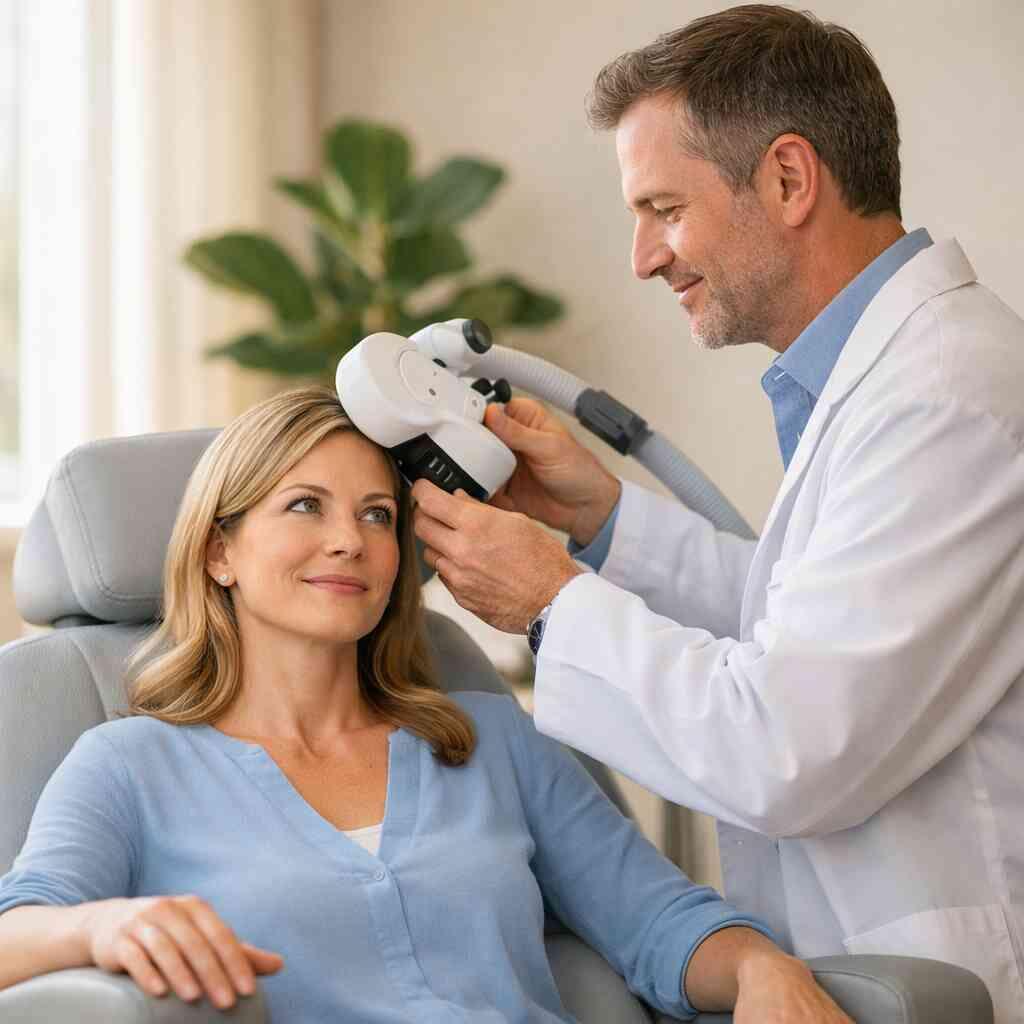
1) When the room is quiet but your mind is not: how TMS can interrupt the loop
If you are reading this because your body feels tired and your mind still will not settle, that is real. Anxiety can keep humming even when your job looks stable and your home is calm. The hard part is that people often see the outside, not the loop inside. At TMS treatment in Florida for anxiety support, that loop is part of the conversation from the start.
Why anxiety can keep firing even when life looks stable on the outside
Anxiety is not always caused by a visible crisis. Sometimes the nervous system keeps signaling danger long after the threat is gone. You may feel it in your chest, jaw, stomach, or sleep. You may also notice it most at night, when the house gets quiet and your thoughts get loud.
One client in the Boca Raton area described it as “a radio stuck between stations.” That image fits better than most clinical language. The mind jumps from one worry to the next, and none of them feel finished. That is exhausting, and it can make you doubt your own judgment.
What transcranial magnetic stimulation therapy is actually doing to the worry network
Transcranial magnetic stimulation therapy uses focused magnetic pulses to help regulate activity in brain circuits tied to mood and stress. It is a form of non-invasive brain stimulation and a kind of magnetic brain therapy. It does not involve surgery. It also does not require daily medication changes to get started.
Here is the part most online guides miss: TMS for anxiety is not about “shutting off” your feelings. It is about helping overactive circuits calm down enough for you to think, sleep, and function with more room to breathe. Many people first ask, how does TMS work, and that is the simplest answer. It influences neural signaling in targeted areas linked with fear, attention, and regulation.
For people looking for alternative depression treatment or non-drug depression treatment, this approach can feel more workable than another medication trial. The same is true for people who have tried TMS after failed medications and want a different path.
Why TMS for anxiety can feel different from talk therapy alone when the same thoughts keep returning
Talk therapy can be powerful, but it asks a lot from a brain that feels flooded. If the body stays on alert, insight alone may not stick. TMS for anxiety can help lower the volume first. Then therapy may feel more usable.
That is why some people notice that once the physical edge softens, they can finally use coping skills again. They can sleep a little longer. They can sit through a meeting without scanning every exit. They can stop rereading the same text message ten times. TMS treatment Florida is not a magic fix, but it can create more usable mental space.
On the projects we have seen this year, the biggest shift often starts with small things. A client can tolerate a grocery store. Another can answer emails without spiraling. Those changes matter because they return a sense of agency.
2) The Florida clinic check that turns hesitation into a real plan
A lot of people delay care because they do not know what a proper evaluation should include. That hesitation makes sense. The process should not feel vague or pushy. A good Florida mental health clinic should explain the next step in plain English and answer the uncomfortable questions before anyone talks treatment.
What a careful anxiety evaluation should cover before anyone talks treatment
A real evaluation should look at your symptoms, your medical history, your medications, and your past treatment response. It should also ask how anxiety shows up in daily life. Sleep, appetite, panic, concentration, and avoidance all matter. So do depression symptoms, trauma history, and substance use.
Clinics that practice responsibly often use tools like the PHQ-9 and, when depression is part of the picture, the MADRS. Those scores do not define you. They help show patterns and track change over time. That matters because treatment should be guided by data, not guesswork.
If you are comparing options after multiple medication trials, ask directly about medication resistant depression and whether your history fits that pathway. If you have already been through several medication changes, you deserve a clear explanation. That includes whether TMS after failed medications may be reasonable in your case.
Why a Florida mental health clinic should explain non-invasive brain stimulation in plain language
People often feel calmer once someone explains TMS without jargon. A responsible clinic should describe what the machine does, what the session feels like, and what side effects may happen. It should also explain that deep TMS therapy and repetitive TMS are different approaches. Both fall under the broader umbrella of transcranial magnetic stimulation, but they are not identical.
The best clinics do not oversell. They talk about evidence. They mention that TMS has FDA-cleared uses for depression, and that FDA-approved depression treatment language must be used carefully and accurately. They also explain that anxiety care is supported by clinical experience and growing research, not by hype. That kind of honesty builds trust.
If you want to read more about treatment types, the clinic should be able to point you toward non-invasive brain stimulation in Florida mental health care without making it feel like a sales pitch. Clear explanations lower fear. Fear drops even more when you know what the appointment actually looks like.
How location access in places like Miami, Fort Lauderdale, West Palm Beach, Orlando, and Tampa can change follow-through
Access changes everything. If you live near Aventura, Coral Gables, Boca Raton, Delray Beach, or Winter Park, a nearby clinic can make follow-through realistic. That matters for treatment schedules, transportation, and family routines. It matters even more in summer, when Florida traffic, rain, and work demands can make long drives feel impossible.
A client near Fort Lauderdale once told us that the commute was the main reason they kept postponing care. Once they found a closer appointment, the plan became manageable. That is the hidden value of location. If you search TMS near me Florida, you are usually searching for consistency, not just convenience.
For people comparing regional access, location pages can help you evaluate options such as TMS clinic Miami, TMS Fort Lauderdale, TMS West Palm Beach, TMS Orlando, and TMS Tampa. A practical clinic should help you choose the most feasible site and not make you guess.
3) Why TMS for anxiety can make room for therapy to work again
Some people expect TMS to replace therapy. Usually, the smarter view is that it can support therapy. When the body is less reactive, you can stay present longer. That means the work in counseling may go deeper and feel less exhausting.
How quieter physical anxiety can make sleep, focus, and daily function easier to rebuild
Anxiety drains attention. It interrupts sleep. It can make your shoulders feel like concrete by noon. When TMS begins to calm that constant activation, you may notice a little more room in your day. That room is where rebuilding starts.
The benefit is not flashy. It looks like reading a page without rereading it three times. It looks like getting through dinner without bracing for the next bad thought. It also looks like waking up less worn out. Those are small wins, but they stack.
The 2018 Stanford work often cited in TMS discussions, including studies by Carpenter and colleagues, helped strengthen interest in TMS for mood symptoms. For anxiety care, the point is not to promise a specific result. The point is to show that the brain can respond when the right circuit gets attention. That is why people exploring transcranial magnetic stimulation research often find the science encouraging.
Where TMS and EMDR combination may fit when trauma and panic overlap
Trauma and panic often travel together. If your anxiety is tied to reminders, hypervigilance, or body alarms that never seem to shut off, a combined plan may make sense. In some cases, clinicians consider a TMS and EMDR combination so that the brain is less reactive before trauma processing begins. That sequencing can matter.
This is not one-size-fits-all. It depends on symptom pattern, safety, and clinical judgment. But the logic is straightforward. If your system is in constant alarm, trauma work can feel impossible. If TMS softens the alarm, EMDR may feel more tolerable.
For people who want a deeper look at protocol differences, a resource on deep TMS therapy versus repetitive TMS can help you ask better questions. Good care begins with good questions.
Why some people compare deep TMS therapy and repetitive TMS when symptoms feel layered or stubborn
The choice between deep TMS therapy and repetitive TMS often comes down to clinical goals, comfort, and symptom profile. Some people respond better to one format than the other, but no clinic should promise a perfect match before evaluation. What matters most is a thoughtful fit.
ApproachCommon useMain ideaWhat to askDeep TMS therapyLayered symptoms, broader targetingReaches deeper brain networksHow does this compare with my symptoms?Repetitive TMSTargeted circuit modulationUses repeated magnetic pulsesWhy is this protocol recommended for me?When symptoms are stubborn, it is tempting to chase certainty. Still, the better move is to ask how the treatment fits your history. A smart plan accounts for anxiety, sleep, mood, and daily function together.
4) The safety and side effect conversation people should have before they commit
People often want the benefits first and the risks later. That is human. Still, the safety conversation should happen early, not after a surprise. A trustworthy clinic will explain side effects in practical terms and answer insurance questions without pressure.
What TMS side effects safety usually means in real life, not in marketing language
Most people want the plain version. TMS side effects safety usually involves discussing scalp discomfort, headache, temporary fatigue, or light sensitivity. Some people also feel a tapping sensation during treatment. Those effects are usually manageable, but every person’s experience can differ. The clinic should also explain that seizures are rare, but screening matters. That is why medical history review is not optional. A careful provider should ask about prior head injury, metal implants, and seizure history. If they skip that, keep asking until you get a clear answer. For a fuller breakdown, a page on TMS safety and side effects information should read like a patient guide, not an ad. Good safety communication lowers fear. It also helps people stick with treatment. 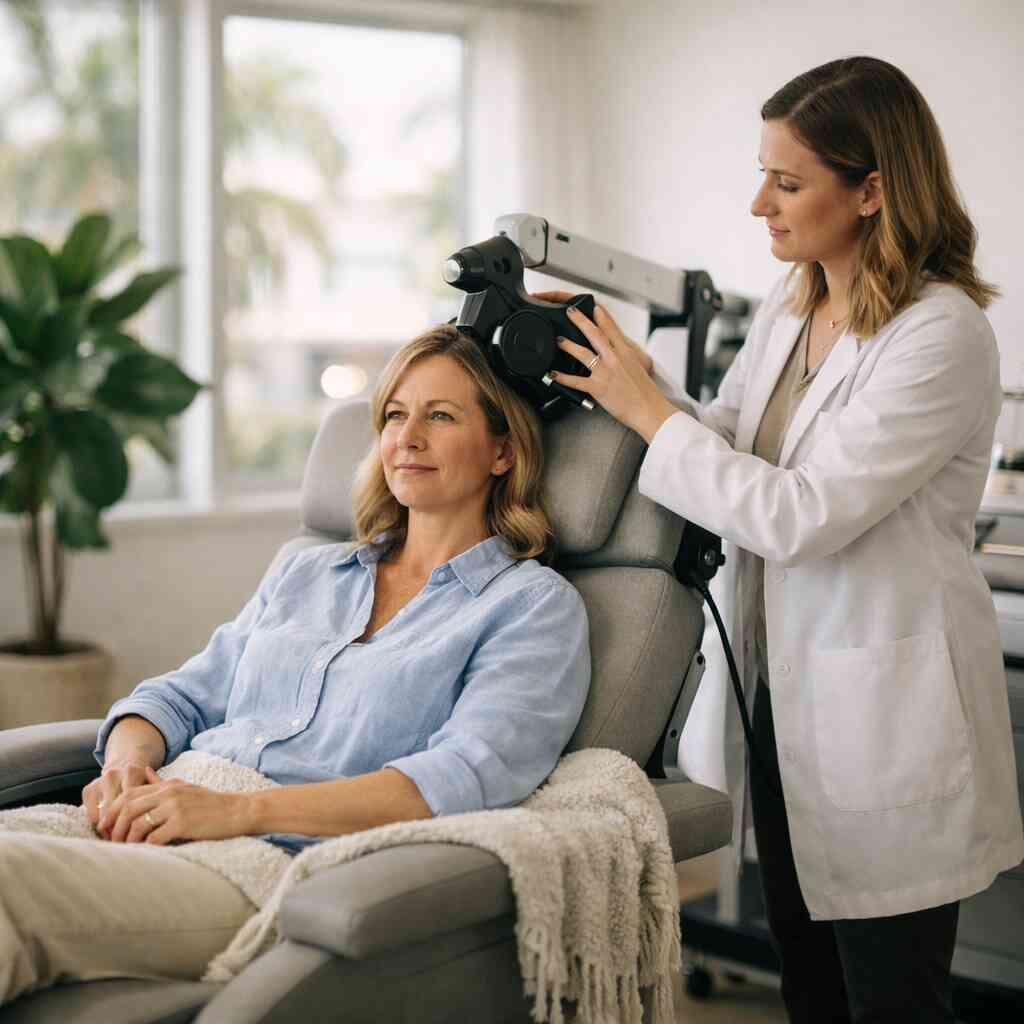
Which questions to ask about medication resistant depression, anxiety, and any past treatment burnout
If you have been through enough medication changes to feel worn down, say that plainly. The treatment team should ask what helped, what failed, and what felt unbearable. That includes side effects like dry mouth, grogginess, emotional blunting, or weight changes. Those details matter.
Ask these questions:
- What symptoms are you targeting first?
- How will you measure progress?
- What happens if my anxiety improves before my mood?
- How do you decide if I am a candidate for TMS?
- What if I have concerns about TMS for teen depression or TMS for young adults in the family?
A thoughtful clinic will not rush you. It will help you decide if this is a fit. It should also talk candidly about TMS therapy success rate in general terms, without promising your outcome. That honesty is part of trust.
How a TMS psychiatrist Florida visit should handle cost, insurance verification, and any limits in TMS insurance coverage Florida
A TMS psychiatrist Florida visit should handle benefits and limits before treatment starts. That includes verifying whether your plan covers the service, what diagnosis criteria apply, and what documentation may be needed. Florida’s insurance landscape can be uneven, so the answer to does insurance cover TMS in Florida depends on your specific plan.
If cost comes up, ask for a clear explanation of TMS cost Florida and any self-pay backup options. Do not accept vague answers. You deserve specifics about authorization, copays, and whether the clinic helps with appeals. A resource on TMS cost and insurance coverage in Florida can help you prepare.
If you want help comparing your options, ask for a local review through a Florida mental health clinic for TMS evaluation. You do not have to sort out every insurance term alone.
5) When anxiety is tied to depression, OCD, PTSD, or substance use, the treatment map gets wider
Anxiety rarely travels by itself. It often shows up with depression, OCD, trauma, or substance use. That is why a narrow plan can miss the bigger picture. A wider treatment map can match the real problem more closely.
Why mixed symptoms may call for TMS depression treatment Florida or TMS OCD therapy instead of a one-size answer
If your anxiety sits beside sadness, low drive, and hopelessness, a depression-focused plan may matter too. That is where TMS depression treatment Florida can be part of the discussion. If the loop is more about intrusive thoughts, checking, or mental rituals, TMS OCD therapy may be the better lens.
Mixed symptoms need mixed thinking. A one-size approach can miss the way one condition feeds another. That is why careful screening matters. It helps the team decide whether the main target is worry, rumination, compulsion, or mood collapse.
If OCD is part of your story, a dedicated page on TMS treatment for OCD in Florida can help you understand that path better.
How TMS for PTSD Florida, TMS for bipolar depression, and TMS addiction recovery can shape a more tailored care plan
Trauma, bipolar depression, and addiction recovery all change the care plan. TMS for PTSD Florida may be considered when hyperarousal and intrusive memories drive the anxiety. TMS for bipolar depression may also be discussed carefully, with close attention to mood history and monitoring. Each diagnosis changes the risk and benefit conversation.
For substance use, the evidence base around rTMS and cravings is growing. Researchers, including teams associated with the Medical University of South Carolina, have contributed to that conversation. That does not mean TMS replaces rehab. It means it may support craving reduction in some carefully selected cases. The literature also connects well with the SAMHSA TIP approach, which emphasizes individualized, evidence-based substance use care.
A focused page on TMS support for PTSD in Florida can help frame trauma-related treatment questions. For a broader view, TMS recovery and long-term maintenance plans may be useful when symptoms ebb and return.
Where TMS for substance use disorder and dual diagnosis treatment Florida may fit alongside rehab therapy and maintenance support
When anxiety and substance use overlap, the plan needs structure. TMS for substance use disorder may fit alongside counseling, relapse prevention, and medical support. In those cases, dual diagnosis treatment Florida can be the more accurate phrase. The goal is not to chase one symptom while ignoring the rest.
Some people also ask about TMS for smoking cessation or alcohol addiction brain stimulation. Those areas are still evolving, so a cautious clinic should explain the limits clearly. That is especially important if you are comparing addiction rehab Florida options. The right team will focus on realistic support, not miracle language.
If you want to see how the pieces can fit together, a page on transcranial magnetic stimulation research and science can help anchor the discussion. The best next move is simple: write down your top three symptoms, then ask a Florida clinic how they would prioritize them.
Frequently Asked Questions
Does TMS work for anxiety?
TMS may help some people with anxiety, especially when symptoms keep returning despite therapy or medication changes. It uses targeted magnetic pulses to influence brain circuits involved in stress and regulation. Results vary, so a careful evaluation matters. A clinic should explain what symptoms it is targeting and how progress will be measured.
How does TMS work in simple terms?
TMS sends short magnetic pulses to specific areas of the brain through a coil placed on the head. Those pulses are meant to help regulate activity in circuits linked to mood, anxiety, and attention. The treatment is non-invasive and does not require anesthesia. Most sessions happen while you are awake and seated.
Is TMS safe, and what side effects should I expect?
TMS side effects are usually mild and may include scalp discomfort, headache, fatigue, or temporary sensitivity at the treatment site. Safety screening is important because it helps rule out rare risks and fit the treatment to your history. A trustworthy clinic will review implants, seizure history, and medications before starting. Ask for plain-language safety guidance, not vague reassurance.
Does insurance cover TMS in Florida?
Coverage depends on your insurer, your diagnosis, and the documentation your plan requires. Some plans cover TMS for specific conditions, especially depression, while others need prior authorization. A Florida clinic should verify benefits before treatment and explain any out-of-pocket costs. Ask about copays, deductibles, and appeal support.
Can TMS help if I have depression, OCD, PTSD, or substance use too?
It might, depending on your symptom pattern and clinical history. Some people need a plan that addresses depression, OCD, PTSD, or substance use alongside anxiety. That is why a broader evaluation matters. The team should decide whether TMS for bipolar depression, TMS OCD therapy, or addiction-focused care fits your needs.
How do I choose the best TMS clinic Florida has for my situation?
Look for a clinic that explains treatment clearly, screens carefully, and respects your questions about cost and safety. Ask how they handle insurance, how they track outcomes, and whether they offer location access that fits your routine. Reviews help, but the consultation tells you more. Choose the place that listens well and answers directly.