When OCD has already eaten through meds and talk therapy: what TMS Treatment Florida can change
The question people type at 11 p.m. is usually blunt: can TMS help OCD when everything else has stalled? If you are asking that, the exhaustion is real. The looping thoughts are real. So is the frustration of trying SSRIs, ERP, CBT, and still feeling trapped by rituals and doubt. With TMS treatment in Florida for OCD care, the goal is not to promise a miracle. It is to offer another evidence-based path when the old one has not been enough.
Why obsessive loops can stay loud even after SSRIs and CBT
OCD can keep firing even after good-faith treatment. SSRIs may soften the edge, but the brain may still send the same alarm again and again. CBT can help you respond differently, yet some people still feel pulled back into checking, washing, counting, or mental review. That gap is often why people start looking at transcranial magnetic stimulation therapy. It is not a sign of failure. It is a sign that your brain may need a different kind of support.
Here is the part most people miss: OCD does not always behave like simple anxiety. It can lock onto threat circuits with stubborn force. In clinic conversations, patients often say, “I know the thought makes no sense, but it still feels dangerous.” That disconnect is miserable. It also explains why many people start searching for TMS OCD therapy after failed medications and months of effort. For some, it is part of a broader plan that also includes TMS after failed medications for medication resistant depression.
What transcranial magnetic stimulation therapy actually targets in the OCD brain
Transcranial magnetic stimulation therapy uses magnetic pulses to influence activity in targeted brain networks. It is a form of non-invasive brain stimulation, so it does not require surgery or anesthesia. In OCD care, the focus is often on circuits linked to compulsive urgency, error detection, and repetitive fear signaling. That is why people sometimes call it magnetic brain therapy, even though the medical term is more precise. The idea is simple, even if the brain science is not: calm the network, and the thoughts may lose some of their grip.
Research on transcranial magnetic stimulation has grown steadily, and OCD is one area where specialists keep refining protocols. The strongest practical language is cautious language. TMS does not erase personality, and it does not “fix” every symptom. What it may do is reduce the intensity that makes rituals feel non-negotiable. If you are also dealing with low mood, a Florida clinician may discuss non-drug depression treatment after unsuccessful medications as part of a larger plan.
Why many people start searching for TMS OCD therapy after failed medications
Many people reach TMS treatment Florida after a long, tiring chain of medication trials. The pattern is familiar. A drug helps a little, then stops. Another causes fatigue, weight changes, dry mouth, or emotional flattening. Then comes the quiet panic of wondering if you will ever feel like yourself again. When that happens, TMS for anxiety or OCD can start to look less like a luxury and more like a practical option.
In the depression world, people often ask about FDA approved depression treatment because they want something proven, not trendy. That caution makes sense. The best-known depression data include the 2018 Stanford work by Carpenter and colleagues, which supported TMS as a meaningful option for depression care. For OCD, the same spirit applies: look for measured care, not hype. A strong clinic should talk clearly about transcranial magnetic stimulation therapy for obsessive compulsive disorder and explain where evidence is solid and where it is still evolving.
How Florida patients usually decide between another med trial and non-drug depression treatment methods
The decision often comes down to energy, side effects, and time. Another medication trial can be reasonable, but many Florida patients are already tired of waiting through side effects. Others want a non-drug depression treatment path because they cannot tolerate more medication changes. TMS after failed medications feels appealing because it is structured, clinic-based, and generally does not add a daily pill burden. That matters when you are already carrying work, family, and intrusive thoughts.
I remember a patient from near Coral Gables who had spent years “almost improving.” She was not dramatic about it. She was simply worn down. She wanted a plan that felt measurable and human. That is often the turning point. People stop asking, “What if I try one more pill?” and start asking, “What if I need a different tool?” For some, the next conversation becomes TMS treatment for anxiety disorders alongside OCD care.
What happens inside the room when repetitive TMS meets a Florida OCD care plan
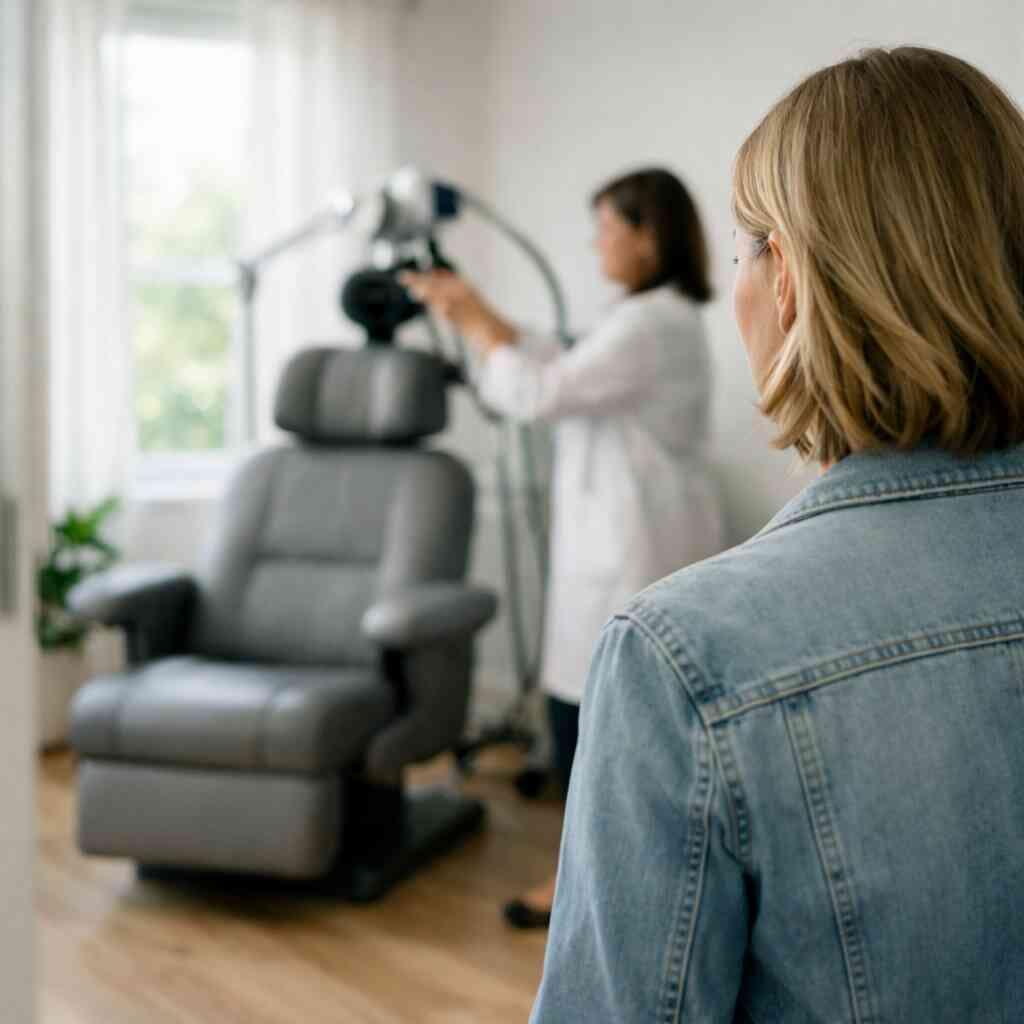
Once you get past the fear of the unknown, the room itself is usually less dramatic than people expect. The chair looks ordinary. The machine hums. The coil sits close to the scalp, and the experience feels mechanical, not invasive. Still, the meaning of the visit can feel huge. For many, it is the first time treatment feels active again.
How does TMS work when the goal is quieter obsessions and less compulsive pull
People ask, how does TMS work in a way that matters for OCD? The short answer is that it delivers rapid magnetic pulses to specific brain regions. Those pulses may help shift how circuits talk to each other. In OCD, that can mean less “stuckness” around a thought or urge. It is not a sedative. It is not talk therapy. It is repetitive TMS applied with a clinical target and a treatment plan.
That distinction matters because people often want to compare it to medication. TMS is not a chemical patch. It is a timing and signaling intervention. Some clinics use deep TMS therapy for broader field penetration, while others use standard repetitive TMS based on the patient’s pattern and the protocol chosen. If you want a deeper side-by-side view, deep TMS therapy and standard TMS for OCD care can clarify the practical differences.
What a typical session feels like from the chair to the hum of the coil
A typical visit is straightforward. You sit. The staff checks positioning. The coil begins its patterned tapping sound. Some patients describe it as a fast, rhythmic knocking. Others notice little beyond the pressure and the noise. Most sessions are outpatient, which means you go home afterward and keep your day moving. That matters in Florida, where many people commute from Aventura, Boca Raton, or Winter Park and need care that fits real life.
One man from Fort Lauderdale told us the sound bothered him more than the sensation. By the third visit, he said the rhythm felt oddly reassuring. He still had OCD symptoms, but the routine of showing up gave him structure. That is not a flashy outcome. It is still meaningful. Consistency is often the hidden medicine.
Where deep TMS therapy and repetitive TMS fit in OCD care
Clinics may discuss deep TMS therapy and repetitive TMS as different ways to reach the same larger goal: reducing symptom pressure. Deep TMS can reach deeper or broader networks, depending on the device and protocol. Standard repetitive TMS can also be very useful, especially when the target is chosen carefully. The right answer depends on the diagnosis, symptom pattern, and the clinic’s protocol.
A thoughtful provider should explain why one approach fits better than another. They should not hide behind jargon. They should also be honest that outcomes vary. That honesty builds trust. If you want a clean overview of the science, how repetitive TMS works for quieter obsessions is the kind of language patients often find easier to digest than research papers.
Which symptoms are usually tracked with PHQ-9 style measures and OCD focused check-ins
Good care tracks more than “How do you feel?” A Florida mental health clinic should use structured check-ins. For depression, PHQ-9 or MADRS-style measures help show changes in mood, sleep, energy, and interest. For OCD, clinicians often follow obsession intensity, time spent in compulsions, distress levels, and daily functioning. That helps separate a real shift from a good day.
In practice, the numbers are only part of the story. The patient’s report matters too. Are you checking less? Are you able to leave the house faster? Are the thoughts still there but less sticky? Those details help a TMS psychiatrist Florida decide whether the protocol is helping or needs adjustment. They also support discussions about TMS treatment in Florida for OCD care in a way that feels grounded, not vague.
What TMS side effects safety conversations should cover before the first session
Safety talk should happen before treatment starts, not after. Most patients ask about headache, scalp discomfort, fatigue, or light sensitivity. Those are the side effects people hear about most often. The real conversation should also cover seizure risk screening, implanted metal issues, medication review, and how staff handle discomfort. That is what responsible TMS side effects safety looks like.
You deserve plain language here. If a clinic glosses over risks, keep asking. A good team will explain what is common, what is rare, and what they do if you have a reaction. For a deeper patient-facing overview, TMS side effects and safety for Florida patients is the kind of resource that should match the conversation you have in the office. TMS treatment Florida should feel careful, not casual.
The Florida details people worry about before they ever sit down in the chair
The treatment itself is only part of the decision. In Florida, the logistics can feel just as heavy. Insurance rules vary. Commutes matter. Seasonal residents come and go. And people want care that fits around work, school, or family life without adding more chaos. That is not small stuff.
Does insurance cover TMS in Florida and what usually gets verified before care starts
People ask this question early for a reason: cost anxiety can stop care before it starts. Does insurance cover TMS in Florida? Sometimes yes, sometimes partially, and sometimes only with prior authorization. Plans often want proof of prior medication trials, diagnosis documentation, and symptom severity records. That is especially true for depression, where medical necessity review is common. For OCD, coverage can be more case-specific, so careful verification matters. A clinic that handles this well should explain the process in plain terms. They should verify benefits before you commit. They should also tell you what your plan likely requires. If you want a detailed breakdown, TMS insurance coverage in Florida is the sort of resource that helps you prepare without guessing. ### What TMS cost Florida can involve when benefits are in play and out of network 
TMS cost Florida can vary based on insurance, protocol length, and whether the clinic is in network. Out-of-network care can raise out-of-pocket costs. Deductibles and copays can change the math. So can whether mapping, follow-up visits, and re-evaluations are included. The point is not to scare you. The point is to keep you from being surprised.
Here is a simple way to think about it:
Cost factorWhat it can affectInsurance statusPrior authorization and patient responsibilityNetwork statusCopays, deductibles, and approval speedProtocol typeSession count and device useFollow-up needsReassessment and maintenance planningIf you are comparing offers, ask for a written estimate. Then compare it with your benefits. You can also review TMS cost in Florida and payment options before making a decision.
Why TMS near me Florida matters when you live in Miami Fort Lauderdale West Palm Beach Orlando or Tampa
Searches like TMS near me Florida are not just about convenience. They are about follow-through. If the drive is brutal, you may miss visits. If the schedule is too tight, treatment can lose momentum. That is why location matters so much in TMS care. People in Miami, Fort Lauderdale, West Palm Beach, Orlando, and Tampa often need a clinic that feels realistically reachable, not merely impressive on a map.
The geography of care matters even more in South Florida, where traffic can turn a short drive into a long one. It also matters in places like Delray Beach and Aventura, where patients may balance care with work and family obligations. For location details, find a TMS clinic near me in South Florida is a practical place to compare access. For county-specific access, TMS treatment in Miami-Dade County and TMS treatment in Broward County can help local searches feel less scattered.
How a Florida mental health clinic aligns care with outpatient rules and local access needs
Florida outpatient care has its own rules and rhythms. A strong clinic should know AHCA expectations, documentation requirements, and how to coordinate care safely. That matters whether you are seeking depression help, OCD treatment, or support that overlaps with Florida behavioral health services. The best clinics also know how to work around school schedules, shift work, and the seasonal flow of snowbird patients.
We see this most often in people who need predictable care. They cannot afford confusion. They need a clinic that communicates clearly and respects privacy. A well-run Florida mental health clinic should also help patients understand next steps if symptoms overlap with other conditions. That may include TMS treatment in Orange County or TMS treatment in Hillsborough County for broader access across the state.
When TMS for anxiety, TMS for PTSD Florida, or TMS for bipolar depression may enter the conversation
OCD rarely shows up alone. Anxiety often rides along. Trauma can sit underneath it. Mood swings can complicate the picture. That is why clinicians may discuss TMS for anxiety, TMS for PTSD Florida, or TMS for bipolar depression depending on the full assessment. The key is careful diagnosis, not label hopping.
A good provider will also explain where evidence is stronger. TMS is best established in depression care, and the literature for OCD and trauma is still growing. That does not make it weak. It means a responsible team stays honest about what the evidence supports. If you want a broader overview of service areas, TMS treatment in Palm Beach County can be another useful local reference.
How dual diagnosis treatment Florida can connect OCD care with TMS addiction recovery or TMS for substance use disorder
Sometimes OCD and substance use feed each other. A person may drink to quiet intrusive thoughts. Another may use nicotine or other substances to blunt anxiety. In those cases, dual diagnosis treatment Florida becomes important. TMS is not a stand-alone addiction cure. Still, the research on rTMS and craving reduction keeps growing, including work from centers such as the Medical University of South Carolina. That is why some clinics discuss TMS addiction recovery or TMS for substance use disorder as part of a larger plan.
The SAMHSA TIP framework matters here because substance use care should stay grounded in evidence and coordination. People sometimes ask about alcohol addiction brain stimulation or TMS for smoking cessation. Those conversations should stay careful and specific. They are promising areas, not magic fixes. If OCD, cravings, and mood are all tangled together, the best care plan may link stimulation with counseling, relapse prevention, and strong follow-up.
What tells you the fit is real and what to do next if OCD still runs the day
The last decision is often the hardest one. By this point, you may have read reviews, called offices, and still felt unsure. That is normal. People do not want another dead end. They want a reason to trust the plan in front of them.
How to compare a best TMS clinic Florida search without getting distracted by hype
A best TMS clinic Florida search can produce plenty of polished websites. That does not mean all clinics are equal. Look for plain answers, clear screening, and real discussion of risks and benefits. A good clinic should not oversell TMS therapy success rate or claim every patient improves the same way. It should explain the protocol, the tracking tools, and the follow-up structure. That is what serious care looks like.
Use this quick filter:
- Do they explain the diagnosis clearly?
- Do they discuss OCD, depression, and anxiety separately?
- Do they offer benefit verification before treatment starts?
- Do they answer safety questions directly?
- Do they share how progress is measured?
If you want to compare staff approach and philosophy, about us can help you understand the care style before you call. Avoid any clinic that sounds more like a sales page than a medical office.
What to ask a TMS psychiatrist Florida about medication resistant depression and OCD pathways
A strong TMS psychiatrist Florida should welcome specific questions. Ask how they handle medication resistant depression, and ask how they distinguish OCD from generalized anxiety or trauma symptoms. Ask whether they use standardized tools, such as PHQ-9 or OCD-focused scales, to monitor progress. Ask what would make them pause, adjust, or stop treatment. Those questions are not pushy. They are smart.
If you are considering TMS after failed medications for medication resistant depression, ask how that history affects the OCD plan. Sometimes the same brain patterns drive both conditions. Sometimes they need separate targets. Good clinicians will explain the difference without rushing you. That is the kind of conversation that builds confidence.
How TMS maintenance therapy and long term results are usually discussed honestly
People often hope for a permanent fix. Clinicians should not feed that hope too quickly. TMS maintenance therapy may be discussed when symptoms return or when a patient benefits from periodic follow-up. TMS long-term results vary, and they depend on diagnosis, relapse patterns, therapy support, sleep, stress, and other health factors. Honest teams say that out loud.
A useful conversation sounds like this: “Let’s see how you respond, then decide whether maintenance makes sense.” That is much better than promising endless improvement. Patients respect realism. They also appreciate clarity about what happens after the acute phase. For broader treatment planning, depression TMS treatment in Florida may also be relevant if low mood is part of the picture.
When TMS and EMDR combination care or therapy plus stimulation makes more sense than either alone
Sometimes the best plan is not TMS alone. Sometimes it is TMS and therapy together. If trauma sits underneath the OCD cycle, a TMS and EMDR combination can be worth discussing with the right team. Other people do best with exposure-based therapy alongside stimulation, because the brain may become more flexible while therapy teaches new responses. That pairing can feel practical, not fancy.
The trick is matching the tool to the problem. TMS may lower the volume. Therapy may help you build new habits in the quieter space. That is why experienced teams talk about timing, pacing, and coordination rather than selling one perfect solution. If you want to compare local options, TMS treatment in Duval County can help patients outside South Florida find broader access.
How Florida patients from South Florida to Winter Park can move from uncertainty to a clear care plan
If OCD has worn you down, clarity helps more than pep talks. Start by gathering your medication history, your therapy history, and your insurance card. Then ask one clinic to verify benefits and explain the likely path. If you live in South Florida, that may mean a clinic near Miami, Boca Raton, or Delray Beach. If you are farther north, Winter Park or Orlando access may matter more.
The next move can be simple. Call. Ask for a screening. Ask how they handle TMS reviews Florida style concerns, insurance verification, and OCD-specific treatment planning. You do not have to solve the whole thing tonight. You only need enough clarity to take the next practical step, and a careful TMS clinic should help you do that with calm, respect, and straight answers.
Frequently Asked Questions
Question: What can I expect from What to Expect from TMS Treatment Florida for OCD Care if SSRIs and therapy have not been enough?
Answer: If OCD symptoms have stayed intense after medications and talk therapy, TMS treatment Florida may offer another evidence-based path to consider. The goal of transcranial magnetic stimulation therapy is not to promise a cure, but to use non-invasive brain stimulation to target brain circuits involved in repetitive fear signaling, compulsions, and mental stuckness. For many people, that makes TMS OCD therapy appealing after failed medication trials because it does not add another daily pill and is usually delivered in a structured outpatient setting. A thoughtful Florida mental health clinic should also explain how TMS fits into a broader plan that may include therapy, monitoring, and follow-up care. If you are also dealing with low mood, the same clinic may discuss non-drug depression treatment or TMS after failed medications as part of a coordinated approach.
Question: How does TMS work for OCD, and is repetitive TMS or deep TMS therapy used more often?
Answer: How does TMS work is one of the most common questions patients ask. In simple terms, transcranial magnetic stimulation therapy uses magnetic pulses to influence targeted brain networks without surgery or anesthesia. For OCD, clinicians often focus on circuits tied to urgency, error detection, and intrusive looping thoughts. Repetitive TMS is commonly discussed because it delivers patterned stimulation over multiple sessions, while deep TMS therapy may be used when a broader or deeper field is clinically appropriate. The right option depends on the protocol, diagnosis, and the clinic’s assessment. A strong TMS psychiatrist Florida should explain why one approach is recommended instead of another, what the session feels like, and how progress is tracked over time. If you want a careful, evidence-based explanation, that is a good sign you are in the right place.
Question: What are the TMS side effects safety questions I should ask before starting care?
Answer: Safety conversations should happen before treatment begins. Most people want to know about scalp discomfort, headache, fatigue, or sensitivity to the tapping sound. Those are among the more commonly discussed TMS side effects safety topics, but a responsible clinic should also screen for seizure risk, implanted metal concerns, medication interactions, and any factors that might make treatment unsafe or uncomfortable. That is especially important in a Florida behavioral health setting where people may already be managing complex conditions like anxiety, OCD, or depression. A trustworthy team will answer questions clearly instead of minimizing concerns. If you are comparing options for TMS treatment Florida, look for a clinic that explains risks, monitors you throughout the process, and takes your comfort seriously.
Question: Does insurance cover TMS in Florida, and what affects TMS cost Florida?
Answer: Does insurance cover TMS in Florida depends on the plan, the diagnosis, and whether prior authorization is required. Many insurance plans want documentation of medication trials, symptom severity, and medical necessity before approving care. That is why TMS insurance coverage Florida should be verified before treatment starts. TMS cost Florida can vary based on in-network or out-of-network status, deductibles, copays, session count, and whether mapping or follow-up visits are included. A good clinic should help you understand the expected cost in plain language, not pressure you into making a fast decision. If you are searching for TMS near me Florida or comparing a TMS clinic Miami, TMS Fort Lauderdale, TMS West Palm Beach, TMS Orlando, or TMS Tampa location, benefit verification can help you choose based on fit and access rather than surprise expenses.
Question: How do I know whether TMS treatment Florida is the best TMS clinic Florida option for OCD, depression, or anxiety?
Answer: The best TMS clinic Florida option is usually the one that gives clear answers, careful screening, and realistic expectations. Look for a team that separates OCD, depression, and anxiety symptoms rather than treating them all the same. A strong provider should discuss TMS for anxiety, TMS depression treatment Florida, and TMS OCD therapy with equal care, and explain when transcranial magnetic stimulation research is strongest and where evidence is still developing. It also helps when the clinic discusses TMS therapy success rate honestly without making promises, and when it explains TMS maintenance therapy and TMS long-term results as possibilities rather than guarantees. If you are comparing a luxury TMS center with a more standard Florida mental health clinic, focus less on appearance and more on communication, benefit verification, safety, and follow-up structure. Compassionate care, clear planning, and thoughtful monitoring matter more than hype.


