If you are searching for TMS near me Florida because someone you love keeps slipping despite medication, TMS may be a reasonable next option to ask about. It is a non-invasive brain stimulation treatment that can help some people with depression, anxiety, OCD, and related conditions when medications have not been enough.
Key Takeaways
- TMS treatment Florida refers to transcranial magnetic stimulation therapy, a non-drug option often considered for medication-resistant depression and some other mood disorders.
- Families usually start looking after side effects, relapse, or repeated prescriptions have not brought stable relief.
- A careful Florida clinic should explain candidacy, safety, insurance, and what the treatment plan looks like before anyone commits.
- TMS therapy success rates and results vary by person, so honest clinics talk about likely benefits without promising outcomes.
- The most useful next step is a clinical evaluation, not a guess from a search result.
When the meds stop working and the mirror starts to feel like a warning sign
When medication keeps falling short, families usually notice the change before the person does. Sleep gets messy, routines fall apart, and the person you know may seem flat, agitated, or exhausted in a way that feels hard to explain. That is often when TMS near me Florida searches begin, usually late at night and with a lot of worry behind them.
What loved ones usually notice first when depression, anxiety, OCD, or bipolar symptoms keep slipping through medication
Loved ones tend to notice practical signs first. They may see missed work, canceled plans, more crying, more irritability, or the kind of quiet withdrawal that looks like someone has gone numb. With OCD, you may notice loops of checking, reassurance-seeking, or rituals that keep expanding. With bipolar depression, the low periods can look deep, heavy, and stubborn, even when treatment has already changed.
Here is the part most families miss: the hardest symptom is often not sadness. It is the sense that nothing is changing. That is why people start asking about TMS depression treatment Florida, TMS for anxiety, TMS OCD therapy, or TMS for bipolar depression after several medication changes have not held.
One family member in Palm Beach County described it plainly: “We kept thinking the next prescription would be the one.” By the time they asked about TMS treatments for depression, they were not looking for a miracle. They were looking for a plan that felt more grounded.
Why TMS near me Florida searches often start after side effects, relapse, or too many failed prescriptions
People usually do not search for TMS near me Florida at the beginning of care. They search after dry mouth, weight gain, brain fog, emotional blunting, sleep disruption, or a relapse that hits after a brief improvement. That does not mean medication failed in a moral sense. It means the current plan may not be enough.
TMS often enters the conversation as an alternative depression treatment or non-drug depression treatment when someone has already tried standard options. The most honest way to frame it is this: it is one more evidence-based tool, not a guaranteed fix. A careful clinic should be able to explain how it fits after TMS after failed medications and what it can and cannot do.
According to the American Psychiatric Association, treatment decisions should match the diagnosis, symptom pattern, and past response history, not just the latest internet search. For families in Florida, that matters because care should feel personal, not generic. The American Psychiatric Association is a good place to read basic patient guidance before you compare clinics.
Which Florida mental health clinic questions matter most before you trust a TMS provider with someone you love
This part is genuinely confusing for most people. A clinic can sound polished and still leave out the details that matter. Before scheduling, ask direct questions about screening, supervision, medication coordination, and what happens if symptoms change during treatment. If a clinic avoids specifics, that is a warning sign.
Use this short checklist:
- Who completes the psychiatric evaluation?
- How do you decide if the person is a candidate for TMS?
- What conditions do you treat besides depression?
- How do you monitor side effects and progress?
- How do you coordinate with the prescribing clinician or therapist?
- What are the insurance and self-pay steps?
If you are comparing a Florida mental health clinic to a local hospital-based program, also ask about access and continuity. Families in places like Miami, Fort Lauderdale, West Palm Beach, Orlando, and Tampa may need a clinic that can coordinate around work, school, and long drives. You can start by reviewing the clinic’s locations and about the team before you call.
What really happens inside transcranial magnetic stimulation therapy in a Florida clinic
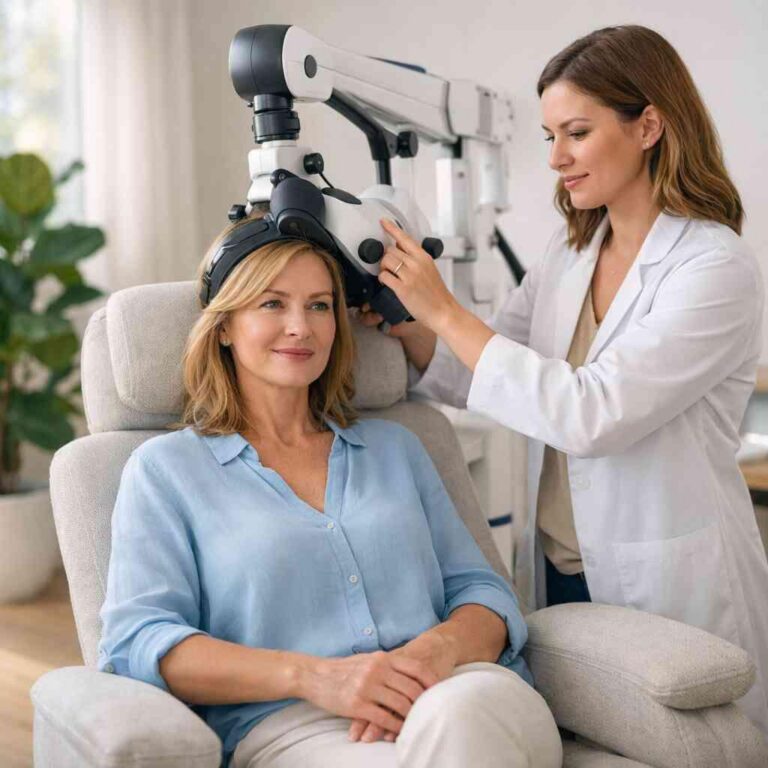
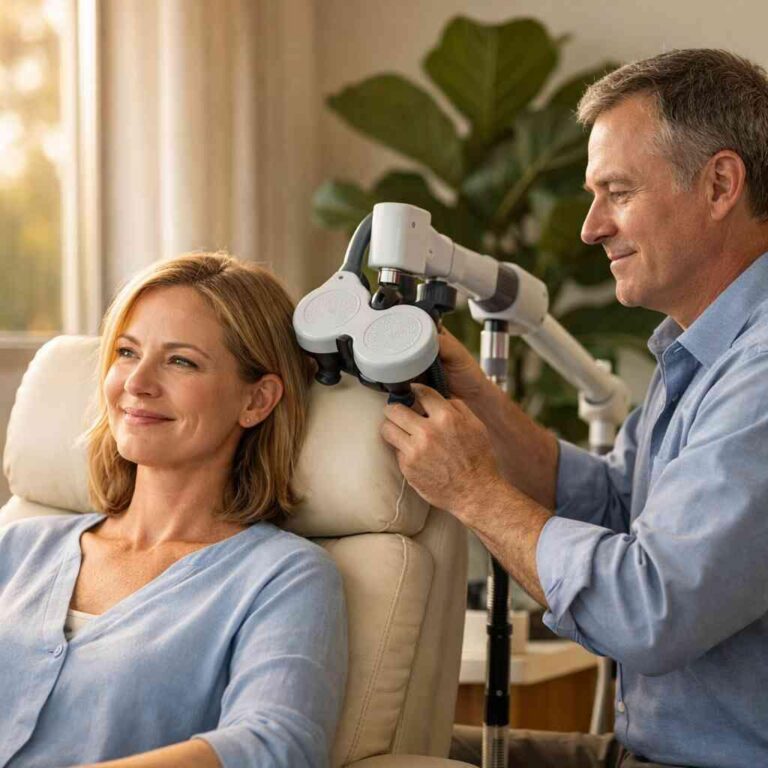
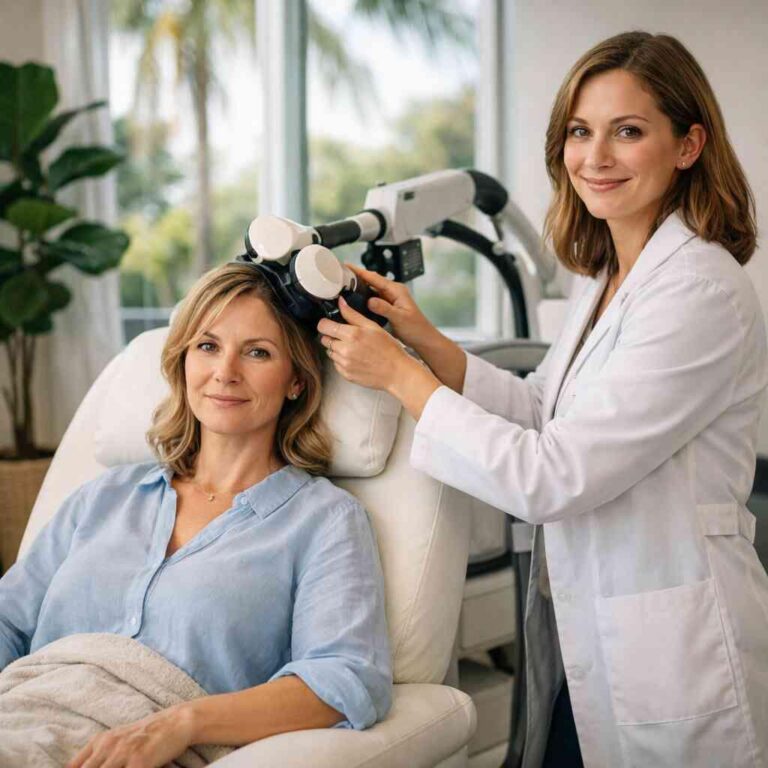
Transcranial magnetic stimulation therapy uses focused magnetic pulses to stimulate areas of the brain involved in mood regulation. It does not require anesthesia, does not involve surgery, and usually happens while the person is awake and seated. In Florida clinics, the process should feel structured, calm, and medically supervised from evaluation through follow-up.
How does TMS work when the brain has felt stuck in a loop for months or years
How does TMS work? In simple terms, it sends repeated magnetic pulses to targeted brain regions, most often the left dorsolateral prefrontal cortex for depression protocols. The aim is to help brain networks communicate more effectively when they have become underactive or overlinked in a pattern that keeps symptoms going. That is why people sometimes call it magnetic brain therapy.
The terms matter. Repetitive TMS usually refers to standard pulse patterns. Deep TMS therapy uses a different coil design to reach broader or deeper networks, which may be relevant for some conditions. For anxiety and OCD, the target and protocol can differ from depression care, which is why a real evaluation matters more than a one-size-fits-all pitch.
The evidence base is not hype. Research has supported TMS as a meaningful option for depression care, and the field has continued to grow through transcranial magnetic stimulation research. FDA-cleared systems such as NeuroStar and BrainsWay are part of that landscape, but a good clinic should avoid overpromising and should explain that outcomes vary.
Why repetitive TMS and deep TMS therapy can feel different from talk therapy, ECT, or another medication swap
TMS feels different because it works at the level of brain circuits, not insight alone. Talk therapy can be essential, but it does not directly stimulate neural activity in the same way. ECT is more intensive and typically involves anesthesia, while TMS is usually done in an outpatient chair with no sedation. That difference matters to people who cannot tolerate more medication changes or who want a non-invasive brain stimulation option.
OptionWhat it involvesTypical feelMain useMedication swapNew or adjusted prescriptionsSystemic side effects can happenDepression, anxiety, OCD, bipolar disorderTalk therapyStructured clinical conversationsEmotionally demanding, not physicalCoping skills, insight, behavior changeECTElectrical stimulation under anesthesiaMore intensive medical procedureSevere or urgent depression casesTMSMagnetic pulses in an outpatient clinicAwake, seated, usually well toleratedFDA-approved depression treatment and selected other conditionsFamilies often ask about TMS side effects safety before they ask anything else. The most common side effects are usually scalp discomfort, headache, or mild fatigue during early sessions. Serious risks are uncommon, but the clinic should still review seizure risk, metal implants, and all relevant medical history before treatment starts.
One patient’s spouse once said the best part was not a dramatic moment. It was walking out after a session and realizing there was no foggy recovery period. That is often why TMS treatment Florida is appealing to people who are exhausted by medication changes but still want an active plan.
What a careful evaluation looks like for TMS depression treatment Florida, TMS for anxiety, TMS OCD therapy, and TMS for bipolar depression
A careful evaluation should feel clinical, not sales-driven. The provider should review diagnoses, current medications, prior trials, substance use history, sleep, trauma symptoms, and any history of mania or seizures. For depression care, clinics often track progress with tools such as the PHQ-9 or MADRS so changes are measured, not guessed. For TMS depression treatment Florida, the screening should confirm whether symptoms fit a protocol-supported diagnosis, especially if the person has medication-resistant depression. For TMS for anxiety, the clinic should explain whether anxiety is primary or part of another condition. For TMS OCD therapy, protocol selection matters even more because OCD treatment often uses different targets and settings. For TMS for bipolar depression, the clinic must screen carefully for manic history and coordinate with psychiatric care. 
The same caution applies when families ask about TMS addiction recovery, TMS for substance use disorder, or TMS for PTSD Florida. There is growing interest in rTMS for cravings and related symptoms, including work from centers such as the Medical University of South Carolina, but these uses are not a substitute for standard addiction care. The SAMHSA treatment guidance for substance use disorders remains an important reference point, especially when a person also needs dual diagnosis support. SAMHSA National Helpline is a reliable starting point if addiction is part of the picture.
If you are comparing options in South Florida, look at more than branding. A strong clinic should explain treatment length, expected visit frequency, insurance verification, and how it supports people from Aventura, Coral Gables, Boca Raton, Delray Beach, and Winter Park without making the process feel rushed. If you want a deeper overview, What Makes TMS Therapy in Florida a Non Drug Depression Option is a helpful place to read next.
For readers who want a clinical, no-pressure overview of options, TMS Treatment Florida can help you compare the basics and find a local path that fits. They also make it easier to ask the insurance and safety questions that matter before anyone starts treatment.
If medication has not been enough, call the confidential helpline at +18886883036 to talk through TMS options in Florida with a real person.
People also ask about TMS near me Florida
Is TMS worth trying after several medications failed?
TMS can be worth discussing when several medication trials have not helped enough or have caused side effects that make daily life harder. It is especially relevant for medication-resistant depression, and it may also be considered for some anxiety or OCD presentations. A clinician should review past treatments carefully before recommending it.
Does insurance cover TMS in Florida?
Sometimes, yes, but coverage depends on the plan, diagnosis, and medical criteria. Many plans require documentation of prior antidepressant trials and a formal psychiatric evaluation. Ask the clinic to verify TMS insurance coverage Florida before scheduling so you know what is approved, what is not, and whether any preauthorization is needed.
What are the most common TMS side effects?
The most common side effects are usually mild and local, such as scalp discomfort, a headache, or brief fatigue. Some people feel fine after a session and go right back to work. The clinic should still review safety concerns, including seizure risk factors and any metal in or near the head.
How long does TMS treatment take?
Most protocols involve sessions several times a week over multiple weeks, with each visit usually lasting less than an hour. The exact schedule depends on the diagnosis, the device, and the treatment plan. A clinic should explain the full timeline before you commit so you can plan around work, school, or caregiving.
Can TMS help with anxiety or OCD too?
It may help some people, especially when anxiety or OCD occurs alongside depression. TMS for anxiety and TMS OCD therapy use specific protocols, so the clinic should not treat them as the same thing. A thoughtful evaluation is important because the target brain areas and goals can differ.
Where should I start if I want a Florida clinic near me?
Start by checking whether the clinic offers a psychiatric evaluation, insurance verification, and treatment planning for your condition. Review the clinic’s location pages, team information, and FAQ resources, then call to ask direct questions. If you want a guided option, the FAQ page is a practical place to compare basics before you decide.
Frequently Asked Questions
Question: What should families know before choosing TMS near me Florida for a loved one who has not improved with medication?
Answer: When families begin searching for TMS near me Florida, it is often after repeated medication changes, side effects, or relapse have made daily life feel unmanageable. The first step is a careful psychiatric evaluation to confirm whether transcranial magnetic stimulation therapy is an appropriate fit for the person’s diagnosis, history, and current needs. At TMS Treatment Florida, the focus should be on matching the treatment plan to the individual, not forcing a one-size-fits-all approach. That matters for people dealing with medication-resistant depression, TMS for anxiety, TMS OCD therapy, or TMS for bipolar depression, because each condition may require a different clinical conversation. Families should also ask about TMS side effects safety, visit frequency, treatment length, and TMS insurance coverage Florida before starting. A thoughtful Florida mental health clinic will explain what is known, what is still being evaluated, and whether TMS after failed medications is a reasonable next step.
Question: How does TMS work, and why is it considered a non-invasive brain stimulation option?
Answer: How does TMS work is one of the most common questions families ask, and it is a good one. Transcranial magnetic stimulation therapy uses magnetic pulses to stimulate specific areas of the brain involved in mood regulation. Because it does not involve surgery or anesthesia, it is considered non-invasive brain stimulation and is often discussed as an alternative depression treatment or non-drug depression treatment. In many clinics, repetitive TMS is used for depression protocols, while deep TMS therapy may be considered for certain conditions depending on the device and clinical plan. A careful provider should explain how the treatment fits the diagnosis, whether the person has medication-resistant depression, and how progress will be monitored over time. TMS Treatment Florida should also be able to discuss the practical experience of sessions, the expected schedule, and the role of ongoing psychiatric care. That kind of transparency helps families feel more confident when comparing a best TMS clinic Florida option to other Florida behavioral health providers.
Question: Is TMS Treatment Florida a good option for depression, anxiety, OCD, or bipolar depression?
Answer: TMS Treatment Florida may be worth discussing for people who need support with depression, anxiety, OCD, or bipolar depression, especially when standard treatment has not provided enough relief. For many families, the biggest concern is not whether care exists, but whether it is tailored well. A clinic offering TMS depression treatment Florida should screen carefully for diagnosis, symptom severity, prior medication trials, and any history that could affect treatment planning. The same is true for TMS for anxiety, TMS OCD therapy, and TMS for bipolar depression, because each condition requires a thoughtful evaluation rather than a blanket promise. Families should also ask whether the clinic coordinates with a TMS psychiatrist Florida and whether treatment planning includes tracking symptoms with standard clinical tools. While no clinic should promise specific outcomes, a strong provider can explain the current evidence base, the role of transcranial magnetic stimulation research, and how TMS treatment Florida may fit into a broader care plan.
Question: What should people ask about TMS cost Florida and does insurance cover TMS in Florida?
Answer: Questions about TMS cost Florida and does insurance cover TMS in Florida are very common, and they should be asked early. Coverage often depends on the insurance plan, the diagnosis, and whether the person meets medical criteria for treatment. Many plans require documentation of prior antidepressant trials and a formal psychiatric evaluation before approving care. TMS Treatment Florida should be able to help patients understand TMS insurance coverage Florida, verify benefits, and explain whether prior authorization may be needed. If a person is comparing TMS clinic Miami, TMS Fort Lauderdale, TMS West Palm Beach, TMS South Florida, TMS Orlando, or TMS Tampa options, it is also important to ask how billing works across locations and whether the clinic can help estimate out-of-pocket responsibility. A trustworthy Florida mental health clinic should be clear about financial steps without pressuring anyone to commit before the insurance picture is understood.
Question: Does the blog Ultimate Guide to TMS Near Me Florida for Loved Ones apply to people looking for help beyond depression, like addiction recovery or dual diagnosis treatment Florida?
Answer: Yes, the concerns in Ultimate Guide to TMS Near Me Florida for Loved Ones can absolutely extend beyond depression, especially when a family is dealing with complicated symptoms or dual diagnosis treatment Florida needs. Some clinics explore TMS addiction recovery, TMS for substance use disorder, TMS for smoking cessation, or even alcohol addiction brain stimulation as part of a broader care discussion, but these uses should never replace standard addiction treatment or medical supervision. A responsible provider will be careful about what is established, what is emerging, and what still requires more research. Families should ask how TMS fits alongside addiction rehab Florida, therapy, medication management, and supports like TMS and EMDR combination when appropriate. TMS Treatment Florida should be able to talk through whether the person’s needs are better served by depression care, substance use support, or a combination of services. That kind of honest guidance can make it easier for loved ones to move from uncertainty to a realistic next step.