When Orlando feels stuck after one medication after another
If you are reading this after another antidepressant left you flat, tired, or oddly disconnected, that frustration makes sense. People call us from Orlando, Winter Park, and nearby neighborhoods with the same quiet worry. They do not want another promise. They want something that feels believable. That is why TMS treatment Florida keeps coming up for people who have tried SSRIs and still feel stuck. TMS treatment in Florida is drawing attention because it uses transcranial magnetic stimulation therapy instead of another daily pill.
Why TMS treatment Florida is getting attention from people who still feel flat after SSRIs
A lot of readers search for TMS depression treatment Florida after the same pattern repeats. The medication helps a little, then the energy fades. Or the side effects get louder than the benefits. That is often the moment people start reading about non-drug depression treatment and alternative depression treatment options. TMS is a form of non-invasive brain stimulation that may fit when TMS after failed medications becomes the real story. The phrase FDA approved depression treatment matters here, but it should never be treated like a magic word.
What online reviews often miss is the emotional fatigue behind the search. You may be tired of starting over. You may also be tired of explaining that “fine” is not the same as well. In the conversations we see most often, people want clarity more than cheerleading. That is a fair request. The best clinics answer with specifics, not slogans. If you want a deeper clinical overview, the TMS depression treatment page is a useful place to compare the basics.
What medication resistant depression can look like when the problem is fatigue, numbness, or relapse
Medication resistant depression does not always look dramatic. Sometimes it looks like sleeping too much, answering texts late, or losing interest in food you used to love. Sometimes it looks like numbness. Sometimes it looks like relapse after a few hopeful weeks. That is why people ask about TMS after failed medications instead of chasing a fourth or fifth prescription change. In clinic conversations, this often becomes a question about function, not labels.
One client in central Florida described it as “my life feels tinted gray.” That kind of sentence stays with you because it is so plain. The person was not suicidal, and they were not in crisis. They were just exhausted by the long drag of partial improvement. That is exactly where magnetic brain therapy gets discussed as a practical next option. It can be an FDA approved depression treatment without adding more systemic medication burden. Still, a careful evaluation matters first.
How local access in Orlando changes the search for TMS near me Florida and the right clinic fit
Local access changes everything. When you search for TMS near me Florida, you are usually not just looking for distance. You are looking for a place that fits your schedule, your insurance, and your emotional bandwidth. In Orlando, that may mean easier access from Winter Park or along the I-4 corridor. It may also mean choosing between a clinic that feels polished and one that feels genuinely patient-centered. Both should explain their process clearly.
For people comparing TMS clinic Miami, TMS Fort Lauderdale, TMS West Palm Beach, TMS South Florida, TMS Orlando, or TMS Tampa, location should not be the only filter. Ask who evaluates you. Ask how they track symptoms. Ask how they handle follow-up. Florida’s seasonal resident patterns can also affect appointment demand, so timing and availability matter more than many guides admit. If you want to compare service areas, the locations page helps anchor that search.
What people actually mean when they ask whether transcranial magnetic stimulation therapy works
People usually mean, “Will this help me feel like myself again?” That is a better question than “Does it work?” because it gets closer to the lived problem. How does TMS work is straightforward in concept, but the experience can still feel unfamiliar at first. The treatment sends focused magnetic pulses to brain regions involved in mood regulation. It does not require anesthesia. It does not change your personality. It does not erase your memories. The science is still evolving, but the idea is simple.
How does TMS work without changing your personality or turning you into a different person
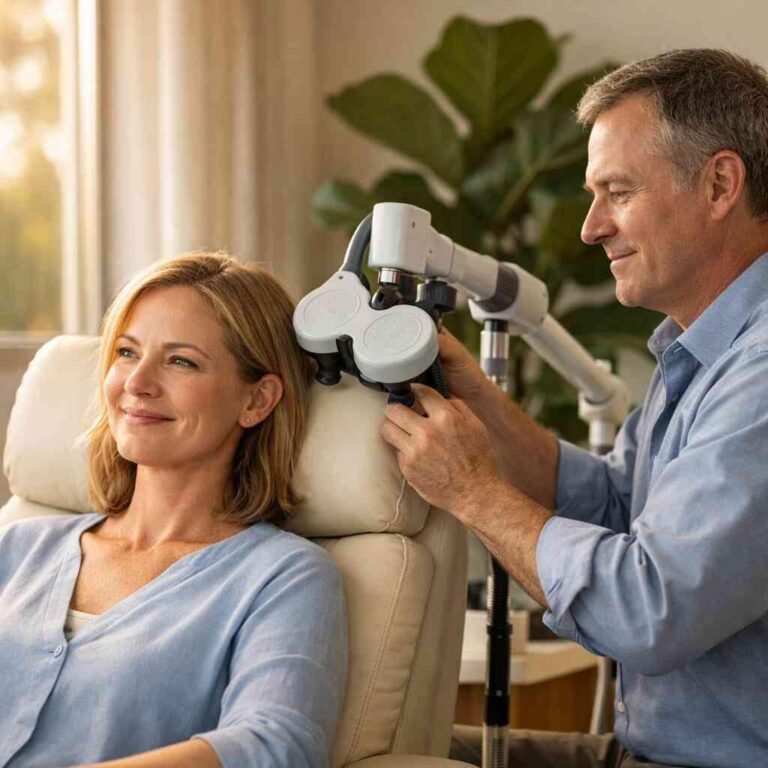
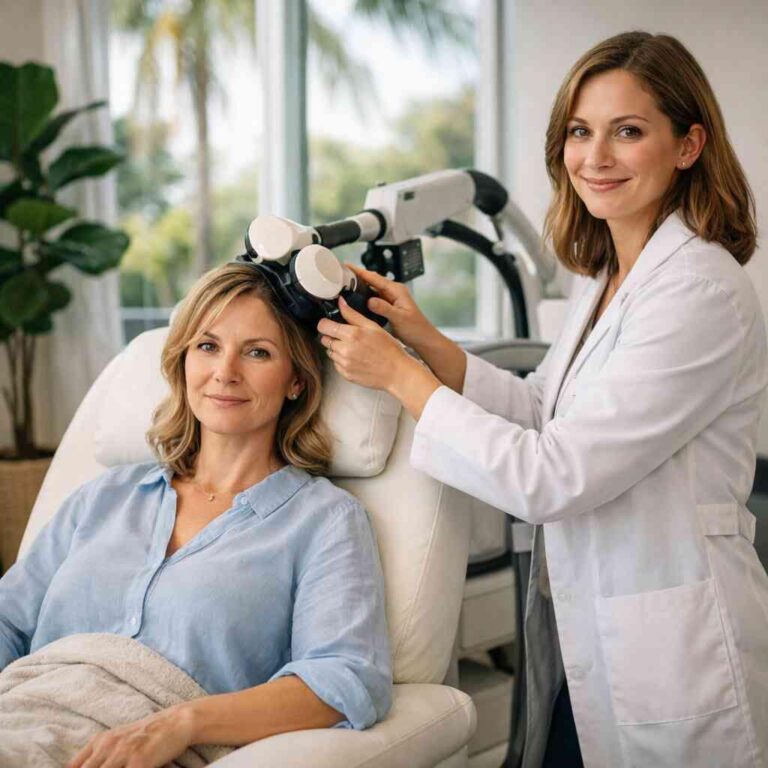
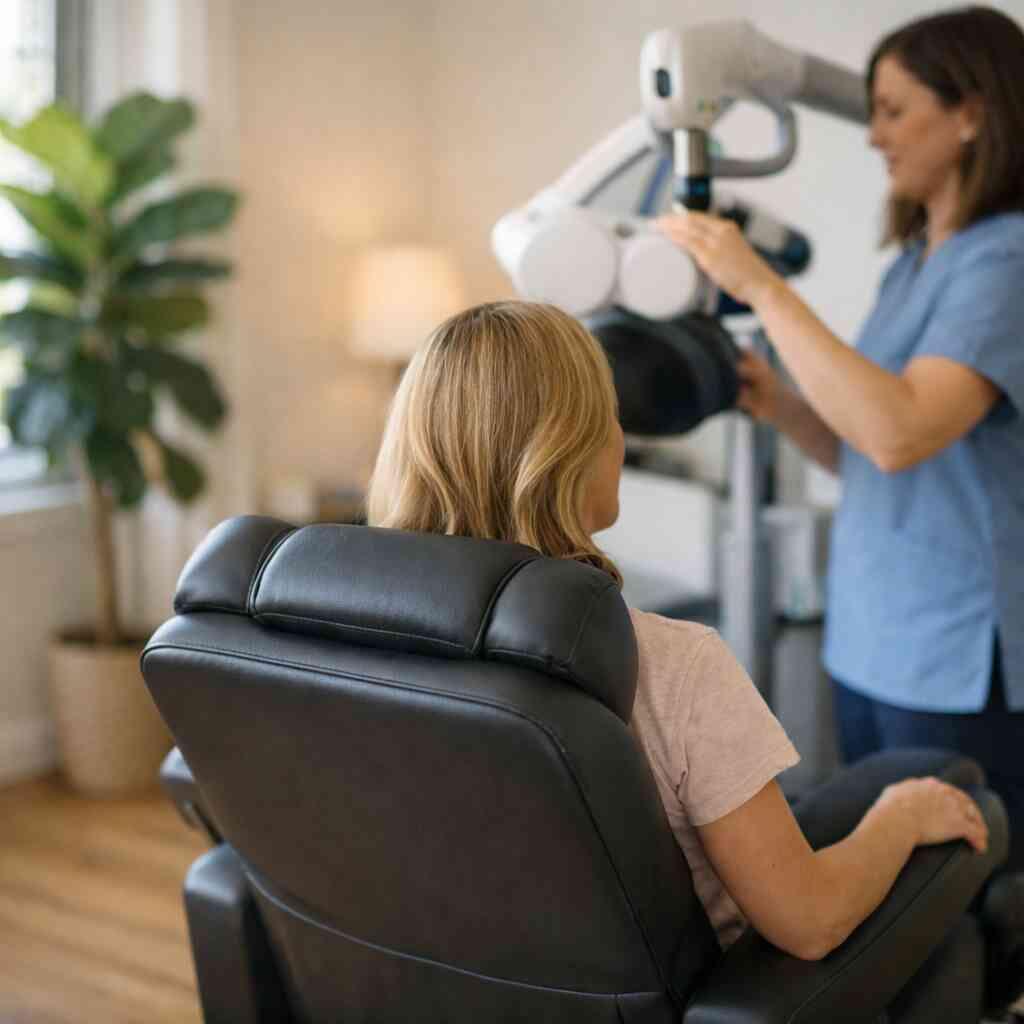
Think of it less like a shock and more like a nudge. Transcranial magnetic stimulation therapy uses targeted magnetic fields to stimulate nerve circuits linked with depression and related conditions. Many people describe the sensation as tapping or clicking on the scalp. It can feel strange at first, but not overwhelming. That is one reason many readers prefer it over more medication changes. It is non-invasive brain stimulation, and it leaves no surgical recovery period.
The fear that TMS will “change who you are” is common. It is also understandable. People dealing with depression often feel protective of anything that might alter their mind. Yet repetitive TMS is designed to modulate activity, not overwrite identity. That distinction matters. It is also why a careful intake with a TMS psychiatrist Florida team can ease a lot of fear before treatment starts. If you want more background, the about TMS treatment in Florida page can help explain the clinic philosophy.
Why repetitive TMS and deep TMS therapy are different tools for different brain targets
Not all TMS protocols are the same. Repetitive TMS uses repeated pulses over a chosen area. Deep TMS therapy reaches broader or deeper neural targets through different coil designs. That does not mean one is better in every case. It means they serve different clinical goals. When people compare options, they are often comparing target depth, comfort, and the condition being treated.
FeatureRepetitive TMSDeep TMS therapyBrain targetMore focalBroader or deeperSession feelClicking, tappingSimilar, sometimes more intenseCommon useDepression, anxiety supportDepression, OCD protocols in some settingsClinical choiceDepends on evaluationDepends on symptoms and device planThat table is the short version. The longer version is personal. Some people want the most focused approach possible. Others want a protocol that matches a more complex symptom pattern. Either way, you should ask which device and protocol the clinic actually uses.
What current research can and cannot say about TMS therapy success rate and long-term results
Research on transcranial magnetic stimulation has grown steadily. The 2018 Stanford study often discussed in TMS circles, along with broader reviews by Carpenter and colleagues, helped strengthen confidence in TMS for depression. The Clinical TMS Society and APA practice guidelines also support thoughtful use in appropriate patients. Still, research does not justify claiming one universal TMS therapy success rate for every person. People vary. Diagnosis varies. Prior medications vary. So do life stressors.
That is why TMS long-term results and TMS maintenance therapy matter. Some people maintain gains well. Others need follow-up planning. The honest answer is that TMS can help many patients, but the outcome depends on matching the right protocol to the right person. On the safety side, TMS side effects safety is usually one of the first questions people ask. Common issues may include scalp discomfort, headache, or fatigue. Serious risks are uncommon, but a full screening is still essential.
Why tools like the PHQ-9 and MADRS matter more than vague feelings when progress is tracked
Feelings matter. But numbers matter too. If a clinic says you are improving, ask how they know. That is where the PHQ-9 and MADRS come in. These tools give structure to the process. They help compare week one with week six. They also help keep expectations grounded when someone feels “about the same” but scores show a change.
Here is the part most people miss: good TMS care measures more than mood alone. Sleep, motivation, concentration, and daily function all matter. A patient may still have hard days and still be improving. That is why careful tracking beats vague reassurance. It also gives you a cleaner way to judge whether treatment is worth continuing. In a serious clinic, data and empathy should sit next to each other.
Why Orlando patients compare TMS for depression, anxiety, OCD, and addiction in the same search
It makes sense to search broadly when symptoms overlap. Depression can sit beside anxiety. OCD can sit beside depression. Addiction can sit beside trauma. That is why people often compare TMS for anxiety, TMS OCD therapy, TMS for PTSD Florida, and TMS addiction recovery in one sitting. They are not being scattered. They are trying to find the right explanation for a complicated nervous system. That search often leads to a Florida mental health clinic that can sort through the whole picture.
When TMS depression treatment Florida makes sense after failed medications and talk therapy
For many patients, TMS depression treatment Florida becomes relevant after failed medications and months of therapy that helped insight but not energy. Therapy can still matter. Medications can still matter. Yet if you are still waking up heavy, TMS may deserve a serious look. The strongest candidates often have medication resistant depression and enough stability to attend regular sessions. This is where a clinic should explain the plan clearly, without pressure.
The 2018 Stanford work, along with broader transcranial magnetic stimulation research, supports TMS as a serious option. That does not mean every depressed person should get it. It means the treatment has a real evidence base. If you want to compare this with the broader service line, the TMS treatment and therapy locations in Florida page can help you see where care may fit your commute and your life.
What TMS for anxiety and TMS OCD therapy may look like when symptoms overlap and keep looping
TMS for anxiety can help some people when worry, tension, and sleep disruption stay high. TMS OCD therapy is different, because OCD often needs a more specific protocol and a careful diagnosis. The looping thoughts matter. The rituals matter. The compulsions matter. People often describe OCD as knowing the fear is irrational and feeling trapped anyway. That is why TMS treatment for obsessive-compulsive disorder in Florida should be considered with precision.
An Orlando patient once described their days as “a mental browser with 40 tabs open.” That is how anxiety and OCD often feel together. The noise is constant. The body stays braced. A clinic should not flatten those differences into one generic plan. It should sort through them. If you are comparing symptom-specific options, the anxiety TMS treatment page and the OCD TMS treatment page are both worth reviewing.
Where TMS for PTSD Florida and TMS for bipolar depression fit, and where caution matters
TMS for PTSD Florida is still an area of active study. Some patients report benefit, but the evidence is not as settled as depression protocols. TMS for bipolar depression also requires care, because mood switching risk needs to be considered by a clinician who understands bipolar history. That is where a thoughtful intake matters more than a flashy promise. You want a team that asks about past mania, sleep shifts, and family history.
The best Florida behavioral health programs treat caution as part of good care, not as a refusal. That is especially important for teens, young adults, and people with complex histories. If you have trauma symptoms, bipolar symptoms, or both, the plan should be individualized. It should also include coordination with your broader mental health supports when needed.
Why TMS addiction recovery and TMS for substance use disorder are being studied alongside cravings and dual diagnosis treatment Florida
People are increasingly asking about TMS addiction recovery and TMS for substance use disorder because cravings can feel as relentless as depression. This area is still developing. The research on rTMS and craving circuits is growing, including studies discussed in addiction centers and academic settings like the Medical University of South Carolina. The National SAMHSA TIP materials also remind clinicians to treat substance use with structure and support, not shortcuts. TMS may fit some cases, especially when depression and cravings collide.
Dual diagnosis care matters here. If you are dealing with depression plus alcohol use, or anxiety plus opioid recovery, the treatment plan should reflect both. That is why dual diagnosis treatment Florida and addiction rehab Florida often show up in the same search as TMS. If you want a broader overview of this pathway, the how TMS treatment Florida helps patients with dual diagnosis page can be a starting point, though a full evaluation is still essential.
How TMS for smoking cessation and alcohol addiction brain stimulation differ from depression-focused protocols
TMS for smoking cessation and alcohol addiction brain stimulation are not simply depression treatments with a new label. They target craving, impulse control, and reward circuitry in different ways. That means the protocol, goals, and follow-up may differ. A depression protocol aims at mood symptoms. A craving-focused protocol aims more directly at urges and use patterns. Those are not the same problem. 
The difference matters because people sometimes expect one treatment to solve everything. Real recovery rarely works that way. If a clinic promises a cure for addiction, that is a red flag. Better care explains where the research is promising and where it is still forming. It also explains how TMS may complement counseling, recovery support, and medical management. For background on this broader clinical model, the what is TMS therapy in Florida for depression in 2026 page can provide helpful context.
What TMS and EMDR combination conversations usually mean inside a Florida mental health clinic
When people ask about TMS and EMDR combination, they usually want trauma relief without losing depth work. EMDR can process memory and trauma responses. TMS can support mood and arousal systems. Used thoughtfully, they may complement each other. Used carelessly, they can confuse the plan. So the conversation should always start with symptoms, timing, and readiness.
Here is the practical part. If trauma drives the depression, EMDR may still matter a lot. If low mood blocks the ability to engage in trauma work, TMS may help create enough stability for therapy to work better. That is not a universal rule. It is a clinical judgment. A good Florida mental health clinic will explain the sequence, not just the buzzwords.
The Orlando decision frame that turns curiosity into a real plan
This is the stage where hope needs structure. People often know they want help. They just do not know how to compare clinics without getting lost in marketing. That is especially true when TMS cost Florida, TMS insurance coverage Florida, and best TMS clinic Florida all enter the same conversation. A useful plan should answer safety, cost, evaluation, and follow-up before you commit.
What to ask a Florida mental health clinic about TMS side effects safety and who should evaluate you
Ask who performs the evaluation. Ask how they screen for seizure risk, bipolar history, and medication interactions. Ask how they monitor TMS side effects safety during the series. Ask what happens if you miss sessions. Those questions are not picky. They are smart.
Florida clinics also need to follow Florida AHCA expectations for outpatient settings, so licensing and clinic oversight matter. You do not need to become a compliance expert. You do need to know the basics. A reputable clinic should welcome those questions and answer them plainly. If you want to compare credentials and team background, the about us page is the right place to look. A clinic should be transparent about who is involved and what role they play.
How TMS insurance coverage Florida and TMS cost Florida are usually discussed before treatment starts
Money conversations should happen early. TMS insurance coverage Florida varies by plan. So does the answer to does insurance cover TMS in Florida. Some plans require prior authorization. Others want proof of medication failures. Others need documented symptom scores. The clinic should help you understand those steps before the bill ever appears.
If you need a cost overview, ask for the range, the likely authorization path, and any out-of-pocket estimate. Do not accept vague answers. TMS cost Florida should be discussed with enough clarity to plan your month, not your fantasy. For a more detailed breakdown, the insurance and costs page can help you frame the right questions before you call.
Why TMS psychiatrist Florida support matters for teens, young adults, and people with complex histories
A strong TMS psychiatrist Florida review matters most for people with layered histories. That includes teens with depression, TMS for teen depression, TMS for young adults, bipolar symptoms, trauma, ADHD, or substance use history. These cases deserve more than a checkbox intake. They need careful diagnostic thinking and family or support-system coordination when appropriate.
Young adults in particular can get bounced between providers. That is tiring. It can also delay the right treatment. A thoughtful psychiatrist should explain why TMS is or is not appropriate, what else should be evaluated, and how progress will be tracked. The goal is not to push treatment. The goal is to match treatment to the person in front of you.
How to compare the best TMS clinic Florida options without getting lost in hype or luxury branding
A luxury TMS center may look impressive. That alone tells you little. The better question is whether the clinic explains its protocol, tracks outcomes, and follows through. Reviews can help, but TMS reviews Florida should be read carefully. Look for comments about communication, scheduling, and clarity. Do not treat one glowing review as proof of medical quality.
A simple checklist helps:
- Does the clinic explain how does TMS work in plain language?
- Do they discuss TMS therapy success rate honestly?
- Do they track PHQ-9 or MADRS scores?
- Do they review safety and contraindications?
- Do they explain next steps if symptoms return?
That is the real difference between polished branding and solid care. If you want a comparison point, the best TMS clinic in Florida for 2026 care page can help you evaluate what good communication should sound like.
What next makes sense if you want TMS Orlando, TMS Tampa, TMS Miami, or TMS South Florida care and want to move forward with clarity
If you are weighing TMS Orlando, TMS Tampa, TMS Miami, or broader TMS South Florida access, keep the plan simple. Pick one clinic. Ask about evaluation timing. Ask about insurance verification. Ask what diagnoses they commonly treat. Then decide if the fit feels calm, clear, and respectful. You do not need to solve everything this week.
A practical next move is to collect three things today: your medication history, your insurance card, and a short list of symptoms that still bother you most. Then make one call. You do not have to figure this out alone, and you do not have to figure it all out right now. Start with one conversation, and ask for clarity before you ask for commitment.
Frequently Asked Questions
Does TMS work for depression when medications have failed?
Often, yes. It can help some people with medication resistant depression. Research and clinical guidelines support TMS as a real option for certain patients, especially after failed medications. Still, no honest clinic should promise a specific result. Good care starts with screening, symptom tracking, and a clear diagnosis. The best way to judge progress is with tools like the PHQ-9 or MADRS, not gut feeling alone.
Is TMS safe, and what side effects should I expect?
TMS is generally considered safe when a qualified clinic screens you properly. Common side effects may include scalp discomfort, mild headache, or tiredness. These often improve as treatment continues. Serious risks are uncommon, but they must be discussed before treatment starts. If you have a seizure history, bipolar symptoms, or implanted metal concerns, the clinic should review those carefully.
How long does TMS treatment usually take?
Many TMS plans run across several weeks with frequent sessions. The exact schedule depends on the protocol, diagnosis, and device used. Some people notice changes earlier, while others need more time before they see meaningful movement. Clinics usually track progress over time, often with standardized rating scales, so the plan can be adjusted with real data.
Does insurance cover TMS in Florida?
Sometimes it does, but coverage varies by plan. Many insurers require documented medication failures and a confirmed diagnosis before authorizing treatment. Some also want symptom scores and prior treatment history. The clinic’s insurance team should help verify your benefits before you start. It is smart to ask for a written estimate of likely out-of-pocket costs.
Can TMS help with anxiety, OCD, or addiction too?
TMS may help some people with anxiety, OCD, and addiction-related symptoms, but the evidence differs by condition. TMS OCD therapy has a more established pathway than some other uses. TMS addiction recovery and TMS for substance use disorder remain active research areas, especially for cravings and dual diagnosis care. A careful evaluation matters, because the right protocol depends on the symptom pattern.
What should I ask before choosing a TMS clinic in Orlando?
Ask who evaluates you, which device they use, how they track outcomes, and how they handle insurance verification. Ask about side effects, follow-up, and what happens if symptoms return. You should also ask whether they use PHQ-9 or MADRS scores. Those questions help you compare clinics based on care quality, not marketing.