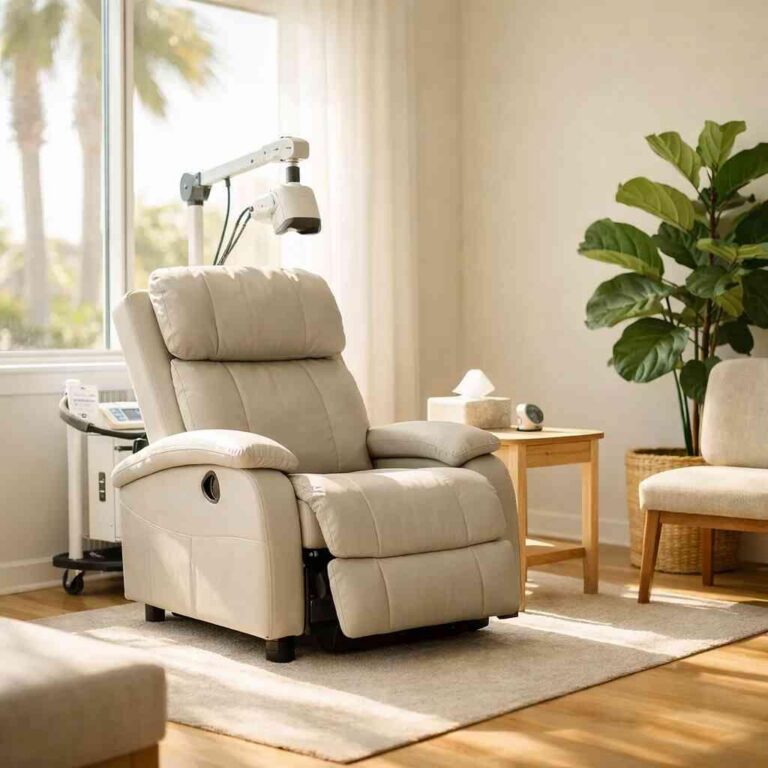
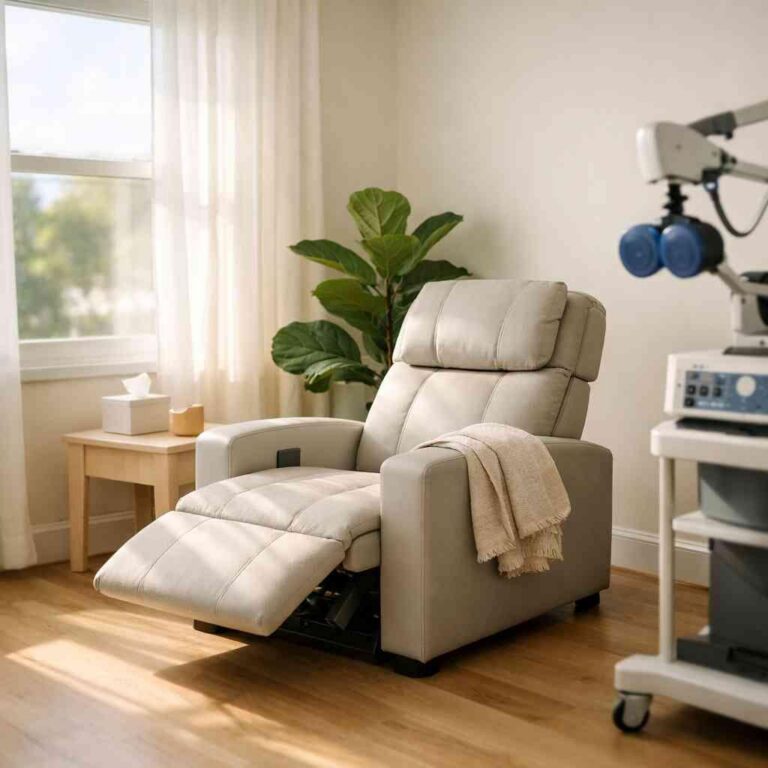
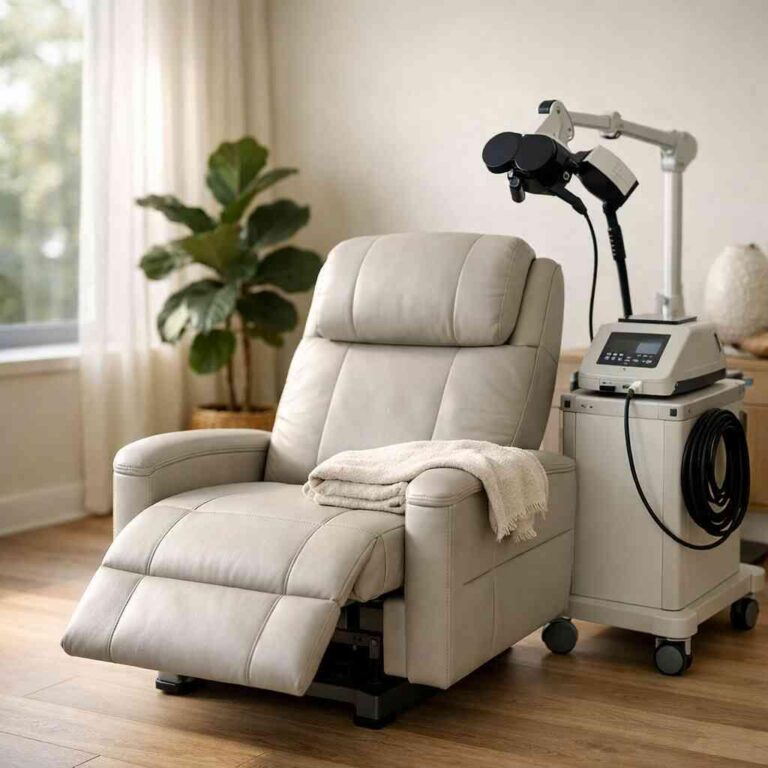
TMS helps medication resistant depression by using targeted magnetic pulses to stimulate brain circuits that antidepressants may not fully reach. It does not force a mood change; it helps the brain’s own networks communicate more effectively again.
Key Takeaways
- Medication resistant depression often means the brain is not responding well enough to serotonin-based treatment alone, not that recovery is out of reach.
- Transcranial magnetic stimulation therapy is a non-invasive brain stimulation treatment that targets mood networks linked to depression.
- TMS after failed medications can help because it works on brain activity and connectivity, while pills mainly change chemistry system-wide.
- Repetitive TMS and deep TMS therapy both use magnetic stimulation, but clinics describe them differently because they reach brain tissue in different ways.
- For Florida patients, practical issues like TMS insurance coverage Florida, follow-up care, and access to a TMS psychiatrist Florida matter as much as the science.
Why medication resistant depression can still respond when pills have stalled
Medication resistant depression can still respond because antidepressants and TMS work differently. Pills change brain chemistry across the whole system, but TMS directly stimulates the mood circuits that may be underactive or poorly connected. That is why a person can feel stuck on medication and still improve with a non-drug depression treatment.
What changes in the brain when SSRIs and other antidepressants stop giving relief
When SSRIs and other antidepressants stop giving relief, the problem is often not just “low serotonin.” Depression can involve slowed communication between the prefrontal cortex, limbic system, and other mood-regulating networks. A medication may help one part of that system, yet leave the larger circuit imbalance in place.
That is the hard part for many people. You can take the medicine correctly, stay consistent, and still feel flat, foggy, or emotionally pinned down. We hear this from people across Florida who have tried one medication after another and are tired of guessing.
One client from the Boca Raton area described it like this: mornings felt heavy, coffee barely helped, and every dose felt like another try at the same dead end. That kind of exhaustion is common in medication resistant depression, and it is exactly why people start asking, how does TMS work after pills have stalled.
Why non drug depression treatment can reach circuits medication cannot fully reset
Non-drug depression treatment can reach circuits medication cannot fully reset because it works through brain activation, not just chemistry. TMS delivers pulses to a specific region involved in mood regulation, often the left dorsolateral prefrontal cortex. Over time, that stimulation may help the brain reorganize activity in a more stable pattern.
For some people, this matters because their depression shows up as more than sadness. It can look like low drive, poor concentration, sleep disruption, and a sense that even simple tasks take too much energy. TMS does not replace therapy, sleep care, or medication planning, but it can add a different mechanism when other care has not gone far enough.
If you want a broader overview of the treatment path, our depression TMS guide explains where this option fits. For people comparing options in Florida, that distinction between chemistry and circuit-based care is often the turning point.
What TMS is actually doing to the depressed brain
TMS is trying to improve how the brain’s mood networks fire and talk to each other. Transcranial magnetic stimulation therapy uses brief magnetic pulses to stimulate targeted areas of the brain without surgery or sedation. In plain terms, it helps “rehearse” healthier signaling in regions tied to mood, focus, and motivation.
How transcranial magnetic stimulation therapy uses non invasive brain stimulation to target mood networks
Transcranial magnetic stimulation therapy is a form of non-invasive brain stimulation. A coil placed near the scalp sends focused magnetic energy through the skull and into the brain tissue below. Those pulses do not “shock” the brain in the way many people imagine; they gently influence neural firing patterns. The evidence base is meaningful. The 2018 Stanford-associated work often discussed in TMS research, along with broader clinical data, supports TMS as an FDA approved depression treatment for certain patients. Professional guidance from groups like the American Psychiatric Association and the National Institute of Mental Health also helps frame where brain-stimulation treatments fit in modern depression care. For a clearer explanation, see our article on what TMS therapy is in Florida and how it works. 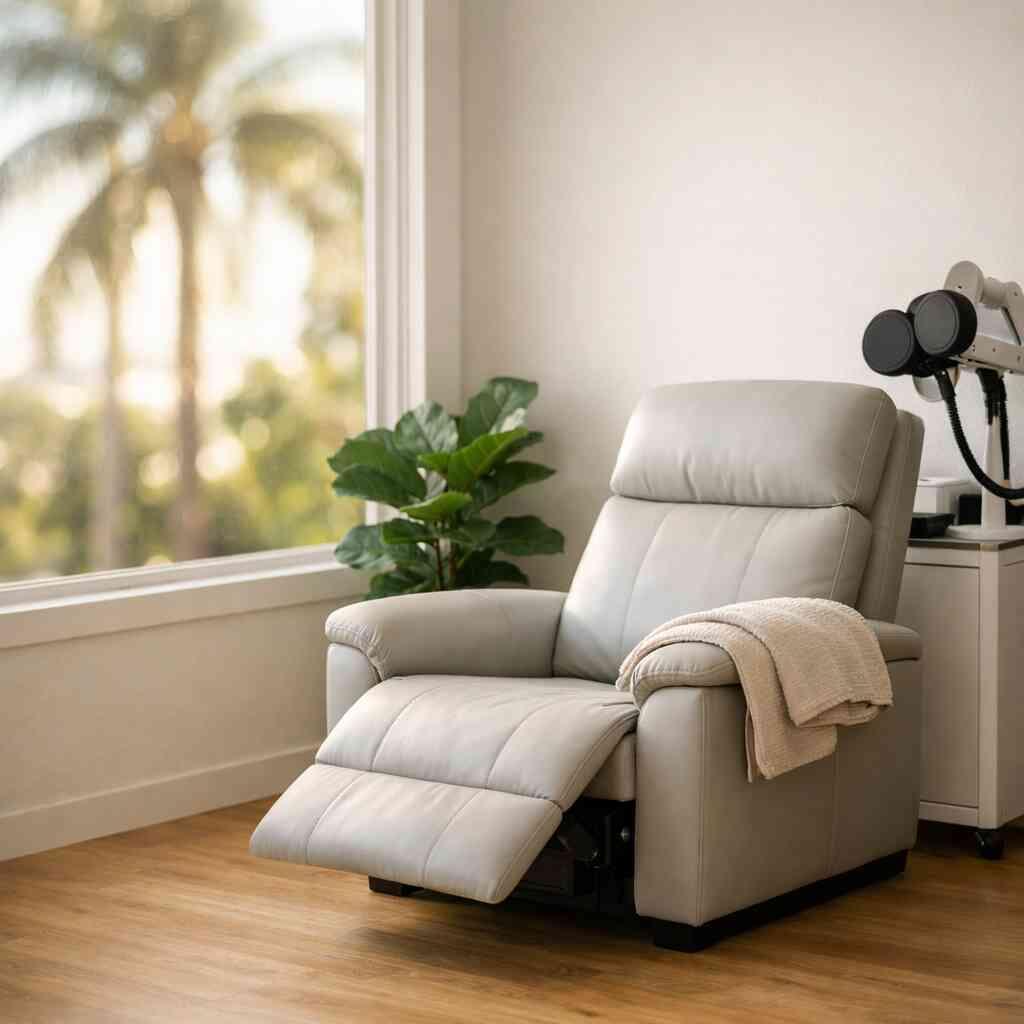
A typical clinic will track progress with tools such as the PHQ-9 or MADRS rather than relying on “how do you feel today” alone. That matters because mood recovery is rarely linear. The numbers help show whether the brain is responding over time.
Why repetitive TMS and deep TMS therapy are discussed differently in Florida clinics
Repetitive TMS and deep TMS therapy are both forms of magnetic brain therapy, but they are not identical. Repetitive TMS generally uses repeated pulses aimed at a more specific surface cortical target. Deep TMS is designed to reach deeper or broader brain regions with a different coil structure.
FeatureRepetitive TMSDeep TMS therapyTargetingMore focused cortical areaBroader field, potentially deeper reachSession feelRepeated tapping sensationSimilar, sometimes more diffuseCommon discussion in clinicsDepression-focused protocolsDepression, OCD, and some other indicationsBest fitDepends on diagnosis, history, and goalsDepends on the clinic’s protocol and evaluationFlorida clinics may discuss them differently because patients arrive with different diagnoses and histories. Someone seeking TMS for anxiety may need a different plan than someone exploring TMS OCD therapy or treatment for bipolar depression. If you are searching for a TMS clinic Miami or looking for a TMS near me Florida option, the right question is not only “which device?” but also “which protocol fits my history?”
On the practical side, people in Aventura, Coral Gables, Delray Beach, Winter Park, and other parts of South Florida often want a clinic that can explain the difference clearly and coordinate follow-up care. That is especially important when insurance questions, work schedules, and travel time all matter.
The real reasons TMS can help after failed medications
TMS can help after failed medications because it targets brain network function, not just symptoms. It may improve communication in regions involved in mood, attention, and motivation, which is why some people notice changes even after several medication trials have not worked well. It is also why safety, follow-up, and long-term planning matter as much as the device itself.
How TMS may improve communication in brain regions tied to mood, focus, and motivation
The best way to think about TMS is as a circuit reset, not a quick mood fix. Researchers believe it can strengthen underactive pathways and reduce the lockstep patterns that keep depression going. Over repeated sessions, that may support more flexible brain activity.
Clinical TMS care often includes daily sessions over several weeks, then a reassessment. Some patients need TMS maintenance therapy later if symptoms return, especially when depression has been recurrent. The goal is not a dramatic one-day change. It is steadier movement over time.
Here is the part most people miss: TMS does not depend on your stomach absorbing a pill, your liver metabolizing it, or your system tolerating the same side effects. That can matter for people who have had dry mouth, weight changes, fatigue, or emotional dulling from medication. It also matters for those exploring TMS after failed medications and wanting a different mechanism. For a more focused overview, read why TMS therapy helps when medications fall short.
Why people with TMS after failed medications often ask about TMS side effects safety and long term results
People ask about TMS side effects safety because they have often already been through enough uncertainty. The most common side effects are usually scalp discomfort, mild headache, or temporary facial twitching during treatment. Serious risks are uncommon, but screening matters, especially for seizure risk and metal implants near the head.
For a balanced view, the Clinical TMS Society and other professional groups discuss patient selection, monitoring, and outcome tracking. That kind of guidance matters in a Florida mental health clinic because good care includes more than just turning the machine on. It includes a real evaluation, a treatment plan, and follow-up.
People also ask about TMS therapy success rate and TMS long-term results. Those answers depend on diagnosis, prior treatment history, protocol, and adherence, so no honest clinic should promise a fixed outcome. What can be said safely is that many patients who have not done well on medication still find TMS worth discussing, especially when they want a non-drug depression treatment with a different biological pathway.
For readers weighing costs and access, our insurance and cost guide explains how coverage questions are usually handled in Florida. If you are comparing a TMS West Palm Beach or TMS Orlando option with a TMS Tampa or TMS South Florida clinic, the right conversation should include screening, safety, and what happens after the initial series ends. You can also review how to compare TMS clinics in Miami, Fort Lauderdale, and Tampa.
If medication has stalled and you want a careful, confidential conversation about whether TMS makes sense for you, TMS Treatment Florida can help you sort through local options without pressure. You can also call the 24/7 helpline at +18886883036 to talk through screening and next steps with a real person.
Frequently Asked Questions
Question: Why does TMS help medication resistant depression when antidepressants have not worked well?
Answer: TMS can help medication resistant depression because it works on brain circuits rather than only changing brain chemistry system-wide. While antidepressants may be helpful for many people, some depression is tied to disrupted communication in mood networks that pills do not fully reset. Transcranial magnetic stimulation therapy uses non-invasive brain stimulation to target those networks directly, which is why many people consider it an alternative depression treatment when medications have stalled. At TMS Treatment Florida, the focus is on careful screening, individualized planning, and compassionate support so patients can explore whether TMS after failed medications may be a reasonable next step. We do not promise specific outcomes, but we do offer a thoughtful evaluation of whether this FDA approved depression treatment may fit your history and goals.
Question: What happens during transcranial magnetic stimulation therapy at a Florida mental health clinic?
Answer: During transcranial magnetic stimulation therapy, a magnetic coil is placed near the scalp and delivers focused pulses to targeted brain areas involved in mood regulation. This is a non-invasive brain stimulation treatment, so there is no surgery and no sedation. Many people appreciate that TMS treatment Florida options are designed to fit into real life, with sessions that are typically scheduled over multiple visits rather than requiring an inpatient stay. Depending on the protocol, a clinic may use repetitive TMS or deep TMS therapy, and the best choice depends on the person’s diagnosis, history, and treatment goals. If you are looking for a TMS psychiatrist Florida or searching for TMS near me Florida, the most important part is choosing a clinic that can explain the process clearly and safely, including what to expect before, during, and after treatment.
Question: How does TMS work for people who also have anxiety, OCD, PTSD, or bipolar depression?
Answer: TMS is often discussed for depression, but it may also be considered for related conditions such as TMS for anxiety, TMS OCD therapy, TMS for PTSD Florida, and TMS for bipolar depression, depending on clinical evaluation. The reason is that many of these conditions involve overactive or underactive brain networks that affect mood, focus, and stress response. By using magnetic brain therapy to stimulate specific regions, TMS may help improve how those networks communicate. That said, the treatment plan should always be individualized, especially when there is dual diagnosis treatment Florida involvement, substance use history, or a need for coordinated behavioral health care. At TMS Treatment Florida, the goal is to provide a careful, supportive process that respects the complexity of each person’s mental health needs.
Question: What should I know about TMS side effects safety, insurance, and long-term care before starting?
Answer: It is smart to ask about TMS side effects safety, TMS insurance coverage Florida, and TMS long-term results before starting care. Most people want to know whether the treatment is tolerable, affordable, and realistic for ongoing support. Common side effects are generally described as mild and temporary, such as scalp discomfort or headache, but a full screening is still important. Coverage questions such as does insurance cover TMS in Florida or TMS cost Florida can vary by plan, so a clinic should help you understand benefits and documentation needs without making assumptions. If symptoms return later, some patients may discuss TMS maintenance therapy as part of a longer-term plan. TMS Treatment Florida encourages open conversation about all of these topics so patients can make informed decisions with clarity and confidence.
Question: What makes TMS Treatment Florida a good option if I am looking for the best TMS clinic Florida has to offer?
Answer: When people search for the best TMS clinic Florida, they usually want more than a machine. They want a Florida mental health clinic that listens, explains options clearly, and creates a plan that fits their life. TMS Treatment Florida serves patients across the state, including those looking for TMS clinic Miami, TMS Fort Lauderdale, TMS West Palm Beach, TMS South Florida, TMS Orlando, or TMS Tampa options. The practice is focused on compassionate care, individualized treatment planning, and a strong understanding of how TMS depression treatment Florida can fit alongside broader mental health support. For some patients, that may also include discussions about TMS and EMDR combination, TMS addiction recovery, or TMS for substance use disorder when appropriate. If you are comparing TMS reviews Florida or looking for a luxury TMS center experience with a respectful, supportive approach, the priority should always be safety, transparency, and fit rather than hype.