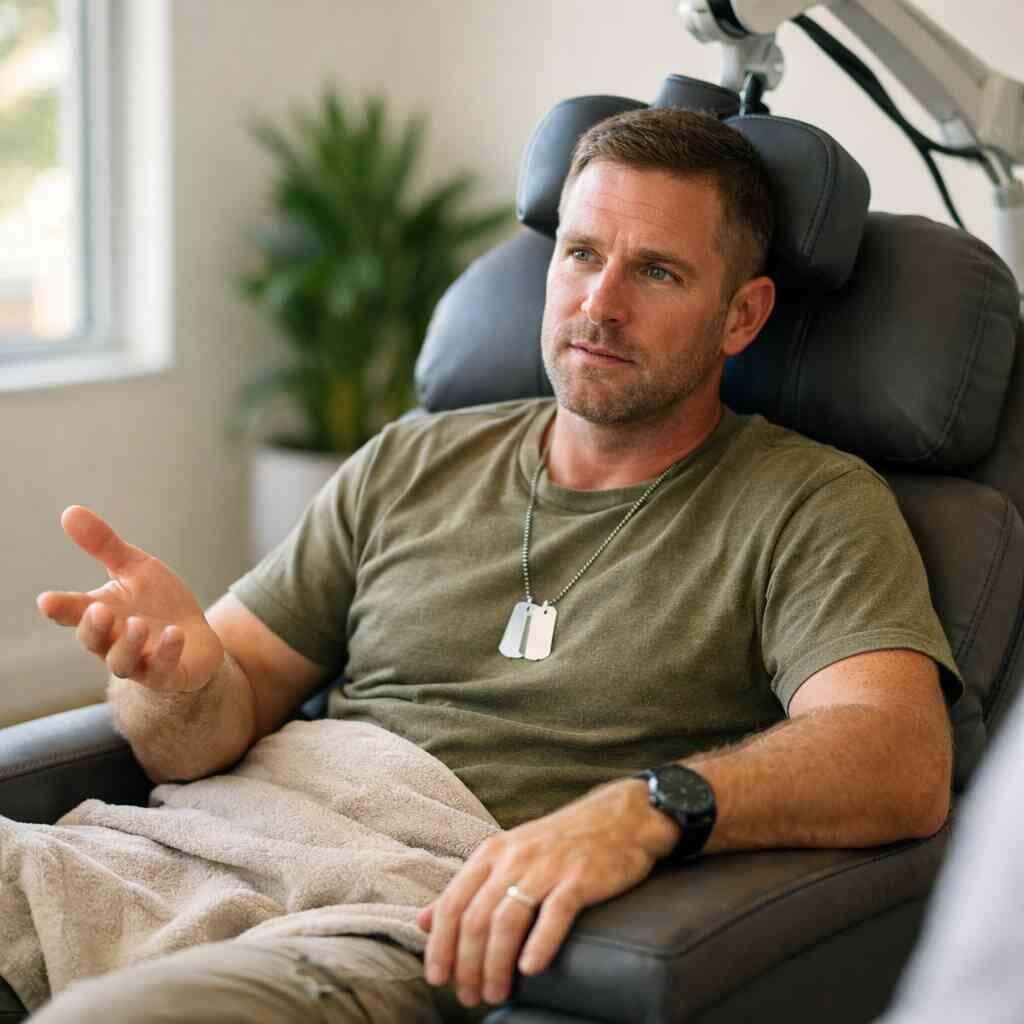
When depression keeps veterans stuck after usual medications stop working
Many veterans search for a simple answer at night: what if the medications stopped helping? That question carries weight. It often shows up after months of fatigue, a flat mood, and a sense that the mind has gone quiet in the wrong way. If you are feeling that now, the frustration makes sense.
Medication-resistant depression can feel heavier for veterans than for civilians. You may be carrying sleep disruption, hypervigilance, pain, or memories that keep your body on alert. On top of that, antidepressant side effects can make you feel foggy, numb, or even more disconnected. That is why TMS treatment Florida matters as an option worth understanding.
Why medication-resistant depression can feel heavier for veterans than for civilians
Veterans often deal with more than low mood. The day can include nightmares, poor sleep, pain, irritability, and a body that never fully relaxes. That constant strain can make depression feel fused to daily life. It is not weakness. It is overload.
The biggest trap is assuming one more medication will fix everything. Sometimes it helps. Sometimes it adds dry mouth, weight changes, or a dull mental edge. We hear this from people who have already tried several prescriptions and still feel stuck. That is where TMS depression treatment Florida can start to make sense.
The quiet signs that SSRIs, sleep loss, and numbness are all pointing the same way
There are quiet signals that often get missed. You may be sleeping longer but waking tired. You may finish a work shift and feel nothing. You may notice that favorite music, food, or family time no longer lands the way it used to. Those details matter.
One veteran from the Fort Lauderdale area described feeling “present enough to function, but not enough to live.” That sentence stayed with us because it is so common. The person was not in crisis every moment. Instead, depression sat there like a low electric hum. When people describe that kind of flatness, clinicians should think broadly, not narrowly. Sometimes the next step is not talk therapy alone.
Why TMS treatment Florida can make sense when talk therapy alone is not moving the needle
Talk therapy helps many people. It can also stall when the brain is too stuck to respond well. Transcranial magnetic stimulation therapy offers a different route because it works through non-invasive brain stimulation, not medication changes. For veterans who have already done the hard work of therapy and still feel trapped, that difference matters.
The best way to think about it is this: therapy teaches new patterns, while TMS helps make the brain more ready to use them. The 2018 Stanford study by Carpenter and colleagues helped build momentum for this field, and later practice guidance has kept interest strong. If you want a Florida-specific starting point, 6 ways TMS treatment in Florida supports veterans with depression is a helpful overview.
1 How transcranial magnetic stimulation therapy works when the brain feels welded shut
A lot of people ask, how does TMS work? The short answer is that it uses focused magnetic pulses to stimulate brain regions involved in mood control. It does not flood your whole body. It does not change your personality. It aims at circuits that depression can silence.
That is why many patients view it as alternative depression treatment or non-drug depression treatment rather than another medication to manage. In the U.S., devices such as NeuroStar and BrainsWay have received FDA clearance for depression treatment, though that does not mean every device or protocol is identical. The details still matter. Clinic experience, mapping, and follow-up matter too.
The simple science behind non-invasive brain stimulation and magnetic brain therapy
Magnetic brain therapy sounds abstract until you picture the setup. You sit in a chair. A padded coil rests near the scalp. The machine clicks rhythmically. Those pulses create small electrical changes in targeted brain tissue. That is the basic idea behind non-invasive brain stimulation.
Researchers continue to study transcranial magnetic stimulation research because the method is precise enough to be interesting, yet gentle enough for outpatient care. Many clinics use repetitive TMS protocols, and some use deep TMS therapy for broader targeting. If you want a clean explainer, the science behind transcranial magnetic stimulation in 2026 gives a more detailed clinical view.
Why repetitive TMS and deep TMS therapy target mood circuits instead of flooding the whole body
Here is the part most people miss. TMS does not ask your liver, stomach, or bloodstream to do the heavy lifting. It goes straight at the networks linked to mood and motivation. That is why it can feel so different from oral medication.
For some veterans, that focused design matters because they already have enough medication burden. Others like the clarity of knowing what is being targeted. In practice, clinics may track progress with PHQ-9 or MADRS scores, not guesses. That creates a more grounded picture of change. It also helps avoid the “I think maybe I feel a little better” problem.
What a session feels like in a Florida clinic, from the chair to the tapping sound
A session is usually straightforward. You sit in a chair. Staff position the coil. Then the tapping begins. It can feel odd at first, like a quick drumbeat on one side of your head. Most people describe it as more annoying than painful.
One client who drives in from Boca Raton told us the hum of the machine felt strange for the first two visits, then ordinary. That is often how it goes. Routine lowers stress. Florida clinics also know that parking, timing, and heat matter. If you are comparing locations, the Florida clinic directory can help you think through access from Miami, Fort Lauderdale, West Palm Beach, Orlando, or Tampa.
2 Why TMS can fit veterans who need relief without more medication fallout
Many veterans reach a point where the side effects become the bigger problem. That is not a small issue. If a medication blunts your focus, drains your energy, or worsens sleep, daily life gets harder fast. TMS offers a path that may reduce dependence on more medication changes.
That is one reason people search for TMS after failed medications. The phrase sounds clinical, but the feeling behind it is personal. You have already tried. You have waited. You may have changed doses more times than you can count. At some point, a different strategy feels less like a luxury and more like sanity.
How TMS after failed medications can help when side effects have become the bigger problem
TMS after failed medications is not about erasing the past treatment. It is about acknowledging that the past treatment did not get you where you needed to go. Some veterans arrive after several SSRI or SNRI trials. Others have had partial responses that never held. Either way, the math becomes simple. More of the same may not be the answer.
This is where a Florida mental health clinic with TMS experience can help you think clearly. A good team will review history, symptoms, and goals before talking about the chair. They should also explain whether you fit a standard FDA approved depression treatment pathway or whether another concern needs attention first. Transparency matters more than hype.
Why TMS side effects safety matters for veterans managing sleep, focus, and daily function
TMS side effects safety is often one of the first questions veterans ask. That is wise. You need to know how treatment might affect work, driving, or family routines. Common side effects are usually limited and can include scalp discomfort or a headache. Serious risks are uncommon, but they still deserve careful screening.
The key is an honest discussion. A good clinic should explain what is known, what is not, and what monitoring looks like. If you want a balanced overview, see TMS safety and side effects in Florida. You should never feel pushed past your comfort level. Care should feel structured, not rushed.
How TMS for PTSD Florida and TMS for anxiety can be part of a broader mental health plan
Depression rarely travels alone for veterans. TMS for PTSD Florida may come up when trauma symptoms and depression overlap. TMS for anxiety can also be part of the conversation when worry, hyperarousal, or panic keeps sleep and concentration shattered. TMS is not a cure-all, but it can sit inside a broader plan.
That broader plan may include counseling, sleep work, trauma therapy, and medication review. For some people, TMS OCD therapy or TMS for bipolar depression may also be discussed, depending on diagnosis and history. If your symptoms are complex, a TMS psychiatrist Florida can help sort out what fits and what does not. If you are comparing approaches, TMS treatment in Florida for depression gives a focused explanation.
3 The recovery map for veterans who face depression and substance use at the same time
Depression and substance use often feed each other. One day you are trying to sleep. The next, you are reaching for alcohol, nicotine, or another way to shut the mind down. That is why dual diagnosis treatment Florida is so important. It treats the mood piece and the substance use piece together.
This matters because an addiction plan can fail if depression keeps screaming in the background. Likewise, depression care can wobble if cravings keep pulling you off track. The right plan respects both. It does not shame either one.
Why dual diagnosis treatment Florida often needs both mood care and addiction care
Dual diagnosis treatment Florida means more than having two labels on a chart. It means your care team sees the connection between mood, stress, trauma, and substance use. For veterans, that connection can be especially strong. Pain, boredom, isolation, and trauma reminders all play a role.
The Florida Agency for Health Care Administration also matters here because outpatient clinics still need to meet local regulatory standards. That structure protects patients. It also helps set expectations around safety and oversight. If depression and addiction are both active, the treatment plan should reflect that reality.
How TMS addiction recovery and TMS for substance use disorder are being studied for cravings
Research on TMS addiction recovery and TMS for substance use disorder is still growing. That matters. It means you should hear honest language, not exaggerated promises. Some studies, including work from centers such as the Medical University of South Carolina, suggest rTMS may help reduce cravings in certain groups. The signal is promising, but not definitive.
That is why clinics should frame TMS as a support, not a miracle. For a deeper look at addiction-related care, five ways TMS treatment Florida aids addiction recovery is a useful resource. If a provider claims certainty, slow down. Better clinicians speak in probabilities, not guarantees.
Where TMS for smoking cessation and alcohol addiction brain stimulation may fit alongside rehab support
TMS for smoking cessation and alcohol addiction brain stimulation may interest veterans who want another layer of support during rehab. These uses are still being studied, and they usually work best as part of a larger recovery structure. That means counseling, relapse planning, medical follow-up, and realistic goals.
If you are in rehab or stepping down from it, TMS may fit as an adjunct. It should not replace proven addiction care. It should strengthen the plan you already have. If you want to understand how TMS can fit into a recovery path, the addiction treatment page explains the clinic’s approach in more detail.
4 How Florida access changes the real-world decision for veterans looking for care
Access is not a side issue. It often decides everything. If you live near Miami, Fort Lauderdale, West Palm Beach, Orlando, or Tampa, you may have more choices than someone in a smaller county. But convenience still matters. Repeated visits only work when the drive feels doable.
That is why searches like TMS clinic Miami, TMS Fort Lauderdale, TMS West Palm Beach, TMS Orlando, and TMS Tampa are so common. People are not just shopping. They are solving a logistics problem while already feeling worn down. Florida heat, traffic, and seasonal travel patterns can all affect follow-through.
Why a TMS clinic Miami or TMS Fort Lauderdale option can matter for follow-through
If getting to care feels complicated, treatment adherence drops. A nearby clinic makes it easier to show up after work, after appointments, or after a tough night of sleep. That is especially true for veterans balancing family and job demands. The less friction, the better. A TMS clinic Miami or TMS Fort Lauderdale location can also help if you are coordinating with specialists in Coral Gables or Aventura. For Broward residents, a short drive can be the difference between staying engaged and dropping off. If you want to see service areas, TMS treatment in Broward County is a practical place to check. ### What veterans in TMS West Palm Beach, TMS Orlando, and TMS Tampa should ask about insurance verification 
Insurance questions should happen early. Ask what the clinic will verify before you start. Ask how they document failed medications. Ask whether they will help you understand copays or prior authorization. These details save time and stress.
The phrase does insurance cover TMS in Florida matters because coverage often depends on diagnosis, prior treatment history, and plan rules. TMS insurance coverage Florida is not always simple, so a clinic that helps with verification can reduce confusion. If you need cost language, the insurance and cost overview is a better starting point than guessing from internet noise.
How Florida mental health clinic access, seasonal travel, and TMS near me Florida searches shape timing
Florida has a unique rhythm. Some residents travel seasonally. Some split time between states. Some need care near where they winter, then continuity later. That is why TMS near me Florida searches often spike when people are trying to line up schedules fast.
The best clinics respect that reality. They plan around work, commute, and weather disruptions. They also understand that mental health care must fit real life. If you are comparing regions, the Palm Beach County location page can help you think through proximity from Boca Raton, Delray Beach, and surrounding communities.
5 What veterans should ask before choosing a clinic and starting treatment
Choosing a clinic should feel careful, not flashy. A strong provider answers plain questions without acting irritated. They explain screening, mapping, and follow-up in normal language. They do not hide behind buzzwords. That is the difference between a polished sales pitch and actual care.
This is also where best TMS clinic Florida searches can get tricky. Marketing can sound impressive while offering little substance. You want proof of process, not promises. You want calm competence, not drama.
Which questions reveal whether a provider understands TMS psychiatrist Florida level care
Ask who evaluates you. Ask how they confirm diagnosis. Ask how they handle bipolar history, seizure risk, medications, and trauma symptoms. Those questions reveal whether the clinic has TMS psychiatrist Florida-level depth or just surface-level familiarity.
You can also ask how they measure change. Good clinics do not rely on vibes. They use structured tools like PHQ-9 or MADRS and review symptoms over time. If the answer sounds vague, keep looking. For team background, about TMS Treatment Florida is worth reviewing before you commit.
How to compare TMS insurance coverage Florida, TMS cost Florida, and does insurance cover TMS in Florida
Money questions are uncomfortable, but they are part of real planning. TMS cost Florida depends on coverage, location, and treatment details. You should ask for a clear estimate after verification, not before. That keeps the discussion honest.
Here is a simple comparison framework:
TopicWhat to askWhy it mattersCoverageDoes insurance cover TMS in Florida for my diagnosis?Rules vary by planCostWhat might I owe after verification?Avoids surprise billsVisitsHow many sessions are typical?Helps with schedule planningFollow-upIs maintenance therapy discussed?Supports long-term planningIf the clinic cannot explain these basics, keep searching. A calm, direct conversation about TMS treatment Florida costs and coverage is a strong sign of maturity.
What to look for in a best TMS clinic Florida conversation without falling for hype or vague promises
The best conversations sound ordinary in the best way. Staff should explain screening, timelines, and possible side effects plainly. They should also make space for your military history, current medications, and goals. If they rush, that is a problem.
Ask about TMS reviews Florida if you want a sense of patient experience, but do not let reviews replace direct questions. Ask whether they offer luxury TMS center comforts if that matters to you, but never confuse comfort with clinical quality. If you want a local starting point, TMS Treatment Florida can help you orient to service areas and next questions.
6 What steady progress looks like after the chair sessions end
A lot of people think treatment ends when the last session ends. Often, the real work shifts rather than stops. You may need maintenance planning, symptom monitoring, and other support to keep gains from slipping. That is normal. It is not failure.
The phrase TMS long-term results matters here because mental health care should think beyond a single burst of improvement. Veterans often need structure after relief starts to appear. That structure can be simple, practical, and steady. It can also be the difference between momentum and backsliding.
Why TMS maintenance therapy may matter for long-term results in depression care
TMS maintenance therapy may be discussed when a patient responds well and needs help holding that progress. Not everyone needs it. Some do. The decision depends on symptom history, relapse pattern, and life stress. That is why follow-up matters.
A veteran in Orlando once told us the hardest part was not starting care. It was keeping life from pulling him backward after he felt better. That is a real concern. Maintenance planning can reduce that risk by making the next step clearer before the first round ends.
How clinicians may track change with PHQ-9 or MADRS instead of guessing
Good care should measure change. PHQ-9 and MADRS are common tools because they turn vague feelings into usable data. That matters when mood shifts are subtle. It also helps the clinician know whether the treatment plan needs adjustment.
Numbers do not replace your story. They support it. If your sleep improves, your interest returns, and your score drops, that is useful information. If the score does not move, the team should reassess rather than shrug.
When to consider TMS and EMDR combination or other Florida behavioral health support for ongoing stability
Some veterans do best with more than one support at once. TMS and EMDR combination may be part of a broader plan when trauma keeps driving symptoms. Other people may need medication review, sleep treatment, or specialized therapy. The key is matching the tool to the problem.
If your needs extend beyond depression, ask about Florida behavioral health resources that can work alongside TMS. That may include trauma therapy, addiction support, or medication management. The FAQ page can also answer practical questions as you sort through options.
Frequently Asked Questions
How long does TMS treatment usually take for depression?
Most treatment plans involve multiple short sessions over several weeks, but the exact schedule can vary by protocol and insurance requirements. The clinic should explain the timing before you start. They should also tell you how they will measure progress with tools like PHQ-9 or MADRS. That gives you a clearer picture than guessing based on mood alone.
Does TMS work if medications have already failed?
It can be a reasonable option for medication-resistant depression or TMS after failed medications situations. Research has shown meaningful benefit for many patients, including the 2018 Stanford work by Carpenter and colleagues. Still, no clinic should promise a specific outcome. A thoughtful evaluation matters more than marketing language.
Is TMS safe for veterans with PTSD or anxiety?
TMS may be considered for some veterans with PTSD or anxiety symptoms, but the provider must screen carefully. Safety depends on your history, medications, and any seizure risk factors. Most people tolerate treatment well, though scalp discomfort or headaches can happen. A good clinic will discuss TMS side effects safety before anything begins.
Does insurance cover TMS in Florida?
Sometimes, yes, but coverage depends on your plan, diagnosis, prior treatment history, and medical documentation. TMS insurance coverage Florida can be confusing, which is why verification matters early. Ask the clinic to check benefits before you commit. That can help you avoid surprise costs and delays.
What should I ask before choosing a TMS clinic in Florida?
Ask who evaluates you, how they measure improvement, what safety screening they use, and whether they offer help with insurance. Also ask about location convenience if you are traveling from Miami, Broward, Palm Beach, Orange County, or nearby. The best clinics explain the process plainly and treat your questions with respect.
Can TMS be part of addiction recovery care?
It may be used as an adjunct in some dual diagnosis treatment Florida plans, especially when depression and cravings overlap. Research on TMS for substance use disorder and craving reduction is still growing. It should not replace rehab, counseling, or medical care. Instead, it may support a larger plan that also addresses relapse risk.
Where can I learn more about TMS options in Florida?
Start with a clinic that explains the treatment clearly, verifies insurance, and gives you room to ask hard questions. You can review service areas, team background, and treatment pages to compare fit. If you need a local, grounded conversation, reach out to TMS Treatment Florida and ask for a plain-language review of your options today.