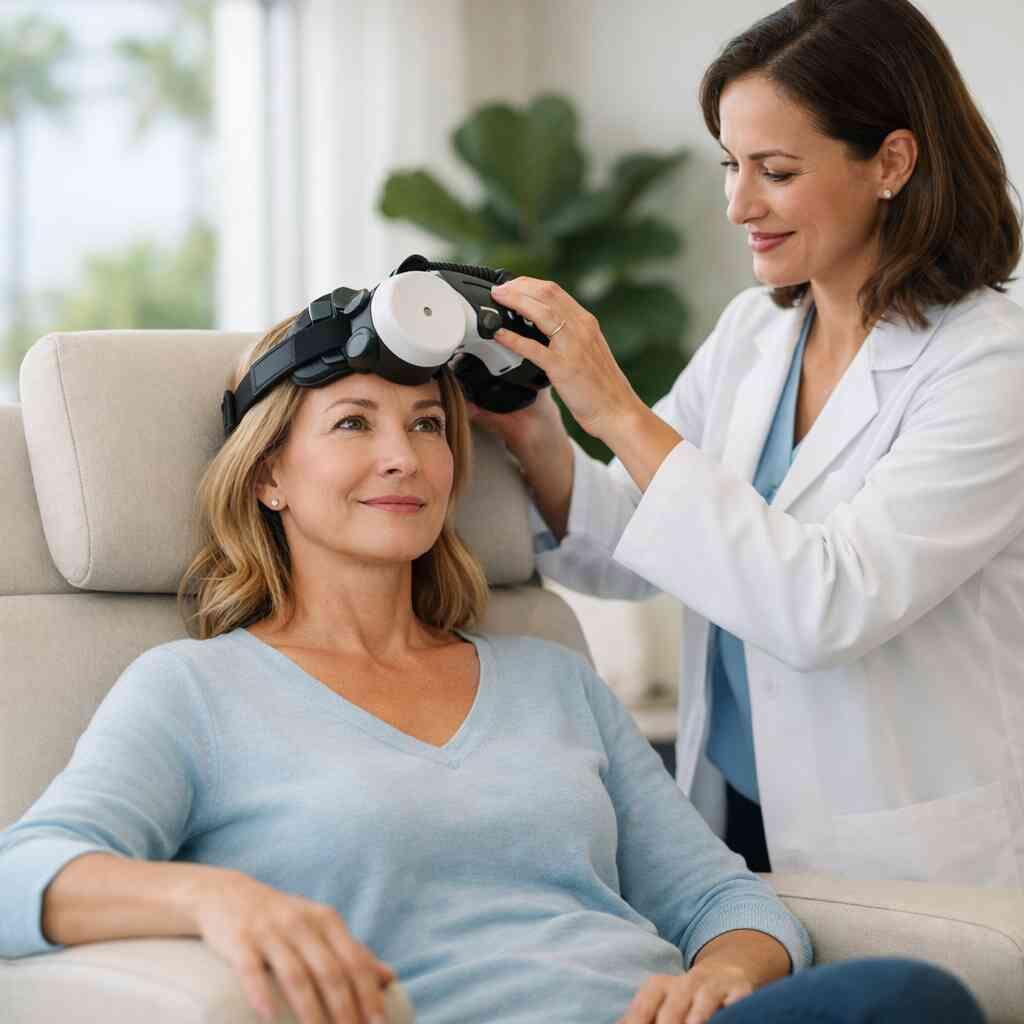
When PTSD feels stuck after therapy and medication, TMS Treatment Florida can help
You may have already done the hard work. You may have tried SSRIs, counseling, sleep routines, and patience that ran thin months ago. Still, the body keeps bracing. The mind keeps replaying. That steady strain is exactly why many people start searching for TMS treatment Florida and a different path forward.
Why trauma symptoms can keep looping even after SSRIs and counseling have already been tried
PTSD can lock the brain into threat mode. You may know you are safe, yet your nervous system acts otherwise. Sleep stays light. Sounds feel sharper. Small stressors land like big ones. That is exhausting, and it is not a failure of will.
We hear this from people who have already done the “right” things. They followed the plan, but relief never lasted. In that setting, TMS after failed medications can feel less like another guess and more like a measured next option. For some people, TMS depression treatment Florida and trauma care overlap because depression and PTSD often travel together.
Here is a short example from a recent local pattern we see often. A patient from Broward County described waking up tense every morning, even after multiple medication changes. The medication helped a little, then flattened her mood and dulled her focus. She wanted a non-drug depression treatment that did not add more fog, and that is a common reason people ask about TMS treatment in Florida for medication-resistant depression.
What transcranial magnetic stimulation therapy actually does inside a tense, trauma-shaped brain
Transcranial magnetic stimulation therapy uses focused magnetic pulses to influence activity in brain regions involved in mood and regulation. It is a form of non-invasive brain stimulation, which means there is no surgery and no anesthesia. The treatment is often called magnetic brain therapy, though clinicians usually prefer the more exact term TMS. The core idea is simple: support healthier signaling in circuits that have gone stale, overactive, or underconnected.
For PTSD, that matters because trauma can leave the brain too alert in some places and underactive in others. A strong startle response is not just “stress.” It is a pattern. The best available evidence for TMS is strongest in depression, including work like the 2018 Stanford study by Carpenter and colleagues, which helped reinforce TMS as a serious option for difficult-to-treat depression. That is why FDA-approved depression treatment matters so much in the conversation, even when you are seeking help for trauma-related symptoms too.
If you want a plain-language overview, think of TMS as a way to nudge stuck networks back toward balance. It does not erase memory. It does not force feelings away. Instead, it may help the brain stop firing the same alarm signals on repeat. For a broader treatment overview, some readers start with how transcranial magnetic stimulation works, though clinical guidance should always come from your care team.
Why Florida readers searching TMS near me Florida often want a non-drug depression treatment that feels more manageable than another prescription change
There is a special kind of fatigue that comes from another medication discussion. You already know the side effects: dry mouth, weight changes, numbness, sleep shifts, sexual side effects. Then comes the waiting, again. That is why TMS near me Florida searches usually come from people who are tired of round after round of medication adjustments.
A lot of Florida patients also want something that fits real life. They may work, drive kids to school, or split time between counties. They want care that feels structured, not vague. They want a plan that can sit beside work, therapy, and family obligations. That is where non-drug depression treatment and alternative depression treatment language becomes more than marketing. It becomes relief from decision fatigue.
In the projects we have seen this year, people often ask the same practical question first: “Will this make me feel more like myself?” That is a fair question. The honest answer is that TMS is not magic, and no ethical clinic should promise outcomes. Still, for many people, it offers a path that feels more workable than another prescription switch.
What makes TMS for PTSD Florida feel different from the usual mental health playbook
PTSD care has too often felt one-size-fits-all. Talk therapy helps some people. Medication helps some people. Others need a different entry point. TMS for PTSD Florida stands out because it aims at brain circuits rather than asking you to reason your way out of a body response that feels automatic.
How repetitive TMS and deep TMS therapy aim at the brain circuits tied to fear, sleep, and emotional overload
Repetitive TMS delivers a series of pulses over a targeted area. Deep TMS therapy reaches slightly different depths and patterns, depending on the system used. Both are forms of brain stimulation therapy overview approaches that focus on network behavior, not just symptom labels. When trauma affects sleep, alertness, and emotional control, that network focus matters.
Some patients also ask about deep TMS versus repetitive TMS. That comparison is useful because the right fit depends on the symptom picture and the clinic’s equipment. A TMS psychiatrist Florida should explain why one method fits your goals better than another, instead of pushing one style for every person.
In practice, the target is usually the same broad problem: a brain stuck too close to alarm. For some people, that shows up as intrusive memories. For others, it looks like irritability, insomnia, or emotional shutdown. That is why repetitive TMS and deep TMS therapy for PTSD should be discussed with a real plan, not just a device brochure.
Why TMS for anxiety and TMS depression treatment Florida often appear together in trauma care plans
PTSD rarely travels alone. TMS for anxiety often enters the conversation because hypervigilance and panic can sit right beside trauma symptoms. Depression can also settle in after months of fighting sleep loss and dread. That is why TMS depression treatment Florida and anxiety care often get discussed together at a good Florida mental health clinic.
A thoughtful clinic will look at the whole pattern. Are you overwhelmed all day? Are you numb instead? Do you feel panic in your chest, or heaviness in your limbs? These details matter. They help guide whether TMS treatment in Florida for depression care or TMS treatment in Florida for anxiety support should be prioritized first. If the clinic also offers non-invasive brain stimulation for depression and anxiety, the plan can stay integrated.
Here is the part most people miss. Good TMS care does not chase one symptom in isolation. It watches the pattern. That matters for Florida behavioral health, where many patients also juggle stress from work, family, or seasonal moves.
Where TMS and EMDR combination may fit for people who still feel trapped in flashbacks, hypervigilance, or shutdown
TMS and therapy are not rivals. They can work in different lanes. A TMS and EMDR combination may make sense when someone feels too activated or too shut down to fully benefit from trauma processing alone. EMDR works on memory networks and emotional reprocessing. TMS may help regulate the background state that keeps those networks jammed.
A patient in Palm Beach once described it this way: therapy “knew what to do,” but his body could not stay calm long enough to get there. That is the kind of case where combination care can be thoughtful. It does not mean TMS replaces trauma therapy. It means the brain may need more stability before deeper processing can stick.
Research on TMS for PTSD is still growing, so no responsible clinic should oversell it. Still, the combination idea makes clinical sense for selected patients. If you are already working with a therapist, ask how TMS could support, not interrupt, that work.
The clinic day itself: what a Florida TMS session really looks and sounds like
Most people imagine something more dramatic than reality. The actual visit is usually calm, structured, and surprisingly ordinary. That is good news. TMS treatment Florida should feel clinical, not theatrical.
What happens during the consultation, screening, and symptom review at a Florida mental health clinic
A first visit usually starts with screening. The team reviews diagnosis, prior medications, therapy history, sleep, safety concerns, and current symptoms. A strong clinic will also ask about seizure risk, metal implants, substance use, and any bipolar symptoms. Those details matter because TMS for bipolar depression and trauma care require careful screening.
The process should fit Florida rules and outpatient standards, including oversight under Florida Agency for Health Care Administration expectations for licensed care settings. You deserve clear answers about who is providing treatment and how the clinic monitors safety. If you want to understand the clinic team before you book, about the staff and credentials should be transparent.
A careful consultation is not just paperwork. It is the moment when a clinic decides whether TMS is appropriate, whether more evaluation is needed, or whether another level of care makes more sense. That honesty matters more than any marketing line.
How providers track change with tools like PHQ-9 or MADRS instead of guessing from mood alone
Good outcomes are not guessed. They are tracked. Most serious clinics use tools like PHQ-9 or MADRS to measure symptoms before and during treatment. That gives you something concrete. It also protects you from the trap of vague impressions, where a bad day can overshadow real progress. This is especially important with medication-resistant depression and trauma-linked depression. Mood can wobble. Energy can rise before hope does. Sleep may shift slowly. Measurement helps the care team see whether the pattern is changing in the right direction. That is also how clinics avoid overclaiming TMS therapy success rate. The same standard should apply if the clinic also talks about TMS OCD therapy, TMS for teen depression, or TMS for young adults. Different ages and diagnoses need different pacing and follow-up. A good clinic does not flatten those differences. 
What the chair, coil, and daily rhythm feel like at a TMS clinic Miami, TMS Fort Lauderdale, TMS Orlando, or TMS Tampa
The room is usually quiet. You sit in a chair. A technician or provider positions the coil. Then you hear a tapping sound, steady and mechanical. Some people describe it as odd but tolerable. Others say the first session feels strange, then routine sets in fast.
That rhythm matters in busy places like a TMS clinic Miami, TMS Fort Lauderdale, TMS Orlando, or TMS Tampa. People often fit treatment before work or between responsibilities. In South Florida, that can make a real difference for patients commuting from Coral Gables or Aventura. In Central Florida, it can matter just as much for people coming from Winter Park.
One patient told us the biggest surprise was not the machine. It was the predictability: same chair, same process, same staff. For someone whose nervous system has been stuck on unpredictability, that structure can feel quietly powerful.
Why location, insurance, and access can decide whether PTSD care actually happens
A treatment can be clinically sound and still out of reach. That is the reality for many people. Insurance, cost, and distance often decide whether care starts at all.
How TMS insurance coverage Florida and “does insurance cover TMS in Florida” questions usually get answered before treatment starts
Before treatment begins, many patients ask, does insurance cover TMS in Florida? The short answer is that coverage depends on the plan, diagnosis, documentation, and prior treatment history. That is why TMS insurance coverage Florida should be checked early, not after you are emotionally invested. A good clinic helps with verification before you commit.
Insurance usually looks for evidence of past treatment attempts, especially for depression. That can include medication trials, therapy history, and diagnostic records. If you are comparing options, ask directly whether the clinic helps with TMS insurance coverage in Florida. Clear billing answers lower stress before the first session even starts.
The Florida insurance landscape can be complicated, especially for seasonal residents and people with changing employer plans. That is why early verification is not a luxury. It is part of good care.
What patients should know about TMS cost Florida when comparing private pay plans and covered care
TMS cost Florida varies by clinic, location, device type, and whether insurance participates. We are not going to invent a number here, because that would not help you. Instead, ask for a written estimate that explains evaluation fees, treatment sessions, mapping, and follow-up. If a clinic offers a guide to TMS cost Florida and payment options, read it carefully.
Compare the total package, not just the session price. Ask about:
- Initial consultation and mapping
- Insurance authorization support
- Follow-up visits
- Maintenance therapy costs
- Any missed-session policy
A luxury TMS center may offer more comfort, but comfort should not hide weak billing clarity. The best clinics explain costs in plain language. That is part of trust.
Why people from Aventura, Coral Gables, Boca Raton, Delray Beach, and Winter Park often look for TMS South Florida and nearby Florida behavioral health options
Access is not abstract. It is drive time, parking, childcare, and the energy you have left after work. That is why people from Aventura, Coral Gables, Boca Raton, Delray Beach, and Winter Park often search for TMS South Florida and nearby Florida behavioral health options. They want care that fits their map, not just their diagnosis.
If you are comparing locations, start with a clinic directory like Florida locations. A nearby clinic can make the difference between finishing treatment and dropping out halfway through. That matters especially for PTSD, where consistency helps stabilize the routine.
What forward motion looks like after the last session and how to choose the right path next
The last session is not the end of the conversation. It is the point where your team decides what support still fits. That planning deserves honesty, not hype.
When maintenance therapy makes sense and when a different trauma plan may be more realistic
TMS maintenance therapy may help some patients keep gains steady after the acute course. It is not automatic, and it is not for everyone. A clinic should explain when maintenance makes sense and when another trauma plan is more realistic. For some people, that means more psychotherapy. For others, it means medication adjustment, addiction support, or a different level of care.
Maintenance decisions should be based on symptoms, function, and history. If your sleep begins to slide or avoidance returns, the team should discuss that early. TMS long-term results are most useful when they are paired with follow-up, not guesswork. Good care plans make room for relapse prevention.
How TMS side effects safety, long-term results, and TMS therapy success rate should be discussed honestly without hype
People deserve direct answers about TMS side effects safety. Most discussions focus on scalp discomfort, headache, or temporary fatigue. That is the real conversation. No clinic should promise zero discomfort or guaranteed change. It should explain risks, monitor response, and adjust as needed.
The same goes for TMS therapy success rate. Ask what the clinic actually measures, how it tracks progress, and which evidence base it uses. Ask whether it follows consensus guidance from groups like the Clinical TMS Society or broader psychiatric guidelines from the APA. For depression, TMS has real evidence. For PTSD, the science is promising but still developing. That distinction matters.
If you want more clinical reading, TMS treatment in Florida for PTSD recovery can help frame the discussion. You should always feel informed, never pushed.
What to ask a best TMS clinic Florida candidate about TMS psychiatrist Florida support, teen and young adult care, dual diagnosis treatment Florida, and the next level of follow-up
Choosing the best TMS clinic Florida means asking better questions. Start with the basics. Who evaluates you? Who oversees treatment? How often do you review progress? If a clinic offers a strong TMS psychiatrist Florida model, that support should show up in the plan.
Ask these questions:
- Do you treat dual diagnosis treatment Florida cases, including PTSD with substance use concerns?
- Do you offer TMS addiction recovery or TMS for substance use disorder support when cravings complicate care?
- Do you screen for TMS for teen depression and TMS for young adults separately?
- Do you coordinate with therapy if I am already doing EMDR or counseling?
- How do you handle follow-up after treatment ends?
That last question matters most. Good care does not disappear when the chair stops. It stays organized. If you are ready to compare options, review the FAQs and ask for a consultation that feels clear, calm, and unhurried. You do not have to sort all of this out tonight. Start with one call, and ask for the facts in writing.
Frequently Asked Questions
Question: How does TMS treatment Florida support people with PTSD when medication and therapy have not been enough?
Answer: TMS treatment Florida offers transcranial magnetic stimulation therapy as a non-invasive brain stimulation option that may help people who feel stuck after trying standard care. For many patients, PTSD symptoms are tied to a nervous system that stays in threat mode, even when they know they are safe. That is why TMS after failed medications is often discussed as a next step for people with medication-resistant depression, anxiety, or trauma-related overwhelm. TMS is not a replacement for therapy, but it can be a practical part of a broader plan that includes counseling, sleep support, and careful follow-up. At TMS Treatment Florida, the focus is on compassionate, individualized care rather than one-size-fits-all treatment.
Question: In Why TMS Treatment Florida Is a Guide for PTSD Recovery, what makes transcranial magnetic stimulation therapy different from other mental health treatments?
Answer: Transcranial magnetic stimulation therapy is different because it works through targeted magnetic pulses rather than medication or surgery. Many people looking for a non-drug depression treatment or alternative depression treatment want something that does not add new side effects or more emotional fog. TMS uses repetitive TMS or deep TMS therapy depending on the treatment plan and the clinic’s technology, and it is commonly discussed as an FDA-approved depression treatment option for adults with difficult-to-treat depression. In PTSD care, the goal is not to erase memories. Instead, the hope is to help regulate brain circuits involved in fear, alertness, and mood. That is why people often ask how TMS works before deciding if it fits their recovery plan.
Question: Can TMS for anxiety and TMS depression treatment Florida be combined with trauma therapy like EMDR?
Answer: Yes, for some people, a TMS and EMDR combination may make sense when PTSD, anxiety, and depression are all part of the picture. TMS for anxiety can be especially relevant for patients whose trauma symptoms show up as constant hypervigilance, panic, sleep disruption, or physical tension. TMS depression treatment Florida may also help when depression has developed after months of living with trauma symptoms. EMDR and TMS work differently, so they can complement each other in carefully planned care. A thoughtful Florida mental health clinic should review your full history, including whether you have dual diagnosis treatment Florida needs, before recommending a sequence of care. The best approach is usually the one that supports stability, safety, and consistency.
Question: What should I expect during a TMS clinic Miami, TMS Fort Lauderdale, TMS West Palm Beach, TMS Orlando, or TMS Tampa visit?
Answer: A typical visit at a TMS clinic Miami, TMS Fort Lauderdale, TMS West Palm Beach, TMS Orlando, or TMS Tampa is usually structured and outpatient-friendly. It often begins with screening, symptom review, and discussion of your treatment history, including medication-resistant depression, TMS OCD therapy, or TMS for bipolar depression if those apply. The provider may use measures like PHQ-9 or MADRS to track progress over time instead of relying only on how you feel on one day. During treatment, you sit in a chair while the coil is positioned and the device delivers pulses in a steady tapping rhythm. Many people find the process manageable, but your team should also talk openly about TMS side effects safety, follow-up, and what to do if symptoms change. A good clinic should feel calm, informative, and respectful of your pace.
Question: How do TMS insurance coverage Florida and TMS cost Florida usually work for someone searching TMS near me Florida?
Answer: TMS insurance coverage Florida depends on your plan, diagnosis, and prior treatment history, so it is best to verify early rather than assume coverage. People often search TMS near me Florida because they want care that is both clinically appropriate and realistic for their schedule and budget. A strong clinic should explain whether does insurance cover TMS in Florida applies to your case, what documentation is needed, and whether there are additional fees for consultation, mapping, or follow-up care. TMS cost Florida can vary by clinic and treatment setup, so asking for a written estimate is wise. This is especially important for patients comparing a luxury TMS center with a more standard Florida behavioral health setting. Transparent billing and clear expectations help reduce stress before treatment starts.
Question: Is TMS Treatment Florida a good option for people with PTSD who also have addiction recovery or young adult care needs?
Answer: For some patients, yes. TMS Treatment Florida may be a thoughtful option when PTSD overlaps with substance use concerns, because trauma and addiction often reinforce each other. In those cases, TMS addiction recovery or TMS for substance use disorder may be discussed as part of a dual diagnosis treatment Florida plan. The clinic may also consider whether TMS for smoking cessation or alcohol addiction brain stimulation is relevant if those issues are part of the full history. Younger patients can have different needs, so TMS for teen depression and TMS for young adults should be approached with extra care, screening, and family or therapy coordination when appropriate. The key is individualized care, not assumptions. When a clinic listens carefully and explains options clearly, it becomes easier to trust the treatment path and stay engaged long enough to evaluate TMS long-term results responsibly.