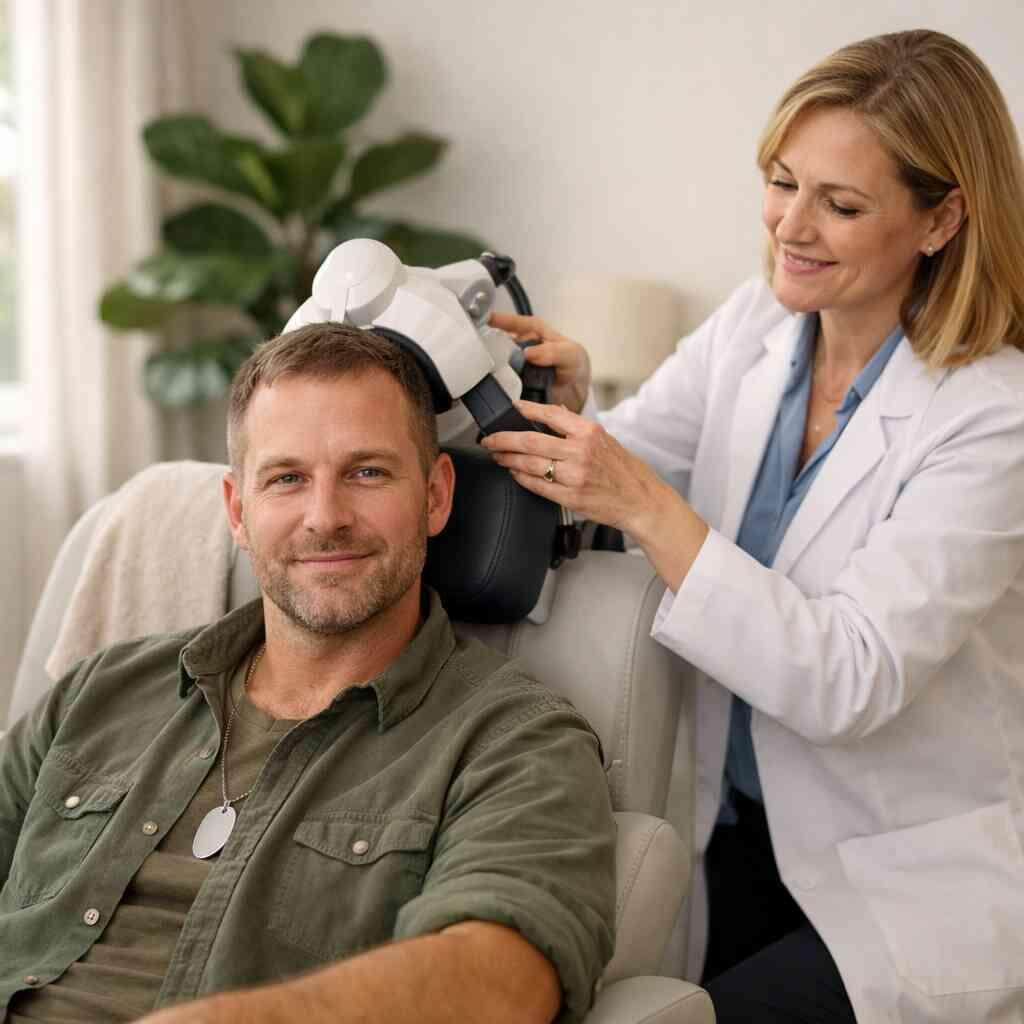
When the weight of service follows you home: why TMS can feel different for veterans in South Florida
If you are reading this after a long day and the old heaviness still sits on your chest, that feeling makes sense. Many veterans describe a strange split after service ends. The uniform comes off, but the body still acts like the threat is near. TMS treatment Florida offers a different kind of support for that kind of stuckness, especially when talk therapy and medication have not moved the needle. It gives your brain another route forward.
What makes military trauma, depression, and anxiety show up differently after service ends
Military stress does not always look dramatic. Sometimes it looks like irritability, numbness, sleep that never feels deep, or a jaw that stays clenched all day. For some veterans, trauma shows up as hypervigilance in traffic, panic in crowded places, or a flat mood that feels more exhausting than sadness. That is why TMS for PTSD Florida and TMS for anxiety can feel relevant in a way generic care does not. The mind learned to stay on watch, and it can stay there long after service.
We hear this from veterans who say life feels smaller now. They avoid certain roads, sit near exits in restaurants, or wake up already braced for impact. One veteran from Broward told us the loudest part of civilian life was not noise. It was silence, because silence gave room for memories he could not shut off. That is often the moment people start looking for alternative depression treatment or non-drug depression treatment that feels less blunt than another medication change.
Why medication resistant depression and chronic stress can make pills feel like a dead end
A lot of veterans arrive after TMS after failed medications. They have tried SSRIs, SNRIs, sleep agents, or combinations that helped briefly and then faded. Some ran into side effects like grogginess, sexual dysfunction, weight changes, or emotional flattening. Others never got much relief at all. That is the reality of medication resistant depression, and it can make each new prescription feel like a reset with no promise.
Here is the part most people miss: medication can still be valuable, but it does not always reach the exact circuits that chronic stress has pushed off balance. TMS depression treatment Florida gives people a non-invasive option when pills have felt like a dead end. It is not magic. It is structured. It is also an FDA approved depression treatment for certain uses, which matters when you are comparing it with newer, less established ideas. If you want a deeper look, our TMS depression treatment in Florida after failed medications page explains the basics clearly.
How Florida life from heat to long drives can add friction when care already feels hard to start
South Florida can make care harder than it should be. Heat drains energy. Rain can turn a simple drive into a stressful one. And when you already feel depressed, the idea of crossing Miami traffic or making it from Coral Gables to an appointment in Broward can feel like too much. That is why TMS near me Florida searches often come from people who are not lazy. They are worn down.
We also see seasonal residents and working adults plan around routes, tolls, and bridge timing. Someone in Aventura may want help that does not require a day-long commute. Someone in Boca Raton may need access that fits between work and family care. Location matters more than people expect, especially when energy is low and follow-through is fragile. If proximity is a major issue, start with our TMS clinic locations in South Florida near Miami, Broward, and Palm Beach resource.
The signal under the noise: what transcranial magnetic stimulation therapy is actually doing
People often ask, “How does TMS work?” That is a fair question, because the name sounds technical and the process can feel mysterious. In plain terms, transcranial magnetic stimulation therapy uses focused magnetic pulses to stimulate specific brain regions linked to mood and regulation. It is a form of non-invasive brain stimulation. It does not sedate you, and you stay awake the entire time.
How does TMS work when the goal is to quiet stuck brain circuits without sedation
TMS uses a magnetic field to create small electrical changes in targeted parts of the brain. Those pulses may help normalize activity in networks involved in depression, anxiety, or compulsive thinking. In clinic language, people often hear terms like magnetic brain therapy or repetitive TMS, but the idea is simple. The treatment aims to help overactive or underactive circuits communicate more normally.
This is different from medication, which circulates through the whole body. It is also different from ECT, which uses anesthesia. Many veterans like that TMS is a non-drug depression treatment and that they can drive themselves home afterward. Safety matters here too. The main TMS side effects safety questions usually involve scalp discomfort, headache, or temporary fatigue. If you want a more detailed overview, our TMS side effects and safety facts page is a useful place to start.
The clinical reason TMS gets serious attention is that research has kept building. The 2018 Stanford study by Carpenter and colleagues added to the evidence base for depression care. So did broader transcranial magnetic stimulation research and consensus guidance from the Clinical TMS Society. That matters because veterans deserve treatments with a real scientific backbone, not hype.
Why repetitive TMS and deep TMS therapy matter for veterans who want non-invasive brain stimulation
Not all TMS is identical. Repetitive TMS refers to repeated pulses delivered over a session. Deep TMS therapy uses a different coil design that reaches broader or deeper brain networks. For some people, that difference matters. For others, the standard protocol is the better fit. The right choice depends on diagnosis, anatomy, and clinical judgment, not trends.
This is where careful matching matters for veterans with layered symptoms. Someone with depression and PTSD may need a different plan than someone with OCD rituals or bipolar depression. A clinic should explain why it recommends one approach over another, not just hand you a machine and hope for the best. If you are comparing options, our deep TMS therapy versus repetitive TMS in South Florida guide can help you ask sharper questions.
There is also real promise in TMS for PTSD support in Florida, and in the wider body of TMS therapy for PTSD care in Florida research. That does not mean every symptom disappears. It does mean the brain can sometimes respond when medication alone has stalled. For veterans, that possibility can feel like relief before the first pulse is even delivered.
What a real clinic visit can look like from screening to mapping to a short session rhythm
The first visit should feel organized, not rushed. A good clinic starts with screening, history, and safety review. They ask about seizures, metal implants, past treatments, and current symptoms. Then they map the treatment area. That mapping helps the team place the coil more precisely. After that, sessions are usually short and repeat on a steady rhythm.
A lot of people are surprised by how ordinary the room feels. There is no heavy sedation. No recovery bay. Usually, you sit in a chair, hear a tapping sound, and stay fully awake. One veteran in Palm Beach County told us the session rhythm felt easier than he expected because it was predictable. Predictability matters when your nervous system has spent years waiting for the next threat.
For people comparing clinics, ask how they handle intake, mapping, and follow-up. Ask whether the clinic offers TMS psychiatrist Florida oversight or physician supervision. Ask how they tailor care for veterans, PTSD, OCD, or bipolar depression. A serious clinic should answer plainly and without sales pressure. If you are also checking team background, our about us page can help you understand the practice philosophy.
How outcomes are usually measured with tools like PHQ-9 or MADRS instead of vague feelings alone
Good care should be measurable. That is not cold. It is respectful. Clinics often track depression with tools like PHQ-9 or MADRS, because those scales show change more clearly than vague impressions. If someone tells you their mood is “better,” numbers help show whether that improvement is stable or just a lucky week.
This matters for TMS therapy success rate questions. Reputable clinics should be careful here. No ethical practice should promise a specific result for every veteran. What it can do is explain that response is monitored over time, with symptoms, sleep, motivation, and function measured consistently. That is also where TMS maintenance therapy may come in for some patients, because TMS long-term results can depend on follow-up care, diagnosis, and life stress.
If you are comparing this with other options, remember that TMS is often considered after other treatments have not worked well. That makes it especially important to track progress clearly. A careful clinic will talk about what improvement means in real life, not just in theory.
What changes when a clinic is built for South Florida veterans instead of built for everybody
Veterans do best when the care room understands what brought them there. That sounds simple, but it changes everything. The paperwork, the pace, the tone, and the follow-up all matter. A Florida mental health clinic serving veterans should feel trauma-aware from the first call. It should also understand that depression, PTSD, OCD, addiction, and bipolar symptoms often overlap.
Why trauma-informed care matters for TMS for PTSD Florida and co-occurring anxiety or bipolar depression
Trauma-informed care is not a slogan. It means the clinic understands triggers, control, consent, and pacing. For veterans, that can make the difference between feeling examined and feeling respected. When someone has TMS for PTSD Florida needs alongside TMS for bipolar depression or TMS for anxiety, the team should know how those conditions interact. They should be ready to adjust communication, session timing, and support. This matters even more for dual diagnosis patterns. A veteran may be dealing with depression and substance use together. Another may be working through trauma and nicotine dependence. The best clinics think in layers. They know dual diagnosis treatment Florida is often the real picture, not the exception. For some people, TMS can also be part of a larger plan that includes therapy, sleep repair, and, when appropriate, coordinated care for TMS addiction recovery or TMS for substance use disorder. There is growing research on rTMS for cravings, including work out of the Medical University of South Carolina and other centers studying addiction-related brain circuits. That does not mean TMS is a stand-alone cure for addiction. It does mean the science is serious enough to keep watching. The same is true for TMS for smoking cessation and even alcohol addiction brain stimulation research. If you want a focused overview, our TMS for substance use support in Florida resource is a practical starting point. 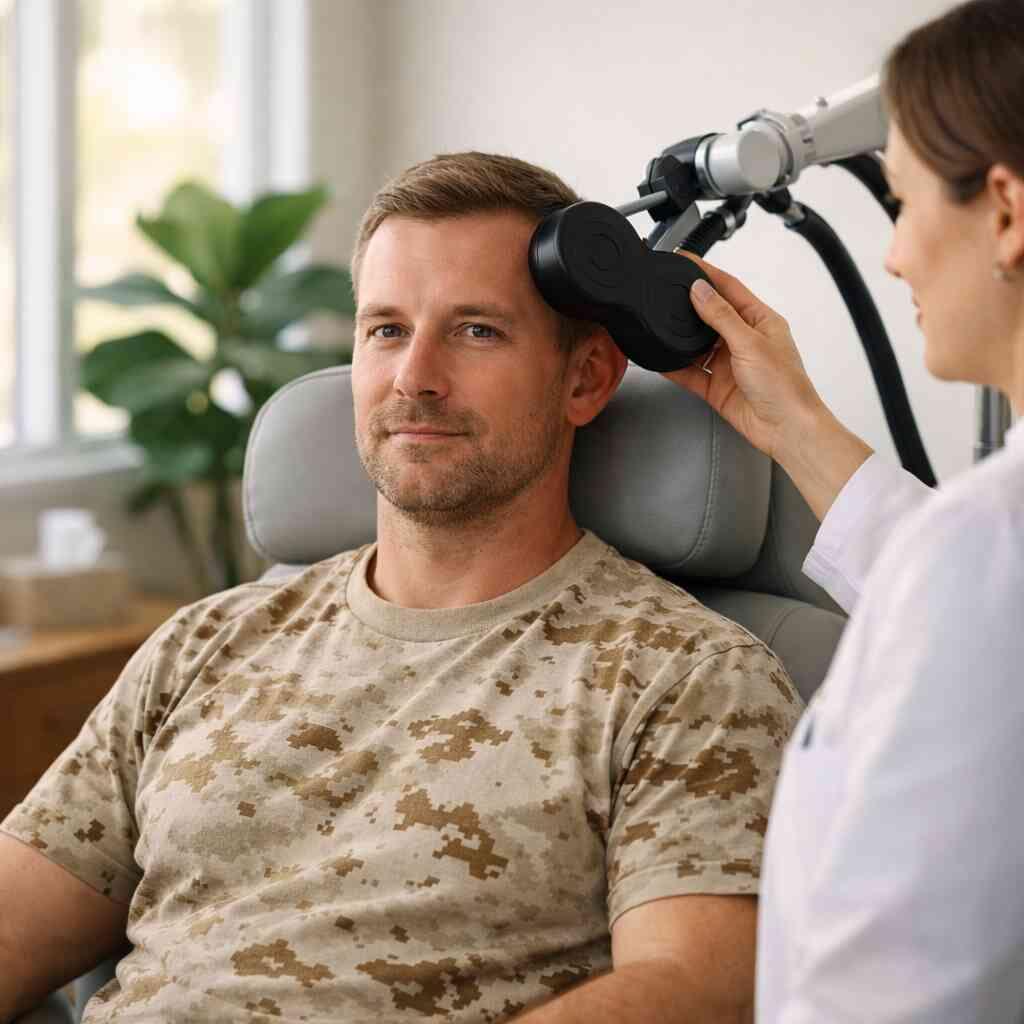
How TMS insurance coverage Florida and does insurance cover TMS in Florida questions are usually handled
Insurance is often the part people dread most. That dread is normal. The good news is that many clinics know these questions well and can help verify benefits before treatment begins. TMS insurance coverage Florida depends on the plan, diagnosis, prior treatment history, and medical necessity criteria. In many cases, people ask the same thing in different words: does insurance cover TMS in Florida?
That question should get a clear answer, not a vague promise. A solid clinic explains authorization steps, documentation needs, and what your out-of-pocket responsibilities may be. It should also be honest about TMS cost Florida when insurance does not cover the full course. Exact pricing varies, so no one should invent a number. If finances are part of the decision, our TMS treatment cost and insurance coverage in Florida page can help you understand the moving parts.
Here is a simple checklist for the first insurance conversation:
- Ask whether your plan requires prior authorization.
- Ask which diagnoses the clinic treats.
- Ask whether they verify benefits for you.
- Ask what happens if coverage is denied.
- Ask about payment options before you commit.
That kind of clarity protects you from surprise bills and wasted time. It also helps you compare a luxury TMS center feel with substance. Comfort is nice. Clarity is better.
Why location access from Miami, Fort Lauderdale, West Palm Beach, Orlando, and Tampa can matter more than people expect
Access is not just a map pin. It is energy, parking, traffic, tolls, and how many obligations sit on your calendar. A veteran in Miami may search for a TMS clinic Miami because the drive itself can determine whether care continues. Someone in Broward may prefer TMS Fort Lauderdale for the same reason. A person farther north may be comparing TMS West Palm Beach, TMS Orlando, or TMS Tampa depending on family, work, or seasonal travel.
That is why TMS South Florida access deserves real attention. We often hear from people in Aventura, Coral Gables, Delray Beach, and Winter Park who need something practical, not theoretical. If you are looking for the best TMS clinic Florida, proximity can support consistency. Consistency matters because TMS works best when sessions happen on schedule.
If you want to compare locations directly, our locations page is a helpful map-based starting point. People searching for TMS near me Florida often need reassurance that treatment can fit real life. They do not need another impossible plan. They need a clinic that respects the geography of recovery.
What to ask before choosing a best TMS clinic Florida including team credentials, about us, insurance, and costs, plus local follow-up
Before you commit, ask direct questions. Ask who evaluates you. Ask who supervises treatment. Ask how the clinic handles follow-up if symptoms shift. Ask whether the team has experience with veterans, PTSD, OCD, addiction, or bipolar depression. Those questions are not pushy. They are smart.
You should also check the clinic’s TMS reviews Florida with a careful eye. Look for patterns about communication, scheduling, and professionalism, not miracle claims. Be cautious around any practice that promises exact outcomes or specific TMS therapy success rate numbers without context. Real medicine does not work that way. It respects uncertainty.
If you want to compare how a practice presents its team and standards, our about us page is one place to start. You can also review our FAQ page for common insurance and treatment questions. The right clinic should make you feel informed, not cornered. And it should treat your history with the seriousness it deserves.
People Also Ask
Does TMS work for veterans with PTSD and depression?
TMS can help some veterans, especially when depression or anxiety has not improved with medication. Research is stronger for depression than for PTSD alone, but PTSD-focused protocols are actively studied. A clinic should explain whether your main target is depression, anxiety, OCD, or trauma-related symptoms. That distinction matters because the treatment plan should match your diagnosis, not just your hope.
Is TMS safe if I have tried many medications already?
For many people, yes, but the clinic should screen carefully first. TMS is non-invasive and does not require anesthesia. The most common side effects are usually mild, such as scalp discomfort or headache. If you have a seizure history or certain implants, the team must review those details before treatment starts.
How long does a TMS session take?
Most sessions are relatively short, often around a half hour or a little longer, depending on the protocol. You stay awake the whole time and can usually return to normal activities afterward. The exact schedule can vary by clinic and device. That is one reason the intake visit matters so much.
Does insurance cover TMS in Florida for veterans?
Sometimes, yes. Coverage depends on the plan, diagnosis, prior treatment history, and medical necessity rules. Clinics often help verify benefits and submit authorization paperwork. If you are military or veteran-affiliated, ask the clinic to walk you through the coverage details before scheduling.
Can TMS help with addiction or smoking cessation?
Research is growing, especially around cravings and substance use disorder. Some studies, including work on rTMS and craving pathways, suggest promise. Still, TMS should be viewed as part of a broader plan, not a stand-alone fix. That plan may include therapy, medical care, and relapse prevention support.
What should I ask a South Florida TMS clinic before I book?
Ask about clinician oversight, veteran experience, insurance verification, side effects, and follow-up planning. Ask whether they use PHQ-9 or MADRS to track progress. Ask how they handle PTSD, OCD, bipolar depression, or substance use concerns. A good clinic will welcome those questions and answer them clearly.
Frequently Asked Questions
Question: How does TMS work for veterans in South Florida who are dealing with depression, anxiety, or PTSD?
Answer: TMS, or transcranial magnetic stimulation therapy, is a form of non-invasive brain stimulation that uses focused magnetic pulses to target areas of the brain involved in mood regulation. For veterans dealing with depression, anxiety, or trauma-related symptoms, it can be a thoughtful option when standard care has not brought enough relief. At TMS Treatment Florida, the process is designed to be structured, calm, and supportive, which matters for people who may feel worn down by medication changes or long treatment histories. It is also a non-drug depression treatment, so patients stay awake during sessions and can usually return to daily activities afterward. Because every person’s history is different, the clinic should always review symptoms, medication history, and safety factors before recommending a plan.
Question: Is TMS depression treatment Florida a good option after failed medications?
Answer: For many people, especially those with medication resistant depression, TMS after failed medications can be a meaningful next step to explore. Some veterans and civilians have tried multiple prescriptions with limited benefit or side effects like fatigue, emotional flattening, or sleep disruption. TMS depression treatment Florida offers an alternative depression treatment approach that does not rely on daily medication changes. While no ethical clinic should promise a specific result, a reputable Florida mental health clinic can explain whether TMS may fit your diagnosis, treatment history, and goals. At TMS Treatment Florida, the emphasis should be on careful evaluation, realistic expectations, and ongoing tracking of symptoms so progress can be measured thoughtfully.
Question: What should veterans know about TMS side effects safety and whether insurance may help cover treatment?
Answer: TMS side effects safety is one of the most common questions people ask, and that is a smart place to start. In general, TMS is considered non-invasive and does not require anesthesia, but a clinic should still review medical history carefully, including seizure risk and any implants. The most common side effects are typically mild, such as scalp discomfort or headache, though every person is different. On the financial side, TMS insurance coverage Florida depends on the plan, diagnosis, prior treatment history, and medical necessity rules. So when people ask does insurance cover TMS in Florida, the honest answer is that it sometimes does, but verification is needed. A good clinic should help with benefit checks and authorization questions before treatment begins, so patients can make informed decisions without surprises.
Question: What makes TMS Treatment Florida different for veterans searching for TMS near me Florida or a TMS clinic Miami, TMS Fort Lauderdale, or TMS West Palm Beach?
Answer: Veterans often need care that is not only clinically sound but also easy to access consistently. That is why location matters so much when someone is searching for TMS near me Florida or comparing a TMS clinic Miami, TMS Fort Lauderdale, or TMS West Palm Beach. South Florida traffic, work schedules, family responsibilities, and low energy can all make follow-through harder than people expect. A thoughtful clinic serving TMS South Florida should understand those barriers and work to make care feel practical, not overwhelming. TMS Treatment Florida should also offer trauma-informed care, clear intake steps, and clinician oversight from a TMS psychiatrist Florida or other qualified medical professional, while being transparent about what they can and cannot promise. That combination of access, clarity, and respect is often what helps patients feel safe enough to start.
Question: Can TMS help with PTSD, bipolar depression, OCD, or substance use concerns in addition to depression?
Answer: TMS may be part of care for several mental health concerns, but the treatment plan should always match the diagnosis and the individual’s needs. For example, TMS for PTSD Florida and TMS for anxiety may be relevant for some veterans, while others may need support for TMS for bipolar depression or TMS OCD therapy. There is also growing interest in TMS addiction recovery and TMS for substance use disorder, including research into alcohol addiction brain stimulation and TMS for smoking cessation, though these uses are still part of a broader care picture rather than stand-alone fixes. In cases involving dual diagnosis treatment Florida or addiction rehab Florida, the best approach is usually coordinated care that may include therapy, medication management, and behavioral support. TMS Treatment Florida should be able to explain where TMS fits, how it is monitored, and whether follow-up options like TMS maintenance therapy may be considered later depending on the patient’s course.
Question: How should I evaluate the best TMS clinic Florida before scheduling treatment?
Answer: When comparing options, focus on transparency, clinical oversight, and how the clinic communicates. A strong best TMS clinic Florida candidate should clearly explain how does TMS work, what the screening process looks like, how outcomes are tracked, and how they handle questions about TMS therapy success rate without exaggeration. Ask whether they use tools such as PHQ-9 or MADRS to measure progress, whether they provide support for veterans, and how they coordinate follow-up if symptoms change. It is also wise to ask about TMS cost Florida, TMS insurance coverage Florida, and whether they can explain the practical differences between repetitive TMS and deep TMS therapy if relevant to your situation. Reviews can be helpful too, but look for patterns around communication and professionalism rather than miracle claims. The right clinic should help you feel informed, respected, and never pressured.