-
Why families who have tried everything keep landing on TMS South Florida when medications stop pulling their weight
If you are reading this after another medication change left you drained, that frustration makes sense. Families often feel worn out by the cycle. A pill helps for a while, then it fades. Side effects pile up. Hope starts feeling expensive.
When SSRIs blur the day and still do not lift the fog
Many families start here: the patient takes an SSRI, waits, and still wakes up heavy. The day feels flat. Sleep shifts. Appetite changes. Work gets harder. Home feels quieter in the wrong way. That is why people search for TMS treatment Florida and ask about non-drug depression treatment.
For medication resistant depression, another swap is not always the answer. The 2018 Stanford work by Carpenter and colleagues helped strengthen the conversation around TMS for depression, especially after failed medications. That does not mean miracle results. It does mean clinicians have evidence to discuss, not just guesswork. Families often want a path that feels steadier than another trial-and-error week.
Why medication resistant depression often pushes families toward non-drug depression treatment
Here is the part most people miss. Many families do not want to abandon medication forever. They want relief without stacking more side effects. That is where transcranial magnetic stimulation therapy gets attention as an alternative depression treatment and an FDA approved depression treatment option in appropriate cases. It is also one reason people ask about TMS after failed medications.
One parent in Broward told us the toughest part was watching a college student disappear into “I’m fine” answers. The meds had helped a little, then not enough. The family wanted something active but gentle. That is the emotional logic behind many calls to a Florida mental health clinic. You want a next move that does not feel like another blind alley.
How transcranial magnetic stimulation therapy can feel more manageable than another med swap
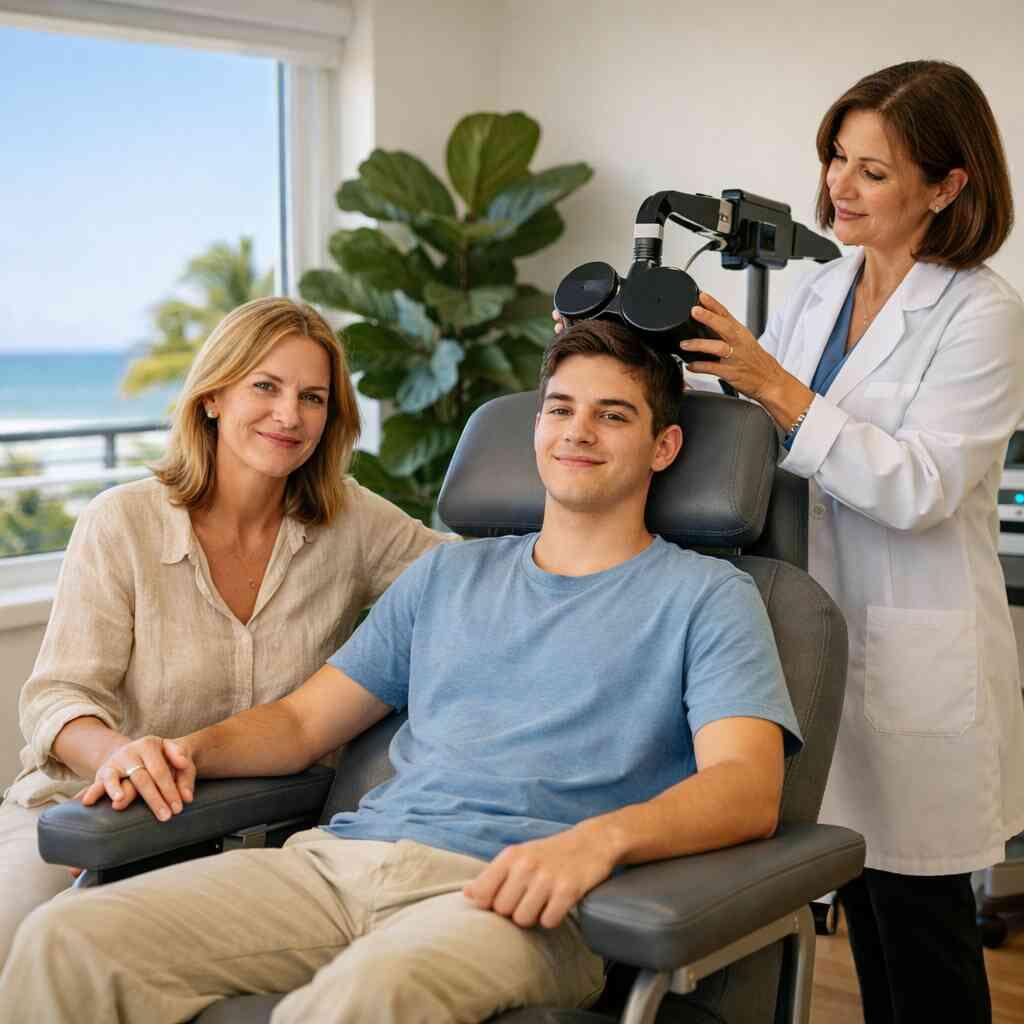
TMS usually feels more concrete than another prescription change. You come in. You sit in a chair. A coil delivers non-invasive brain stimulation to targeted areas. People often like that the treatment plan is visible and structured. It is not magic. It is not vague either.
The device helps explain why people ask, “how does TMS work?” In plain language, it uses magnetic pulses to stimulate brain networks linked with mood. Clinics may describe this as magnetic brain therapy, deep TMS therapy, or repetitive TMS, depending on the device and protocol. Some patients find that clarity calming. Others like that it avoids the groggy feeling they got from medication changes.
What parents and partners usually want to know before they trust a Florida mental health clinic
Parents and partners usually ask the same questions first. Is it safe? Will it interfere with work or school? What about TMS side effects safety? Those are fair concerns. They should be answered directly, not brushed aside.
A careful clinic should review history, screening, and goals before treatment begins. In Florida, outpatient behavioral health clinics also have to fit state rules and operational expectations, including AHCA oversight when applicable. Families deserve a setting that respects both mental health needs and practical life demands. If you want to compare options, start with the clinic’s locations and ask how they coordinate care across Miami, Fort Lauderdale, and West Palm Beach.
Why local access matters from Miami to Fort Lauderdale to West Palm Beach
Local access matters more than people think. South Florida traffic is not forgiving. Seasonal residents complicate schedules. So do school pickups, shift work, and care responsibilities. That is why searches like TMS near me Florida often lead families to choose convenience plus consistency.
On the care plans we see most often, access determines follow-through. A person in Aventura may keep a plan going if the clinic is close enough. A family in Coral Gables may only commit if appointments fit around work. Nearby options in TMS clinic Miami, TMS Fort Lauderdale, and TMS West Palm Beach can make treatment realistic instead of theoretical. That practicality is often the real reason people stay with TMS South Florida.
-
The moment TMS starts making sense for depression anxiety and OCD at the same time
Mental health rarely arrives in neat boxes. A parent may call it depression. A partner sees anxiety. The patient feels both, plus looping thoughts or shutdown. That mix is exhausting. It also explains why families ask whether one treatment can address more than one problem.
Why one diagnosis rarely tells the whole story in real homes
Real homes run on mixed symptoms. Depression can look like irritability. Anxiety can look like avoidance. OCD can look like “just being particular,” until rituals start taking over mornings, dinners, and bedtime. That is why a clinic should think broadly, not narrowly. It should consider Florida behavioral health needs as a whole picture.
When a family says, “We need help, but we do not know what label fits,” that is common. It is also why a careful evaluation matters before treatment starts. The goal is not to force symptoms into one category. The goal is to build a plan that matches the person in front of you.
How TMS depression treatment Florida can be paired with care for anxiety without turning life upside down
Many families ask about TMS treatment for depression in Florida and then quietly add, “There is anxiety too.” That is normal. TMS for anxiety may be considered alongside depression care, depending on symptoms and clinical judgment. It is not always a one-size-fits-all answer. Still, the same session structure can feel easier than juggling multiple medication shifts.
The key is screening and coordination. If you are comparing options, ask how the clinic tracks progress with tools like the PHQ-9 and, when appropriate, the MADRS. Those measures help make the conversation less subjective. They also keep expectations grounded. Families often feel better when progress is measured clearly.
Where TMS OCD therapy fits when rituals and looping thoughts take over the house
OCD can quietly shape a whole home. Locks get checked twice. Then four times. Schedules bend around rituals. Everyone gets tired. TMS OCD therapy may fit when standard approaches have not fully relieved the burden.
Research on transcranial magnetic stimulation continues to expand for OCD, and specialty protocols often need thoughtful screening. A clinic should explain what is known and what is still being studied. If you want a focused resource, the OCD treatment page can help frame the discussion. The point is not to promise certainty. The point is to offer informed options.
Why TMS for PTSD Florida and TMS for bipolar depression deserve careful screening
Some people search for TMS for PTSD Florida or TMS for bipolar depression after trying standard care. Those searches make sense, but they should always lead to careful evaluation. Bipolar symptoms need special screening because mood stability matters before any stimulation protocol starts. PTSD also deserves a trauma-informed review, especially if hypervigilance or sleep disruption is already severe.
The best clinics do not rush this part. They ask about history, medications, past episodes, and safety concerns. They may also discuss how TMS fits, or does not fit, with therapy such as TMS and EMDR combination planning. That kind of care feels slower at first. It is usually smarter in the long run.
How clinicians think about TMS for teen depression and TMS for young adults when school and family stress collide
Teen and young adult care brings its own pressure. School. Sports. Friend groups. Screens. Family tension. It all stacks up. Families seeking TMS treatment Florida for teen depression in Orlando often want something that does not add sedation or brain fog. They also want a plan that respects growth, privacy, and school schedules.
A student in Winter Park might need treatment that fits classes and exams. A young adult in Boca Raton may need help after failed medications and disrupted sleep. In those cases, the clinic should talk clearly about monitoring, coordination, and expectations. TMS can feel more manageable when the process honors real life. That is often what families are searching for in the first place.
-
What families really want to know about safety comfort and the hum of the session room
Most people do not fear the word “therapy.” They fear the unknown. They want to know what the room feels like. What the machine sounds like. Whether it hurts. That is reasonable. Good clinics answer these questions without jargon.
How does TMS work in plain language without the medical fog
At its core, TMS uses magnetic pulses to influence brain circuits tied to mood and behavior. It does not require anesthesia. It does not involve surgery. It is a form of non-invasive brain stimulation that many patients can complete while staying on their normal day schedule. The science can sound complex. The experience is often simpler than people expect.
If you want a deeper technical comparison, the phrase how TMS therapy works and what transcranial magnetic stimulation means is useful for reading. But most families do better with the short version: a coil rests near the head, and pulses are delivered in a controlled pattern. That is why some people call it repetitive TMS. Others hear deep TMS therapy and imagine something dramatic, when the reality is usually a structured outpatient visit.
What repetitive TMS and deep TMS therapy actually feel like in a session
Patients often describe the sensation as tapping, clicking, or pulsing. The sound is noticeable. The feeling is odd at first. Then it becomes familiar. A session room may have a faint machine hum, a chair that reclines, and a staff member checking comfort between sequences. That calm repetition helps some people relax.
One client described the first appointment as “less scary than the internet made it.” That happens often. The treatment is real, but the anticipation is usually worse than the session itself. Families who read a side effects and safety guide tend to feel more prepared. Preparation lowers dread.
Which side effects are usually discussed before treatment starts
Clinicians commonly discuss headache, scalp discomfort, fatigue, and mild skin or muscle sensations near the treatment site. Those are the kinds of details people want before they commit. TMS therapy success rate is not the only thing families should ask about. They should also ask how the clinic handles comfort, adjustments, and follow-up.
Safety discussions should be honest, not theatrical. TMS is generally viewed as a well-tolerated treatment in appropriate candidates, but every patient needs screening. That is especially true for people with seizure risk factors or complex psychiatric histories. TMS side effects safety matters because trust is built in the details.
Why TMS side effects safety matters for worried spouses and caregivers
Spouses and caregivers often carry the silent fear. They do not say it out loud, but they wonder if the treatment will make things worse. That fear deserves respect. The right clinic should explain what to watch for, what is routine, and what would prompt a call back. That is care, not paperwork.
A thoughtful clinic may also track symptoms with PHQ-9 or MADRS scores as treatment progresses. Those numbers do not replace human judgment. They support it. If you are comparing providers, ask whether the clinic documents response and adjustment in a structured way. It tells you a lot about how seriously they take follow-through.
What a thoughtful evaluation looks like in a Florida behavioral health setting
A good evaluation looks calm, thorough, and specific. It should cover diagnoses, medications, sleep, medical history, and goals. It should also ask whether you need coordination with therapy, psychiatry, or family support. In South Florida, that may include practical questions about commute, language access, and appointment timing. For some families, the right place feels more like a luxury TMS center than a busy waiting room. That does not mean marble floors. It means privacy, clear communication, and consistent staff attention. If you want to learn more about the people behind the care, review the about page and verify the team’s credentials directly. That is the kind of due diligence every family deserves.
-
The money question everyone asks before they call a TMS clinic in Miami Fort Lauderdale or Orlando
This is the part many people dread. You may already feel hopeful, then the money question hits. That tension is real. Families want clarity, not a maze of estimates and fine print. 
Does insurance cover TMS in Florida or do families get stuck guessing
Many plans do cover TMS in some situations, but coverage varies. The question “does insurance cover TMS in Florida” should always be answered by benefit verification, not assumptions. Policies differ by carrier, diagnosis, prior treatment history, and medical necessity criteria. That is especially true for TMS insurance coverage Florida searches.
A good clinic helps you verify benefits early. It should explain what documentation insurers often want, such as medication history and prior treatment records. If a staff member cannot explain that clearly, keep asking. Confusion at this stage is expensive.
What drives TMS cost Florida and why the cheapest option is not always the clearest one
People search TMS cost Florida because they need a range, not a mystery. The honest answer is that cost depends on diagnosis, protocol, insurance, and whether maintenance care is needed later. Exact pricing should be confirmed directly with the clinic. No one should invent it. That would only create a bigger problem later.
A lower price can hide weak coordination. A clearer process can save stress. Families often compare options by what is included: intake, authorization support, progress tracking, and follow-up. That is why the cheapest quote is not always the best value.
FactorWhy it mattersWhat to askInsurance verificationTells you what may be covered”Will you verify benefits before treatment?”Protocol typeAffects visit length and approach”Is this repetitive TMS or deep TMS?”MonitoringSupports progress review”Do you use PHQ-9 or MADRS tracking?”Follow-upHelps after the core course”Do you offer maintenance therapy?”### How TMS insurance coverage Florida can differ by plan and diagnosis
Coverage often depends on diagnosis and documentation. For example, TMS treatments for depression may be treated differently from TMS for anxiety or TMS OCD therapy. That is not a moral judgment. It is how insurance systems work. The clinic should help translate that language for you.
Families should also ask whether the clinic knows the details of local payer patterns. Some plans require a history of failed antidepressants. Others want psychiatric records or specialist notes. Good verification reduces surprise bills. It also keeps the treatment plan grounded in reality.
Why families compare TMS near me Florida options by access not just by price
In Florida, access is part of affordability. If a clinic is too far away, missed sessions become likely. That can affect continuity. So TMS near me Florida searches are not shallow. They are practical.
Families from Delray Beach may compare drive time with parking and traffic. People in Aventura may need shorter appointment windows. Someone in Winter Park may care more about schedule fit than headline price. That is why proximity to TMS clinic Miami, TMS Fort Lauderdale, TMS West Palm Beach, TMS Orlando, or TMS Tampa matters. Convenience supports completion.
What makes a best TMS clinic Florida feel more like a guided process than a sales pitch
A strong clinic does not pressure you. It explains. It verifies. It documents. It tells you what it can and cannot promise. That is the difference between a real treatment setting and a polished sales script.
If you are comparing providers, look for transparent communication and clear pathways for questions. Ask how they coordinate with psychiatrists and therapists. Ask how they handle insurance appeals. Ask how they help families understand cost and coverage. That kind of guidance is often what families remember most.
-
Why the right clinic experience changes everything from addiction recovery to long term stability
Some families come for depression and stay because the clinic understands the broader picture. Sleep, cravings, trauma, relapse, family strain. These issues overlap more than people expect. The right environment makes the difference between a one-time treatment and sustained care.
Where TMS addiction recovery fits alongside addiction rehab Florida and dual diagnosis treatment Florida
TMS is not a stand-alone answer for every substance problem. Still, families exploring TMS addiction recovery often want support when cravings and mood symptoms keep feeding each other. That is where dual diagnosis treatment Florida matters. Substance use and mood disorders can reinforce one another. Care plans should reflect that.
The SAMHSA TIP guidance for substance use disorders emphasizes coordinated, evidence-informed treatment. TMS can sit within that larger structure, depending on the case. If you want a focused resource, the dual diagnosis page is a good starting point. The important part is integration, not isolation.
How TMS for substance use disorder and TMS for smoking cessation are being studied for cravings and relapse patterns
Research on rTMS for cravings is still growing. Studies from places like the Medical University of South Carolina have helped fuel interest in TMS for substance use disorder and TMS for smoking cessation. That does not mean the science is settled. It means clinicians are paying attention because the signal is promising enough to study carefully.
Families sometimes ask about “craving control” as if it were a switch. It is not that simple. But the idea of alcohol addiction brain stimulation or craving-focused protocols can make sense when standard support has not been enough. A good clinic will explain the evidence without overselling it.
Why families ask about alcohol addiction brain stimulation when support plans keep falling short
The question usually comes after relapse, not before. That matters. It means the family is tired and cautious. They want to know if there is another tool worth trying. They also want to know whether it fits with rehab, therapy, and medical care.
If a provider discusses addiction, they should reference the broader treatment context. They should mention 12-step support, therapy, medication when needed, and behavioral strategies. They should not frame TMS as a replacement for everything else. The safer conversation is about TMS and EMDR combination possibilities, relapse prevention, and coordinated care.
How TMS maintenance therapy and TMS long-term results shape the next chapter after the first course
Some families think relief ends when the last session ends. Often, the better question is what comes next. TMS maintenance therapy may be part of the plan for some patients, especially if symptoms have recurred before. The goal is to protect gains without pretending the work is finished.
Clinicians may revisit symptom scales, sleep, medication needs, and stressors over time. They may also talk about TMS long-term results in realistic terms. No honest provider should guarantee a permanent fix. But they can discuss maintenance, monitoring, and relapse prevention in a thoughtful way.
What families should look for in a luxury TMS center that respects privacy coordination and real follow through
A true luxury TMS center is not about flash. It is about calm. Privacy matters. Scheduling matters. Communication matters. Families dealing with depression, OCD, anxiety, or addiction do not need theatrics. They need steadiness.
If you are comparing Florida areas we serve and weighing options from Miami-Dade to Palm Beach and Orlando, look for responsive follow-up and a clear care path. That is especially important for seasonal residents who split time between states. Ask one direct question today: who verifies benefits, who tracks progress, and who answers after the appointment ends? You do not have to sort out every detail at once, and you do not have to do it without support.
Frequently Asked Questions
Does TMS work for depression after failed medications?
For many people, TMS is considered after several medications have not helped enough. Research, including the 2018 Stanford study by Carpenter et al., supports TMS as a serious option for treatment-resistant depression. Clinicians often track improvement with tools like the PHQ-9 or MADRS. That said, outcomes vary, and no ethical provider should promise a specific result. A good clinic will review your medication history, symptoms, and goals before recommending a plan.
Is TMS safe and what side effects should I expect?
TMS is generally well tolerated when the right candidate is screened carefully. Commonly discussed side effects include scalp discomfort, headache, and temporary fatigue. Providers should also review seizure risk factors and medical history. Families should ask directly about TMS side effects safety before starting. A thoughtful clinic explains the process clearly and monitors comfort throughout treatment.
Does insurance cover TMS in Florida?
Sometimes, yes, but coverage depends on your plan, diagnosis, and prior treatment history. Many insurers require documentation that medications or therapy were not enough. That is why benefit verification matters before you start. Ask the clinic whether they handle authorization support and appeals. Never assume coverage without checking the details.
Can TMS help anxiety, OCD, or PTSD too?
TMS is best known for depression, but clinicians also consider it for anxiety symptoms, OCD, and some PTSD-related cases. The evidence base varies by condition, and screening matters a lot. OCD protocols often require specialty expertise, while bipolar depression needs careful monitoring. A clinic should explain what is well supported and what remains under study. That keeps expectations honest and useful.
How do I choose the best TMS clinic in Florida?
Start with transparency. Ask about physician oversight, screening, insurance verification, symptom tracking, and follow-up care. Look for a clinic that explains deep TMS therapy, repetitive TMS, and maintenance options in plain language. Local access also matters, especially if you live in Miami, Fort Lauderdale, West Palm Beach, Orlando, or Tampa. The best clinic should feel organized, calm, and easy to reach.
Is TMS an option for addiction recovery or smoking cessation?
TMS for substance use disorder and TMS for smoking cessation are still developing areas of research. Some studies suggest possible benefits for cravings and relapse patterns, but this is not a substitute for addiction treatment. TMS may fit alongside rehab, therapy, and dual diagnosis care. If you are exploring alcohol addiction brain stimulation, ask for a careful explanation of the evidence and limitations. That honesty is a good sign.
How do I get started with TMS Treatment Florida?
The simplest move is to reach out for an evaluation and insurance review. Ask whether the clinic serves your area and whether it can coordinate with your current psychiatrist or therapist. You can also review the treatment pages and service areas first. If your family has been stuck in the same cycle, one clear conversation can help you see what is realistic next.


