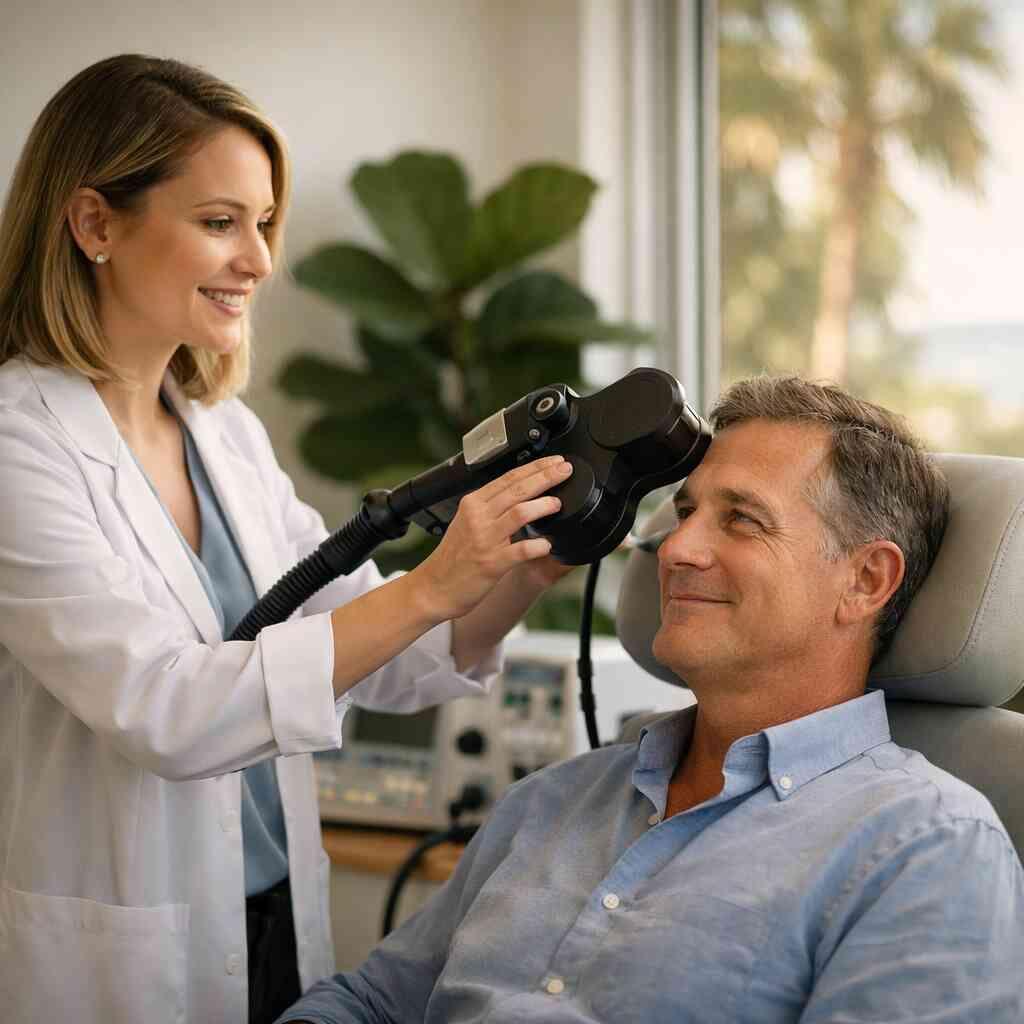
Why Fall Is the Season When TMS Questions Get Real
The first cool morning in Florida can make a rough mood feel louder. People notice it in small ways. Sleep gets strange. Motivation thins out. If you are already living with medication-resistant depression, the shift can feel like a weight settling in before breakfast.
We hear this often from people who have tried pill after pill. The side effects can feel almost as hard as the symptoms. Dry mouth. Fog. Emotional flatness. That is why fall is when many patients start asking about TMS treatment in Florida with real urgency.
The late-year slump that makes medication-resistant depression feel louder
Medication-resistant depression does not wait politely for a better season. It tends to become more obvious when routines shift and daylight shortens, even in sunny Florida. You may still go to work, answer messages, and make dinner, but everything can feel slowed down. That mismatch between functioning and suffering is exhausting.
In the projects and consultations we have seen this year, the hardest part is often the quiet buildup. A person tells us they have been “fine,” yet they have stopped returning calls and started sleeping too late. They are not lazy. They are worn down. That is exactly where non-drug depression treatment can start to feel practical instead of abstract.
Why seasonal mood shifts can sharpen interest in non-drug depression treatment
Fall makes people take stock. The school calendar changes. Holiday plans start forming. The year feels closer to the finish line, and that can trigger honest questions about mental health. If prescriptions have not given you steady relief, you may start comparing options more seriously.
This is where transcranial magnetic stimulation therapy enters the conversation for many patients. It is a non-invasive brain stimulation treatment that does not rely on daily medication changes. For some people, that is a relief. For others, it is simply the first option that sounds tolerable after too many failed trials.
A woman from Coral Gables once told us she could manage the mornings, but by afternoon her mind felt “like static under a screen.” She had tried two antidepressants and one augmentation strategy. What she wanted most was not a miracle. She wanted a treatment that did not leave her sedated, shaky, or emotionally blunted. That kind of honesty matters.
What Florida patients usually ask when TMS near me Florida starts to feel urgent
The most common question is simple: how does TMS work? The next question is usually practical. Is it close enough to fit into real life? Can I get there from Aventura, Boca Raton, Delray Beach, or Winter Park without turning every visit into a marathon?
Patients also ask about the basics. Is it an FDA approved depression treatment? Is it only for severe depression, or can it help with anxiety and OCD too? Is it better than another medication change? Those questions are reasonable, especially when you are tired and trying to hold your week together.
- Is this a fit for TMS after failed medications?
- Does it help with TMS for anxiety or only depression?
- What do TMS side effects safety conversations usually cover?
- Can I combine it with therapy or medication?
- What about TMS insurance coverage Florida?
What Changes Inside the Brain When transcranial magnetic stimulation therapy Starts Working
People often expect TMS to feel dramatic. It usually does not. The changes happen in brain networks that regulate mood, attention, and emotional flexibility. The treatment uses magnetic pulses to encourage activity in targeted areas, especially when depression has slowed those circuits down.
That is the core idea behind magnetic brain therapy and repetitive TMS. It is not shock treatment. It is not sedation. It is a focused signal delivered through the scalp to help mood circuits respond more normally. For many patients, that sounds technical at first, then strangely reassuring.
How magnetic brain therapy uses repetitive TMS to talk to mood circuits
Repetitive TMS sends rapid magnetic pulses to specific brain regions linked to mood regulation. The pulses do not hurt nerves. They influence activity in the cortex, which can affect deeper networks over time. Think of it as nudging an overworked system back into a better rhythm.
The best-known evidence for depression comes from studies and guidelines that helped establish TMS as a serious option for medication-resistant depression. Research from Stanford and later reviews from the APA and the Clinical TMS Society have kept refining that conversation. Researchers often track change with tools like the PHQ-9 or MADRS, because mood care needs more than a gut feeling.
Why deep TMS therapy and standard rTMS are not one-size-fits-all
Not every patient needs the same coil, the same target, or the same protocol. That is where deep TMS therapy and standard rTMS can differ. Deep TMS uses a different coil design to reach broader or deeper cortical regions. Standard rTMS is more focused and often feels like a lighter, more targeted approach.
Here is the part most people miss: the right choice depends on diagnosis, symptoms, past treatment history, and tolerance. If you are comparing options, it helps to review rTMS and deep TMS differences. There is no single “best” version for everyone. There is only the better fit for your brain and your goals.
FeatureStandard rTMSDeep TMSTargetingMore focalBroader reachCommon useDepression, anxiety-related targetsDepression, OCD protocolsSession feelTapping sensationSimilar, sometimes broader sensationFitOften chosen for precise targetingOften chosen for certain deeper network goals### What a personalized TMS treatment plan usually targets for depression, anxiety, and OCD
A personalized plan starts with your diagnosis and your history. That may include depression, anxiety, OCD, PTSD symptoms, or bipolar depression. It may also include medications that stopped helping, side effects you could not tolerate, or therapy that helped only halfway.
For depression, many clinics use a protocol that maps to the left dorsolateral prefrontal cortex. For OCD, the target and dose can differ. For anxiety, treatment may be paired with psychotherapy and careful symptom tracking. If you want a deeper look at the clinical side, review TMS treatment for anxiety disorders and TMS therapy for OCD.
What a Florida TMS Visit Actually Feels Like From the Parking Lot to the Chair
Most people expect a medical visit to feel heavy. TMS usually feels more ordinary than that. You park. You check in. You talk with staff. Then you sit in a chair while a machine makes a steady clicking sound beside you. The process is clinical, but it can still feel surprisingly calm.
Florida patients often like the predictability. That matters when your mental energy is already low. On busy weeks, being able to fit care around work in Miami, Broward, or Palm Beach County can make all the difference.
What happens during the intake at a Florida mental health clinic
Intake usually starts with a history review. You discuss diagnoses, prior medications, therapy, sleep, substance use, and any seizure risk. A clinic may also use symptom tools such as the PHQ-9, GAD-7, or other measures to track change over time. That gives the team a baseline before treatment begins. 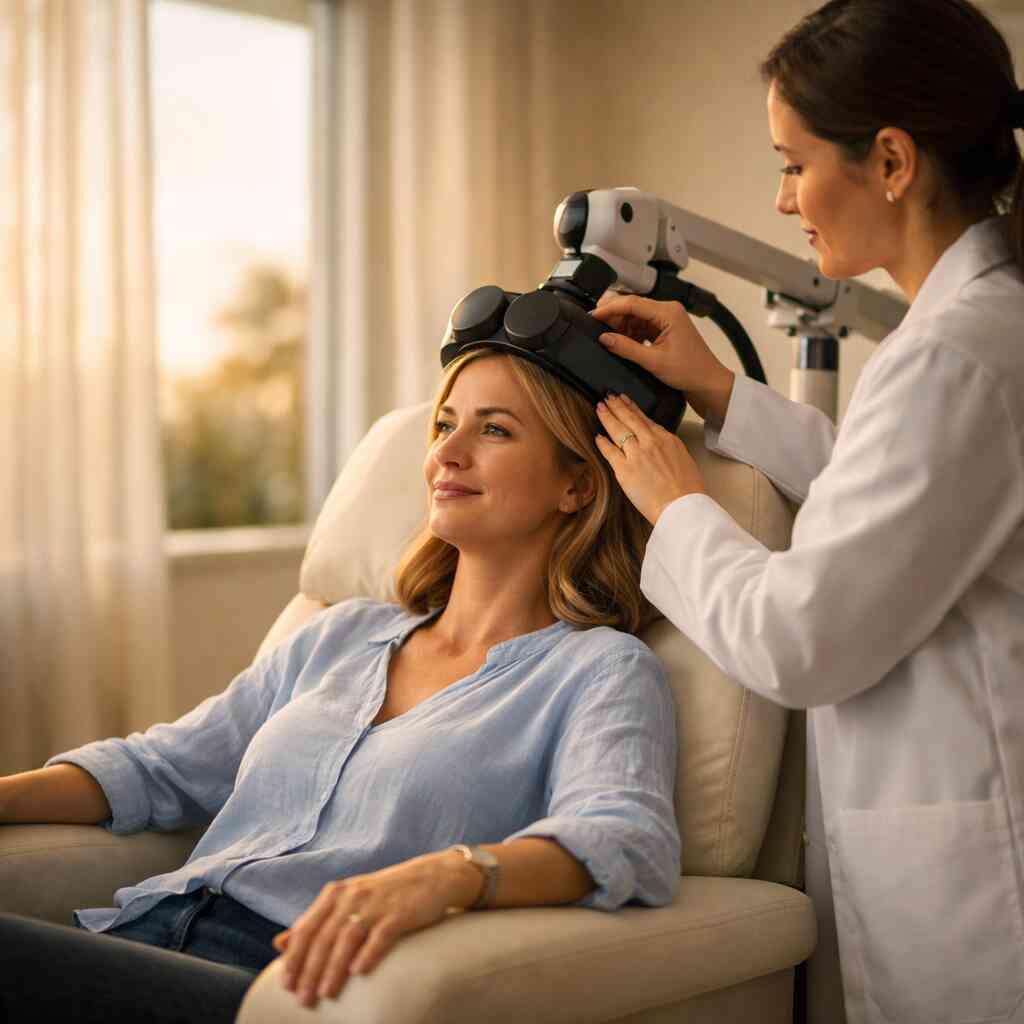
At a good Florida mental health clinic, intake should feel careful, not rushed. You should have room to ask about insurance, scheduling, and whether the plan fits your life. If you want to see how a specific practice handles its team and process, about the staff and clinical philosophy can help you compare options without guessing.
The hum of the machine, the short sessions, and what side effects safety usually means
The machine makes a rhythmic tapping or humming sound. Some people describe the sensation as tapping on the scalp. Others barely notice it after the first few minutes. Sessions are short enough to fit around work, which is one reason outpatient brain stimulation therapy has grown so much in Florida.
Safety questions are normal. So is caution. Common side effects can include scalp discomfort, headache, or fatigue, especially early on. Serious events are uncommon, but every clinic should review screening carefully. For a plain-language overview, see TMS side effects and safety. That kind of clarity matters more than hype.
A man from Fort Lauderdale once asked if he would “feel weird” during treatment. He had tried three medications and hated all of them. After the first few sessions, what surprised him most was not the machine. It was how ordinary the visit felt. That normalcy lowered his stress before the work even had a chance to begin.
How location access matters for TMS clinic Miami, TMS Fort Lauderdale, TMS West Palm Beach, TMS Orlando, and TMS Tampa
Access sounds boring until it is the reason you stop treatment. Florida’s geography can make consistency difficult, especially if you are driving across county lines. That is why local convenience matters for TMS clinic Miami, TMS Fort Lauderdale, TMS West Palm Beach, TMS Orlando, and TMS Tampa patients.
If you live in South Florida, you may be balancing traffic, seasonal travel, and work schedules. Clinics that understand those patterns can make care easier to sustain. For location details, TMS clinic locations in South Florida is a practical place to compare access points. Sometimes the best clinic is the one you can actually reach every weekday.
How to Decide Whether TMS Is the Right Move Before the Season Shifts Again
The decision usually comes after enough disappointment to make you careful. That caution is healthy. TMS is not the only option, but it is a real one, especially if you have tried multiple medications, had difficult side effects, or want a medication-free depression support path that still feels medically grounded.
Florida patients also have to think about timing. Snowbirds return. Traffic changes. Insurance resets can affect approvals. If you have been living with fatigue and low mood for months, waiting for another perfect moment may only extend the strain.
When TMS after failed medications makes more sense than another prescription change
If you have already cycled through several antidepressants, the question changes. Instead of asking which medication to try next, you may ask whether a different treatment model makes more sense. That is where TMS after failed medications often comes up.
Research and consensus statements support TMS as an evidence-based option for depression that has not responded well to medication. In practice, many people choose TMS because they want a non-drug path that still feels structured, measurable, and accountable. Some also explore TMS treatment for anxiety if worry and panic are part of the picture.
What to ask about TMS insurance coverage Florida, TMS cost Florida, and does insurance cover TMS in Florida
The money question is real. Do not let anyone make you feel awkward for asking it. TMS cost Florida can vary based on diagnosis, device type, session count, and insurance status. The right clinic should help you verify benefits before treatment starts.
Ask these questions:
- Does my plan cover TMS for my diagnosis?
- What documents do you need for approval?
- What happens if my insurer requests prior authorization?
- Are there out-of-pocket costs I should expect?
- What is included in the treatment estimate?
For a fuller breakdown, TMS insurance coverage in Florida can help you frame the conversation. Florida’s insurance landscape can be uneven, so direct verification matters more than assumptions. That is especially true for patients moving between seasonal residences.
How to think about TMS for anxiety, TMS OCD therapy, TMS for PTSD Florida, TMS for bipolar depression, and TMS for substance use disorder
TMS is most established for depression, but the field keeps growing. Many clinics now discuss TMS for anxiety, TMS OCD therapy, TMS for PTSD Florida, TMS for bipolar depression, and TMS for substance use disorder with careful language. That caution is smart, because evidence varies by condition and protocol.
For addiction care, there is growing research on rTMS and cravings, including work from centers such as the Medical University of South Carolina. There is also increasing interest in TMS addiction recovery, TMS for smoking cessation, and alcohol addiction brain stimulation as part of broader care. The SAMHSA TIP framework still matters here, because dual diagnosis treatment Florida patients need integrated support, not promises.
If addiction and mood symptoms overlap, look for a clinic that understands both. That includes coordination with addiction rehab Florida services, psychotherapy, and medication management when needed. If you are exploring this path, exploring TMS treatment Florida for substance use support can help you see how TMS may fit alongside recovery care.
FAQ
What does TMS feel like during a session?
Most people feel tapping or pulsing on the scalp. It can be mildly uncomfortable at first, but many patients adjust quickly. Sessions usually feel structured and brief, which helps people keep working and caring for family while in treatment.
How does TMS work for depression?
TMS uses magnetic pulses to stimulate brain areas involved in mood regulation. Over time, that can help improve communication inside mood circuits. Clinicians often measure progress with tools like the PHQ-9 or MADRS, not just by impression alone.
Is TMS safe for side effects and safety concerns?
TMS is generally well tolerated when properly screened and supervised. Common side effects include scalp discomfort and headache. Clinics should review seizure risk, medications, and history before treatment. If you have concerns, ask for a plain explanation before you agree to anything.
Does insurance cover TMS in Florida?
Often, yes, but coverage depends on your plan and diagnosis. Many insurers require prior authorization and proof that medications did not help enough. Always verify benefits before starting, because coverage rules can differ across carriers and counties.
Can TMS help with anxiety or OCD?
It can help some people, especially when anxiety or OCD appears with depression. OCD protocols are more established than many other off-label uses. A clinician should explain whether your symptoms fit an evidence-based pathway and what results are realistic.
Is TMS a good option for addiction recovery?
TMS is being studied for cravings and substance use support, but it is not a stand-alone addiction treatment. It may work best alongside therapy, recovery supports, and medical care. If substance use and mood symptoms overlap, integrated treatment matters most.


