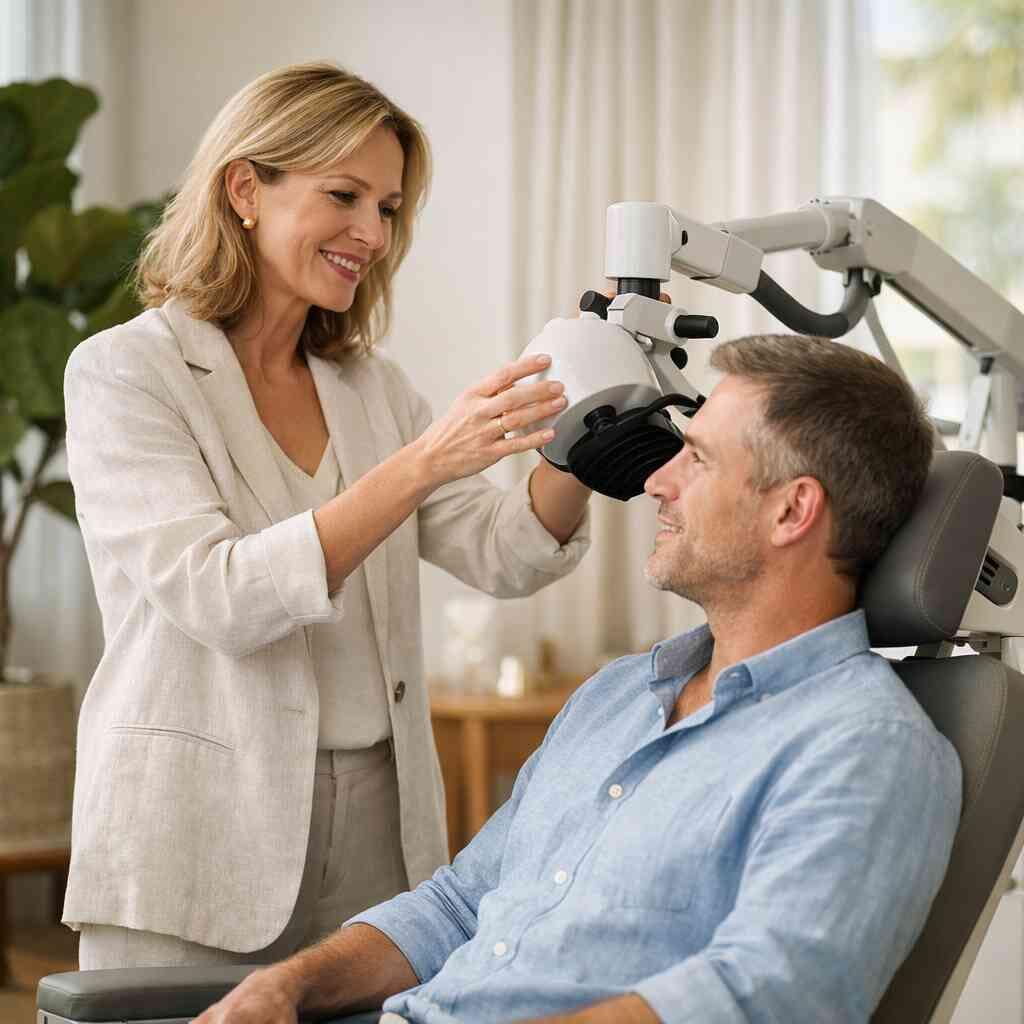
When a Blurry Medication Routine Stops Working in South Florida
If you are reading this after another medication change left you tired, flat, or disappointed, that frustration makes sense. We hear it often. The hardest part is not only the symptoms themselves. It is the feeling that nothing is working anymore. For many people, that is the moment when TMS treatment in Florida starts sounding less like an acronym and more like a possible next step.
Why medication-resistant depression can leave people looking for a different path
Medication-resistant depression can make everything feel like work. You may have tried more than one antidepressant, adjusted doses, and waited for relief that never fully arrived. Sometimes the side effects become part of the problem. Dry mouth, sleep changes, weight shifts, and emotional dullness can pile up quickly. That is why people search for alternative depression treatment and non-drug depression treatment after failed medications.
In the cases we have seen, the question is rarely, “Why not keep trying one more pill?” It is usually, “How many more months can I live like this?” That is a very different question. It deserves a different kind of answer. For some patients, that answer is TMS depression treatment Florida, especially when the record shows repeated medication trials without real relief.
What rTMS and deep TMS are actually trying to change in the brain
Both repetitive TMS and deep TMS therapy use magnetic pulses to stimulate specific brain circuits linked with mood and behavior. People often ask, how does TMS work, and the short version is this: it aims to nudge underactive or dysregulated networks toward healthier activity. That is why clinicians describe it as magnetic brain therapy and transcranial magnetic stimulation therapy. It is not electroshock, and it is not surgery.
Here is the part most people miss. The goal is not to force a feeling. The goal is to influence the brain systems that help regulate mood, attention, and compulsive loops. Research from Stanford and other academic centers has helped move this field forward, and the evidence base keeps growing. If you want a plain-language overview, the page on how transcranial magnetic stimulation works for mood disorders is a useful place to start.
Why the phrase non-invasive brain stimulation matters when pills and talk therapy feel flat
Non-invasive brain stimulation matters because many people want a treatment that does not rely on systemic medication. Pills travel through the whole body. TMS stays much more targeted. That difference matters when you have already spent months managing side effects, missed work, or emotional exhaustion. It can also matter when you want a treatment plan that feels more active than waiting for chemistry to shift on its own.
This is also where people start comparing TMS with other care they already know. Therapy can be essential, and medication can still help many people. Yet when both have stalled, a new option can feel like a relief and a risk at the same time. If you are feeling that mix, that is normal. The question is not whether you have failed. The question is whether your care plan still fits your brain.
How Florida patients start comparing TMS treatment Florida options after failed medications
Florida adds a few practical layers. Seasonal residents may need scheduling flexibility. Others are driving from Aventura, Coral Gables, Boca Raton, Delray Beach, or even Winter Park and want something that fits real life. In South Florida, people often compare commute time, insurance rules, and whether the clinic feels calm enough to return to week after week. That is why searches like TMS near me Florida, Florida mental health clinic, and Florida behavioral health show up so often.
One patient in Broward described it like this: every medication change felt like “starting over with a blindfold on.” The side effects kept changing, but the depression stayed. Once the person understood that TMS was not another pill trial, the conversation changed. That shift matters. It lets you compare options with more clarity and less dread.
The split screen between repetitive TMS and deep TMS
The simplest way to compare these two treatments is to think about focus and depth. Both use magnetic pulses. Both are forms of transcranial magnetic stimulation therapy. Yet they are not identical, and the difference affects how clinics talk about symptoms, protocol, and fit. For many readers, this is where the comparison finally becomes concrete instead of abstract.
How repetitive TMS targets a smaller, more focused surface area
Repetitive TMS usually uses a figure-eight coil that concentrates stimulation near the surface of the cortex. That can be useful when a clinic wants a highly focused target. It is one reason people call it a more local approach. In practical terms, it is often discussed in relation to FDA approved depression treatment pathways and established depression protocols.
For readers comparing repetitive TMS versus deep TMS therapy for depression, the key idea is precision. rTMS tends to focus on a smaller area. That can be a strength when the treatment target is clear. It can also mean the protocol depends heavily on exact placement and mapping. The best TMS clinic Florida patients choose will explain that clearly, without jargon.
What deep TMS is designed to reach and why that changes the conversation
Deep TMS therapy uses a different coil design, often described as reaching deeper and broader brain regions. That does not mean “better” in every case. It means different. Some patients and clinicians like that broader field because it may influence networks beyond the surface. Others prefer the tighter focus of rTMS. The real answer depends on the condition, the goal, and the clinical evaluation.
If you are comparing the difference between rTMS and Deep TMS in South Florida, this is the core split. One is more focused on the surface. The other is built to reach more distributed circuits. For a deeper dive into device and protocol differences, our page on deep TMS therapy and research updates breaks down the conversation in plain language.
FeatureRepetitive TMSDeep TMSCoil styleMore focalBroader fieldTypical feelTargetedMore expansiveMain useDepression and related protocolsDepression, OCD, and some other indicationsFit questionPrecise target neededBroader network approach desired### Where the two therapies overlap for depression, anxiety, OCD, and other mood concerns
The overlap matters as much as the difference. Both methods are used in TMS depression treatment Florida, and both may be considered for TMS for anxiety, TMS OCD therapy, and TMS for PTSD Florida in selected cases. Some clinics also discuss TMS for bipolar depression, though that needs careful psychiatric oversight. For readers with multiple symptoms, the question is often not “Which device is better?” It is “Which protocol fits my diagnosis and history?”
That is especially true in dual diagnosis treatment Florida settings, where mood symptoms and substance use can appear together. A person in recovery may also have depression or OCD. Another may be managing panic, trauma, and nicotine cravings at the same time. In those situations, the clinic needs to think in systems, not labels.
Why TMS side effects safety often feels different from the side effects of antidepressants
TMS side effects safety often feels different because the treatment does not circulate through your whole body like medication does. The most commonly discussed side effects are local and temporary, such as scalp discomfort or a headache. That is very different from the nausea, sexual side effects, weight gain, or emotional flattening some people get from antidepressants. Safety still matters, of course, and every clinic should review risks carefully.
This is also where evidence helps. TMS has been studied in depression, including work often discussed from the Stanford group in 2018 and later consensus reviews. Outcome tracking may use tools like the PHQ-9 or MADRS to measure change over time. That keeps the discussion grounded in numbers, not hype. If you want a patient-facing overview of side effects, see TMS side effects and safety facts.
Choosing the right path without guessing your way through it
This part is genuinely confusing for most people. You may be juggling symptom relief, insurance, commute time, and the fear of wasting more energy. That is a heavy load. The good news is that the right consultation can make the next decision much simpler. You do not need a perfect guess.
Which concerns may point someone toward TMS depression treatment Florida over another option
People often start with TMS when depression has not improved after medication trials. That includes medication-resistant depression, TMS after failed medications, and the desire for a more targeted plan. It can also be appealing when side effects have become intolerable or when you want a treatment that does not require daily pills. For some, the draw is practical. For others, it is emotional relief from feeling stuck. 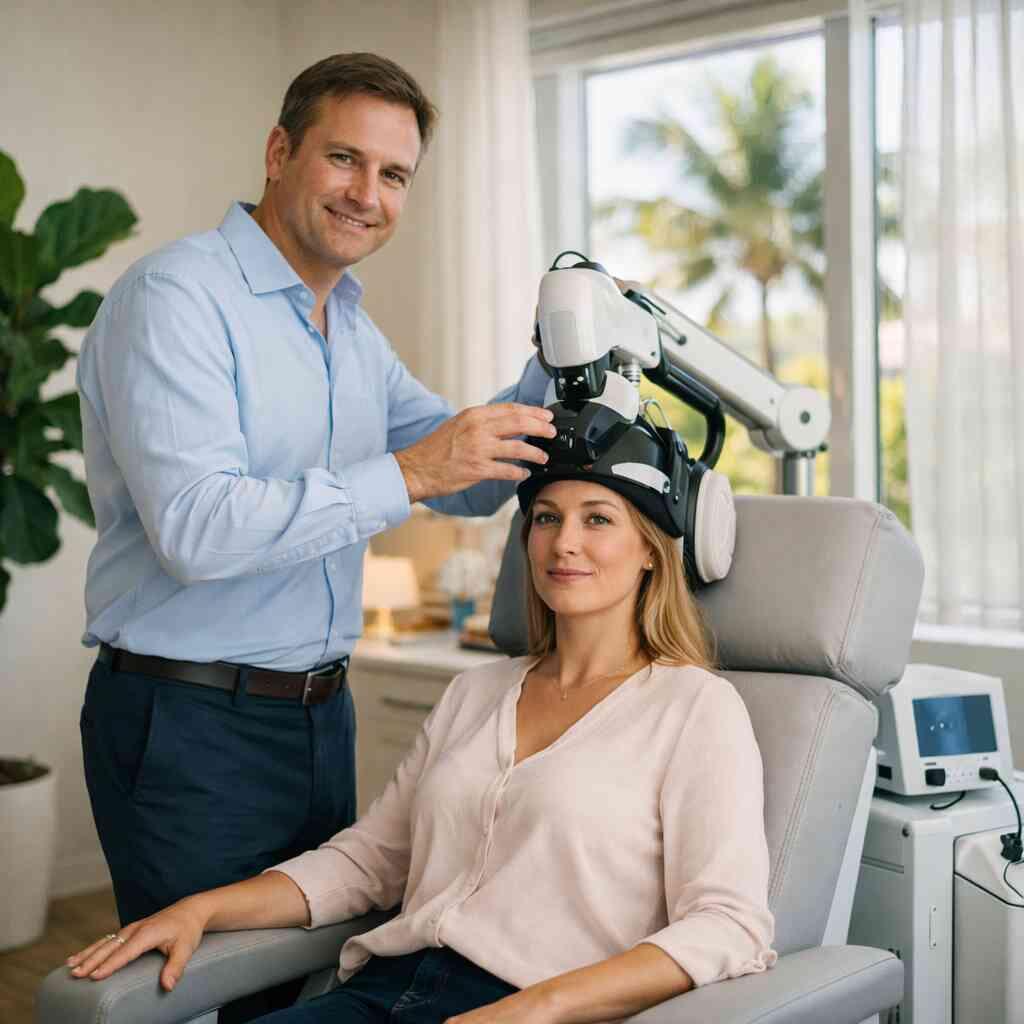
Clinics may use a clinical history, past medication response, and symptom scales to decide if you are a candidate. That is where terms like TMS therapy success rate should be handled carefully. No honest clinic should promise a personal outcome. What they can do is explain the evidence, how response is tracked, and what a realistic treatment course looks like. If depression is your main concern, the page on TMS treatments for depression may help frame the discussion.
How TMS clinic Miami, TMS Fort Lauderdale, and TMS West Palm Beach patients usually compare access, insurance, and convenience
Access matters more than people expect. A person in Miami may compare a TMS clinic Miami option with a Broward or Palm Beach location based on drive time and weekly schedule. Someone in Fort Lauderdale may want a shorter trip than crossing county lines every morning. A patient in West Palm Beach may ask whether the clinic can coordinate around work or school. That is not a small issue. Consistency is part of the treatment structure. Florida also has a patchwork insurance reality. Some plans cover TMS, and some require careful verification. If you are asking does insurance cover TMS in Florida, the answer depends on your plan and diagnosis. A good clinic will help verify benefits and talk through the details before you commit. For location details, you can also look at TMS in Broward County near Fort Lauderdale and TMS in Palm Beach County near West Palm Beach. ### What to ask a TMS psychiatrist Florida about TMS insurance coverage Florida, TMS cost Florida, and TMS reviews Florida
Before you start, ask direct questions. Good clinics welcome them. You want to know what the evaluation includes, how sessions are scheduled, and what happens if your symptoms shift during treatment. You also want clarity on TMS insurance coverage Florida, TMS cost Florida, and whether there are payment options. The point is not to shop by price alone. It is to understand the full picture.
Try this short list:
- What diagnoses do you treat most often?
- How do you confirm I am a candidate?
- What do you do if I miss sessions?
- How do you measure progress?
- Who reviews my plan if symptoms change?
- What should I read in your TMS reviews Florida materials, and what should I ignore?
If you want a focused cost and benefits overview, see TMS cost in Florida and payment options and TMS insurance coverage in Florida.
When support for TMS for anxiety, TMS OCD therapy, TMS for PTSD Florida, TMS for bipolar depression, or TMS addiction recovery belongs in the same care plan
Not every symptom sits in a neat box. Anxiety can ride with depression. OCD can sit beside trauma. Some people also deal with nicotine dependence or alcohol use. That is where integrated planning matters. TMS for anxiety, TMS OCD therapy, TMS for PTSD Florida, and TMS for bipolar depression may all be discussed differently, depending on the person. If substance use is part of the picture, research on TMS addiction recovery and TMS for substance use disorder is growing, including work on craving circuits from centers such as the Medical University of South Carolina.
This is also where treatment planning should respect the larger care plan. Some patients combine therapy with TMS. Others ask about a TMS and EMDR combination when trauma is central. In addiction settings, clinicians may coordinate with addiction rehab Florida programs, and SAMHSA guidance on substance use treatment helps frame those decisions responsibly. For condition-specific reading, see TMS therapy for OCD in Florida and TMS treatment for anxiety disorders in Florida.
Why the next move is a consultation that looks at your history, symptoms, and goals instead of a one-size-fits-all answer
Here is what almost no online guide mentions. The best decision is often less about the device name and more about the quality of the evaluation. A careful TMS psychiatrist Florida should look at your diagnosis, previous medications, symptom pattern, substance use history, and goals. They should also talk about safety, scheduling, and what success would mean for you personally. That is especially important for TMS for teen depression, TMS for young adults, and people with complex histories.
One client from the Boca Raton area said the relief came from hearing, “We are not guessing here.” That changed the tone instantly. It turned a scary search into a plan. If you are ready to compare options, start with a consultation and bring your medication list, prior diagnoses, and questions. If you want the clinic team details first, About the team and credentials is a smart place to review who is involved before you call.
Frequently Asked Questions
Question: What is the difference between repetitive TMS and deep TMS therapy in The Difference Between rTMS and Deep TMS in South Florida?
Answer: Both are forms of transcranial magnetic stimulation therapy and both fall under non-invasive brain stimulation. The main difference is how the magnetic field is delivered. Repetitive TMS, often called rTMS, typically uses a more focused approach on the brain surface, while deep TMS therapy is designed to reach broader and deeper networks. For many people exploring TMS treatment Florida options after medication-resistant depression or TMS after failed medications, the right choice depends on diagnosis, symptom history, treatment goals, and clinical evaluation. A qualified TMS psychiatrist Florida should explain why one approach may fit better than the other instead of presenting one as automatically superior.
Question: How does TMS work for people looking for non-drug depression treatment or TMS depression treatment Florida?
Answer: If you are asking how does TMS work, the simplest explanation is that magnetic pulses are used to stimulate specific brain circuits involved in mood regulation. It is a non-drug depression treatment option, which is one reason many people look into TMS depression treatment Florida after side effects from medication or limited relief from past prescriptions. TMS is often discussed as an FDA approved depression treatment and magnetic brain therapy, but a responsible clinic will avoid promising results for any one person. Instead, the focus should be on careful assessment, symptom tracking, and a treatment plan that fits your history. At TMS Treatment Florida, the goal is to help patients understand their options clearly so they can make informed decisions with their care team.
Question: Can TMS help with anxiety, OCD, PTSD, or bipolar depression in South Florida?
Answer: TMS may be considered for more than depression, depending on the individual and the protocol. Some clinics discuss TMS for anxiety, TMS OCD therapy, TMS for PTSD Florida, and TMS for bipolar depression as part of a broader Florida behavioral health plan. The best approach is always individualized, especially if symptoms overlap or if there is dual diagnosis treatment Florida involvement. A thoughtful evaluation can help determine whether TMS belongs alongside other care such as therapy, medication management, or in some cases a TMS and EMDR combination. Because mental health conditions can be complex, it is important to work with a Florida mental health clinic that explains the evidence, the limits of treatment, and the reason a specific protocol is being recommended.
Question: Does insurance cover TMS in Florida, and what should I ask about TMS cost Florida before starting?
Answer: Does insurance cover TMS in Florida depends on your plan, diagnosis, prior treatment history, and authorization requirements. Many people searching for TMS insurance coverage Florida want straightforward answers before committing, and that is a reasonable expectation. A good clinic should verify benefits, explain what documentation may be needed, and help you understand possible out-of-pocket costs without guessing or making unsupported claims about pricing. If you are comparing TMS clinic Miami, TMS Fort Lauderdale, or TMS West Palm Beach options, ask about coverage, scheduling, and what is included in the care plan. You can also ask how the clinic handles TMS maintenance therapy, follow-up care, and long-term planning so you have a clear picture before starting.
Question: How do I choose the best TMS clinic Florida patients can trust for TMS near me Florida searches?
Answer: When comparing the best TMS clinic Florida options, start with transparency, clinical evaluation, and ease of access. The right clinic should explain the difference between repetitive TMS and deep TMS therapy, review your diagnosis carefully, and discuss TMS side effects safety in plain language. It should also be clear about TMS therapy success rate language, avoiding promises and focusing on evidence-based care, symptom tracking, and realistic expectations. For many people, convenience matters too, whether they are searching TMS South Florida, TMS Orlando, TMS Tampa, or a local TMS near me Florida option. A compassionate clinic will help patients with medication-resistant depression, TMS for young adults, TMS for teen depression, or TMS addiction recovery feel supported from the first consultation onward. If you are reading reviews, use TMS reviews Florida as one part of your research, but prioritize how the team communicates, screens candidates, and builds trust.