If you keep seeing TMS and rTMS and feel stuck, that confusion makes sense. Many Florida patients are already tired of medication side effects, relapse, or another therapy that helped only halfway. They do not need more jargon. They need a clear answer that respects how much they have already carried.
Why TMS and rTMS sound different but often point to the same Florida treatment question
The exact wording patients see in clinic brochures and why it matters less than the protocol
The letters can look more different than they really are. In everyday clinic language, TMS treatment Florida often refers to the umbrella idea of transcranial magnetic stimulation therapy. rTMS means repetitive TMS, which is the standard form most people mean when they say TMS. That small language shift matters less than the actual protocol, target area, session length, and treatment plan. If you are comparing brochures, ask what the clinic does, not just what it calls it.
In practical terms, many people search for the difference between TMS and rTMS in Florida when they are trying to decide whether a clinic is using the same science they read about online. That is a fair question. The answer usually starts with repetition: rTMS delivers magnetic pulses in a patterned series, while TMS is the broader term. Some clinics also discuss deep TMS therapy when their device reaches slightly deeper brain regions. So the better question is not name first, but protocol first.
How a pulse of magnetic energy reaches the brain without surgery or anesthesia
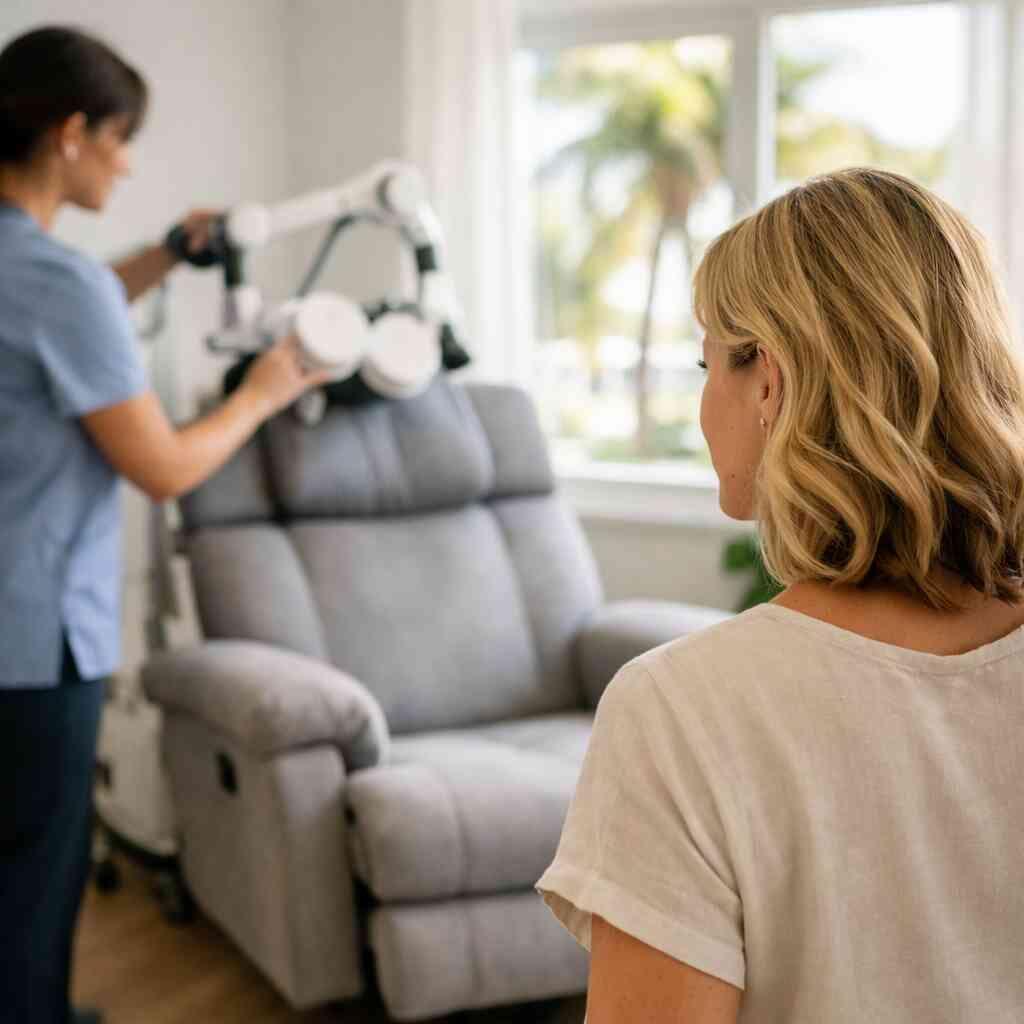
Here is the part most online guides flatten into one sentence. A coil sits near the scalp and sends brief magnetic pulses through the skull. Those pulses create a tiny electrical current in targeted brain circuits. No surgery is involved. No anesthesia is needed. You sit in a chair, awake, while the machine works.
That is why people often describe it as non-invasive brain stimulation or even magnetic brain therapy. If you want a plain-English explanation of how transcranial magnetic stimulation works, think of it as a focused nudge to circuits involved in mood, attention, and control. The goal is not to sedate you. The goal is to help a struggling network communicate more normally. If you are reading this because medication left you foggy or numb, that distinction matters.
One client from Boca Raton told us the machine sounded like light tapping beside the ear, almost like a metronome against the air. That kind of detail matters because the unknown often feels worse than the treatment. What many patients notice first is not drama. It is relief that the process is structured, brief, and clearly explained.
Where deep TMS therapy, repetitive TMS, and magnetic brain therapy fit into the same conversation
The terminology can sound messy, but the clinical conversation is usually simple. Repetitive TMS describes the repeated pulse pattern. Deep TMS therapy uses a different coil design that may reach broader or deeper regions, depending on the target and device. Magnetic brain therapy is not a formal diagnosis term, but patients use it when they want a less technical phrase. All three terms live in the same family of treatment discussions.
A lot depends on the reason you are seeking help. For medication-resistant depression, many clinics discuss FDA-approved depression treatment options under the TMS umbrella. For OCD, some centers use specific protocols that differ from depression settings. For anxiety, PTSD, or addiction support, the conversation gets even more individualized. If you want a deeper comparison of protocol styles, the difference between TMS and rTMS in Florida is worth reading in the context of the device and target, not just the label.
What Florida patients should know before choosing TMS for depression anxiety OCD or addiction support
When medication-resistant depression makes non-drug depression treatment worth a closer look
If you have tried more than one antidepressant and still feel stuck, you are in the exact group many clinics mean by medication-resistant depression. That is where non-drug depression treatment becomes more than a trend. It becomes a serious option. The strongest real-world conversations often start after TMS after failed medications. That is not failure on your part. It is information.
Research has helped push TMS from “interesting” to clinically respected. The 2018 Stanford-linked work by Carpenter and colleagues helped reinforce what many clinicians were already seeing: TMS can meaningfully help some people with major depression, especially when medications have not done enough. That evidence is one reason clinics keep discussing transcranial magnetic stimulation therapy as a serious option, not a last-ditch idea. Still, no ethical clinic should promise a result. The honest message is simpler: for some patients, it can be a solid alternative depression treatment worth evaluating carefully. If you are considering TMS depression treatment Florida, a focused review of medication-resistant depression treatment with TMS in Florida can help frame the conversation.
Why TMS depression treatment Florida is often discussed alongside TMS for anxiety TMS OCD therapy and TMS for PTSD Florida
Depression rarely travels alone. You may also feel panic, rumination, sleep trouble, or that tight chest that shows up before you even know why. That is why TMS for anxiety comes up so often beside depression care. The same is true for TMS OCD therapy and TMS for PTSD Florida, although each condition needs its own clinical lens and protocol. A good clinic does not treat every symptom like the same problem.
On the projects and consultations we have seen, the biggest mistake is assuming all distress fits one box. It does not. Anxiety can amplify depression. OCD can trap you in mental loops. PTSD can keep the body on alert long after the threat has passed. That is why a Florida mental health clinic should match treatment to symptoms, not marketing language. If you want to read more on the anxiety side, the clinic’s page on TMS for anxiety in Florida fits naturally here, because many patients are weighing those symptoms together.
How TMS for bipolar depression TMS for teen depression and TMS for young adults are evaluated differently
This part is genuinely confusing for most people, and that is normal. TMS for bipolar depression is not the same conversation as unipolar depression. Clinics need to screen carefully for mood elevation risk, medication history, and current stability. The same caution applies when families ask about TMS for teen depression or TMS for young adults. Age, brain development, school stress, family support, and consent all shape the plan.
In Florida, families often ask these questions while juggling school calendars, work schedules, and long drives on I-95 or across the Turnpike. That practical pressure matters. A careful clinic should explain why the evaluation differs, not just say “it depends.” For bipolar depression, many centers also review medication coordination and close follow-up. For younger patients, the question is often not only whether TMS fits, but whether it fits now. If you want a fuller clinical overview, the TMS treatment for teens in Florida page can be useful context.
Why TMS addiction recovery and TMS for substance use disorder are based on craving research rather than quick fixes
Addiction care is where unrealistic claims do the most harm. TMS addiction recovery and TMS for substance use disorder are not magic resets. They are part of a growing research field looking at craving, cue reactivity, impulse control, and frontostriatal circuits. Studies from places like the Medical University of South Carolina have helped expand the conversation, especially for cravings and compulsive use patterns. But this work still needs careful screening and realistic expectations.
The SAMHSA TIP guidance around substance use treatment remains important here. It reminds providers to think in layers: medical risk, behavioral support, relapse prevention, and co-occurring mental health needs. That is why many clinics discuss dual diagnosis treatment Florida alongside TMS, especially when depression, trauma, and substance use overlap. If you are considering TMS for substance use disorder in Florida, the right question is not “Will this cure it?” The better question is “Is this one evidence-informed tool in a larger plan?” A good starting point is the clinic’s page on TMS for substance use disorder in Florida.
What TMS side effects safety usually looks like and why TMS maintenance therapy and TMS long-term results need honest framing
Most people want to know two things fast: Is it safe? and Will it last? On safety, clinics should talk plainly about TMS side effects safety. The usual issues are mild scalp discomfort, headache, or fatigue. Serious effects are uncommon, but every clinic should screen for seizure risk and other contraindications. You deserve calm, direct answers here.
For long-term care, TMS maintenance therapy may matter for some patients, especially if symptoms improve and then begin drifting back. That is why honest TMS long-term results conversations matter more than hype. The best clinics track outcomes with tools like the PHQ-9 or MADRS, not just gut feeling. One patient in the West Palm Beach area once told us the evaluation mattered as much as the treatment, because finally someone measured progress instead of guessing at it. If you want a concise safety overview, the TMS side effects and safety overview page is a helpful companion read.
How Florida clinics decide between rTMS protocols cost coverage and your next move
What happens in a real evaluation at a Florida mental health clinic from symptom scales to treatment planning
A serious evaluation should feel thorough, not rushed. At a Florida mental health clinic, the intake usually starts with symptom scales, treatment history, medication history, and a review of medical risks. Clinics may use the PHQ-9, MADRS, or similar tools to set a baseline. That helps the team understand whether TMS depression treatment in Florida fits your pattern of symptoms. It also helps later, because you can compare where you started with where you are now.
The Florida setting adds a few practical layers. Seasonal residents may split care between states. Patients from Aventura, Coral Gables, Boca Raton, Delray Beach, and Winter Park often want access that fits work and family life. In 2026 specifically, we have seen more patients ask for shorter commute windows and clearer follow-up plans. That is sensible. TMS works best when attendance is consistent, so logistics are not minor details.
How TMS insurance coverage Florida works when you ask does insurance cover TMS in Florida
The short answer is: sometimes, but not always, and it depends on the plan and diagnosis. If you are asking does insurance cover TMS in Florida, the clinic should verify benefits before you commit. Most carriers want documentation of prior treatment history, diagnosis criteria, and medical necessity. That is normal. What is not normal is a vague “we take insurance” answer with no real verification.
Florida insurance can feel especially layered because plans differ across employers, Medicare-related options, and private carriers. That is why TMS insurance coverage Florida should be reviewed in writing whenever possible. You may also see differences in authorization rules for depression versus OCD or other uses. If you are comparing clinics, ask who handles benefits checks and whether they explain appeal steps. For more detail, the TMS insurance coverage in Florida page can help you prepare the right questions.
What shapes TMS cost Florida and why the lowest quote is not always the clearest value
People often ask about TMS cost Florida before they ask about protocol fit. That makes sense. Cost matters. But the lowest number is not always the best value if it hides missing follow-up, weak screening, or poor insurance help. The real comparison includes consultation quality, device type, mapping time, and how the clinic handles monitoring. Here is a simple comparison that may help: FactorLower-cost quoteBetter valueScreeningBriefDetailed, medically reviewedInsurance helpLimitedBenefits verification and appeals supportFollow-upSparseOngoing symptom trackingProtocol fitGenericTailored to diagnosis and historyIf you want pricing context, the TMS cost in Florida resource can help you think more clearly before you call. A luxury waiting room is not the same as a strong clinical process. Keep that in mind. 
How to think about TMS clinic Miami, TMS Fort Lauderdale, TMS West Palm Beach, TMS Orlando and TMS Tampa when you search TMS near me Florida
Location searches can get noisy fast. If you type TMS near me Florida, you may see plenty of options, but not all of them fit your needs. TMS clinic Miami, TMS Fort Lauderdale, TMS West Palm Beach, TMS Orlando, and TMS Tampa each sit in different access patterns, traffic realities, and referral networks. That matters if you need consistent appointments. It also matters if you are coming from Aventura or down the coast from Delray Beach.
A strong clinic should make access feel predictable. It should explain parking, scheduling, and follow-up clearly. It should also be transparent about team roles and the supervising clinician. If you want to compare geography and access, the TMS clinic options in Miami and South Florida page is a practical place to start. For Central Florida readers, the TMS clinic options in Orlando and Central Florida page serves a similar purpose.
What makes a best TMS clinic Florida conversation different when you are also weighing dual diagnosis treatment Florida addiction rehab Florida or TMS and EMDR combination
The best clinic conversation does not begin with promises. It begins with fit. If you are also weighing dual diagnosis treatment Florida, addiction rehab Florida, or a TMS and EMDR combination, you need providers who understand overlap. Trauma, cravings, sleep loss, and mood shifts often feed each other. A clinic that only sees one slice of that picture may miss what matters most.
Here is what almost no online guide mentions: coordination is often the real treatment. A good TMS psychiatrist Florida should understand medication history, behavioral supports, and referral needs. The Florida Agency for Health Care Administration rules also matter, because outpatient clinics need proper oversight and compliance. That does not guarantee quality, but it does set a floor. If you want a better sense of team structure, the about us page can help you review credentials without guessing.
Why the smartest next step is comparing clinical fit access and follow up rather than chasing promises of guaranteed results
You do not need a perfect answer today. You need a grounded one. Compare clinics on screening depth, protocol clarity, insurance support, and follow-up. Ask how they measure change. Ask what happens if symptoms plateau. Ask what they recommend for maintenance if things improve and then drift.
If you are sorting through TMS reviews Florida, remember that reviews can show bedside manner, but they cannot replace clinical fit. The same is true for any best TMS clinic Florida claim. Strong care should feel careful, not flashy. If you want a clinic that keeps the conversation humane and medically serious, TMS Treatment Florida is built around that balance. You do not have to solve everything at once. Start with one call, one benefits check, and one honest conversation about what you have already tried.
Frequently Asked Questions
Is TMS the same as rTMS?
Not exactly, but people often use the terms interchangeably. TMS is the broad category, while rTMS means repetitive TMS, which is the most common protocol. In daily clinic language, that distinction matters less than the specific device, target, and treatment plan. If you are comparing options, ask which protocol the clinic uses and why.
How does TMS work for depression?
TMS uses magnetic pulses to stimulate brain networks involved in mood regulation. It does not require surgery or anesthesia. Clinics often track progress with tools like the PHQ-9 or MADRS. For depression, the conversation usually starts when medications have not worked well enough or have caused side effects you cannot keep living with.
Does insurance cover TMS in Florida?
Sometimes, yes. Coverage depends on your plan, diagnosis, prior treatment history, and medical necessity. Many clinics verify benefits before treatment begins. If you are asking about TMS insurance coverage Florida, request written verification and ask about prior authorization and appeals support.
What are the common side effects of TMS?
The most common side effects are mild scalp discomfort, headache, or temporary fatigue. Most people tolerate treatment well, but every clinic should screen for safety risks. If you want to compare clinics, ask how they monitor symptoms and handle any discomfort during treatment.
Can TMS help with anxiety, OCD, or PTSD too?
It can be discussed for those conditions, but the protocol and evidence base differ by diagnosis. TMS for anxiety, TMS OCD therapy, and TMS for PTSD Florida are all separate conversations from depression treatment. A careful clinic should explain the research and set realistic expectations without overpromising.
Is TMS used for addiction or substance use disorder?
Research is growing, especially around cravings and cue reactivity, but TMS is not a standalone fix for addiction. TMS addiction recovery and TMS for substance use disorder work best as part of a broader plan that may include behavioral therapy, relapse prevention, and medical support. That is why many clinics discuss dual diagnosis care alongside treatment.


