When Pills Stop Helping: What PTSD and OCD Patients in Florida Ask Next
If you are reading this after another long night of replaying the same thoughts, take a breath. That frustration is real. Many people in Florida reach this point after SSRIs, therapy, or both, and still feel stuck on alert. The hard part is not a lack of effort. The hard part is that your nervous system may keep acting like danger is still in the room.
Why SSRIs and therapy can still leave the nervous system stuck on alert
SSRIs can help some people, but they do not always quiet trauma loops or compulsions. Therapy can teach skills, yet the body may keep firing fear signals anyway. That gap is why many people start searching for TMS treatment in Florida for PTSD and OCD. Here is the part most people miss: relief sometimes requires a different kind of input, not more force.
We hear this from clients almost every week. They have tried medication changes, added exposure work, or pushed through side effects like dry mouth and brain fog. Then they ask about non-drug depression treatment or alternative depression treatment because they want something that does not add another pill to the pile. That search often leads to TMS after failed medications, especially when fear, checking, rumination, or panic keep returning.
What TMS treatment in Florida looks like when symptoms keep coming back after failed medications
TMS treatment in Florida usually enters the conversation after a careful review of what has already been tried. If you have medication-resistant depression, TMS depression treatment Florida may be discussed alongside trauma and obsessive symptoms. The goal is not to promise a miracle. The goal is to see whether transcranial magnetic stimulation therapy can help your brain shift out of a stuck pattern.
One client in Broward kept switching medications because each one helped for a while, then faded. By the time they reached a consultation, they were tired, guarded, and skeptical. That skepticism made sense. After a structured evaluation, the discussion focused on symptom history, prior medication trials, and whether a Florida mental health clinic with TMS experience could track progress with tools like the PHQ-9 or clinician-rated measures.
Why people searching for non-drug depression treatment often also ask about TMS for anxiety and OCD relief
People rarely search for just one symptom. A person looking for TMS for anxiety may also have OCD rituals, panic, or a trauma history. That is why TMS OCD therapy and TMS for PTSD Florida often show up together in real life. Anxiety can sit under depression, not beside it.
Research on transcranial magnetic stimulation keeps expanding, and that matters for families who feel they have run out of options. TMS is often described as non-invasive brain stimulation or magnetic brain therapy, and it differs from talk therapy because it works on brain circuits rather than thoughts alone. If you want a broader overview, the TMS therapy for anxiety in Florida resource can help frame the difference. Still, the best questions are personal ones: what symptom is hardest, what failed before, and what would a reasonable next plan look like?
How Florida geography changes the search for a TMS clinic in Miami, Fort Lauderdale, West Palm Beach, Orlando, or Tampa
Florida logistics matter more than people expect. If you live in South Florida, you may compare a TMS clinic Miami with TMS Fort Lauderdale or TMS West Palm Beach based on commute time, parking, and insurance support. In Central Florida, people often weigh TMS Orlando and TMS Tampa against work schedules and seasonal traffic. The right clinic is not always the closest one, but it should be practical enough that you can keep showing up.
That matters from Aventura to Coral Gables, from Boca Raton to Delray Beach, and through Winter Park. Seasonal residents add another layer, because treatment schedules do not wait for travel plans. On our side, the question is simple: can your clinic make care stable, not chaotic? If you are comparing TMS near me Florida options, start with access, follow-through, and real insurance guidance.
What actually happens inside transcranial magnetic stimulation therapy and why it feels nothing like talk therapy
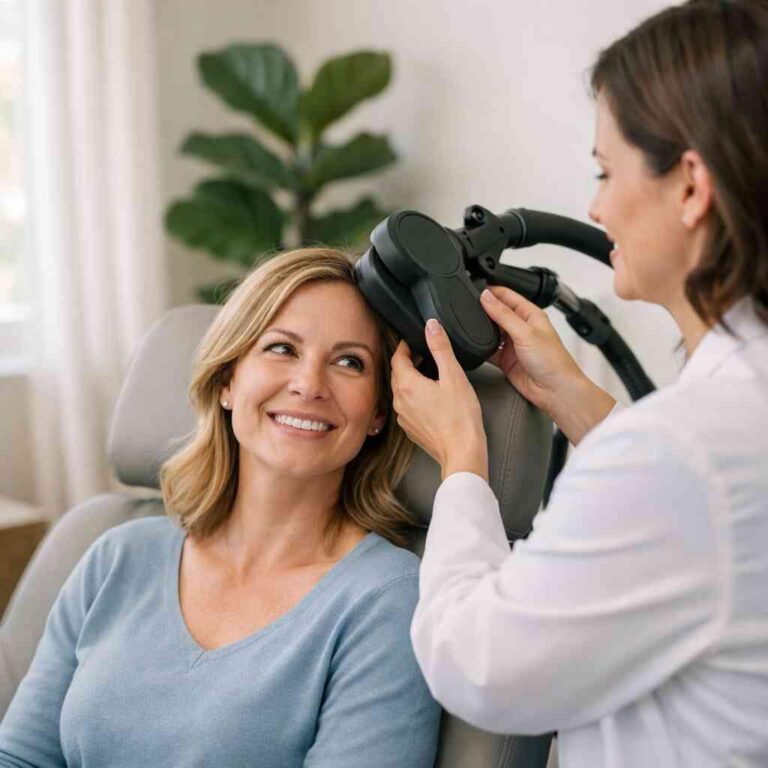
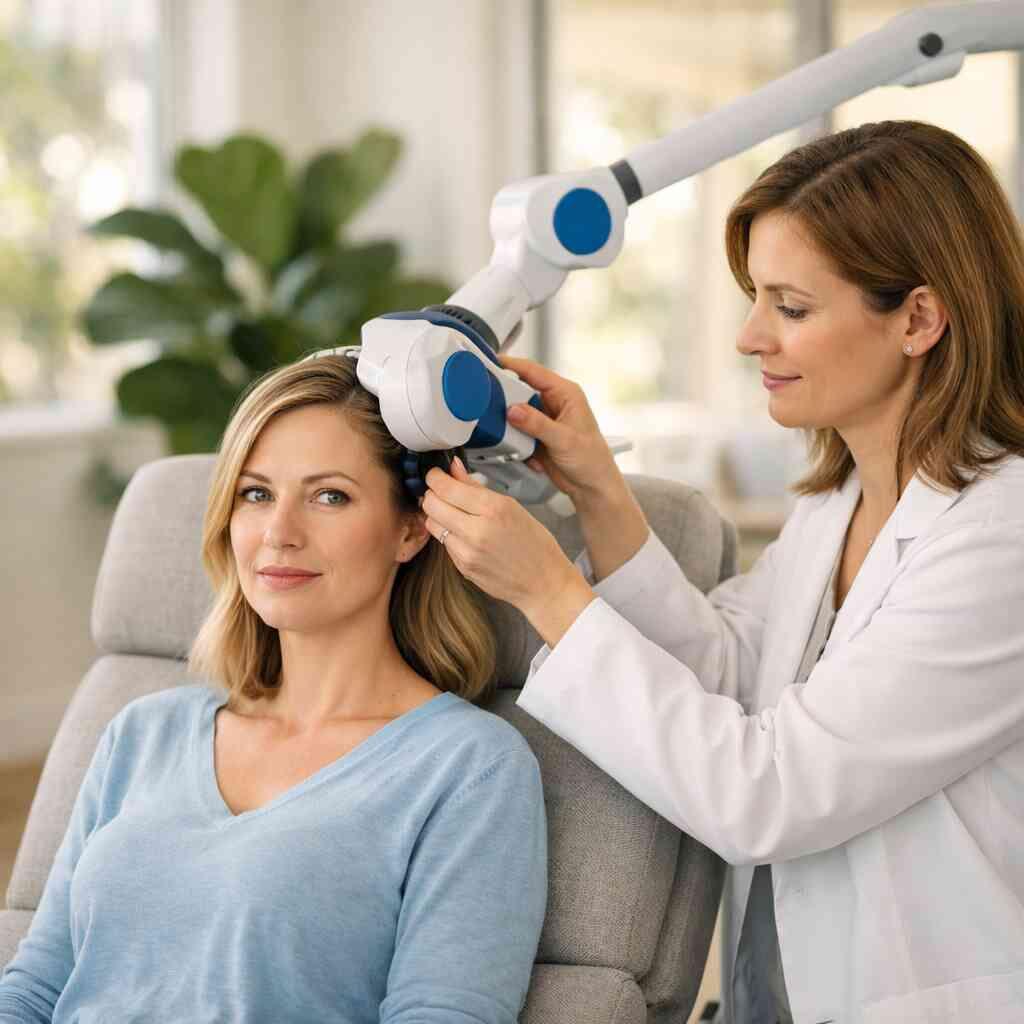
TMS feels unfamiliar the first time. That is normal. You sit in a chair, without anesthesia, and stay awake the whole time. Then a device delivers focused pulses to specific brain areas. People often expect something dramatic. Instead, it feels clinical, quiet, and surprisingly ordinary.
How repetitive TMS and deep TMS therapy use magnetic brain therapy to target mood circuits
Repetitive TMS uses repeated magnetic pulses to influence brain networks linked to mood and control. Deep TMS therapy reaches broader cortical areas, while standard approaches may focus more narrowly depending on the diagnosis and device. Both are forms of magnetic brain therapy, and both are part of modern FDA approved depression treatment options for certain indications. If you want a simple explanation, think of it as a circuit-level intervention rather than a conversation.
The most cited depression data still include the 2018 Stanford work by Carpenter and colleagues, along with broader clinical consensus reviews. Those studies do not guarantee results for everyone. They do support why clinicians keep using TMS for people with stubborn symptoms, especially when medication has not helped enough. For a general primer on mechanism, the Transcranial magnetic stimulation page can be a useful starting point, but clinical decisions should rely on professional guidance and current evidence.
What a real session feels like from the chair setup to the tapping sound and what side effects safety usually means in practice
A typical session starts with a mapping visit. The team measures where stimulation should go and how your body responds. Then you sit in a chair while a coil rests near your head. You hear a tapping sound. You feel a tapping sensation. Most people remain alert, and many return to normal activities right after.
That is why TMS side effects safety matters so much in real-world conversations. Common effects can include scalp discomfort, headache, or brief fatigue, though many people tolerate treatment well. Serious risks are uncommon, but your clinician should review them carefully. If you want the Florida-specific version, TMS Treatment Florida Guide to Side Effects and Safety gives a clearer sense of what to ask before scheduling.
Which conditions are most often discussed together including TMS for PTSD Florida, TMS OCD therapy, and TMS depression treatment Florida
In practice, symptoms overlap. A person may come in for depression and mention trauma nightmares, checking rituals, or a constant startle response. That is why TMS for PTSD Florida, TMS OCD therapy, and TMS depression treatment Florida often appear in the same consultation. The clinic should not force a one-size-fits-all story. It should help you map symptoms honestly. 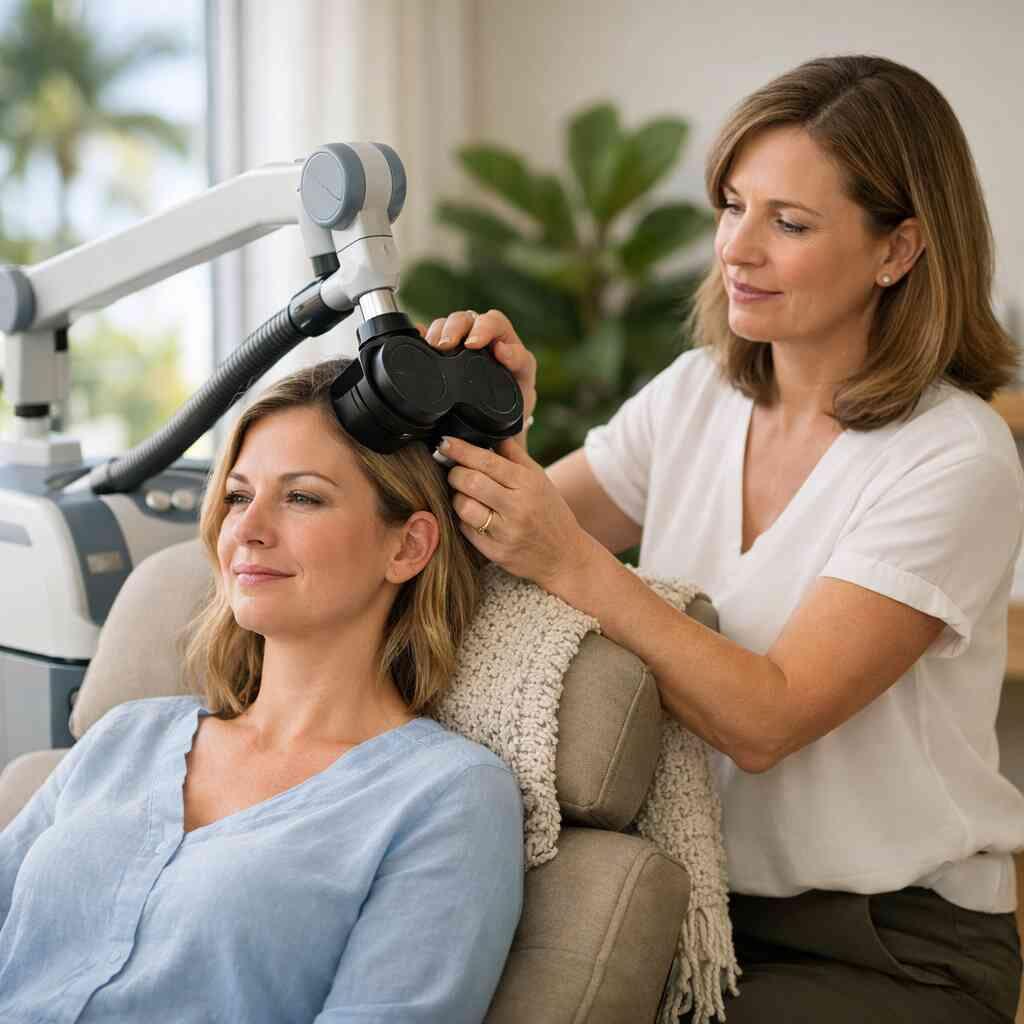
The strongest clinics also use measurement, not guesswork. They may track PHQ-9 scores for depression or other symptom tools to see if patterns are changing. For OCD, treatment planning can also involve therapy coordination, especially if you are already doing exposure work. If you are comparing specialty pages, the transcranial magnetic stimulation therapy for depression in Florida page is a good companion to the OCD and anxiety resources.
When TMS maintenance therapy or a second round makes sense for long-term results without promising miracles
Here is what almost no online guide mentions clearly: TMS is not always a one-and-done decision. Some people ask about TMS maintenance therapy after a strong response. Others ask about a second round when symptoms drift back. That does not mean failure. It means brain symptoms can change over time. The evidence for TMS long-term results is still evolving, and honest clinics should say that plainly. A maintenance plan may fit better than another medication shuffle, especially if you previously responded to treatment. That said, no clinic should promise a specific TMS therapy success rate for your case. A good conversation focuses on your history, your current burden, and whether follow-up care would be structured enough to matter. The Florida decision map for choosing TMS care without wasting months on the wrong clinic
Choosing a clinic can feel exhausting. Glossy websites say a lot. Real care shows up in how they screen, explain, and follow through. If you feel worn down by calling offices that never answer simple questions, that reaction is understandable. Good care should reduce friction, not add it.
How to compare the best TMS clinic Florida options without getting fooled by glossy marketing
The best TMS clinic Florida for you should explain diagnosis fit, treatment length, and what symptoms they actually treat. Ask who reviews your history, how the clinic tracks progress, and whether they coordinate with outside therapists or prescribers. If a clinic cannot explain how TMS works in plain English, keep looking. A polished brochure is not the same thing as a careful intake process.
For more on provider selection, see the Florida guide to choosing a TMS psychiatrist and ask whether the clinic references current practice guidance. The American Psychiatric Association and the Clinical TMS Society both help anchor real-world standards. Also ask about AHCA compliance for outpatient settings, because Florida clinic oversight matters. Good marketing should never replace good process.
What insurance teams usually check when patients ask does insurance cover TMS in Florida and what to know about TMS insurance coverage Florida
The insurance question comes up constantly. Whether insurance covers TMS in Florida depends on your plan, diagnosis, prior treatment history, and documentation. Many insurers want proof of TMS after failed medications and a defined diagnosis that meets medical necessity criteria. Some plans also ask for psychotherapy history or severity scores.
If you want to compare practical details, the Florida TMS insurance coverage and cost options page is a useful place to start. Ask specifically about TMS cost Florida, deductible timing, and authorization steps. A clinic that handles this well will help you understand benefits before you commit. That support matters in a state where coverage can vary widely across employer plans and seasonal resident arrangements.
Why location matters for access from South Florida communities like Aventura, Coral Gables, Boca Raton, and Delray Beach, plus Central Florida areas like Winter Park
Location affects completion. That is the truth. If you live in Aventura, Coral Gables, Boca Raton, or Delray Beach, a clinic in the right corridor can make treatment sustainable. The same goes for Winter Park and the broader Central Florida route.
People often search for a TMS clinic Miami or TMS treatment in Miami-Dade County for South Florida patients because they need predictable travel and less missed work. Others look at TMS treatment in Broward County near Fort Lauderdale, TMS treatment in Palm Beach County near West Palm Beach, or TMS treatment in Orange County near Orlando based on where life already happens. You can read more on our locations pages, but the rule is simple: convenience protects consistency.
What matters most for complex cases such as dual diagnosis treatment Florida, TMS addiction recovery, TMS for substance use disorder, TMS for bipolar depression, and TMS and EMDR combination
Complex cases need extra care. If you are dealing with depression plus alcohol use, stimulants, nicotine, or trauma, dual diagnosis treatment Florida planning matters. TMS may fit alongside recovery care, but it should never replace substance use treatment when that is still active. For that reason, clinicians may discuss TMS addiction recovery, TMS for substance use disorder, or alcohol addiction brain stimulation cautiously and with evidence in mind.
There is a growing body of research on rTMS for cravings, including work from places like the Medical University of South Carolina. Still, research does not equal a blanket promise. If you want a clinical overview, the TMS for dual diagnosis recovery in Florida page can help frame next questions. Some patients also ask about TMS and EMDR combination, especially when trauma work and symptom regulation need to happen together. That conversation should be individualized, not rushed.
When to ask about teen depression, young adults, smoking cessation, alcohol addiction brain stimulation, and Florida behavioral health referrals
Families often wait too long to ask about age-specific care. TMS for teen depression and TMS for young adults may come up when medications create side effects, school becomes impossible, or hopelessness keeps deepening. Some clinics also discuss TMS for smoking cessation or nicotine cravings, though that should be framed as research-informed and not guaranteed. If the clinic cannot explain age fit, move on.
A thoughtful clinic will also know when to coordinate Florida behavioral health referrals. That might include addiction rehab Florida resources, therapy, psychiatry, or higher levels of care. The best planning often happens when TMS is one part of a broader map. The TMS support for young adults in Florida resource is worth a look if age and school demands are part of your decision.
How to make the next call with a clear plan whether you are comparing TMS near me Florida options or checking TMS reviews Florida and FAQ resources
Use a short checklist before you call. It keeps the conversation grounded. It also protects you from vague sales talk. Ask these questions:
- What diagnoses do you treat most often?
- Who reviews my medication history?
- How do you verify insurance benefits?
- What measurement tools do you use?
- How do you handle follow-up or maintenance?
If you are comparing TMS near me Florida options, also read TMS reviews Florida with care. Reviews can help with bedside manner, but they do not replace clinical fit. You can also review the Frequently asked questions about TMS page before calling so you know what to ask. And if you want to check credentials and treatment philosophy, the About TMS Treatment Florida page can help you understand the team behind the care. You do not have to solve everything today. Start with one call, ask three direct questions, and let the clinic earn your trust.
Frequently Asked Questions
Question: What makes TMS treatment Florida a good option if I have PTSD, OCD, or medication resistant depression after trying SSRIs and therapy?
Answer: TMS treatment Florida may be worth discussing when standard approaches have not brought enough relief and symptoms keep returning. The blog Guide to TMS Therapy in Florida for PTSD and OCD 2026 focuses on people who have already tried SSRIs, talk therapy, or both, but still feel stuck in fear loops, compulsions, or persistent low mood. In that situation, transcranial magnetic stimulation therapy offers a non-invasive brain stimulation approach that targets brain circuits involved in mood and control rather than adding another medication. It is often considered an alternative depression treatment or non-drug depression treatment for people with medication resistant depression and TMS after failed medications. At TMS Treatment Florida, the goal is not to promise a specific result, but to offer a careful, compassionate evaluation so you can understand whether TMS depression treatment Florida, TMS for PTSD Florida, or TMS OCD therapy may fit your history and current needs.
Question: How does TMS work, and what is the difference between repetitive TMS and deep TMS therapy?
Answer: How does TMS work is one of the most common questions people ask, especially when they are comparing magnetic brain therapy options. In general, repetitive TMS uses repeated magnetic pulses to influence brain networks involved in mood and regulation, while deep TMS therapy is designed to reach broader cortical areas depending on the device and treatment plan. Both are forms of non-invasive brain stimulation, and both are used within FDA approved depression treatment settings for certain indications. Many people like TMS because sessions are done while awake, without anesthesia, and usually without the downtime associated with more intensive interventions. At TMS Treatment Florida, the focus is on explaining the process clearly, reviewing your diagnosis and treatment history, and making sure you know what to expect before care begins. That kind of education matters just as much as the technology itself.
Question: Is TMS side effects safety something I should worry about, and what should I know before scheduling treatment?
Answer: TMS side effects safety is an important part of any honest consultation. Most patients are told to expect a tapping sensation, a tapping sound, and possible scalp discomfort, headache, or brief fatigue during or after sessions. Serious risks are uncommon, but every patient should receive a full safety review before starting treatment. Because TMS is a form of magnetic brain therapy and not medication, many people are interested in it as a non-drug depression treatment when they want to avoid adding side effects from another prescription. At TMS Treatment Florida, the emphasis is on informed consent, careful screening, and regular progress monitoring so you can make a decision based on facts, not pressure. If you are comparing a Florida mental health clinic or a luxury TMS center, ask how they discuss side effects, track symptoms, and handle follow-up support.
Question: Does insurance cover TMS in Florida, and what should I know about TMS insurance coverage Florida and TMS cost Florida?
Answer: Whether insurance covers TMS in Florida depends on your plan, diagnosis, documentation, and prior treatment history. Many insurers ask for proof of medication resistant depression or TMS after failed medications before approving care, and some also want records showing prior therapy or symptom severity measures. TMS insurance coverage Florida can vary widely, so it is smart to ask early about benefits checks, prior authorization, deductible timing, and any out-of-pocket responsibility tied to your plan. TMS cost Florida should be explained clearly before you commit, but exact pricing can vary and should never be guessed. A trustworthy clinic should help you understand the process without making unrealistic promises. TMS Treatment Florida aims to support that conversation with practical guidance, insurance coordination when available, and straightforward answers so financial uncertainty does not keep you from exploring care.
Question: How do I choose the best TMS clinic Florida if I am comparing TMS clinic Miami, TMS Fort Lauderdale, TMS West Palm Beach, TMS Orlando, or TMS Tampa?
Answer: The best TMS clinic Florida for you is usually the one that fits both your clinical needs and your real-life schedule. If you are comparing TMS clinic Miami, TMS Fort Lauderdale, TMS West Palm Beach, TMS Orlando, or TMS Tampa, ask how the clinic evaluates diagnoses, whether a TMS psychiatrist Florida reviews your history, what measurement tools they use, and how they support follow-up care or TMS maintenance therapy if symptoms return. Location matters too, especially for people searching TMS near me Florida or TMS South Florida, because treatment works best when it is realistic to attend consistently. You should also read TMS reviews Florida with a critical eye and check whether the clinic can explain its approach to TMS depression treatment Florida, TMS for anxiety, TMS OCD therapy, TMS for PTSD Florida, and other overlapping concerns in a clear, respectful way. TMS Treatment Florida encourages people to compare clinics based on transparency, coordination, and compassion rather than glossy marketing alone.
Question: Can TMS treatment Florida help with complex concerns like dual diagnosis treatment Florida, TMS addiction recovery, TMS for substance use disorder, TMS for bipolar depression, or TMS and EMDR combination care?
Answer: Complex cases often need a broader plan, and that is where thoughtful screening matters. In some situations, clinicians may discuss dual diagnosis treatment Florida when depression, trauma, or anxiety overlaps with alcohol use, nicotine dependence, or other substance concerns. There is also growing transcranial magnetic stimulation research around TMS addiction recovery, TMS for substance use disorder, alcohol addiction brain stimulation, and TMS for smoking cessation, but those uses should always be framed carefully and not as guaranteed outcomes. For mood disorders such as TMS for bipolar depression, or for patients also working through trauma with EMDR, a TMS and EMDR combination may be part of a coordinated treatment conversation if the clinical team believes it is appropriate. TMS Treatment Florida approaches these questions with caution, individualized planning, and respect for the fact that no single treatment fits every situation. If appropriate, the clinic may also connect patients with Florida behavioral health, addiction rehab Florida, or other support services so TMS is part of a larger recovery map rather than the only tool.