
When anxiety and OCD keep winning after the usual meds
If you are reading this after another medication stall-out, that frustration is real. The pills helped, then faded. Or they helped some things, but not the looping thoughts, the checking, or the dread. That is often where TMS treatment Florida enters the conversation. People usually arrive tired, skeptical, and still hoping for a clearer answer.
Why TMS treatment Florida starts with people who are tired of trial and error
We hear this almost every week. You tried one SSRI, then another, then a dose change, then a side-effect conversation that felt longer than the benefit. That grind can make anyone feel worn down. TMS depression treatment Florida often comes up after TMS after failed medications stops sounding like a phrase and starts sounding like your life.
Here is what many people miss: the problem is not only symptom severity. It is also the cost of waiting, adjusting, and hoping. Non-drug depression treatment can feel more practical when medication fatigue has become part of the illness itself. For some, that is why alternative depression treatment and magnetic brain therapy get serious attention.
One client in Broward described it plainly. She was taking notes after every med visit because she could not remember what had helped and what had not. By the time she asked about transcranial magnetic stimulation therapy, she was not chasing a miracle. She wanted a plan that did not leave her dizzy, numb, or foggy by noon.
What medication resistant depression often has in common with anxiety loops and OCD rituals
Medication resistant depression rarely sits in a neat box. It often overlaps with panic, rumination, sleep trouble, and the kind of mental tightening that feeds OCD rituals. That is why the same person can feel sad, on edge, and trapped in checking behaviors all at once. Anxiety and OCD can ride alongside depression like a second and third wave.
This overlap matters because symptoms feed each other. You worry, then check. You check, then doubt. You doubt, then withdraw. That pattern can look different from classic low mood, but the brain strain is just as heavy. For that reason, clinics that understand TMS for anxiety and TMS OCD therapy tend to ask better questions than clinics focused only on mood.
A thoughtful Florida mental health clinic should explain that TMS does not erase life stress. It aims to change the circuits that keep stress stuck. That distinction matters. It keeps expectations realistic while still giving you room to hope.
Why non-invasive brain stimulation can feel like a different kind of relief than another prescription
Non-invasive brain stimulation feels different because it changes the treatment experience, not just the chemistry in your bloodstream. You do not swallow a pill and wait for your whole day to shift. Instead, you sit in a chair while a coil delivers targeted magnetic pulses. The setting is quiet, clinical, and surprisingly ordinary.
That ordinariness is part of the appeal. Many people are exhausted by side effects like dry mouth, weight changes, sleep disruption, or emotional flattening. TMS side effects safety conversations often center on scalp discomfort, brief headache, or fatigue rather than whole-body medication effects. That does not make TMS trivial. It makes the risk discussion more specific.
For some patients, that difference changes everything. They can keep working. They can keep parenting. They can keep showing up. That is why people searching for a TMS clinic Miami or TMS Fort Lauderdale often want more than a service list. They want to know what day-to-day life actually looks like.
What a Florida mental health clinic should explain before you trust magnetic brain therapy
A trustworthy clinic should not oversell. It should explain who TMS may help, what it cannot promise, and how progress gets measured. In strong programs, clinicians track symptoms with tools like the PHQ-9 or MADRS before and during care. That helps you see whether anything is changing in a real way.
A good clinic also explains fit. TMS is not right for every person or every diagnosis. Still, for people with TMS after failed medications, the conversation is often worth having. From the projects and patient conversations we have seen this year, the best outcomes in decision-making came from honest screening, not sales language.
If you want a starting point, review the basics on the Florida non-invasive brain stimulation treatment overview. Then ask the clinic how it screens for anxiety, OCD, depression, and related conditions. That is the kind of clarity you want before you trust any treatment chair.
What TMS actually does in the brain when thoughts will not slow down
TMS sounds technical until you picture it simply. A magnetic coil sits near the scalp and sends brief pulses into specific brain areas. Those pulses aim to influence activity in networks linked to mood, attention, and inhibition. The idea is not to “shock” the brain. It is to nudge communication patterns that have gone stale.
How transcranial magnetic stimulation therapy uses repetitive TMS and deep TMS therapy in plain language
Repetitive TMS uses repeated magnetic pulses during a session. Deep TMS therapy uses a different coil design that can reach broader or deeper networks, depending on the device and protocol. Both are forms of transcranial magnetic stimulation therapy, and both fall under magnetic brain therapy in everyday language.
People often ask, how does TMS work? The short version is this: it targets brain circuits that have become underactive or overactive in certain conditions. The longer version involves neuroplasticity, which means the brain’s ability to adjust its own connections. That is why TMS is usually discussed as a non-invasive brain stimulation treatment rather than a quick fix.
The 2018 Stanford-related depression literature often gets referenced in this space, along with broader clinical reviews. For depression, the evidence base is strongest when TMS is used in structured protocols, with symptom tracking and careful follow-up. That is also why many clinics discuss the TMS treatment in Florida for depression after failed medications alongside therapy and medication history.
Why TMS for anxiety and TMS OCD therapy target circuits tied to fear, checking, and intrusive thoughts
TMS for anxiety and TMS OCD therapy focus on networks involved in threat detection, habit loops, and cognitive control. Anxiety can make the brain treat ordinary uncertainty like danger. OCD can make intrusive thoughts feel urgent, even when you know they are irrational. TMS tries to interrupt that over-sensitivity.
That is why the treatment conversation often includes exposure-based therapy, CBT, or sometimes TMS and EMDR combination planning when trauma is part of the picture. TMS is not a replacement for every other mental health tool. It can be one part of a broader plan. For some patients, that broader plan also touches TMS for PTSD Florida, especially when fear and hypervigilance never really turn off.
Here is the part most online guides miss. People with OCD often know their rituals are excessive, and that insight can be painful. TMS does not shame that struggle. It gives clinicians another way to work on the circuit level, which can feel less exhausting than arguing with your own thoughts all day.
What FDA approved depression treatment means and why the label matters for safety conversations
When you see FDA approved depression treatment, the label matters because it signals that a device or use case has gone through a formal review pathway. That does not mean every device or protocol is identical. It does mean the treatment belongs in a serious clinical conversation, not a wellness fad. Devices such as NeuroStar and BrainsWay are often discussed in this context because they have been cleared for certain uses.
That said, device clearance is only one piece of the picture. A clinic still has to screen carefully, monitor you, and adjust the plan as needed. The fact that TMS is an FDA-cleared option does not remove the need for judgment. It strengthens the case for informed consent.
Clinics should also connect this conversation to the Clinical TMS Society consensus review and APA guidance where appropriate. Those sources help clinicians think about protocol selection, exclusions, and monitoring. If a provider cannot explain that clearly, keep asking questions.
How TMS side effects safety usually gets discussed before anyone sits in the chair
The common side effects are usually modest, but “common” does not mean “irrelevant.” People may feel scalp tapping, a brief headache, or light fatigue after a session. Some feel fine and go back to work. Others want water, silence, and a slower afternoon. That variability is normal.
Safety screening should also include seizure risk factors, metal implants, and medication history. A careful TMS psychiatrist Florida should review these details before treatment begins. That is not red tape. It is standard care. In Florida, outpatient behavioral health clinics also have to stay aligned with AHCA expectations for clinic operations and patient safety.
A simple table can help you compare the lived experience:
TopicTMSTypical medication trialDeliveryIn-office magnetic pulsesDaily pills or capsulesMain side effectsScalp discomfort, headache, fatigueCan include sleep, weight, sexual, or GI effectsMonitoringSession-based symptom trackingPeriodic follow-up visitsLifestyle fitUsually preserves routineMay require waiting for side effects to settle### Where the clinical evidence is strongest and where transcranial magnetic stimulation research is still growing
The strongest evidence remains for depression, especially medication resistant depression and TMS depression treatment Florida discussions after failed medication trials. Research also supports use in some anxiety and OCD contexts, though protocols vary more there. That is why good clinicians stay precise about the condition, the target, and the expected monitoring.
At the same time, transcranial magnetic stimulation research keeps expanding. Researchers continue studying TMS addiction recovery, TMS for substance use disorder, craving reduction, and even TMS for smoking cessation. There is also growing interest in alcohol addiction brain stimulation for selected patients. These areas are promising, but they are still developing.
For substance use, responsible clinics often reference the broader SAMHSA treatment framework and the growing rTMS craving literature, including work from centers such as MUSC. If addiction is part of your picture, ask about dual diagnosis treatment Florida and whether the clinic coordinates with addiction rehab Florida providers. That coordination matters more than marketing.
What choosing the right Florida clinic really looks like after the hype fades
Once you understand the basics, the next question gets practical fast. Which clinic will actually evaluate you well, explain costs, and keep you on track? That question matters in Florida, where distance, insurance rules, and seasonal schedules can affect follow-through. A good clinic makes the process easier, not noisier.
Why a TMS clinic Miami or TMS Fort Lauderdale should talk about evaluation tools, not vague promises
A real TMS clinic Miami or TMS Fort Lauderdale should start with screening, not slogans. That means asking about diagnosis, prior treatments, sleep, safety factors, and symptom severity. It also means using tools like the PHQ-9, GAD-7, or OCD checklists to create a baseline. Without that, nobody can tell whether the treatment is helping. If you are comparing clinics, ask how they measure progress. Ask who reviews the data. Ask what happens if symptoms stall. A clinic with a solid process will answer directly. If it dodges, that tells you something. 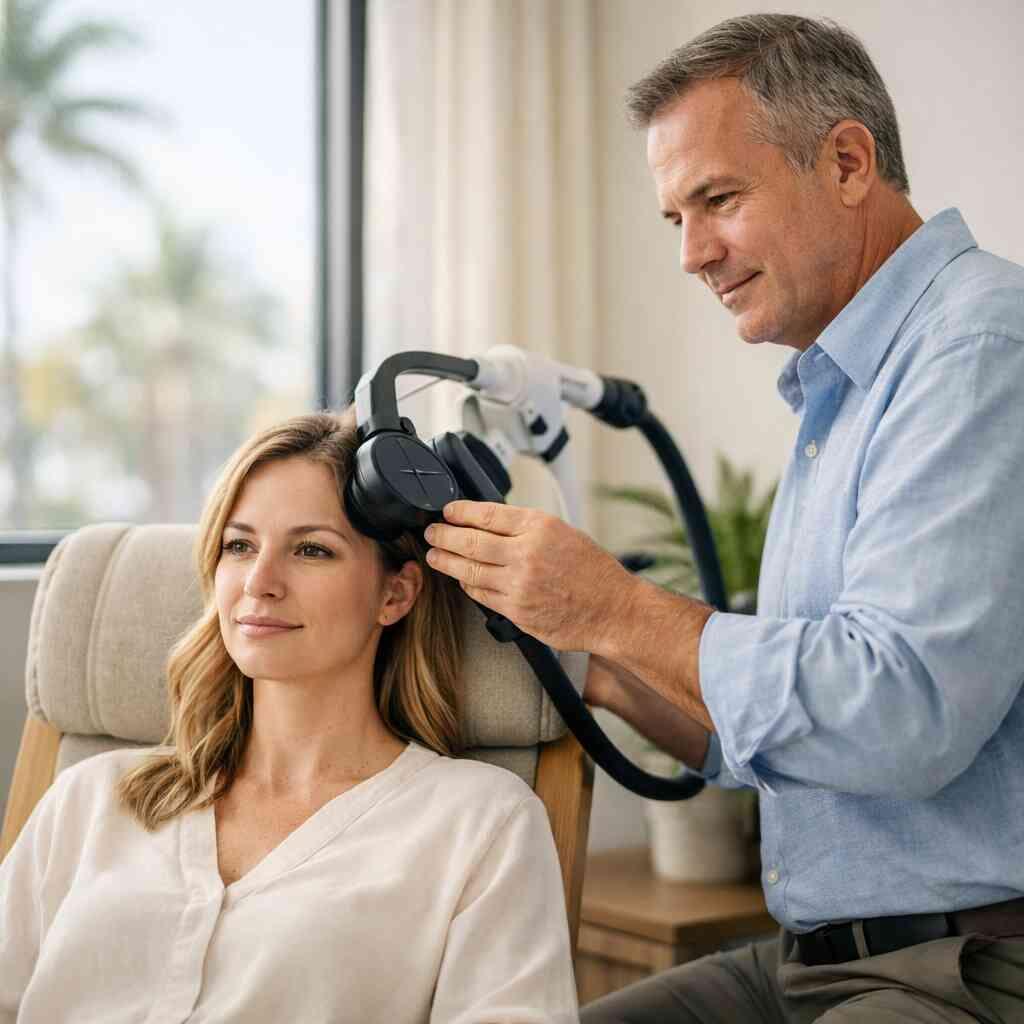
You can also compare local presence through the Florida TMS clinic locations in South Florida page. Geography matters more than people expect, especially when sessions happen several times a week. A clinic that is easy to reach often leads to better follow-through.
How TMS insurance coverage Florida and TMS cost Florida usually get sorted before treatment starts
People worry about money early, and they should. TMS cost Florida depends on diagnosis, session count, protocol, and insurance rules. Exact prices vary too much to quote honestly without an individualized estimate. That is why responsible clinics should never pretend otherwise.
TMS insurance coverage Florida also varies by plan. Some carriers cover treatment for depression when criteria are met. Others want records of failed medications and therapy history. If you are asking, “does insurance cover TMS in Florida,” the real answer is usually, “it depends on medical necessity and your plan.”
Here is a simple checklist that helps:
- Confirm whether your plan requires prior authorization.
- Ask which diagnoses are commonly covered.
- Request the clinic’s documentation list.
- Clarify what happens if coverage is denied.
- Ask about self-pay or payment options if needed.
For more detail, the Comparing insurance coverage for TMS clinics in Florida resource can help frame the questions before your call.
What matters when comparing TMS South Florida, TMS Orlando, TMS Tampa, and TMS West Palm Beach options
Location should never be the only factor. Still, access matters. A strong clinic in TMS South Florida may be more convenient for someone commuting from Coral Gables, while another may better fit someone near TMS West Palm Beach or TMS Orlando. If you live closer to TMS Tampa, the right fit might be the one you can actually attend consistently.
In Florida, that practicality is not minor. Seasonal residents, bridge traffic, and storm season can all complicate weekly attendance. A clinic that understands these realities can help you plan around them. That planning is especially important for people juggling work, childcare, and treatment.
The same principle applies if you search TMS near me Florida. “Near” should mean reachable, sustainable, and clinically appropriate, not just a pin on a map.
Why access from Aventura, Coral Gables, Boca Raton, Delray Beach, and Winter Park can matter for follow-through
The names sound simple, but the logistics are not. Driving from Aventura to Miami can take very different amounts of time depending on traffic. Boca Raton and Delray Beach patients may face different route patterns than someone in Winter Park heading to Orange County care. Small travel burdens add up fast during a treatment series.
One patient from Palm Beach County told us the schedule only worked because the clinic was near his commute, not across town. He had already dropped two therapy plans because parking, timing, and work calls kept colliding. That is the kind of detail most websites ignore, but real recovery planning cannot.
If you want local specificity, review the TMS treatment in Broward County and TMS treatment in Miami-Dade County pages. Those pages help you think about access without pretending every zip code feels the same.
When TMS maintenance therapy, TMS long term results, and next-step planning become the real decision
The real question is not only whether TMS starts well. It is whether the gains hold. TMS maintenance therapy may be discussed when symptoms return or when a clinician wants to protect progress. TMS long-term results depend on the diagnosis, the treatment plan, and what happens after the initial series.
That is where next-step planning matters. Some people continue therapy. Some adjust medication. Some monitor symptoms and return if needed. Others combine care for TMS for young adults, TMS for teen depression, TMS for bipolar depression, or related conditions when a specialist says it is appropriate. The decision should feel measured, not rushed.
If you want to keep moving, ask for a treatment map, not a sales pitch. Review the TMS treatment in Florida for anxiety and OCD recovery page, then compare it with your own symptoms, schedule, and insurance needs. You do not have to figure it all out today. Start with one clear call, one honest screening, and one clinic that can explain the plan in plain English.
Frequently Asked Questions
Does TMS work for anxiety and OCD?
TMS can help some people with anxiety and OCD, especially when symptoms stay stuck after standard treatment. Results vary, and not every protocol fits every diagnosis. A good clinic should explain whether the target circuit matches your symptoms. If OCD rituals, intrusive thoughts, or panic loops dominate your day, ask about structured screening and outcome tracking. That is where the conversation becomes useful.
How long does TMS treatment usually take?
A typical course often runs for several weeks, with sessions scheduled multiple times per week. The exact length depends on diagnosis, protocol, and how your clinician monitors progress. Some people notice changes earlier, while others need the full series before conclusions make sense. Clinics should not guess. They should base timing on your response and documented symptom scores.
What are the most common TMS side effects?
The most common side effects include scalp discomfort, a mild headache, or brief fatigue after a session. Most people can resume normal activities right away. Serious side effects are uncommon, but safety screening still matters. Your clinician should ask about seizures, implants, medications, and any relevant medical history before treatment starts.
Is TMS covered by insurance in Florida?
Often, but not always. Coverage depends on your plan, diagnosis, documentation of prior treatment attempts, and medical necessity criteria. Many plans ask for evidence of failed medications before approving care. Ask the clinic to verify benefits and explain what documentation they need. That saves time and lowers stress.
What is the difference between deep TMS and regular TMS?
Both use magnetic pulses, but the coil design and target depth differ. Deep TMS therapy is designed to reach broader or deeper networks, while repetitive TMS uses more focal stimulation. The right option depends on diagnosis, device availability, and clinician judgment. A good provider can explain the trade-offs without jargon.
Can TMS help with addiction or smoking cessation?
Research is growing, especially for craving reduction and some substance use disorders. It is not a universal addiction fix, and it should not replace evidence-based addiction care. If substance use is part of your story, ask whether the clinic coordinates with dual diagnosis care or addiction rehab providers. That coordination matters as much as the device itself.
How do I choose the best TMS clinic in Florida?
Look for careful evaluation, symptom tracking, clear safety screening, and honest insurance guidance. Ask how they measure progress and what happens if your response is limited. Local access also matters, especially if you live near Miami, Fort Lauderdale, West Palm Beach, Orlando, or Tampa. The best clinic is the one that can treat you well and keep you coming back consistently.


