Why Summer Makes OCD Feel Louder in Florida
Summer can make OCD feel painfully loud. The heat presses in. The day runs long. If you are already tired from checking, counting, cleaning, or redoing, Florida summer can turn every small ritual into an exhausting loop. Many people call us feeling embarrassed by how quickly their symptoms escalate once school lets out, visitors arrive, or schedules get messy. That reaction is real, and it deserves calm, practical support.
How heat, humidity, and packed calendars can turn OCD rituals into an all-day loop
Florida heat changes how your body feels, and OCD often latches onto discomfort. Sweat, sticky skin, and constant temperature shifts can make contamination fears feel more urgent. Then packed calendars add pressure. You may start adjusting plans, rechecking bags, or repeating routines just to feel settled for a few minutes. Here is the part most people miss: the ritual itself often becomes the problem that steals the day.
In the cases we have seen this year, summer stress rarely looks dramatic at first. It looks like five extra checks before leaving the house. It looks like standing at the sink longer than you wanted. It looks like a mental argument that follows you from the car to the grocery store. In South Florida, where routines shift fast between Aventura, Coral Gables, Boca Raton, and Delray Beach, that pressure can build quietly. If you are feeling worn down by it, that fatigue makes sense.
Why travel plans, visitors, and shifting sleep can stir up intrusive thoughts and checking
Travel disrupts the rhythm OCD likes to control. So do overnight guests, late dinners, and sleeping at odd hours. When your sleep gets lighter, intrusive thoughts often feel sharper. Then checking grows teeth. You may wonder if you locked the door, turned off the stove, or sent the right text, and the doubt can keep looping long after you wanted to move on.
One client from the West Palm Beach area described it plainly. Every vacation morning started with a long review of doors, plugs, and luggage. By noon, the trip already felt ruined. Once we mapped the pattern, it became clear that exhaustion was feeding the checking, and the checking was feeding the exhaustion. That cycle is common, especially in summer. It can make even enjoyable plans feel like chores.
What changes in South Florida routines can make symptoms feel harder to ignore in July and August
South Florida summers often bring earlier mornings, indoor afternoons, and more time in air-conditioned spaces. That sounds manageable, but it can also create more room for rumination. Less structure means more mental airtime. More time inside means more chances to scan for “what if” thoughts. If you already live with OCD, that extra mental space can feel like a magnifying glass.
This is also when families notice symptoms more clearly. Kids are home. Work schedules flex. Seasonal residents come and go. The usual anchors shift, and OCD may push harder for control. If you have also been dealing with anxiety or depression, the strain can build fast. Summer mental health support for OCD and anxiety in Florida matters because the season changes the shape of daily life, not just the weather.
When TMS OCD therapy becomes the calm option after meds and exposure work stall
Sometimes the hardest part is realizing that you have done a lot already. You may have tried medications. You may have done exposure and response prevention. You may have pushed through therapy homework that felt brutal. Yet the obsessions still return. The rituals still steal time. That is often when people start asking about the best TMS treatment in Florida for OCD care during summer. The question is reasonable. You want something that fits when other care has stalled.
What TMS treatment Florida is actually doing in the brain when OCD stays stubborn
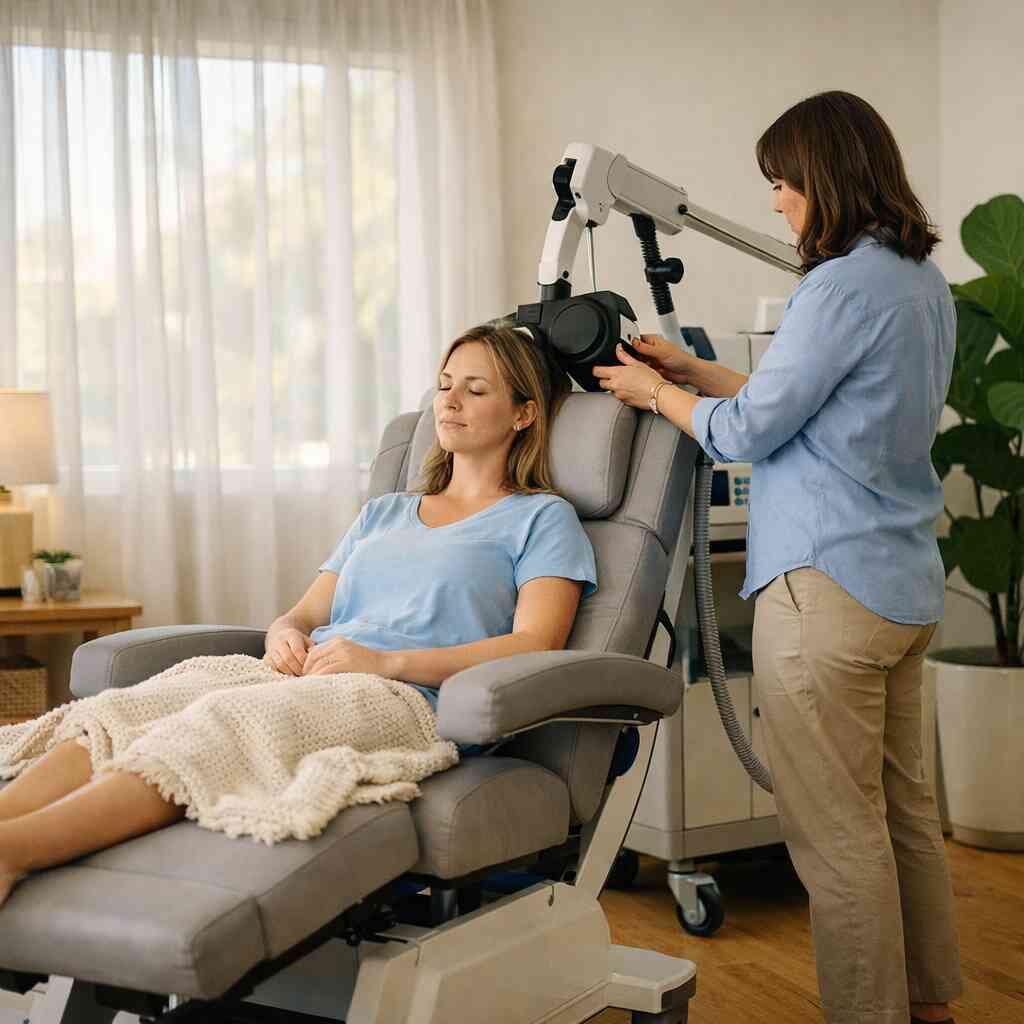
Transcranial magnetic stimulation therapy uses magnetic pulses to stimulate targeted brain regions linked to mood and compulsive loops. For OCD, clinicians may focus on circuits involved in habit control, error monitoring, and intrusive thought processing. That is why people sometimes describe it as magnetic brain therapy with a practical purpose. It is not talk therapy. It is not medication. It is non-invasive brain stimulation that aims to change how certain networks fire.
If you want a plain-language explanation, think of it this way. OCD can keep a brain circuit stuck in “alarm mode.” TMS works on that circuit without surgery or anesthesia. For readers asking how TMS works, the answer is simple: it uses focused magnetic pulses to influence brain activity over a treatment series. For more detail, see how TMS works in the brain for OCD and depression.
The clinical picture matters too. For depression, research such as the 2018 Stanford study by Carpenter and colleagues helped support TMS as a serious option, especially for medication-resistant depression and TMS after failed medications. That research does not prove the same result for every person with OCD, and we should never say that. But it does show why clinicians consider TMS a meaningful tool in modern behavioral health care.
Why non-invasive brain stimulation can feel worth considering after failed medications
A lot of people arrive after side effects wore them out. Dry mouth. Foggy thinking. Sleep changes. Weight changes. Sexual side effects. Or the medication simply stopped helping enough. That is where non-drug depression treatment and alternative depression treatment become more than buzzwords. They become relief from a cycle that feels flat and discouraging.
TMS treatment Florida is especially worth discussing when OCD shows up with depression or anxiety. Many patients are also asking about TMS for anxiety, TMS for PTSD Florida, or TMS for bipolar depression at the same time. That is not unusual. Mental health symptoms rarely arrive one at a time. A skilled clinic looks at the whole picture before recommending anything.
The evidence base keeps growing. The Clinical TMS Society consensus review and APA practice guidance help shape how clinicians think about candidacy and safety. The FDA-cleared systems often discussed in clinical settings include NeuroStar and BrainsWay, though device choice depends on the clinic and the treatment plan. If you are asking about TMS side effects safety, most people want to know the same thing: is it tolerable? The honest answer is that side effects are usually discussed as mild and temporary, but your own clinician should review the specifics with you.
How a TMS psychiatrist Florida clinic weighs OCD care alongside anxiety, depression, and bipolar symptoms
A thoughtful TMS psychiatrist Florida clinic does not isolate OCD from everything else. That would miss the real story. Someone with OCD may also have depression, panic symptoms, trauma history, or bipolar depression. The treatment plan has to respect that mix. If not, it risks missing the real driver of distress.
One young adult from the Miami area came in for compulsive checking and could barely name the depression underneath it. He was sleeping too much, skipping meals, and dreading work. Once the team looked at both symptom sets, the plan became clearer. That is the kind of evaluation that matters at a Florida mental health clinic. It is careful, not flashy.
If you are comparing options, TMS treatment for anxiety and OCD in Florida can help you understand where TMS may fit. For people who also want to compare care options across services, the clinic should explain TMS OCD therapy alongside other tracks, not in a vacuum. That is especially important for anyone with a history of depression, bipolar symptoms, or complex medication responses.
Where deep TMS therapy and repetitive TMS fit in a real treatment plan for OCD care in summer
Repetitive TMS is the core technique behind most clinical TMS programs. It delivers repeated magnetic pulses in a planned pattern. Deep TMS therapy aims to reach broader or deeper brain regions, depending on the system used. If you are comparing them, the difference between rTMS and deep TMS is a helpful place to start. The right choice depends on diagnosis, symptoms, device availability, and clinician judgment.
FeatureRepetitive TMSDeep TMS therapyDeliveryFocused magnetic pulsesBroader field with deeper reachCommon useMood and some OCD protocolsOCD and mood protocols in some clinicsVisit feelSeated, awake, non-sedatingSimilar experience, device-specific differencesMain goalModulate brain circuits over timeModulate broader circuit activityFitDepends on diagnosis and planDepends on diagnosis and planThe best plan is never just “which machine.” It is which protocol, which symptom target, and which follow-up structure make sense for you. For some patients, transcranial magnetic stimulation research on OCD recovery helps explain why clinicians keep refining these approaches. For others, the bigger question is simple: can I keep functioning while I get care? That is where summer scheduling, school breaks, and flexible timing can make treatment more realistic.
What getting started looks like at a Florida mental health clinic without the guesswork
The unknown can feel heavier than the symptoms. People worry about appointments, coverage, and whether they are “a fit.” That uncertainty is normal. A good clinic should lower that stress fast. It should explain the process clearly, review safety, and speak directly about your goals. If you are searching for a Florida mental health clinic for summer OCD support, clarity matters as much as compassion. 
How a summer evaluation usually unfolds at a TMS clinic Miami, TMS Fort Lauderdale, TMS West Palm Beach, TMS Orlando, or TMS Tampa
A strong evaluation starts with listening. A clinician reviews your diagnosis, medication history, therapy history, and current symptoms. They may use tools like the PHQ-9 or MADRS for depression, and other symptom scales for OCD severity. If anxiety or bipolar symptoms are part of the picture, that gets reviewed too. For some patients, the clinic may also discuss TMS for teen depression or TMS for young adults when age and diagnosis make that relevant.
If you are looking for a TMS clinic Miami, TMS Fort Lauderdale, TMS West Palm Beach, TMS Orlando, or TMS Tampa, the goal is the same. You want a clinic that explains the plan without pressure. If you prefer a more location-focused overview, clinic locations can help you compare access points across South Florida and beyond. For many people, that geographic ease matters. Driving from Coral Gables or Boca Raton is not the same as crossing the state after work.
Florida families often ask about schedule fit right away. That is smart. Summer is when routines are most likely to bend. It is also when people feel most tired from pretending everything is fine. A calm, organized intake can make the next week feel less chaotic.
What to ask about TMS insurance coverage Florida, TMS cost Florida, and whether insurance cover TMS in Florida
Money questions are not rude. They are necessary. Ask directly about TMS insurance coverage Florida, prior authorization, and whether your plan covers OCD-related treatment. Also ask what happens if a benefit manager requests more records. In Florida, coverage can vary by plan, employer, and diagnosis. There is no single answer that fits everyone, so anyone promising one should be treated carefully.
You should also ask about TMS cost Florida before you commit. Do not guess. Do not rely on social media posts. Ask for a written estimate, what the estimate includes, and whether follow-up visits or mapping are billed separately. For a deeper breakdown, TMS insurance coverage in Florida and treatment cost guidance can help you frame the right questions.
Here is a short checklist for the call:
- Ask whether the clinic verifies benefits before treatment.
- Ask if they explain whether insurance covers TMS in Florida for your diagnosis.
- Ask about visit frequency and total session count.
- Ask if they discuss alternatives when coverage is partial.
- Ask who answers billing questions if approval stalls.
That conversation should feel practical, not salesy. If it does not, keep looking.
How Florida families can think about TMS maintenance therapy, TMS long-term results, and next steps after the schedule settles
People often want to know what happens after the active series ends. That is where TMS maintenance therapy comes in for some patients. Not everyone needs it. Some do. The plan depends on response, symptom return, and overall stability. For more detail, TMS maintenance therapy and long-term results after care settles can help you understand the logic without pressure.
Long-term results are best discussed honestly. No ethical clinic should promise a cure. Instead, a good team should explain that TMS long-term results can vary, and follow-up care matters. That may include therapy, medication review, sleep support, or coordinated care for dual diagnosis treatment Florida if substance use is also part of the picture. The SAMHSA TIP guidance for substance use disorders reminds clinicians to treat the whole person, not just one symptom cluster.
For some patients, OCD care overlaps with TMS addiction recovery, TMS for substance use disorder, or even TMS for smoking cessation. Research on rTMS for cravings, including work discussed in addiction programs such as those associated with the Medical University of South Carolina, continues to grow. That does not mean every clinic treats addiction the same way. It does mean brain stimulation is being studied for more than depression alone. If you are comparing a luxury TMS center feel with clinical depth, focus on the treatment plan, not the lobby.
Before you decide, review about the team credentials and ask how they evaluate safety, especially if you have complex symptoms or are taking multiple medications. If you want help with next steps, FAQ can answer practical questions without the guesswork. The most important thing is simple: you can gather clear information today, and you do not have to solve everything at once. One call is enough to see what fits.
Frequently Asked Questions
Does TMS work for OCD when medications have not helped?
TMS may help some people with OCD, especially when medications and therapy have not been enough. It is not a guaranteed result, and responsible clinics should never promise one. What matters most is a careful evaluation, symptom tracking, and a plan that fits your history. Many clinicians use TMS alongside therapy rather than instead of it.
How does TMS work in the brain for OCD and depression?
TMS uses magnetic pulses to affect activity in specific brain circuits involved in mood and compulsive behavior. For OCD, clinics often target networks tied to habit loops and intrusive thoughts. For depression, clinicians may use protocols supported by broader research. The treatment is non-invasive, and you stay awake during sessions.
What are the common TMS side effects and is it safe?
Most people ask about headache, scalp discomfort, or temporary fatigue. Those are among the side effects most often discussed in clinical settings. A qualified clinician should review seizure risk, medications, and any metal implants before treatment. Safety depends on screening, device protocols, and careful monitoring.
Does insurance cover TMS in Florida for OCD or depression?
Coverage depends on your plan, diagnosis, and medical policy. Some Florida plans require documentation of failed medications or prior therapy. Others have tighter rules. The clinic should verify benefits and explain expected costs before treatment begins. Never assume coverage without written confirmation.
What is the difference between deep TMS and repetitive TMS?
Repetitive TMS refers to the repeated pulse pattern used in treatment. Deep TMS uses a different coil design that may reach broader or deeper brain areas. Which one fits best depends on diagnosis, symptom profile, and clinic capabilities. A clinician should explain why one protocol is being recommended over another.
Can TMS help if OCD is mixed with anxiety, PTSD, or bipolar depression?
It may, but the plan must be individualized. OCD often appears with anxiety, trauma symptoms, depression, or bipolar depression. A skilled clinician should review the full picture before suggesting treatment. That helps avoid mismatched care and keeps the plan grounded in your actual symptoms.


