
When OCD Starts Running the House, What Changes for the People Who Love Them
The first sign is often not a dramatic moment. It is the second lock check, the third apology, or the extra ten minutes at the door. If you live with this, you know the feeling in your stomach when a simple errand turns into a ritual. That confusion is heavy. It can make you wonder whether you are helping or accidentally feeding the cycle.
The quiet rituals and invisible checks family members notice before the diagnosis feels real
OCD rarely announces itself with a label. It often shows up as repeated handwashing, stove checking, door testing, or long mental review loops. A spouse may notice that leaving home now takes twenty minutes longer. A parent may see a teen rewriting homework because it “does not feel right.” Those details may seem small at first, yet they can become the whole rhythm of the day.
One family in Broward County described it like living with a paused song. The same question came back every night about whether the garage was closed. The same answer came back too, because everyone wanted peace. Then the answers stopped working, and the house got quieter but more tense. That is often the point where families realize this is not stubbornness or a phase.
If you are reading this because you are exhausted, that makes sense. OCD can hide in plain sight. It can also look different in adults, teens, and young adults. Some people have contamination fears. Others have harm obsessions, religious scrupulosity, or symmetry rituals. That range is one reason helping a loved one with OCD in Florida can feel so confusing at first.
Why reassurance becomes a trap even when it comes from a place of love
Reassurance feels kind. It feels like love. The problem is that OCD often treats reassurance like fuel. You answer once, then again, then again, and the brain learns that certainty must come from the outside. Soon the asking grows louder, not smaller.
Here is the part most families miss. Reassurance does not always reduce fear. Sometimes it teaches the fear to return faster. That is why therapists often talk about response prevention, tolerating uncertainty, and breaking the loop instead of winning an argument with it. It sounds simple. It is not easy in a real kitchen at 11 p.m. with a worried child or partner.
If you have been answering the same question fifty times, you are not failing. You are trying to keep the peace. That instinct is human. Still, endless reassurance can make OCD stronger. A gentler boundary, paired with steady care, usually helps more than repeated proof.
How OCD can strain marriages, parents, and siblings across Florida households from Miami to Winter Park
OCD does not only affect the person with symptoms. It changes family roles. One partner becomes the checker. Another becomes the calendar keeper. Siblings learn to wait while the ritual finishes. Parents sometimes start arranging the whole house around triggers because that seems easier than another conflict.
Across Florida households, the strain can feel sharper because life is already busy. Aventura mornings move fast. Coral Gables traffic does not wait for rituals. Boca Raton and Delray Beach families may juggle school, work, and caregiving in the same hour. In Winter Park, parents often tell us the hardest part is hiding the exhaustion from everyone else. That hiding takes energy too.
A father we spoke with in South Florida said his family had started planning dinner around the checking cycle. They did not realize how much their evening had been redesigned. They were polite. They were loving. They were also stuck. That is where good care matters, because support for family members of OCD patients in Florida works best when it protects people from becoming part of the compulsion pattern.
What TMS Treatment Florida Can Do When Talk, Meds, and Patience Are Not Enough
By the time families ask about TMS, they have often already tried a lot. Therapy may have helped some. Medication may have helped at first and then stalled. Side effects may have made the whole thing harder. That mix creates a special kind of fatigue, and it is real.
How transcranial magnetic stimulation therapy fits into OCD treatment support in Florida without replacing every other kind of care
TMS treatment Florida can be part of a broader plan when OCD symptoms remain stubborn. Transcranial magnetic stimulation therapy uses magnetic pulses to stimulate specific brain regions involved in mood and compulsive loops. It is a non-invasive brain stimulation approach, so it does not require surgery or sedation. It also does not replace therapy, skill-building, or family boundaries.
For OCD, TMS is usually considered alongside standard care, not instead of it. That matters. A thoughtful clinic may combine TMS OCD therapy with exposure-based therapy, medication review, and family coaching. In some cases, clinicians also look at TMS for anxiety or TMS for bipolar depression if those symptoms are part of the picture. A careful evaluation keeps the plan honest.
If you want a broader overview of treatment options, the Florida mental health clinic can help you compare next steps without guessing. Families often feel relief when someone finally explains what each piece does. That clarity lowers panic. It also makes decisions easier.
Why repetitive TMS and deep TMS therapy are studied as non-invasive brain stimulation for stubborn symptoms
You may hear two terms a lot: repetitive TMS and deep TMS therapy. Both use magnetic fields. Both are studied in psychiatric care. The difference is in how the stimulation is delivered and which brain targets are reached. In practice, clinicians choose based on symptoms, device type, and the treatment plan.
For depression, evidence has been solid for years. The Stanford-led 2018 work by Carpenter and colleagues helped strengthen support for TMS in treatment-resistant depression. That is one reason people ask about FDA approved depression treatment and TMS after failed medications. For OCD, the research base is smaller than for depression, but it keeps growing. The point is not miracle language. The point is whether the treatment may help when other tools have not done enough.
Here is a simple comparison:
ApproachWhat it targetsCommon useRepetitive TMSSpecific surface brain circuitsDepression, some OCD protocolsDeep TMS therapyDeeper cortical networksOCD and depression in selected casesMedicationWhole-body chemical pathwaysBroad psychiatric treatmentTherapyThoughts, behaviors, and coping skillsOCD, anxiety, trauma, family dynamicsIf you are comparing options after a long medication run, that table may help. It is also why some people search for alternative depression treatment or non-drug depression treatment when pills have not been enough. On the care side, we see families breathe easier when they understand the mechanism before they judge the outcome.
What loved ones should know about TMS side effects safety, TMS after failed medications, and what a realistic evaluation looks like
Safety questions are normal. Good ones, actually. Families want to know about TMS side effects safety, and they should. Most people tolerate TMS well, though some experience scalp discomfort, headache, or fatigue. Those effects are usually mild and temporary, but every evaluation should discuss them clearly. 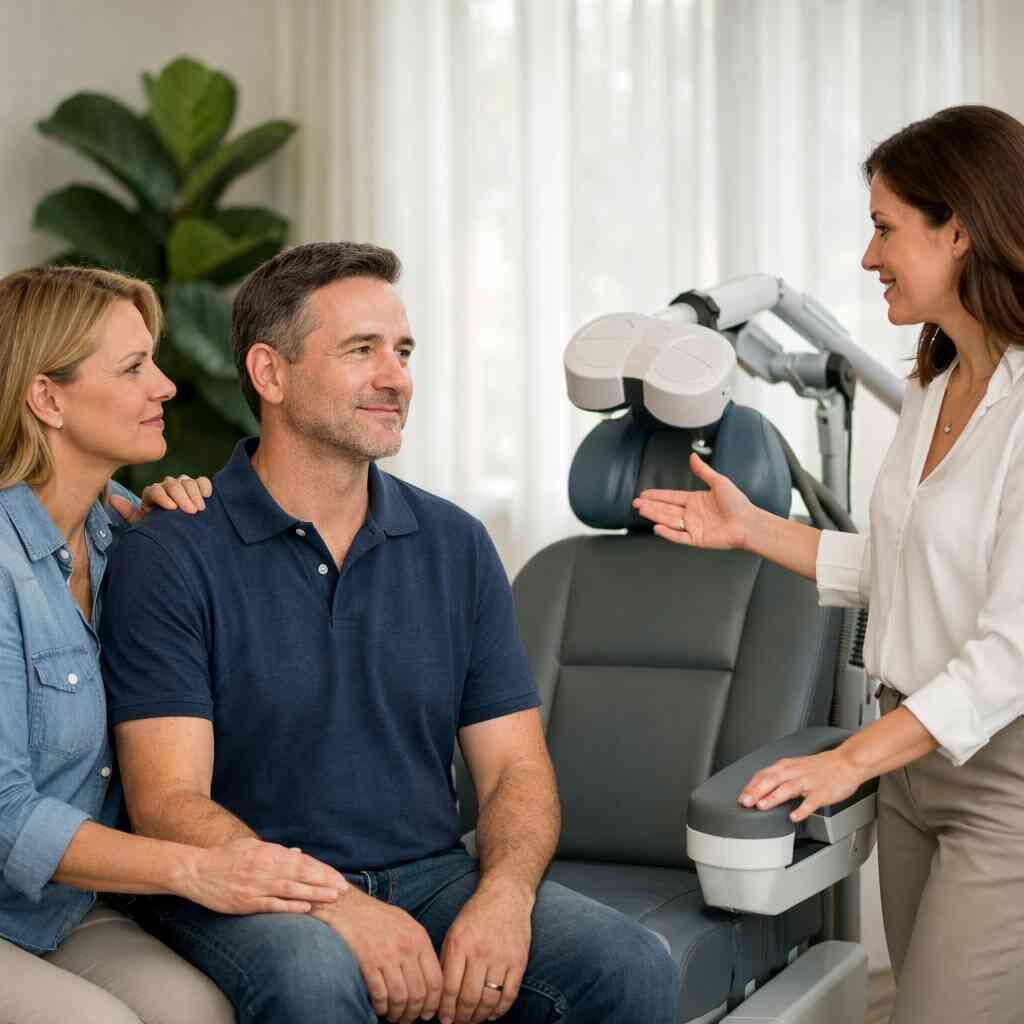
A realistic screening also reviews history. That includes seizure risk, implanted devices, medications, and past psychiatric response. If someone has already tried several drugs, a clinic may discuss medication-resistant depression or TMS after failed medications if mood symptoms are part of the case. The care team should also be honest about what TMS can and cannot do. It is not a cure-all. It is a treatment with a specific role.
We also encourage families to ask about measuring progress with tools like the PHQ-9 or MADRS when depression is present. For OCD, symptom scales and functional tracking matter too. That is how you avoid vague hope and move toward clear follow-up. If a clinic cannot explain its process in plain language, keep asking until it can.
How a Florida Family Clinic Turns Confusion Into a Plan You Can Actually Use
Families usually do not need more theory. They need a plan for Tuesday afternoon, carpool, and the appointment after school. That is where a good Florida behavioral health setting can help. Structure lowers stress. It also gives the whole household a map.
What happens in a TMS OCD therapy consult and how the care team may screen for depression, anxiety, bipolar depression, or dual diagnosis treatment Florida needs
A strong consult starts with listening. The team should ask what symptoms look like at home, not just in a chart. They may also screen for depression, anxiety, bipolar depression, and substance use concerns. That matters because OCD can overlap with dual diagnosis treatment Florida needs, especially when alcohol, nicotine, or other substances have become part of coping.
If addiction is part of the story, the clinic may discuss TMS addiction recovery or TMS for substance use disorder as an emerging area of care. Research on rTMS for cravings is growing, including work discussed by centers such as the Medical University of South Carolina. For some patients, clinicians also consider TMS for PTSD Florida or TMS and EMDR combination planning, depending on the history. The right order matters more than the fanciest label.
This is also where a qualified TMS psychiatrist Florida can help sort out what belongs in the plan. Families should ask how the clinic coordinates with therapists and prescribers. Coordination is not a bonus. It is part of safe care.
How support changes across a treatment week from transportation and scheduling to school, work, and caregiving pressure
TMS takes time, and time is often the hardest part. Appointments can happen several days a week. That can be hard for parents, seasonal residents, and working adults. It can also be hard for the family member who becomes the driver, the reminder, and the cheerleader all at once.
Here is what support often looks like in real life:
- Planning rides before the week starts
- Setting phone reminders that do not feel nagging
- Protecting school or work hours from last-minute panic
- Watching sleep, meals, and hydration, since fatigue hits harder during treatment weeks
- Keeping rituals from swallowing the whole evening
We have seen families do better when they treat logistics like part of treatment, not an afterthought. A mother in Palm Beach County once said the turning point was not the appointment itself. It was the spreadsheet her sister made for pickup times, lunch breaks, and child care. That sounds ordinary. It was. It also kept the household from unraveling.
When to ask about TMS insurance coverage Florida, TMS cost Florida, and location access from TMS clinic Miami, TMS Fort Lauderdale, TMS West Palm Beach, TMS Orlando, or TMS Tampa
Money questions are uncomfortable, but they should not stay fuzzy. Ask early about TMS insurance coverage Florida and TMS cost Florida. Coverage rules can vary by plan, diagnosis, and documentation. Florida’s insurance landscape can feel uneven, so it helps to verify benefits before you commit.
If access matters, location should be part of the conversation. Some families need a TMS clinic Miami option. Others need TMS Fort Lauderdale, TMS West Palm Beach, TMS Orlando, or TMS Tampa access. For people searching TMS near me Florida, proximity can determine whether treatment is realistic or impossible. That is especially true for families balancing school pickups, commuter traffic, and medical appointments in the same day.
If you want a county-level starting point, look at the TMS clinic in Miami-Dade County, the TMS clinic in Broward County, or the TMS clinic in Palm Beach County. Some people prefer a broader TMS treatment Florida reviews and clinic choice search before calling. That is smart. It helps you compare fit, communication, and follow-through.
What long-term support can look like with maintenance therapy, coordination with a TMS psychiatrist Florida, and next steps for family members who want to help without feeding the OCD cycle
Long-term support is not just about the treatment room. It is about what happens after symptoms shift. Some patients may need TMS maintenance therapy, while others may not. The point is to revisit the plan instead of assuming it stays fixed forever. If progress is tracked well, maintenance decisions become less emotional and more practical.
Families should also know that support can continue without becoming part of the compulsion. That means reducing reassurance, avoiding repeated checking for the person, and praising effort instead of certainty. It may also mean staying in contact with the clinic when symptoms change. If depression, anxiety, or craving symptoms return, the plan may need adjustment. That is normal care, not failure.
One last thing. If your loved one has been stuck through therapy, medication, and patience, you do not need to solve everything tonight. Call a clinic, ask for a consult, and write down the questions you already have. If you want a place built around support for family members of OCD patients and clear next steps, start with the team at TMS Treatment Florida. One honest conversation can make the house feel less ruled by OCD.
Frequently Asked Questions
Does TMS work for OCD when medications have not helped?
It may help some people, especially when OCD has been resistant to standard treatment. TMS is not a guaranteed fix. However, it can be a useful option when symptoms remain severe after therapy and medication trials. A good clinic should explain the likely fit, not oversell it. They should also review whether OCD is the main issue or part of a larger pattern.
How does TMS work for stubborn OCD symptoms?
TMS uses magnetic pulses to stimulate targeted brain circuits linked to mood and compulsive behavior. Those signals can influence network activity over time. For OCD, the treatment usually works best as part of a broader plan. That plan may include therapy, medication review, and family support. It is a brain-based treatment, but it still depends on good clinical matching.
What are the most common TMS side effects and safety concerns?
The most common side effects are scalp discomfort, headache, and fatigue. Most are mild. Safety screening should review seizure history, implants, and medications. Families should ask direct questions before treatment starts. If a clinic brushes past safety, that is a red flag. Clear answers matter more than fast promises.
Does insurance cover TMS in Florida?
Sometimes, but not always in the same way. Coverage can depend on the diagnosis, prior medication trials, and the specific health plan. Ask the clinic to verify benefits before scheduling treatment. Also ask about documentation requirements. That saves time and reduces surprise bills. It is one of the most important practical questions you can ask.
Can TMS help if OCD and addiction happen together?
It may be part of a dual-diagnosis plan, depending on the full clinical picture. Research on rTMS for cravings is growing, especially in substance use care. Still, TMS should not replace addiction treatment, therapy, or medical support. If alcohol or substance use is active, the clinic should coordinate carefully. That coordination protects both safety and follow-through.
How do I support my loved one without making OCD worse?
Reduce repeated reassurance, avoid participating in rituals, and keep your tone calm. Set clear, respectful boundaries. Encourage treatment follow-through instead of chasing certainty. It also helps to learn the OCD pattern so you can spot when fear is asking for more fuel. Support works best when it is steady, not reactive.