When cravings, relapse, and numbness all start sounding the same
If you are reading this because sleep feels broken, cravings feel loud, and your mood feels flat, that confusion makes sense. Many people cannot tell where depression ends and substance use begins. The fog overlaps. The body feels tired. The mind feels stuck. In Florida, that mix often pushes people to search for TMS treatment Florida after other paths have felt thin or temporary.
How substance use can hide inside depression, anxiety, and sleep loss
Substance use does not always look dramatic. Sometimes it looks like oversleeping, missed work, short answers, and a bottle hidden behind vitamins. Sometimes it looks like anxiety that never settles, or the kind of insomnia that makes every morning feel sharp and punishing. We hear this from people who thought they had only depression, then realized alcohol, cannabis, or stimulants had become part of the coping loop. That is why TMS addiction recovery enters the conversation for some people with long-running mood symptoms.
Here is the part most guides miss: cravings often grow louder when the brain has been under strain for a long time. A person may come out of rehab, start therapy, and still feel pulled back toward the same old relief pattern. In those moments, TMS for substance use disorder is not a magic fix, but it may be discussed as part of a broader recovery plan. The question is often not, “What is wrong with me?” It is, “What is still driving the cycle?”
Why TMS addiction recovery is being discussed alongside dual diagnosis treatment Florida
Dual diagnosis treatment Florida matters because mental health and substance use often feed each other. Depression can make use feel like relief. Anxiety can make use feel like control. Trauma can make use feel like sleep. When those layers stack up, the treatment plan has to address more than willpower. It has to address the brain patterns underneath the behavior.
That is where transcranial magnetic stimulation therapy has become part of the discussion in Florida behavioral health settings. It is a form of non-invasive brain stimulation that may help when medication, therapy, or residential care have not fully shifted the baseline. For people who have tried standard routes and still feel stuck, that matters. It is especially relevant for readers looking for addiction rehab Florida options that feel more complete.
When TMS for substance use disorder may fit after rehab, therapy, or medication have fallen short
TMS is usually not the first stop for substance use alone. It is more often discussed when another condition is present as well. That might be medication resistant depression, TMS for anxiety, TMS OCD therapy, or TMS for PTSD Florida. If the mood disorder remains untreated, cravings can stay stubborn. That is why some clinicians consider TMS after failed medications, especially when side effects made pills hard to keep taking.
One man in Broward described it plainly during a recent intake conversation. He had finished rehab, but the flatness stayed. He said drinking was no longer the main problem; the emptiness was. That kind of story is common. It is also why some people search for alternative depression treatment or non-drug depression treatment after they have already tried several medications. If you want a Florida-based overview, start with exploring TMS treatment Florida for substance use support.
What Florida readers should know about local access from Miami, Fort Lauderdale, West Palm Beach, Orlando, and Tampa
Access matters. If you live near TMS clinic Miami, TMS Fort Lauderdale, TMS West Palm Beach, TMS Orlando, or TMS Tampa, the practical question becomes how far you must drive and how often. Many TMS programs use repeated sessions over several weeks, so location is not a small detail. It shapes adherence, which shapes real-world success.
Florida also has a unique rhythm. Seasonal residents, hurricane season disruptions, and long commuter corridors can complicate treatment schedules. People in Aventura, Coral Gables, Boca Raton, Delray Beach, and Winter Park often want something close enough to stay consistent. If you are searching for TMS near me Florida, a clear area we serve for TMS treatment and therapy page can help you compare drive time before you commit.
Why transcranial magnetic stimulation therapy feels different from another round of meds
People often ask why TMS feels like such a different proposition from another prescription change. The answer is simple. TMS does not add more medication burden. It uses magnetic pulses to influence activity in targeted brain regions linked with mood, attention, and self-control. That does not make it instant. It does make it structurally different.
How non-invasive brain stimulation works in plain language
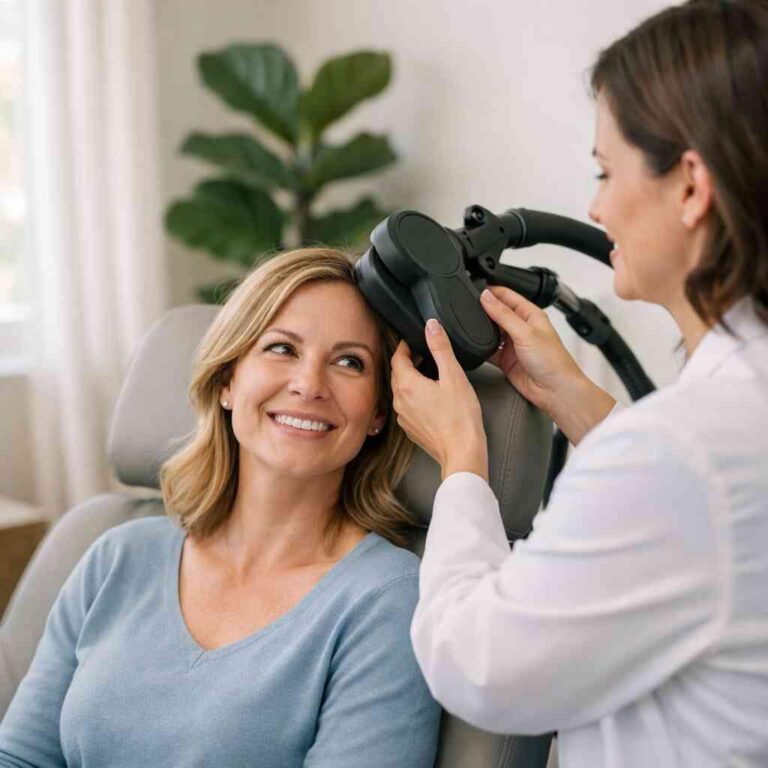
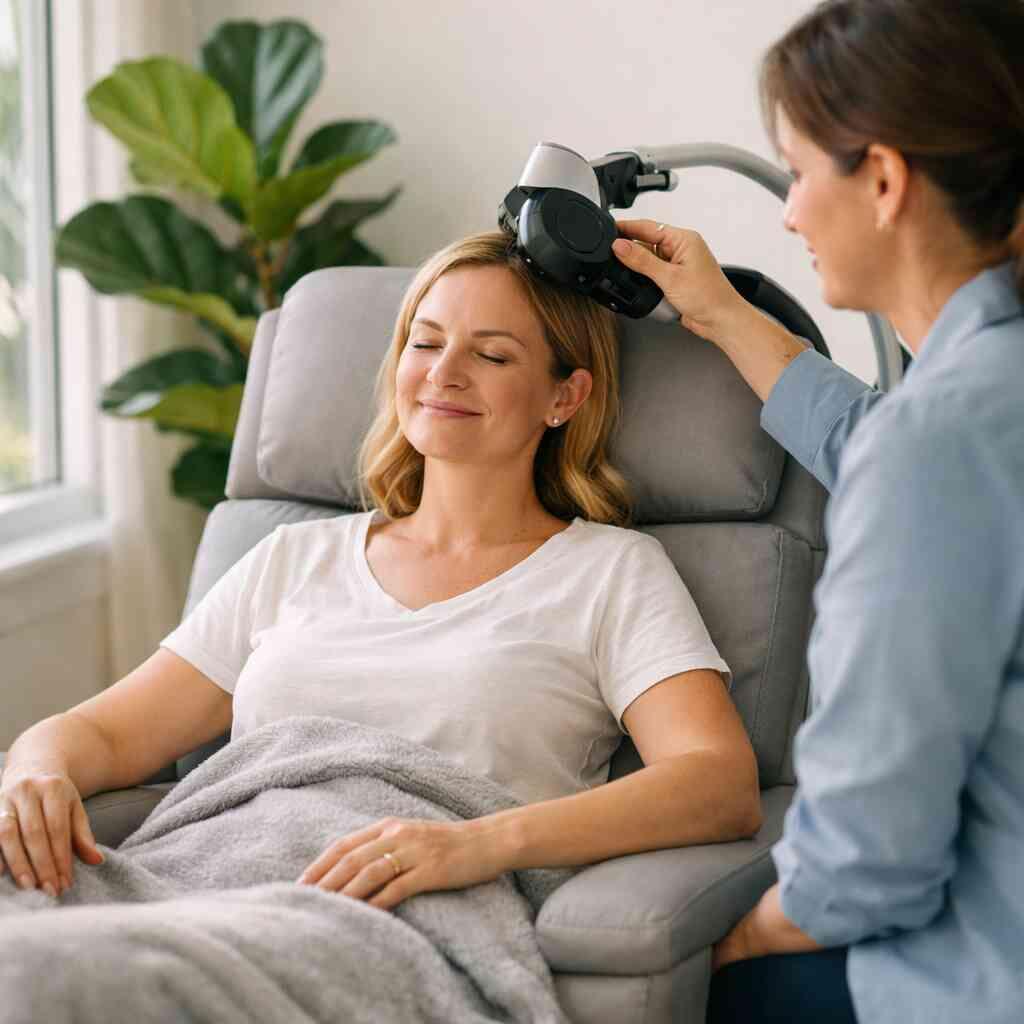
How does TMS work? In simple terms, a coil placed near the scalp sends focused magnetic pulses through the skull. Those pulses influence nerve activity in areas tied to mood regulation. The treatment does not require anesthesia. It does not require surgery. It is usually done while you are awake, seated, and able to return to your day afterward.
People sometimes call it magnetic brain therapy, though clinicians usually say TMS or repetitive TMS. For some patients, deep TMS therapy may be used to reach broader brain networks. The difference is not marketing fluff. It is about coil design and depth of stimulation. If you want a plain-language treatment page, the transcranial magnetic stimulation therapy overview can help frame the basics.
What makes repetitive TMS and deep TMS therapy relevant for medication resistant depression and cravings
TMS gained strong attention because many patients with depression had already tried multiple medications. The 2018 Stanford study by Carpenter and colleagues reinforced what many clinics had seen: some people with depression improved after a course of TMS when medications had not helped enough. That matters for TMS depression treatment Florida, especially when people describe the exhausting loop of switching drugs, waiting, and still feeling heavy.
For recovery care, the question is more cautious. Research on rTMS and cravings continues to grow, including work from centers such as the Medical University of South Carolina. The evidence is promising, but not final. That means TMS for cravings should be presented honestly as an evolving area, not a promise. In some cases, people also explore TMS for smoking cessation or the idea of alcohol addiction brain stimulation, though these uses still need careful clinical judgment.
Where TMS for anxiety, TMS OCD therapy, TMS for PTSD Florida, and TMS for bipolar depression can intersect with recovery care
Recovery rarely lives in one lane. A person may need help for depression, but also for panic, compulsions, trauma, or bipolar depression. That is why clinics that offer TMS for anxiety, TMS OCD therapy, TMS for PTSD Florida, and TMS for bipolar depression can be useful in dual diagnosis settings. The brain does not separate these issues neatly. Treatment planning should not pretend it does.
The overlap also matters for younger adults. Some people searching for TMS for teen depression or TMS for young adults are trying to interrupt a pattern before it hardens. Others are comparing TMS with ketamine treatment in Florida or even curiosity about psilocybin treatment in Florida. Those comparisons are understandable. Still, each option has different evidence, access rules, and risk profiles. A thoughtful Florida mental health clinic should walk you through that without pressure.
What a clinic visit can feel like in a Florida mental health clinic from screening to a typical session
A good TMS visit starts with screening, not with a machine. Clinicians review diagnoses, medications, seizure history, metal implants, and current symptoms. They may use tools like the PHQ-9 or MADRS to track severity. That matters because outcomes should be measured, not guessed. The Clinical TMS Society and APA practice guidance both emphasize careful assessment.
A typical session is usually quiet and repetitive. You sit in a chair. You hear a tapping sound. You may feel tapping or tingling on the scalp. Then you leave. One client in the Palm Beach area described the first session as “strangely ordinary,” which is often how it feels. There is no dramatic event. There is just a consistent process that can fit real life. For added clinical context, see the deep TMS therapy overview.
Choosing the next move without guessing in the dark
This is the part most people find uncomfortable. You are trying to make a smart decision while already tired. You may have read half the internet, compared clinics, and still feel unsure. That is normal. The right questions can cut through the noise quickly. 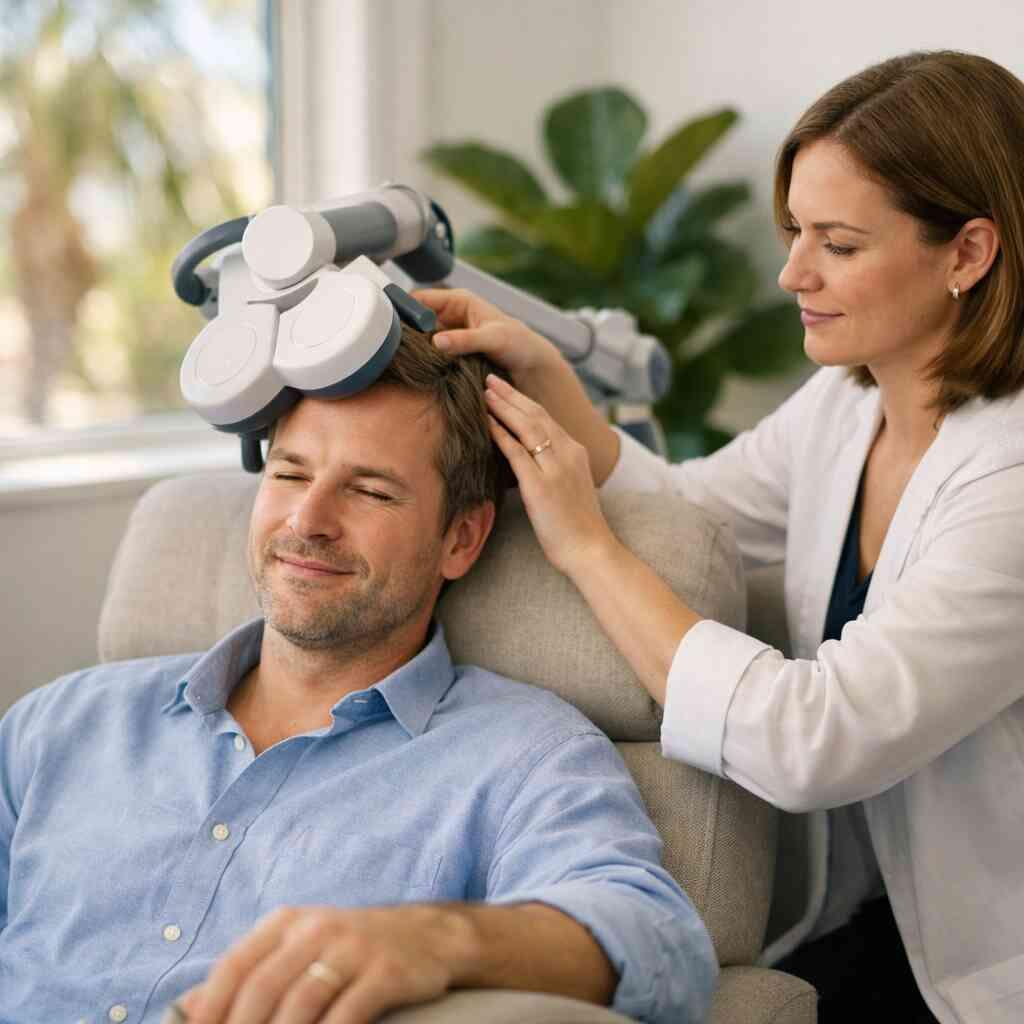
How clinicians think about safety, TMS side effects safety, and who may not be a fit
TMS side effects safety is one of the first questions worth asking. The most common side effects are usually mild and local, such as headache, scalp discomfort, or brief fatigue. More serious risks are uncommon, but they still matter in screening. That is why a careful review of your medical history should happen before treatment starts.
A clinic should also explain who may not be a fit. Certain metal implants, a seizure history, or unstable psychiatric symptoms can change the recommendation. That is not rejection. It is safety. In Florida, outpatient clinics also need to operate within AHCA expectations for licensed care settings, so good documentation and consent matter. If you want to learn more about the team and clinical approach, the about us page can help you see how a practice presents its standards.
What to ask about TMS insurance coverage Florida, TMS cost Florida, and does insurance cover TMS in Florida
Money questions should come early. Ask directly about TMS insurance coverage Florida, verification steps, copays, deductibles, and whether your plan requires prior authorization. Ask, plainly, does insurance cover TMS in Florida for your diagnosis. Do not assume. Coverage can vary by policy and diagnosis, especially when substance use is part of a larger mental health picture.
You should also ask about TMS cost Florida if insurance denies part of the claim or if you are paying out of pocket. Clinics should give ranges only if they can verify them. They should not guess. A transparent insurance and costs page can make the conversation easier before you call. Here is a practical checklist:
- Ask which diagnosis the plan will authorize.
- Ask how many sessions the insurer expects.
- Ask what happens if coverage changes mid-treatment.
- Ask about payment plans if self-pay becomes necessary.
How to compare a TMS psychiatrist Florida, a best TMS clinic Florida search, and a TMS near me Florida option
A TMS psychiatrist Florida should do more than sign forms. You want someone who can connect diagnosis, medication history, and recovery context. A best TMS clinic Florida search should not stop at glossy photos. It should include screening quality, outcome tracking, and whether the clinic treats complex cases like dual diagnosis. If the clinic also treats TMS for bipolar depression, TMS for OCD, or TMS for PTSD Florida, ask how they adjust the plan across conditions.
If you are comparing a TMS near me Florida option, use geography wisely. Miami-Dade, Broward, and Palm Beach can all have strong access corridors. That matters if you are driving from work in Aventura or from family obligations in Delray Beach. For location specifics, the TMS treatment in Miami-Dade County page and the TMS treatment in Broward County page can help you compare convenience without guessing.
When maintenance therapy, long-term results, and TMS and EMDR combination planning matter after the cravings ease
The hard truth is that progress needs upkeep. Some people do well with a standard course and then never need much more. Others benefit from TMS maintenance therapy, especially if symptoms return during stress, travel, or seasonal change. That is why TMS long-term results should be discussed before treatment begins, not after the first good week.
For trauma-heavy cases, TMS and EMDR combination planning can make sense. EMDR may help process memory and trigger networks, while TMS may support mood regulation and symptom relief. The combination should be coordinated, not improvised. If you are searching for TMS reviews Florida, read them for themes, not hype. Look for comments about communication, follow-through, and how the clinic handles setbacks. You do not need perfection. You need a team that takes the whole picture seriously.
Take one concrete action today: compare two Florida clinics, verify insurance benefits, and ask which diagnosis they would screen first. You do not have to figure this out alone, and you do not have to solve it all today.
Frequently Asked Questions
Does TMS help with substance use recovery?
TMS may help some people in substance use recovery, especially when depression, anxiety, PTSD, or cravings sit together. The research on TMS addiction recovery and TMS for substance use disorder is still growing, so it should not be framed as a stand-alone cure. Instead, many clinicians view it as one part of a broader plan that may also include therapy, rehab, medication management, and relapse prevention. A careful evaluation matters because the best fit depends on your symptoms, history, and current stability.
Is TMS safe if I have tried many medications already?
Often, yes, if you pass screening. Many people looking for TMS after failed medications are specifically trying to avoid another round of side effects, sedation, or emotional flattening. The most common side effects are usually mild, such as headache or scalp discomfort. Still, safety screening matters, especially if you have a seizure history, metal implants, or unstable symptoms. A qualified clinic should explain risks clearly before starting.
Does insurance cover TMS in Florida for depression and recovery-related symptoms?
Sometimes, but not always. Does insurance cover TMS in Florida depends on the plan, diagnosis, prior authorization rules, and medical necessity criteria. Most coverage questions are easier when the diagnosis is clear and the documentation is strong. Coverage is often more straightforward for depression than for substance-use-only treatment. That is why clinics should verify benefits before treatment begins and explain any expected out-of-pocket costs.
How long does a typical TMS course take?
A typical course usually involves repeated sessions over several weeks. The exact schedule depends on the protocol, diagnosis, and device used. Many clinics use repetitive TMS, while some cases may involve deep TMS therapy. The time commitment is one reason location matters so much for people searching TMS near me Florida. Consistency helps, so a clinic close to work or home can make a real difference.
Can TMS be used for anxiety, OCD, PTSD, or bipolar depression too?
Yes, in some cases. Many clinics treat TMS for anxiety, TMS OCD therapy, TMS for PTSD Florida, and TMS for bipolar depression with careful screening and clear expectations. The evidence is strongest for depression, but the broader clinical literature keeps expanding. Treatment should be personalized because the brain symptoms and the recovery context are different for each person. A clinic should explain which condition they are targeting and how they measure progress.
What should I ask before choosing a TMS clinic in South Florida?
Ask how they screen patients, who reviews your case, and how they track outcomes with tools like PHQ-9 or MADRS. Ask about TMS side effects safety, insurance verification, and whether they coordinate with therapists or addiction programs. If you live in Miami, Fort Lauderdale, West Palm Beach, or nearby communities like Aventura and Coral Gables, ask about travel logistics too. A strong clinic should answer clearly, without pressure. If you want a location starting point, use the location page and compare options that fit your routine.